- The Ukrainian language evolution
- Why people think Ukrainian is the same as Russian
- Ukrainian vs Russian: What’s the difference?
- Final words
- Frequently Asked Questions
- What is the main misconception about the Ukrainian language?
- How did the Ukrainian language evolve?
- What is a key difference between Ukrainian and Russian pronunciation?
- Why do some people think Ukrainian and Russian are the same?
- What percentage of vocabulary do Ukrainian and Russian share?
When people from other countries discover that you’re from Ukraine, their first question is often, “So, do you speak Russian?” The answer is a clear “No, Ukrainians speak Ukrainian.” The follow-up question typically is, “But isn’t Ukrainian very similar to Russian?”
Let’s take a moment to reflect: how is it that many people remain unaware that Europe’s largest country has its own distinct language? Why do such questions arise in discussions about Ukraine?
In this article, we explore the rich history and development of the Ukrainian language, while also dispelling the widespread misconception that it is the same as Russian. Join us as we uncover the unique characteristics that set these two languages apart.
The Ukrainian language evolution
Linguist George Shevelov asserts that the Ukrainian language did not originate from a single location. Instead, he identifies five potential centers of its emergence. Notably, Kyiv and Halych, as two significant medieval capitals, played crucial roles in shaping the modern Ukrainian language.
This theory finds strong backing from both contemporary dialects and historical texts. For instance, the Slavic letter ѣ was pronounced as [i], whereas in the Russian cities of Murom and Ryazan, which are believed to be pivotal in the evolution of the Russian language, it was pronounced as [je]. Additionally, medieval manuscripts from Halych showcase a hard [ra] sound, contrasting with the soft [rʲa] found in modern Ukrainian, as seen in the example of градоуща instead of грѩдоуща. This distinctive pronunciation feature continues to be present in the region’s spoken dialects today.
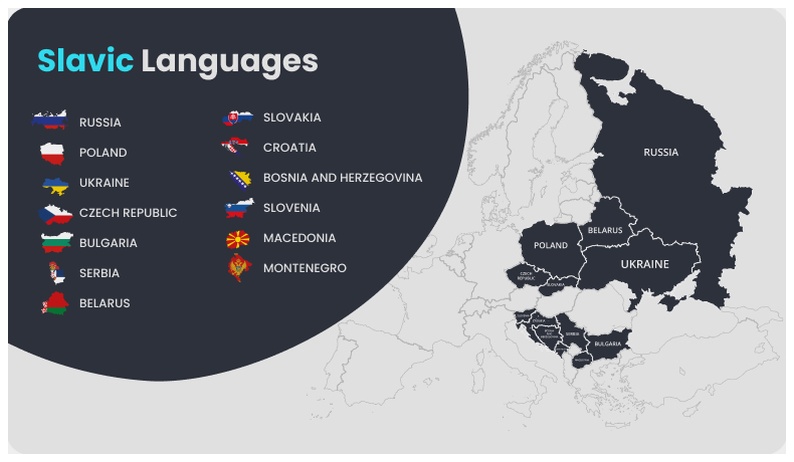
The intricate relationships with nearby Slavic dialects—such as Polish and Slovak to the west and Belarusian to the north—transformed the linguistic landscape surrounding these original centers. Over time, these interactions led to the evolution of dialect clusters into distinct languages.
Belarusian shares a closer linguistic bond with Ukrainian than with Russian, and both are even more closely related to Slovak and Polish. The reason for this connection is straightforward: Ukrainians and Belarusians were part of the Polish-Lithuanian Commonwealth, whereas Russia was never included in this historical alliance.
In the 17th century, effective international relations heavily relied on translators to bridge language gaps. This need for translation remains relevant today, as significant differences still exist between Ukrainian and Russian, despite centuries of enforced assimilation efforts.
Throughout much of Ukrainian history, the Russian language evolved independently, resulting in significant differences, including phonetics. A notable example is the pronunciation of the sound [e]; Russians often substitute it with [ʲe]. For instance, the Russian word нету, meaning “there is none,” is pronounced [nʲetu], while its Ukrainian counterpart, немає, is pronounced [nemaje]. This subtle variation serves as a linguistic hallmark, or shibboleth, that most Russians struggle to replicate.
In contrast, Ukrainians often use the sounds [ʕ] or [ɦ] (pharyngeal or glottal fricative) in place of the Russian [g]. A clear illustration of this difference can be seen in the word “гуси,” which is spelled the same in both languages. Russians typically pronounce it as [gusi], while Ukrainians say [ɦusɪ].
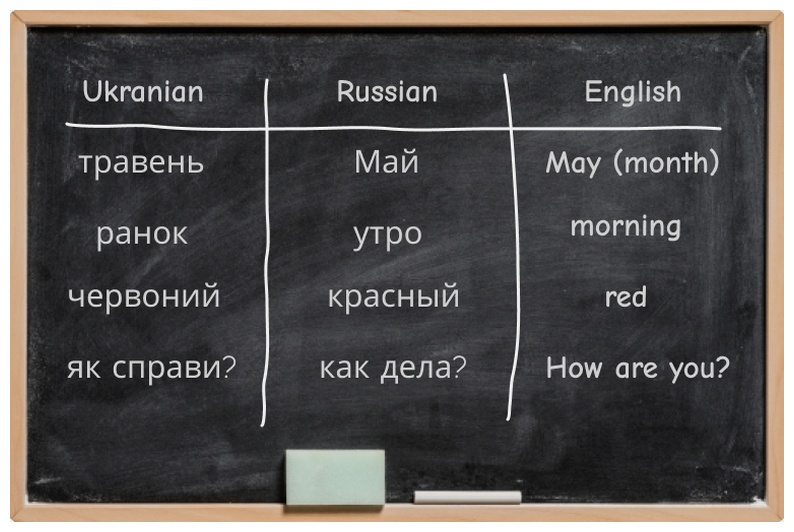
In Ukrainian, the names of the months draw inspiration from nature, reflecting the local environment—such as Birch month, Flower month, and Grass month for the spring season. In contrast, Russian months utilize modified Latin names like март (March), апрель (April), and май (May). This divergence extends beyond month names; many fundamental words differ significantly, despite their shared medieval roots. For instance, the Russian word for “red,” красный, stems from the term for “beauty,” while the Ukrainian word красний translates to “beautiful.” Instead, Ukrainians use червоний, which is derived from the word for “red dye worm,” to denote “red.” Interestingly, in Russian, червонный describes a reddish hue of gold.
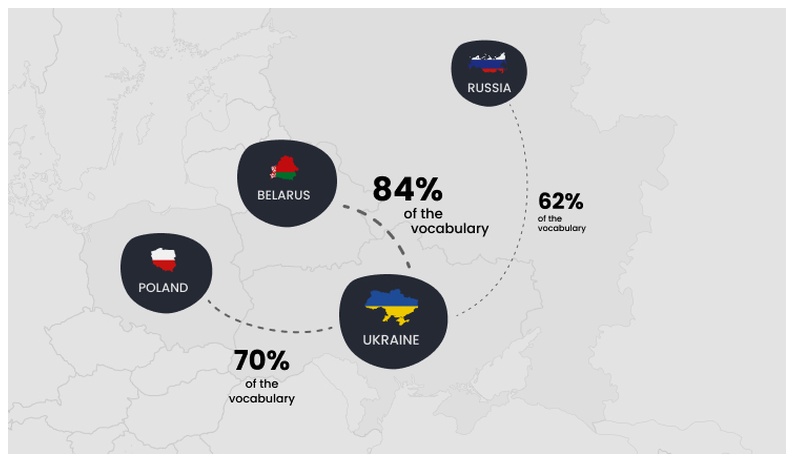
While some words may appear similar, the reality is quite different. Professor Tyshchenko notes that Ukrainian and Russian share only 62% of their vocabulary, in contrast to the 84% shared between Belarusian and Russian, and 70% between Polish and Russian. This highlights the linguistic differences between closely related languages, which do not necessarily reflect issues of national identity.
Why people think Ukrainian is the same as Russian
How did the misconception arise that Ukrainian is the same as Russian? Many people don’t delve into the nuances of language evolution. While it’s common knowledge that English has many French loanwords due to William the Conqueror, this surface-level understanding can be misleading. There’s no shame in grasping the basics, but sometimes what we consider fundamental truths are simply incorrect.
Here’s the common narrative you’ll encounter in nearly any YouTube video about this subject: thousands of years ago, there existed a proto-Slavic language—a foundational tongue from which all Slavic languages developed, characterized by a range of dialects that were mutually intelligible.
Next came “Old Russian,” the precursor to modern Russian, Belarusian, and Ukrainian. According to Russian propaganda, Belarusian and Ukrainian are merely extensions of the Russian language. However, this simplistic, linear view of language evolution fails to capture the complex linguistic relationships and shared histories among these languages.
No language evolves in a strictly progressive manner; each stage is distinct but not necessarily superior to the last. Instead of becoming objectively better over time, languages transform to meet the needs of their dynamic environments. At any given moment, a language effectively serves its purpose. This process of adaptation isn’t linear; factors like history and geography significantly influence the twists and turns of language evolution.
Ukrainian vs Russian: What’s the difference?
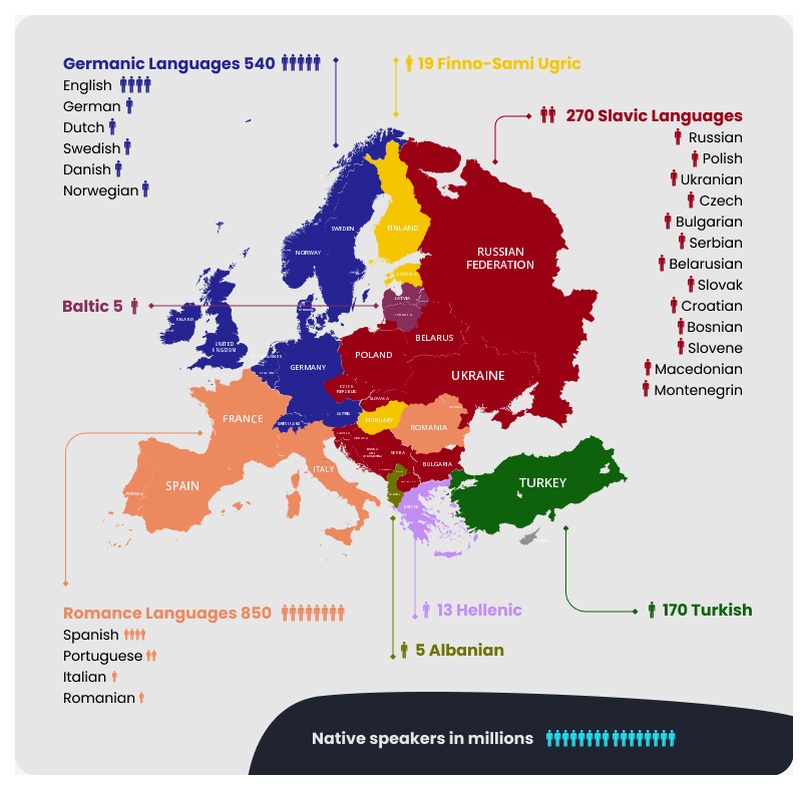
Believing that Ukrainian is simply a variation of Russian is akin to claiming that Dutch is just German spoken with an English accent. While both Ukrainian and Russian are indeed Slavic languages, each of the nearly 20 Slavic languages has its own unique characteristics. This misconception conveniently supports Russian colonialist narratives, which portray Ukrainian and Belarusian as mere dialects of Russian. Interestingly, Polish was once included in this dismissive view, but after Russia’s embarrassing defeat in the Battle of Warsaw, they seemed to abandon that claim.
For Ukrainians, the situation remains complicated. A common question they encounter is, “But you understand Russian, right?” While many Ukrainians do understand Russian, the reverse is not true. For most Russians, the Ukrainian language is often viewed as complex or even nonsensical. This disparity stems from a long history of colonization, during which Ukrainians were required to learn Russian, leading to a deeper understanding of the language while their own was frequently dismissed.
Ukrainians are cleverly leveraging their linguistic skills to distinguish themselves from Russians, who often struggle to comprehend spoken Ukrainian, let alone pronounce it correctly. This has led to the development of numerous shibboleths—unique linguistic markers that help identify “their own” versus “others.” A prime example is the word “palyanytsia,” meaning loaf of bread, which has gained legendary status. Due to the stark differences in phonetics, Russians typically mispronounce it, saying “lye” [lʲe] instead of the correct “lya” [lʲa]. This mispronunciation serves as one of at least three unmistakable signs in this single word.
Final words
The concept of the proto-Slavic, Old Russian, and Eastern Slavic languages is often overly simplified. Moreover, it has been misused in Russian propaganda, particularly to rationalize military actions.
Russia has so tightly controlled the narrative on language development and the distinctions between Russian and Ukrainian that it took a war for many individuals to start reevaluating their fundamental beliefs.
Frequently Asked Questions
What is the main misconception about the Ukrainian language?
Many people mistakenly believe that Ukrainian is simply a variation of Russian.
How did the Ukrainian language evolve?
The Ukrainian language evolved from multiple centers, notably Kyiv and Halych, influenced by nearby Slavic dialects.
What is a key difference between Ukrainian and Russian pronunciation?
Ukrainians use different sounds, such as [ɦ] instead of the Russian [g], leading to significant pronunciation differences.
Why do some people think Ukrainian and Russian are the same?
This belief is often perpetuated by Russian propaganda that simplifies the complex relationships among Slavic languages.
What percentage of vocabulary do Ukrainian and Russian share?
Ukrainian and Russian share only about 62% of their vocabulary, highlighting their linguistic differences.