- Cambridge takes top place!
- So what about London?
- The top locations in Scotland, Wales and Northern Ireland
- The locations leading the way for Sign Language fluency
- The UK’s most-wanted languages
- Frequently Asked Questions
- What percentage of the UK population is multilingual?
- Which city in the UK is the best for raising multilingual children?
- How does Reading support multilingualism?
- What are the top three cities in Wales for language development?
- What languages are most sought after for learning in the UK?
More than half of the global population is multilingual, with 43% classified as bilingual and an additional 17% as multilingual. In the UK, about one-third of people (36%) speak more than one language. However, this pales in comparison to Indonesia, where an impressive 75% of the population is bilingual. It’s clear that the UK has room for improvement in language learning.
In our quest to highlight the UK’s most supportive environments for multilingualism, we explored over 110 towns and cities to identify where the next generation of multilingual speakers is likely to thrive. By examining bilingual and international schools, the demand for language learning, and the size of local bilingual communities, we uncovered the nation’s best locations for fostering a rich multilingual landscape.
Cambridge takes top place!
The city poised to nurture the next generation of multilingual speakers might come as a surprise to those who assumed London would lead the pack. Instead, it’s Cambridge that takes the top spot! Surprisingly, London ranks fifth in this list. Joining the UK’s top five are Reading, Ipswich, and Manchester, showcasing a diverse landscape of multilingualism across the nation.
Cambridge is home to a thriving community of bilingual education, featuring 11.78 independent bilingual schools for every 10,000 children, and these institutions boast an impressive collective rating of 4.78. If you're a parent or guardian looking to enhance your child's language learning experience, consider joining in the journey by learning a new language yourself! In 2022, the city saw over 3,000 searches for "learn X" across multiple languages, highlighting a strong interest in language acquisition among families.
Cambridge boasts the UK's third-largest bilingual community, with 20% of its residents speaking a second language. This vibrant linguistic diversity places it just behind London and Leicester, highlighting the city's rich cultural tapestry and the importance of fostering strong bilingual interactions.
Reading has earned the title of the UK’s second-best place for raising multilingual children, thanks in large part to its vibrant bilingual community. Nearly 19% of its residents are bilingual, positioning Reading as the fourth-largest bilingual hub in the country. In 2022, the city's enthusiasm for language learning was evident, with over 3,200 searches for "Learn [X]." Additionally, Reading boasts five bilingual schools for every 10,000 children, averaging an impressive rating of 4.77.
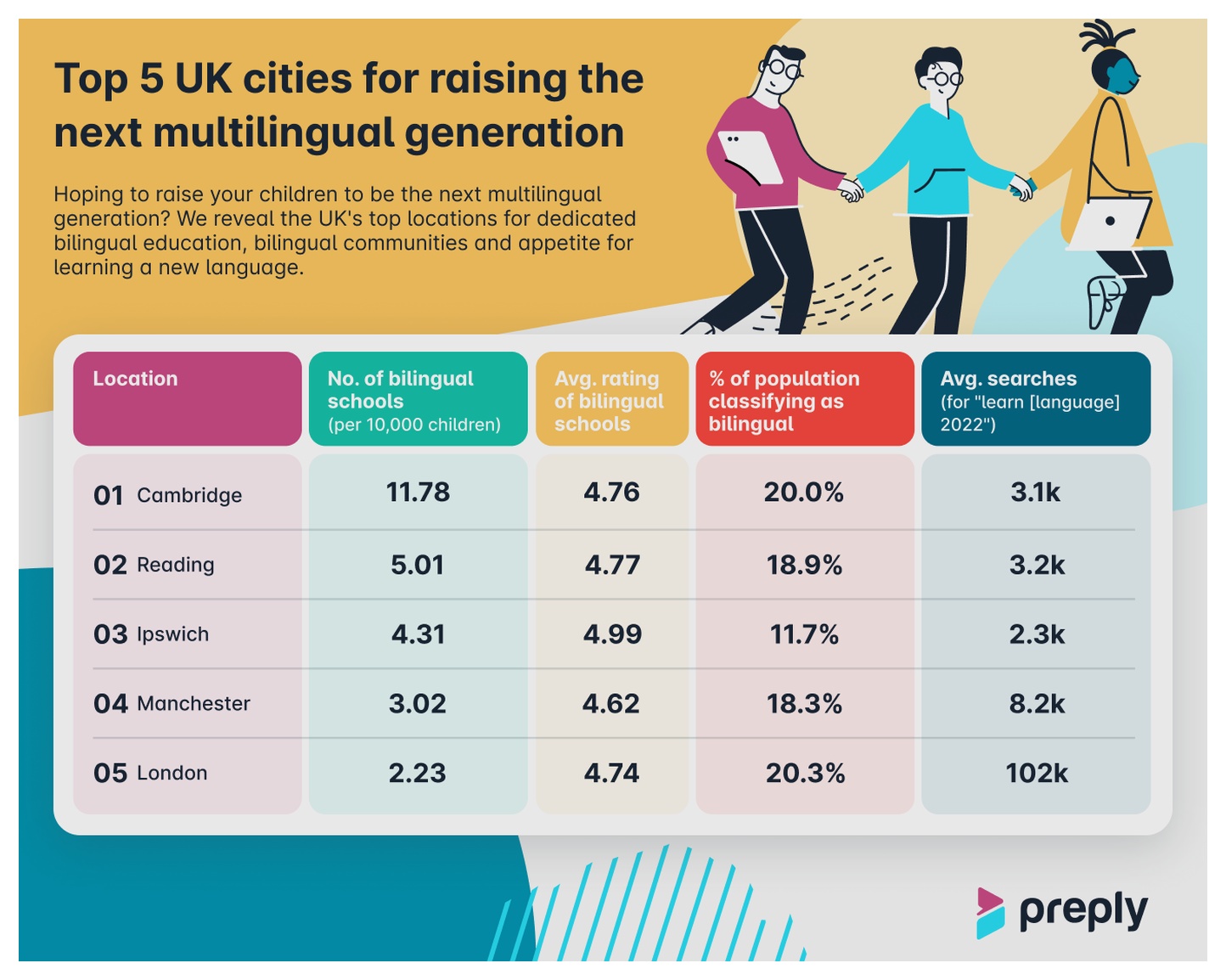
Claiming the third spot on the podium is the compact yet formidable town of Ipswich. With 3.27 bilingual schools for every 10,000 children, it may be smaller in number, but it boasts an impressive near-perfect rating of 4.99—the second-best in the country. Last year, the demand for language learning reached around 2,300, and Ipswich's bilingual community ranks among the top twenty in the UK, with 11.7% of its residents identifying as bilingual.

Learn a language with personalised 1-on-1 classes with our expert tutors from all over the world
French lessons online
Spanish lessons online
So what about London?
In an unexpected turn of events, London has lost its title as the city with the largest bilingual community per capita, now surpassed by Leicester. Currently, 20.3% of Londoners identify as bilingual, while an impressive one-third (30%) of Leicester's residents speak multiple languages fluently.
Londoners are passionate about language learning, with over 100,000 online searches for "Learn [language]" in 2022 alone. However, the city faces a significant challenge: it has a low ratio of bilingual schools to its child population, providing just 2.23 bilingual schools for every 10,000 children.
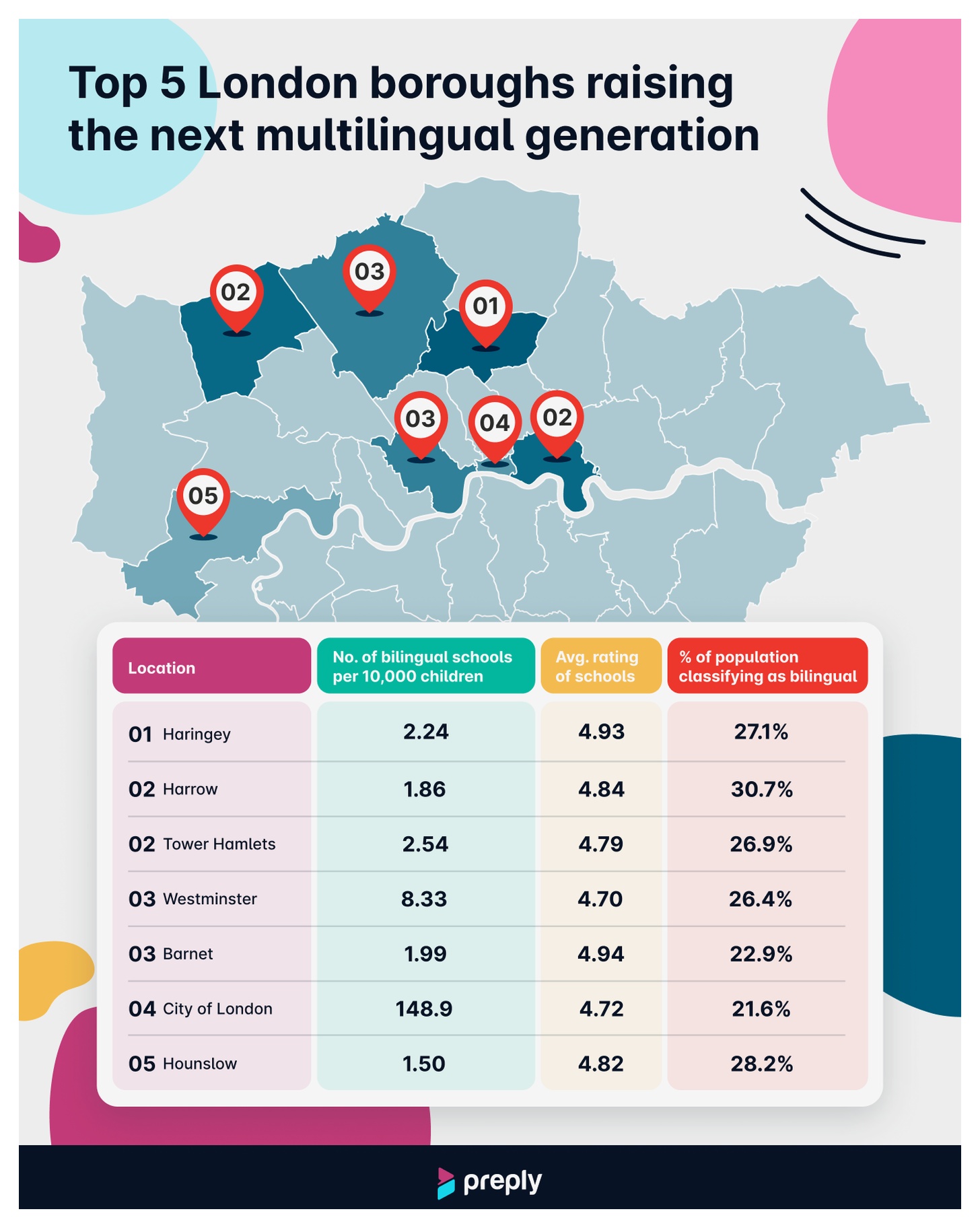
If you're looking to help your children develop their language skills in London, certain areas stand out as the best options. Haringey leads the pack, followed closely by Harrow and Tower Hamlets, which tie for second place. Westminster and Barnet share the third spot. On the other hand, boroughs like Waltham Forest, Croydon, and Bromley may not offer the same advantages for language development.
The top locations in Scotland, Wales and Northern Ireland
In Scotland, Edinburgh, Glasgow, and Aberdeen stand out as the prime cities for fostering bilingual and multilingual children. Over in Wales, Cardiff, Swansea, and Wrexham lead the way as the top three cities for language development. Meanwhile, in Northern Ireland, Belfast, Lisburn, and Dungannon are recognized as the best locations for raising multilingual kids.
Learn a language online with our free learning materials.
Learn English online
Learn French online
The locations leading the way for Sign Language fluency
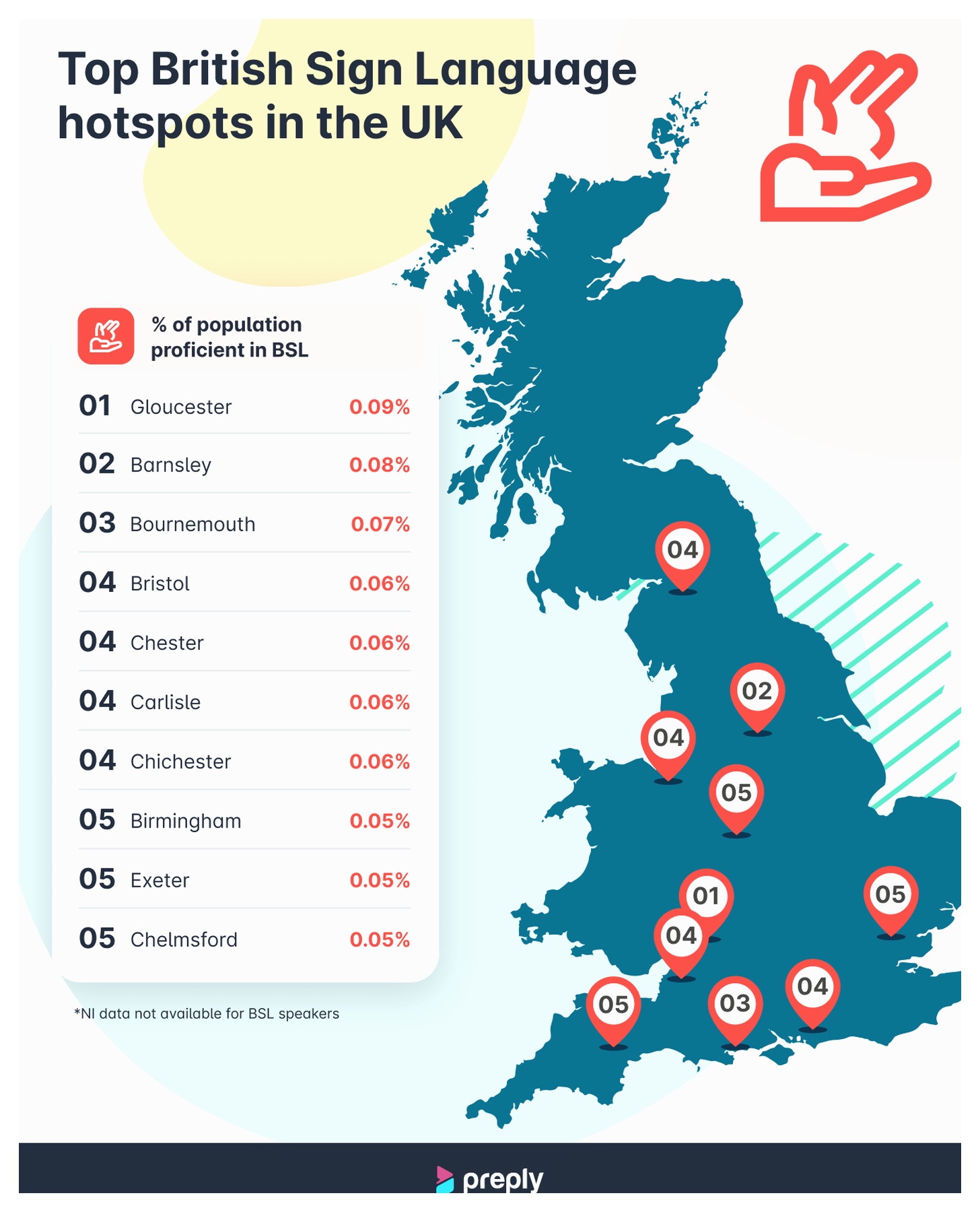
When examining bilingual population statistics, it's important to include those skilled in British Sign Language (BSL). As awareness of BSL grows, it contributes to a more inclusive society. Our goal was to identify the UK’s largest BSL-speaking communities. Leading the list is Gloucester, where 0.09% of residents are proficient in BSL, followed closely by Barnsley at 0.08% and Bournemouth at 0.07%.
The UK’s most-wanted languages
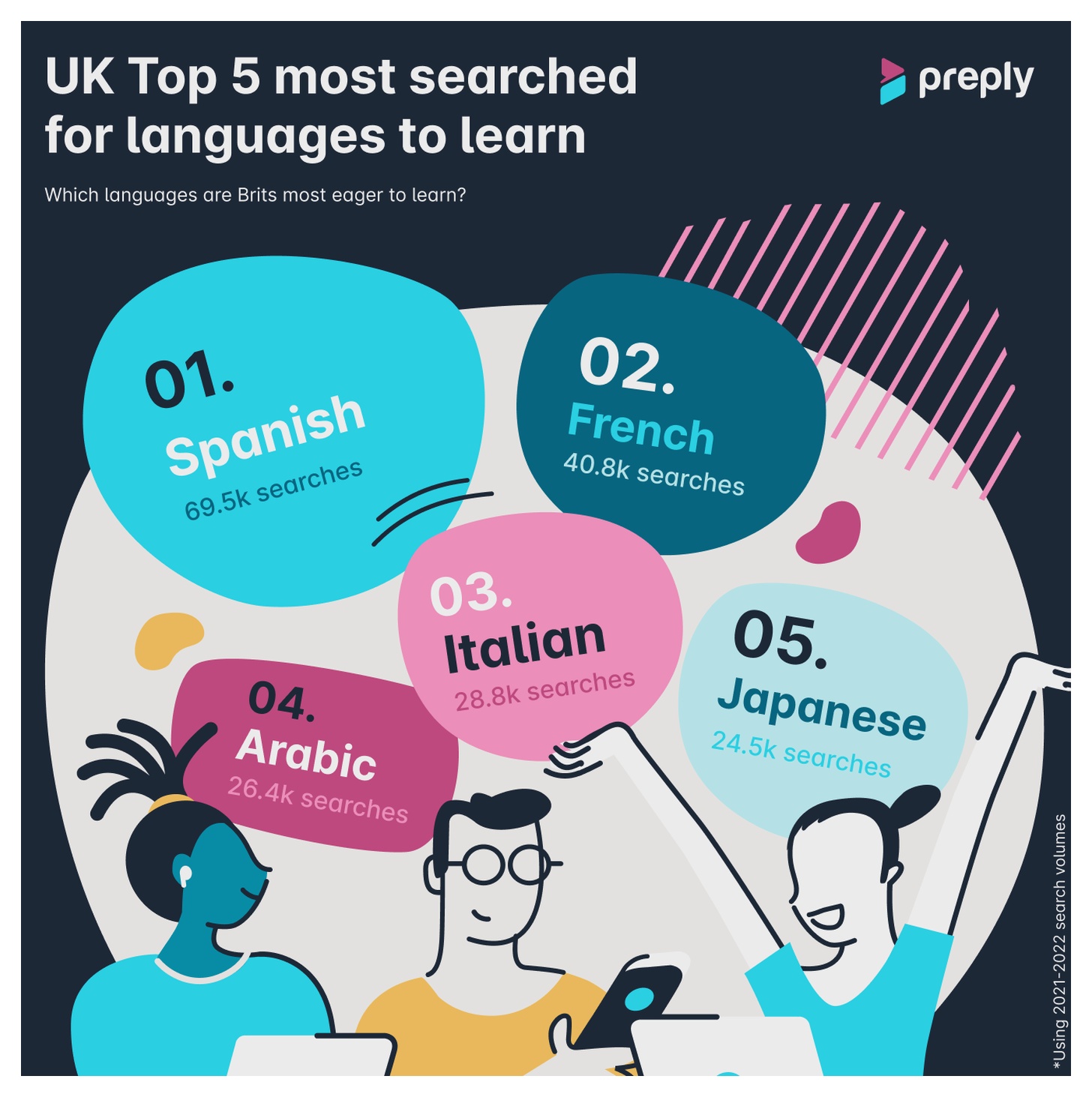
As we explored language demand across the UK, we uncovered intriguing insights into the most sought-after languages. Spanish tops the list, with nearly 70,000 searches for “Learn Spanish” nationwide, highlighting its popularity among Brits. Following closely are French and Italian, taking the second and third spots, while Arabic and Japanese round out the top five. This data reveals a clear trend in language learning preferences across different locations in the UK.
Bilingualism and multilingualism offer a wealth of social, psychological, and lifestyle benefits, making the advantages of knowing multiple languages substantial. Fostering language skills in the younger generation provides them with a significant advantage, setting them up for success in various aspects of life.
Methodology
Bilingualism refers to the ability to speak two languages fluently, while multilingualism encompasses the skill of understanding and using three or more languages with proficiency. Both abilities open doors to diverse cultures and enhance communication in our increasingly globalized world.
This study analyzed over 110 locations across the UK, focusing on the primary town or city in each county. It examined the number of bilingual and international schools, adjusted for every 10,000 children, along with their average ratings. Additionally, we explored local search volumes for language learning queries, such as “learn X,” and assessed the percentage of the population that is bilingual, providing a comprehensive view of the linguistic landscape in these areas.
Sources include Google Maps API, Google Keyword planner and UK census data.
Frequently Asked Questions
What percentage of the UK population is multilingual?
About one-third of people in the UK (36%) speak more than one language.
Which city in the UK is the best for raising multilingual children?
Cambridge is ranked as the top city for nurturing the next generation of multilingual speakers.
How does Reading support multilingualism?
Reading has a vibrant bilingual community with nearly 19% of its residents bilingual and five bilingual schools for every 10,000 children.
What are the top three cities in Wales for language development?
The top cities in Wales for fostering multilingual children are Cardiff, Swansea, and Wrexham.
What languages are most sought after for learning in the UK?
Spanish, French, and Italian are the most wanted languages, with Spanish leading at nearly 70,000 searches for 'Learn Spanish'.