- What does gender-inclusive language mean?
- Gender inclusion in the world’s most widely spoken languages
- Gender inclusive language in English
- Gender inclusive language in Spanish
- Gender inclusive language in Portuguese
- Gender inclusive language in French
- Gender inclusive language in Mandarin Chinese
- Gender neutrality in other widely studied languages
- Gender inclusive language in Italian
- Gender inclusive language in German
- Conclusions
- Frequently Asked Questions
- What is gender-inclusive language?
- Why is inclusive language important?
- How does gender-inclusive language vary across different languages?
- What are some examples of gender-neutral terms in English?
- How can individuals promote gender inclusivity in their communication?
The moment is opportune: across the globe, conversations about closing the gender gap and safeguarding the LGBTQ+ community are taking center stage in public discourse. As society evolves, so does language, adapting to promote more respectful communication with diverse groups. Today, the term “inclusive language” is gaining traction in many languages, referring to a way of speaking that avoids discriminatory words, tones, and expressions that can harm marginalized communities.
Inclusive language promotes respectful and accessible communication among individuals, ensuring it is anti-racist and free from discrimination against people with disabilities and various gender identities. Additionally, this inclusive approach encompasses the development of tools and apps that translate content into multiple languages, making information accessible to a broader audience.
Understanding gender-inclusive language involves embracing a dynamic vocabulary that reflects the evolving identities within the LGBTQ+ community and beyond. In this article, we will introduce you to several key terms that are essential to this inclusive dialogue.
- **Gender**: A collection of norms and behaviors that shape an individual’s presence, expression, and societal role, distinct from sex assigned at birth, which is based on observable anatomical and biological characteristics.
- gender identity: the act of self-determination by which each person perceives and manifests their gender
- gender-fluid: people whose gender identity varies over time or depending on the context or people they interact with
- LGBTQ+: acronym that encompasses the wide spectrum of existing gender identities, sexual and romantic orientations
- Non-binary: A gender identity for individuals who do not conform to traditional male and female gender roles and expectations.
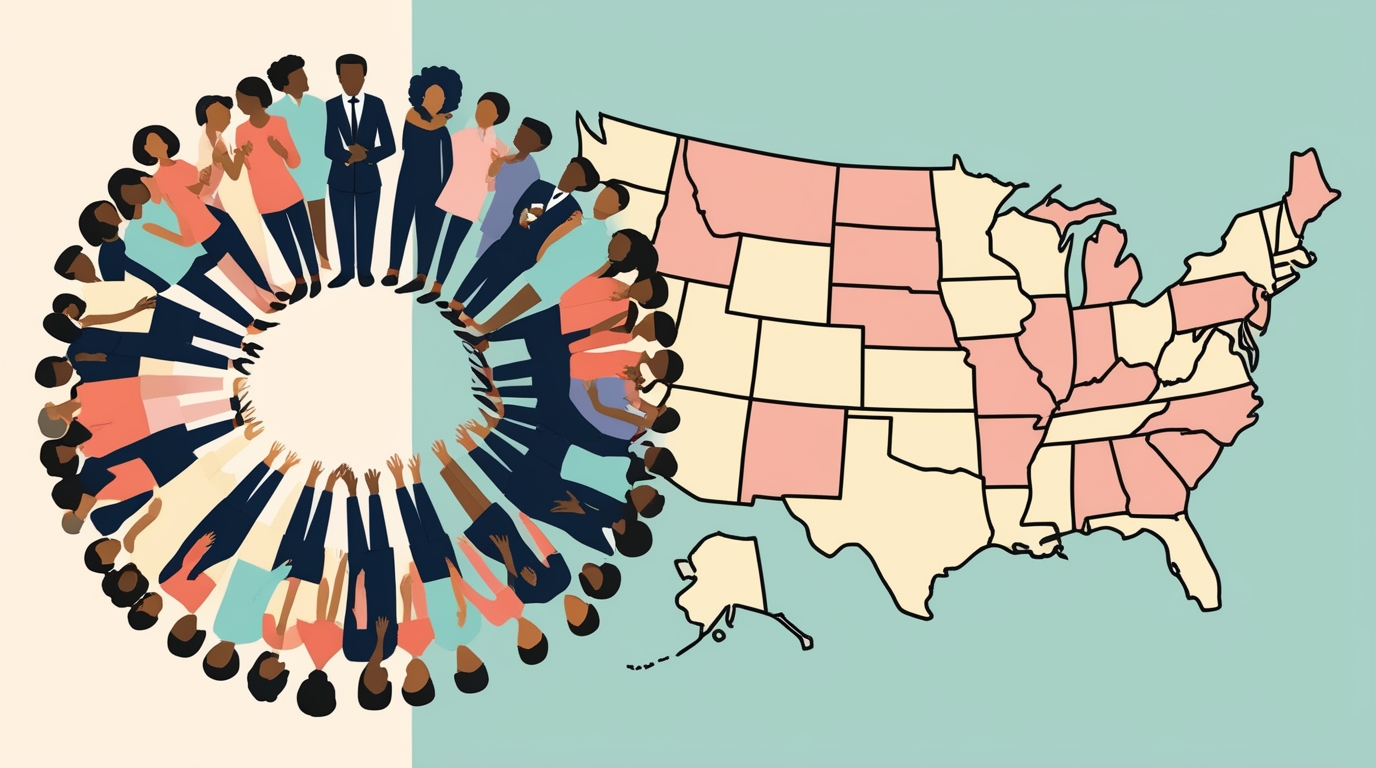
What does gender-inclusive language mean?
Gender-inclusive language is an essential aspect of inclusive communication that is gaining traction worldwide. From the United States to Mexico, China to India, and across Europe in countries like Spain, Italy, and Germany, languages are evolving to reflect the diverse identities and values held by speakers, particularly those within the LGBTQ+ community. This shift not only promotes respect and acknowledgment but also enriches the way we communicate.
According to the United Nations gender-inclusive language guidelines:
Embracing gender-inclusive language involves communicating in ways that respect all genders and avoid reinforcing stereotypes. Since language significantly influences our cultural and social perceptions, adopting this inclusive approach is a vital step toward advancing gender equality and eliminating bias.

Three friends sit at a table in what looks like a coffee shop, they chat and laugh heartily.
In practice, using gender-inclusive language means embracing gender-neutral and gender-positive expressions that deconstruct patriarchal attitudes and beliefs.
Those who advocate the use of gender-inclusive language believe that this helps to:
- denounce sexism and gender intolerance
- Emphasize that gender is a spectrum, encompassing more than just men and women. Recognizing and validating diverse gender identities is essential for visibility and inclusion.
- unhinge gender biases that especially harm women and non-binary people, preventing them from fully enjoying rights and opportunities
- value and respect people in the LGBTQ+ community, their lives, and choices
- not privilege some people to the detriment of others
The European Parliament emphasizes that “gender-neutral or gender-inclusive language goes beyond mere political correctness.” In essence, language plays a crucial role in shaping our attitudes, behaviors, and perceptions. This means that adopting gender-neutral language isn’t just about recognizing non-binary and gender-fluid identities; it also serves as a powerful tool for challenging and eradicating sexist language.
No matter what language you are learning, we encourage you to embrace inclusivity in your studies. This approach will not only expand your vocabulary but also deepen your ability to express yourself and advocate for important causes, including women’s rights and LGBTQ+ equality.
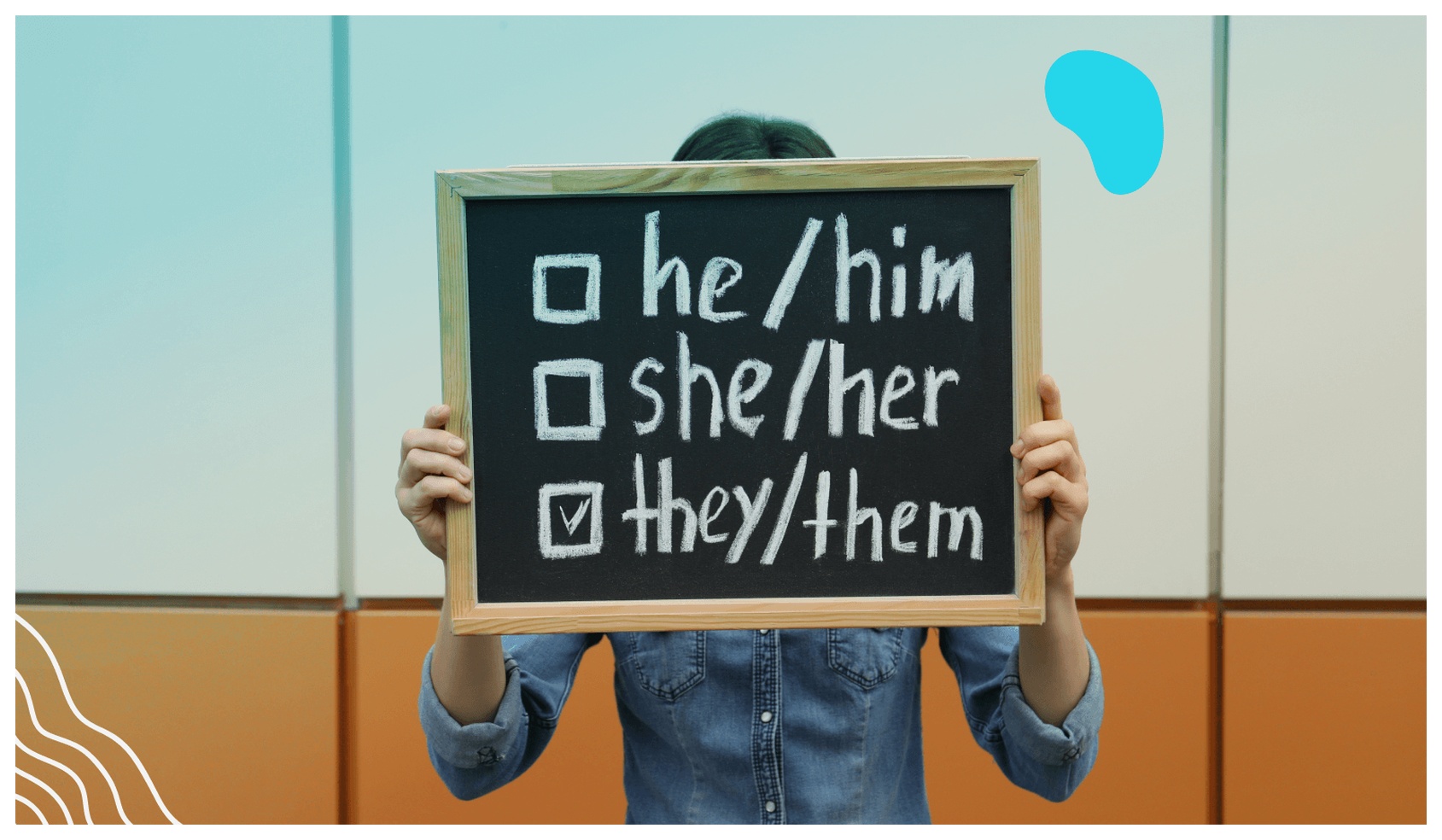
“Understanding English Pronouns: He/Him, She/Her, and the Importance of They/Them”
Gender inclusion in the world’s most widely spoken languages
Having explored the common traits of gender-inclusive languages, let’s delve deeper. We’ll examine how gender-neutral language is approached in five of the most widely spoken languages globally: English, Spanish, Portuguese, French, and Mandarin Chinese.
Gender inclusive language in English
English is unique in that it lacks grammatical gender, unlike many other languages. It features only a handful of gender markers, primarily found in pronouns, possessives, and certain nouns and forms of address. This simplicity sets English apart and makes it more accessible for learners.
Personal nouns tend to be gender-neutral, but we also have gender-specific personal pronouns like “he,” “she,” “her,” “his,” and the gender-neutral “they” and “them.” This distinction allows us to communicate more precisely about individuals’ identities.
The UN guidelines on gender-inclusive language in English recommend to:
use non-discriminatory language, like forms of address and pronouns that are consistent with people’s gender identity
avoid gender-stereotyped expressions, like “She throws/runs/fights like a girl” or “In a manly way”
To ensure inclusivity and visibility for both genders, use both feminine and masculine forms, such as “he or she” and “her or his.” This approach acknowledges and represents everyone effectively.
You can also:
- use gender-neutral words, like “humankind” instead of “mankind”, “partner” instead of “wife/husband”, “firefighter” instead of “fireman”, etc.
- use gender-neutral pronouns, like they/them (singular they), instead of the binary masculine/feminine pronouns
In 2019, the esteemed Merriam-Webster dictionary named “singular they” as its word of the year, reflecting a growing acceptance of this inclusive pronoun. Today, numerous organizations, including the American Psychological Association and even the White House, endorse its use, highlighting a significant shift in societal norms around gender identity.

Visual Overview of the White House “Contact Us” Page: Exploring Pronoun Options
Recently, Jennifer Lopez demonstrated a thoughtful approach for parents addressing their non-binary children by using the gender-neutral pronoun “they.” At the LA Dodgers Blue Diamond Gala, she introduced her 14-year-old child, Emme Maribel Muñiz, with a heartfelt acknowledgment that embraced their identity.
“This is a truly remarkable moment! My favorite duet partners are incredibly popular, always in high demand, and on the pricier side. Though hiring them comes at a cost, every penny is worth it for the joy and magic they bring to our collaboration.”
Gender inclusive language in Spanish
The global prevalence of the Spanish language makes the discussion on inclusive language quite complex. Each Spanish-speaking nation approaches this issue in a way that aligns with its unique linguistic and social landscape, as well as the civil rights protections already in place for the LGBTQ+ community.
However, we can identify two efforts that unite the evolution of gender inclusive language in Spanish:
- finding a neutral suffix to avoid the grammatical masculine/feminine forms
- raising awareness of sexist language and giving equal visibility to all genders
Spanish, a beautiful Romance language, classifies its vocabulary into two distinct grammatical genders: masculine and feminine. This essential feature shapes how words are used and understood, adding depth to the language.
A widely accepted guideline, supported by grammar authorities and the Real Academia Española, states that the generic masculine form should be used when referring to groups that include individuals of various genders. This rule serves to maintain clarity in communication while acknowledging mixed-gender collectives.
This issue has sparked debate for several years, with various social groups advocating for more inclusive language. In response to the demands of LGBTQ+ advocates, innovative gender-inclusive suffixes are beginning to take shape, reflecting a growing awareness of diverse identities.
A 2020 study conducted by the Fundeu BBVA foundation in collaboration with the Instituto de Ingeniería del Conocimiento uncovered the widespread use of three non-binary gender suffixes in Spain and Latin American countries: @, -x, and -e. These findings highlight the evolving language practices that embrace gender diversity in these regions.
For instance, consider the Spanish words “niño” (masculine for child) and “niña” (feminine for child). To create a gender-inclusive and non-binary alternative, we might express it as:
- niñ@
- niñx
- niñe

Vibrant LGBTQ+ Illustration: Celebrating Diversity with LingualNeeds Connection
The research revealed distinct patterns in the usage of three suffixes across Spanish-speaking nations. In Argentina, the suffixes -x and -e are particularly popular, while in Venezuela and Spain, the @ symbol remains the dominant choice.
Gender inclusive language in Portuguese
Portuguese, much like Spanish, features distinct gender markers, categorizing words as either masculine or feminine. Interestingly, when referring to groups or speaking in general terms, the masculine form is typically used to encompass everyone.
When referring to a group that includes boys, girls, or children of various genders, grammar indicates that the appropriate terms are “eles” or “todos.” These terms effectively encompass the entire collective.
To get around this rule, gender neutral language in Portuguese is starting to embrace these solutions:
- use the symbols @ or “x” or the suffix “-e” in place of gender markers identified by “o” or “a”
- Adopt gender-neutral pronouns like “ile,” created in 2015 by Brazilian artist Pri Bertucci and psychologist Andrea Zanella. This pronoun aims to replace the masculine “ele” and “eles” for non-binary individuals, drawing inspiration from Latin neuter demonstrative pronouns.
In collaboration with HBO, Pri Bertucci and Andrea Zanella developed an inclusive language manual that’s available for free download. This resource aims to promote sensitivity and understanding in communication.
Gender inclusive language in French
The conversation about gender-neutral language in French has a long history, with roots tracing back to 1978. That year, linguist Marina Yaguello published “Les Mots et les femmes,” the first book to tackle the issue of sexism in the French language. This groundbreaking work sparked an ongoing dialogue about how language reflects and shapes gender perceptions.
The conversation surrounding generalist principles gained significant momentum in 2013. That year, the Haut Conseil à l’Egalité entre les femmes et les hommes released a groundbreaking report titled “Rapport relatif à la lutte contre les stéréotypes. Pour l’égalité femmes-hommes et contre les stéréotypes de sexe, conditionner les financements publics.” This document not only addressed gender equality but also sparked discussions on the use of inclusive language within French society.
A key grammar rule often challenged by advocates for gender-inclusive language is the principle that “the masculine always prevails over the feminine.” This notion suggests that masculine forms take precedence, a concept many argue perpetuates gender bias in language.
The dismissal of this grammatical rule has sparked a wave of proposals aimed at making written language more inclusive, ensuring that both masculine and feminine forms are equally represented.
For a wealth of solutions and examples, be sure to explore the French version of the United Nations website. Here are some noteworthy proposals to consider:
- use professional titles correctly, declining them to the feminine when referring to a woman
- Avoid referring to women by their first names only; instead, use their surnames and, when applicable, their professional titles, just as you would for men.
- avoid the distinction between Mademoiselle and Madame, which emphasize a woman’s marital status even when not needed
- Use gender-neutral terms like “humanity” or “individuals” instead of “men” to promote inclusivity.

“Vibrant Illustration: ‘Bonjour, mes pronoms sont _ _ _’ with LGBTQ+ Pride Elements”
Innovative typographical strategies are gaining popularity as they effectively allow for the coexistence of masculine and feminine forms within the same sentence.
- The slash in “le/la fonctionnaire nommé/e à ce poste s’acquitte des tâches suivantes” indicates gender inclusivity, meaning “the employee appointed to this position performs the following tasks.”
- Parentheses usage in French: “l’administrateur(trice) nomm(é)e à ce poste s’acquitte des tâches suivantes” translates to “the administrator appointed to this position performs the following tasks.”
- period, as in “l’administrateur.trice nommé.e à ce poste s’acquitte des tâches suivantes”
- midpoint, as in “l’administrateur·trice nommé·e à ce poste s’acquitte des tâches suivantes”
Gender inclusive language in Mandarin Chinese
Mandarin Chinese stands out for its lack of grammatical genders and numbers. For instance, the term 学生 (xuésheng), meaning “student,” can refer to anyone, regardless of gender or number—whether it’s one student or many. This applies to most adjectives as well, making the language both simple and versatile in its expressions.
In Mandarin, the third-person pronoun tā (他) represents the masculine form. However, during the 20th century, its usage declined as Western influences promoted stricter binary gender roles, leading to a reduced emphasis on gender-neutral language.
Recently, the third-person pronoun “ta” has gained popularity, particularly in its pinyin form. This pronoun is exclusively used in written communication to refer to individuals when their gender is unknown, making it a versatile choice in various contexts.
In a recent interview with Ariana magazine, a publication dedicated to social justice in Asia, Hong Kong transgender activist Joanne Leung shares her insights and experiences.
Several prominent companies, such as China Central Television and JDB Group, a beverage manufacturer, are strategically choosing to remove gender references from their advertisements and Weibo posts when it’s not essential to the message. This approach reflects a growing trend towards inclusivity in marketing.
As reported by RADII, a platform dedicated to showcasing Chinese creators, younger generations are embracing the pronoun “TA,” even among those outside the queer community. Notably, Bilibili, a popular Chinese streaming service, has adopted this inclusive language by using the phrase “Videos of TA” in creators’ profiles instead of the traditional “His/Her videos.”
Gender neutrality in other widely studied languages
Italian and German, though less commonly spoken, are gaining attention for their fascinating developments in gender-inclusive language. These languages are actively evolving to embrace inclusivity, making them subjects of significant scholarly interest.
Gender inclusive language in Italian
In Italian, much like other Romance languages, a key issue revolves around navigating the grammatical convention of the generic masculine. A particularly hot topic of public discussion is the use of feminine job titles, which often faces resistance from more traditional speakers.
The topic of nonbinary gender suffixes has gained significant attention recently. Among the most popular and hotly debated options are the asterisk (as in “ragazz*” instead of the traditional “ragazzo/a”) and the schwa phonetic symbol /ə/ (as in “ragazzə” instead of “ragazzo/a”). These innovations aim to create more inclusive language that reflects diverse gender identities.
“Joyful Duo Smiles at the Camera with Colorful Flag and Sparkling Blue Makeup”
Gender inclusive language in German
German has three genders (masculine, feminine and neuter, with their respective three articles der, die, das.
In many languages, including this one, the masculine plural is commonly used to refer to both genders. For example, teachers in mixed-gender classes typically use the term Schüler, which means “students” in the masculine form.
There are various techniques to address common grammatical habits. One effective approach is gender neutralization, which involves using paraphrases to steer clear of gendered language. For instance, you can opt for neutral terms like “Mensch” (human), “Person” (individual), or “Fachkraft” (specialist) to promote inclusivity in your communication.
Another option is making the feminine form visible with:
- double form, as in “Leser und Leserinnen” (male and feminine reader)
- splitting, as in “Leser/innen”
- Inclusive terms like “Leser_innen”, “Leser:innen”, and “Leser*innen” utilize symbols (_, :, *) to encompass male, female, and non-binary identities.
Conclusions
Learning a language opens the door to understanding the social issues that matter to its speakers. Today, familiarizing yourself with concepts like inclusive language, especially gender-inclusive language, is crucial for keeping pace with societal changes and fostering meaningful connections.
Understanding gender-inclusive language is essential for fostering a more inclusive, accessible, and welcoming world for everyone. By embracing this language, we can better support women’s rights and the LGBTQ+ community, ultimately promoting the rich diversity of human experiences.
Frequently Asked Questions
What is gender-inclusive language?
Gender-inclusive language refers to communication that respects all genders and avoids reinforcing stereotypes, promoting better understanding and visibility of diverse gender identities.
Why is inclusive language important?
Inclusive language is essential as it helps to promote respect, acknowledgment, and equality for marginalized communities, particularly within the LGBTQ+ community.
How does gender-inclusive language vary across different languages?
Gender-inclusive language varies by language, with different approaches to gender markers and pronouns, reflecting the unique linguistic and social contexts of each culture.
What are some examples of gender-neutral terms in English?
Examples of gender-neutral terms in English include ‘partner’ instead of ‘wife/husband’, ‘humankind’ instead of ‘mankind’, and the use of ‘they’ as a singular pronoun.
How can individuals promote gender inclusivity in their communication?
Individuals can promote gender inclusivity by using non-discriminatory language, avoiding gender stereotypes, and embracing gender-neutral terms and pronouns.