

- The growth of distance learning in higher education
- Online enrollment in higher education by state
- Online education in elementary and secondary schools
- The importance of corporate online learning
- Online learning for upskilling and personal development
- What learning styles are best for online learning?
- What do you plan to learn next?!
- Frequently Asked Questions
- How has the COVID-19 pandemic impacted online learning in America?
- What are some historical methods of distance learning?
- What percentage of college students were enrolled in online courses before the pandemic?
- What trends are observed in K-12 online education during the pandemic?
- How does online learning cater to different learning styles?
The COVID-19 pandemic accelerated the adoption of online learning in schools throughout America, transforming it into a key component of contemporary education. This shift highlights the numerous advantages that online learning offers, making it an essential part of the learning experience today.
Distance learning has a rich history that dates back to the late 1800s, beginning with education delivered via parcel post. This was followed by innovative methods like radio and television. However, none of these earlier approaches can match the efficiency and effectiveness of today’s advanced learning technologies.
Online learning has revolutionized education by making it more accessible than ever. It empowers students to study at their own pace and on their own schedules, regardless of their backgrounds or educational aspirations. This flexible approach allows for personalized learning experiences, catering to individual needs while effectively reaching a larger audience—all without compromising the high standards of traditional classrooms.
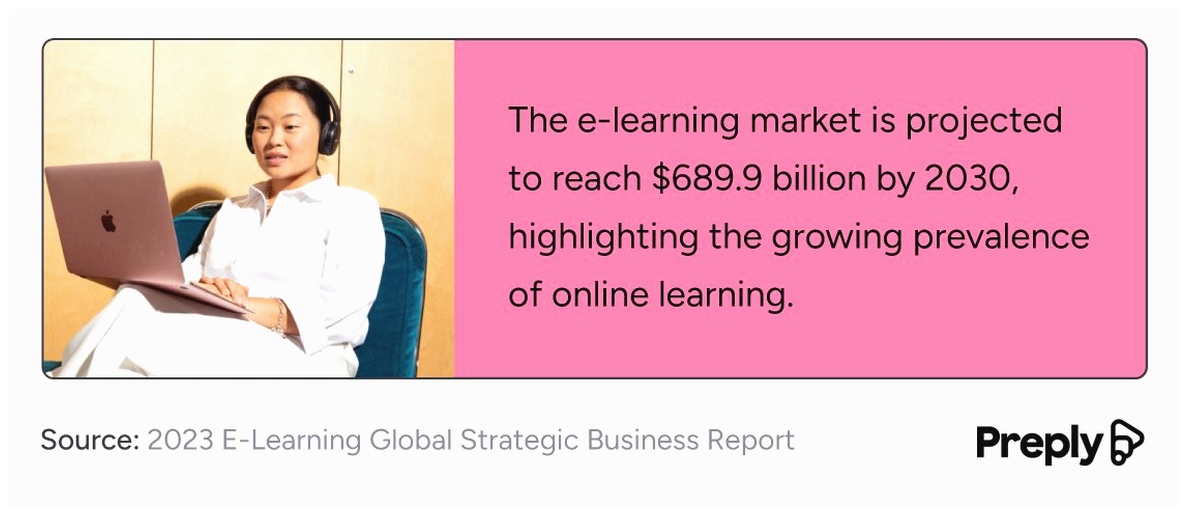
Online learning is rapidly transforming the educational landscape, with the e-learning industry projected to soar to a staggering $689.9 billion by 2030. This remarkable growth highlights the increasing popularity of online education and indicates that this trend is here to stay.
This article explores essential statistics on e-learning in America, highlighting its impact on education across all levels and its implications for the future. Join us as we delve into these insights!
The growth of distance learning in higher education
Distance learning is not a new concept; it has existed for many years. However, the onset of the COVID-19 pandemic in 2020 caused a dramatic surge in online education, leading to its widespread acceptance and integration in higher education.
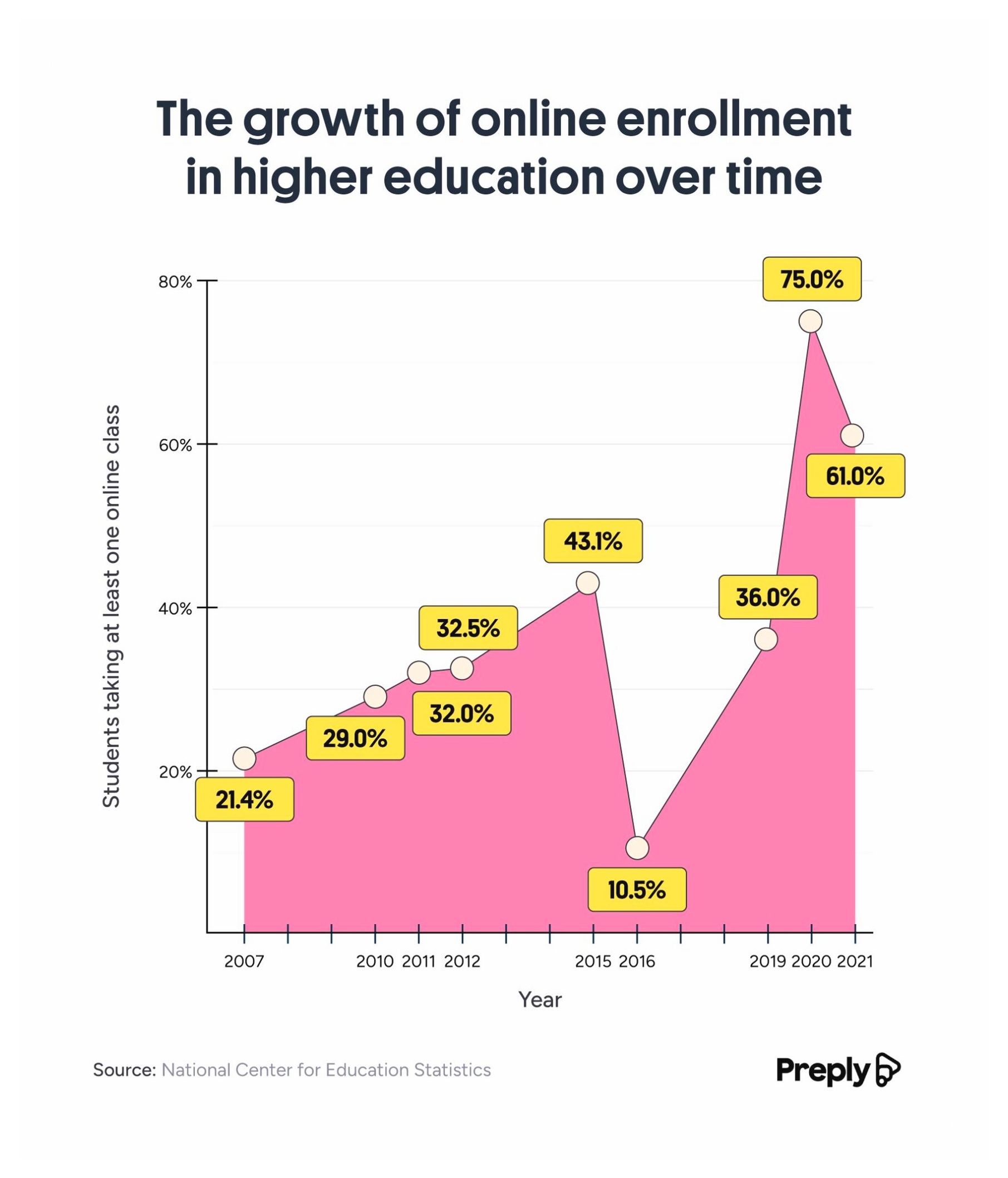
To help illustrate the impact, here’s a quick overview of online enrollment trends in higher education:
- 2007: 3.9 million out of 18.2 million (21.4%) college or university students were enrolled in at least one online course.
- In 2010, 6.1 million of the 21 million college students (29%) were enrolled in online courses, marking an 18.8% increase in online enrollment from 2007 to 2010.
- In 2012, 6.7 million of the 20.6 million higher education students (32.5%) were enrolled in online courses, reflecting an average annual growth rate of about 4.9% in online student enrollment from 2010 to 2012.
- 2016: 10.5% of college students were enrolled in an exclusively online degree program.
- In Fall 2021, 61% of undergraduate students enrolled in at least one online course, with 28% participating full-time in online learning.
Educational institutions recognized the potential of remote learning well before the pandemic; in fact, a 2013 survey revealed that 69.1% of chief academic leaders viewed it as essential for their long-term strategies. However, it was COVID-19 that truly propelled online education into the mainstream. By 2020, a remarkable 75% of undergraduate students were enrolled in at least one online class, a significant increase from 36% in 2019, and 44% of students were pursuing their degrees exclusively through online programs.
Distance learning doesn’t necessarily imply that students are miles apart. In fact, among undergraduate students who participated solely in online courses, a striking 74% were enrolled in institutions located within their home state. Conversely, only 23% attended online schools in a different state. This highlights that many students are choosing to pursue their education from the comfort of their local environment.
Although it may seem impossible for virtual classrooms to match the experience of in-person learning, they are proving to be surprisingly effective. A study from a community college revealed that online courses achieved a success rate of 60%, just a slight 9% lower than the 69% success rate found in traditional classroom settings. This suggests that online learning is a viable alternative for many students.
As universities continue to grow and develop better online programs, they’ll continue to close the gap.
Online enrollment in higher education by state
The table below showcases data from the National Center for Education Statistics for fall 2021, illustrating the percentage of post-secondary and graduate students enrolled in distance education across different states. Notably, states such as Arizona, Hawaii, and New Hampshire experienced high adoption rates, with over 50% of their students participating in online learning. In contrast, states like Montana and Rhode Island reported minimal online enrollment figures.
| State | Students exclusively enrolled online | State | Students exclusively enrolled online |
| Alabama | 29.0% | Montana | 12.8% |
| Alaska | 48.2% | Nebraska | 27.9% |
| Arizona | 51.3% | Nevada | 17.7% |
| Arkansas | 23.7% | New Hampshire | 74.1% |
| California | 40.0% | New Jersey | 18.2% |
| Colorado | 27.8% | New Mexico | 34.1% |
| Connecticut | 21.9% | New York | 21.3% |
| Delaware | 24.9% | North Carolina | 30.8% |
| District of Columbia | 23.7% | North Dakota | 22.9% |
| Florida | 31.8% | Ohio | 29.8% |
| Georgia | 24.9% | Oklahoma | 21.3% |
| Hawaii | 51.5% | Oregon | 27.0% |
| Idaho | 31.1% | Pennsylvania | 17.3% |
| Illinois | 29.2% | Rhode Island | 12.8% |
| Indiana | 24.6% | South Carolina | 21.5% |
| Iowa | 17.8% | South Dakota | 30.6% |
| Kansas | 24.6% | Tennessee | 19.3% |
| Kentucky | 27.9% | Texas | 26.5% |
| Louisiana | 22.1% | Utah | 46.2% |
| Maine | 31.6% | Vermont | 23.0% |
| Maryland | 34.9% | Virginia | 34.7% |
| Massachusetts | 21.3% | Washington | 27.9% |
| Michigan | 23.6% | West Virginia | 48.7% |
| Minnesota | 39.3% | Wisconsin | 16.4% |
| Mississippi | 22.8% | Wyoming | 19.6% |
| Missouri | 22.8% |

Learn a language with personalised 1-on-1 classes with our expert tutors from all over the world
French lessons online
Spanish lessons online
Online education in elementary and secondary schools
Online resources play a vital role in enhancing and reinforcing lessons learned in elementary and secondary school. They become especially crucial when in-person learning is disrupted, such as during the COVID-19 pandemic, ensuring that children receive the education they need during these critical developmental years.
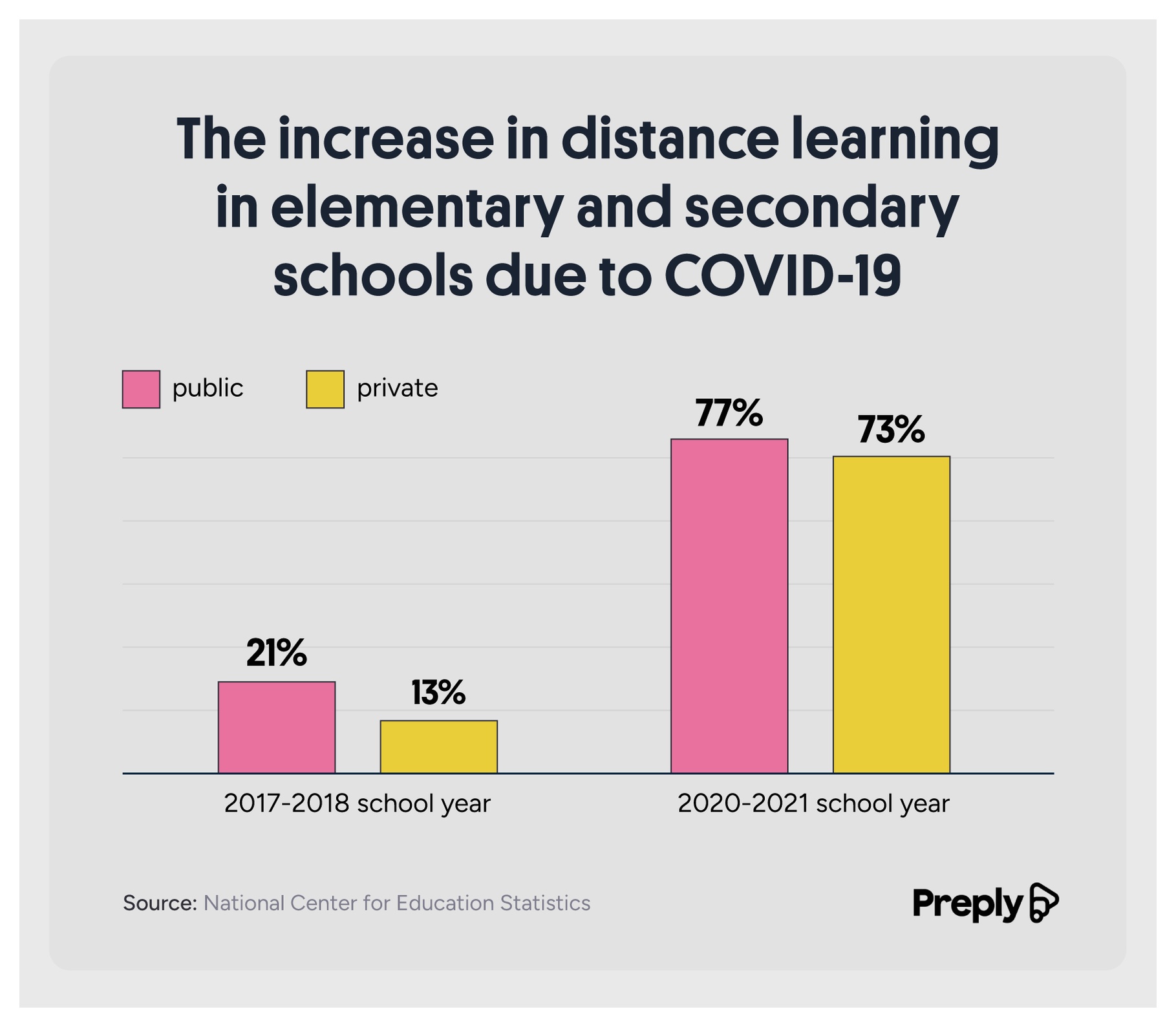
Here’s an overview of e-learning statistics in K-12 education:
- In the 2017-18 school year, just 21% of public schools and 13% of private schools provided fully online courses.
- In spring 2020, the COVID-19 pandemic prompted 77% of public schools and 73% of private schools to transition to online classes or distance learning.
- During the COVID-19 pandemic, 41% of public schools and 48% of private schools sent paper materials home with students.
- During the 2020-21 school year, 49% of teachers implemented a hybrid split schedule, enabling in-person and remote students to learn separately and progress at their own pace.
- During the 2020-21 school year, 63% of hybrid teachers and 61% of remote teachers reported that their students were falling behind, in contrast to only 43% of in-person teachers.
- Post-pandemic, 28% of school systems planned to adopt supplemental online courses, up from 23% pre-pandemic.
The importance of corporate online learning
Online learning extends far beyond the university classroom. Companies are increasingly turning to corporate e-learning providers to deliver training that is not only time-efficient but also highly effective. This approach enhances workforce efficiency, reduces costs, and fosters skill development among employees, ultimately boosting productivity and improving retention rates.
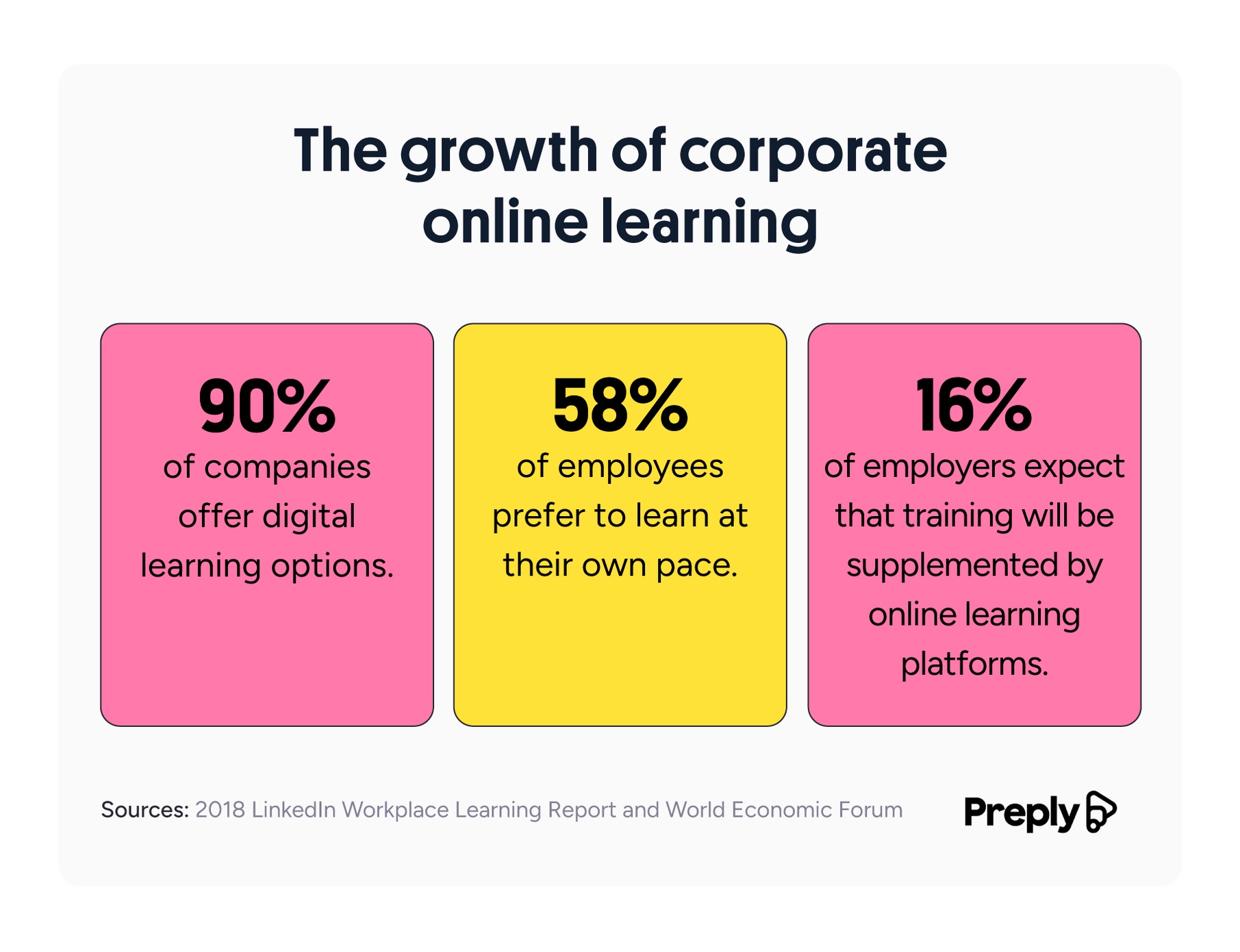
Here’s an overview of online training trends in the corporate world:
- In the U.S., 90% of companies offer digital learning options.
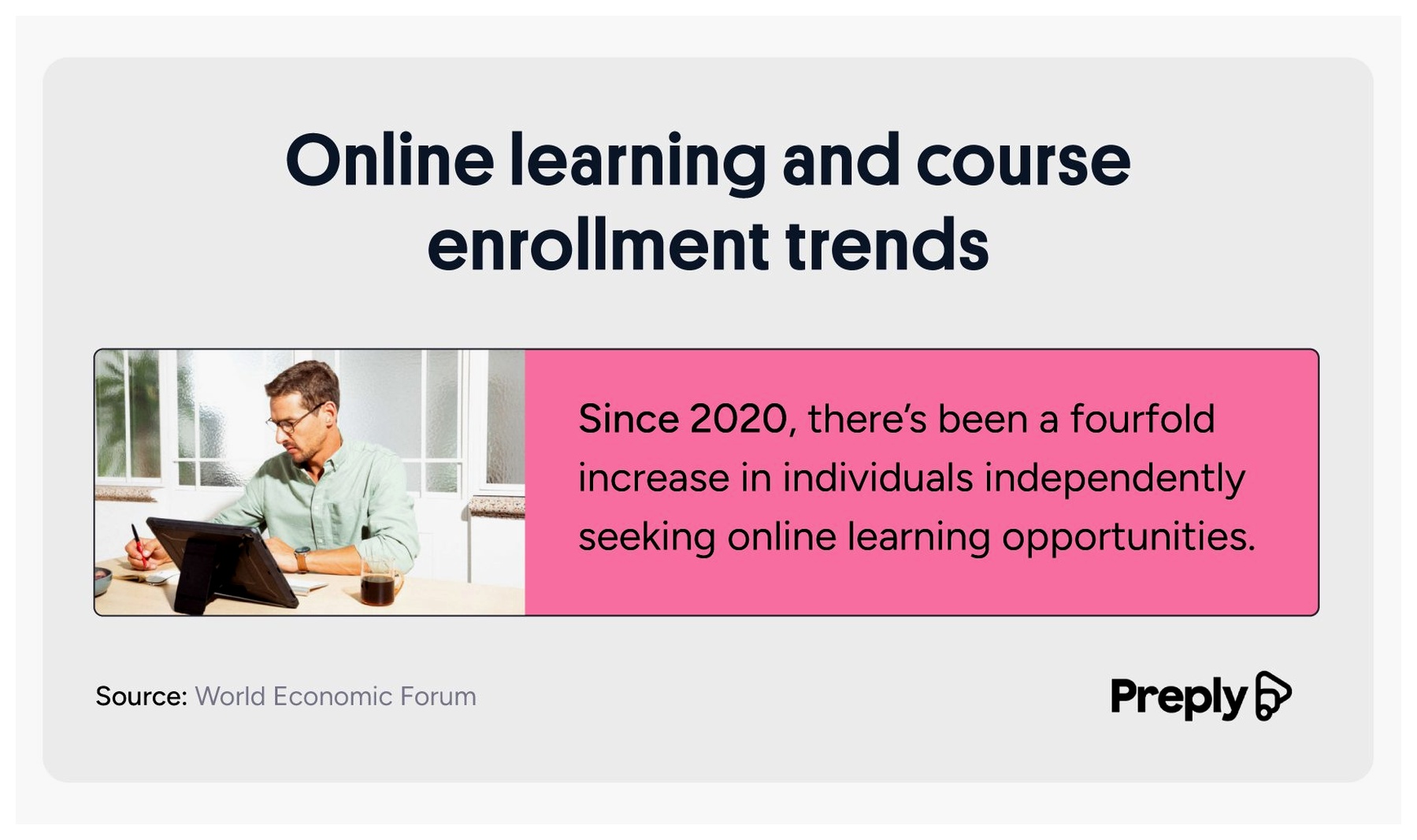
- There’s been a fivefold increase in employers providing online learning opportunities for employees.
- Online learning appeals to most employees’ learning styles, given that 58% prefer to learn at their own pace.
- Employers expect that 16% of training will be supplemented by online learning platforms.
- Providing learning opportunities is the number one way that organizations are working to improve retention.
LingualNeeds offers corporate training courses designed to enhance your business’s professional development initiatives. By equipping your employees with effective communication skills, these programs can empower your team to connect with a broader international audience, ultimately expanding your business’s global reach.
Learn a language online with our free learning materials.
Learn English online
Learn French online
Online learning for upskilling and personal development
The internet is brimming with opportunities to acquire new skills, whether it’s sewing, cooking, or mastering a new language. You can opt for structured online courses or explore a wealth of free tutorials. E-learning opens doors to knowledge and personal growth, making it accessible to everyone, regardless of their experience or educational background.
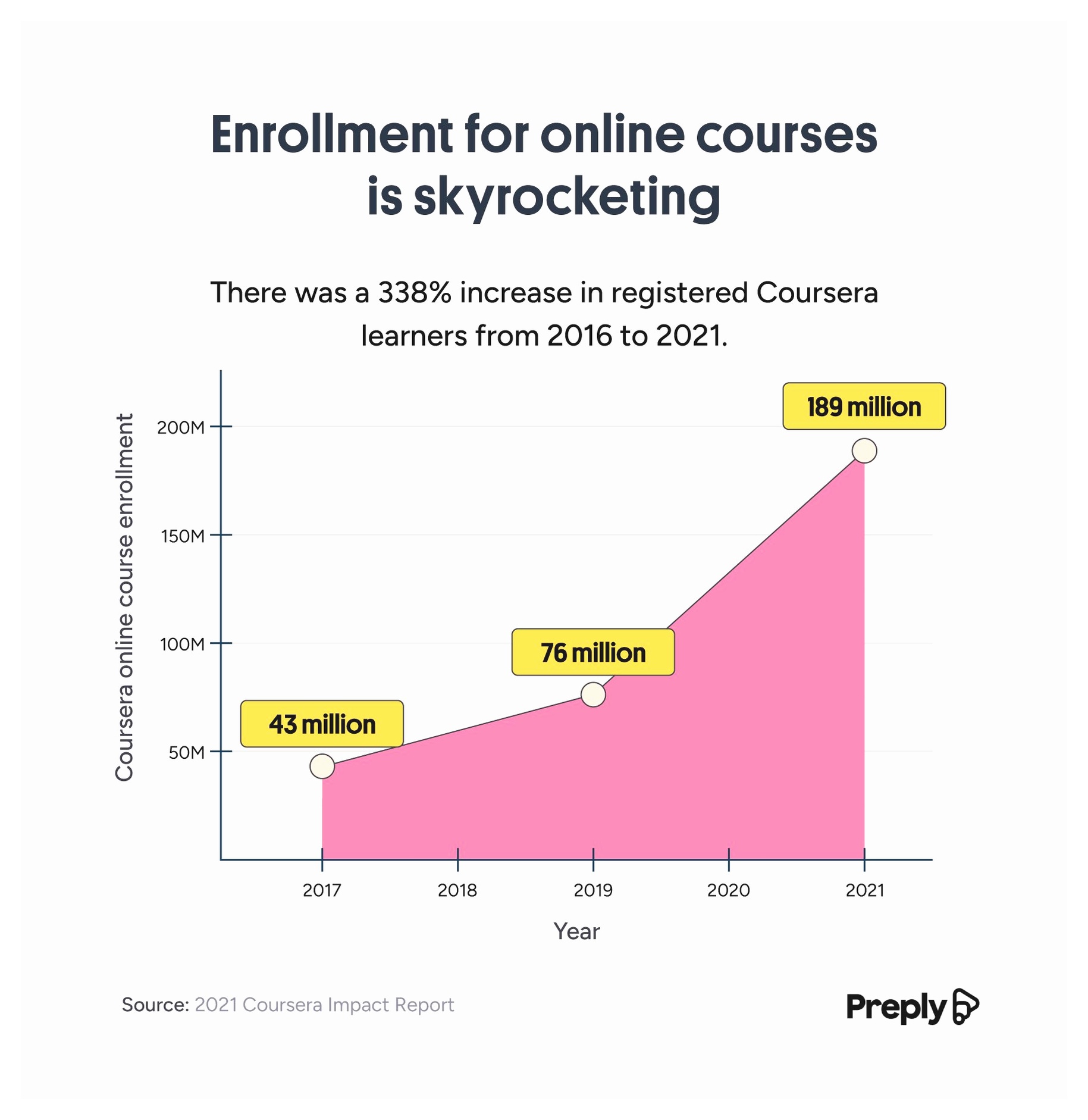
To illustrate the widespread impact of online education on various learning experiences, here are some compelling statistics from the current landscape of digital learning:
- There was a 338% increase in registered Coursera learners from 2016 (21 million) to 2021 (92 million).
- Online course enrollments more than doubled in 2020 and increased by 32% the following year, peaking at 189 million.
- There was a threefold increase in registered learners during the pandemic, reaching 92 million in 2021.
What learning styles are best for online learning?
Visual and verbal learning styles, along with visual and nonverbal approaches, thrive in virtual environments. The adaptability of online education accommodates a wide range of learning preferences, needs, and teaching methods. Moreover, as learning management systems (LMS) evolve and become more advanced, the potential of virtual classrooms continues to grow, enhancing the overall learning experience.
Here’s how virtual learning supports some of the most common learning styles:
- Visual/verbal: Since online learning course information and materials are mostly presented in writing, e-learning is especially well-suited for visual/verbal learners.
- Visual/Nonverbal Learning: Online courses often incorporate multimedia elements, such as charts, tables, graphs, and images, alongside text. These graphical components enhance comprehension for visual and nonverbal learners by effectively conveying key concepts.
- **Auditory/Verbal Learning in Online Education:** While online learning primarily uses visual elements like text and graphics, auditory/verbal learners can enhance their experience by engaging in collaborative activities through virtual classrooms, forums, and conferencing tools.
- Tactile/Kinesthetic Learning: Online learning environments offer tactile/kinesthetic learners hands-on experiences through 3-D simulations that replicate or substitute real-life demonstrations.
What do you plan to learn next?!
Online learning has revolutionized access to education, offering a flexible and cost-effective solution that caters to diverse learning styles and preferences. Whether you’re aiming to further your studies or acquire a new skill, e-learning unlocks a vast array of educational opportunities for everyone, regardless of their background, location, or experience level.
The education landscape has transformed dramatically with the rise of online learning platforms, making it essential to choose a trustworthy provider. If you’re looking to learn a new language online, you can rely on LingualNeeds for high-quality courses that deliver results.
For more than ten years, we’ve been a reliable source for language learning. Our experienced tutors offer personalized 1-on-1 sessions tailored to your level, whether you’re just starting or looking to enhance your skills. Enjoy the flexibility of learning at your own pace and from the comfort of your home.
Frequently Asked Questions
How has the COVID-19 pandemic impacted online learning in America?
The pandemic accelerated the adoption of online learning, making it a key component of contemporary education and leading to widespread acceptance in schools.
What are some historical methods of distance learning?
Distance learning has evolved from parcel post education in the late 1800s to methods like radio and television, ultimately leading to today’s advanced online learning technologies.
What percentage of college students were enrolled in online courses before the pandemic?
In 2019, 36% of undergraduate students were enrolled in at least one online class.
What trends are observed in K-12 online education during the pandemic?
The pandemic prompted 77% of public schools and 73% of private schools to transition to online classes, with many adopting hybrid learning models.
How does online learning cater to different learning styles?
Online learning accommodates various learning styles through multimedia elements, written materials, and interactive experiences, making it suitable for visual, auditory, and tactile learners.


