
- The most walkable cities in Europe
- The least walkable cities in Europe
- The least walkable cities to explore on foot
- The best UK cities to explore by foot
- The least walkable UK city break locations
- Top tips for immersing yourself in local culture on foot
- Choose your level
- Learn some language basics before you go
- Research the local customs
- Don’t be afraid to get a little lost
- Indulge in local food and drink
- Take public transport
- Methodology and sources
- Frequently Asked Questions
- What are the benefits of exploring a city on foot?
- Which city is ranked as the most walkable in Europe?
- What are some tips for immersing yourself in local culture while traveling?
- Which UK city is considered the best for walking?
- What are the least walkable cities in Europe?
City breaks have surged in popularity among travelers eager for immersive and culturally enriching experiences, from the lively streets of Vatican City in Rome to the enchanting old town of Prague.
If you have the opportunity, exploring a new city on foot is one of the most rewarding ways to truly immerse yourself in the local culture. Walking allows you to uncover hidden gems and experience the area like a true local. Plus, it’s an eco-friendly option that can also save you money—what’s not to love?
At LingualNeeds, we’ve carefully researched the most walkable city breaks across Europe and the UK for this summer, making it easier for you to select your perfect getaway destination.
We’ve examined the walking distances and step counts among the top five attractions in Europe’s most visited cities to evaluate their walkability.
Embark on your language journey! Whether you’re diving into Spanish, French, or exploring online Portuguese lessons, now is the perfect time to sharpen your skills and prepare to navigate the world with confidence!
The most walkable cities in Europe
Great news for walking enthusiasts: Europe is a treasure trove of walkable cities! Each destination offers its own unique charm and vibrant experiences, making it easy to explore a delightful variety of sights and cultures.
Whether you want to greet Spain with a cheerful “hola,” toast to Italy with a lively “cin cin!,” or express your gratitude for exquisite French cuisine with a heartfelt “merci,” there’s a warm welcome waiting for you in every culture.
We examined the 30 most frequently suggested European city breaks available online to identify which ones offer the easiest exploration, requiring the fewest steps to discover their highlights.
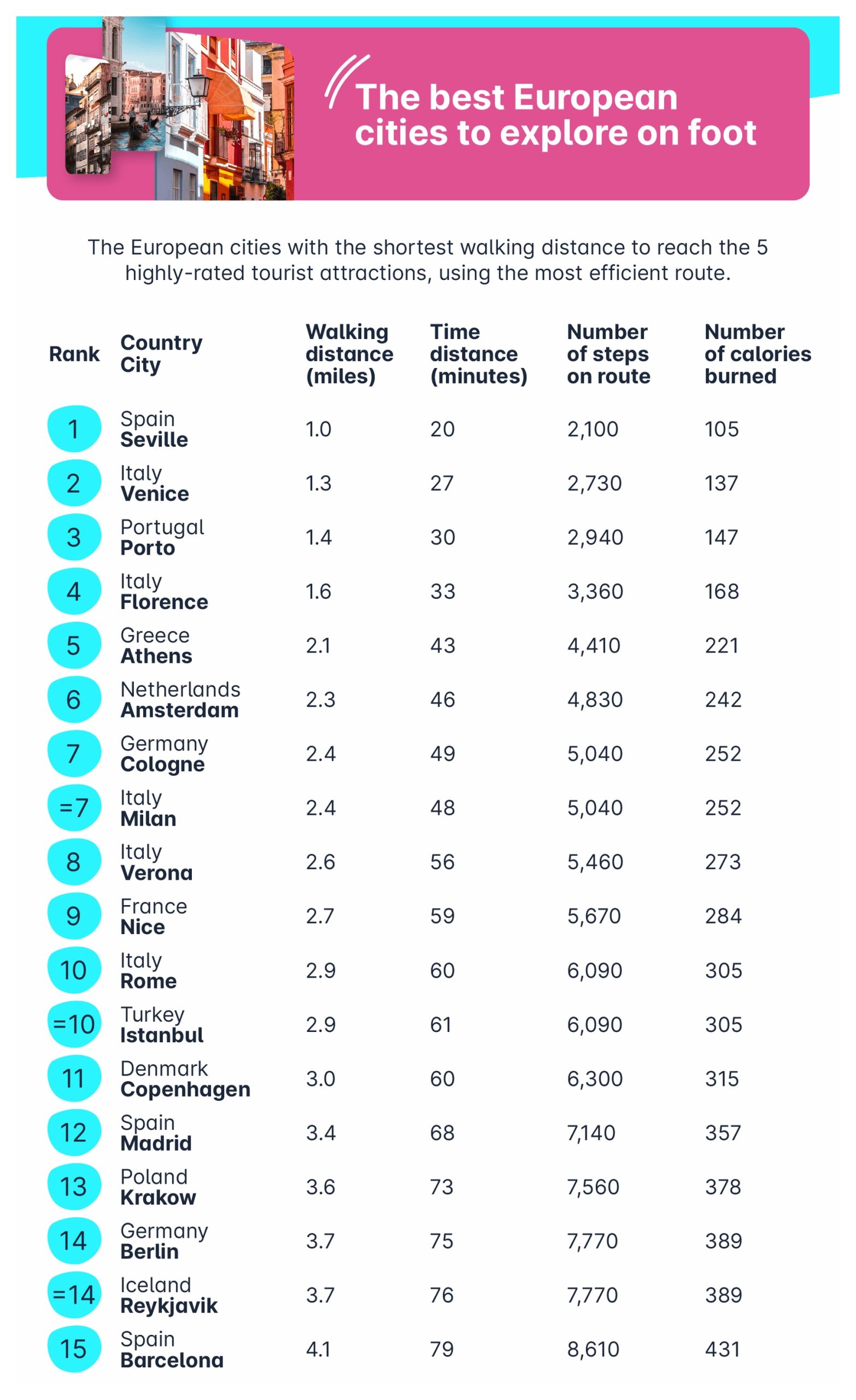
Seville in Spain takes first place with the shortest walking route between the top five rated tourist attractions.
Stroll through the stunning Plaza de España, then make your way to the UNESCO World Heritage sites of the Real Alcázar and Seville Cathedral. Delve into the charming labyrinth of alleys in the enchanting Barrio Santa Cruz, where you’ll be captivated by the towering Torre Giralda, a striking symbol of the city.
Maximize your experience with just a 20-minute walk connecting all these attractions. To immerse yourself in the local culture, consider joining our online Spanish classes today!
It’s no wonder that Venice ranks as the second most walkable city for a city break. Strolling through its enchanting alleyways and discovering stunning bridges that arch over a network of winding canals is a delightful experience that captivates every visitor.
Take in the impressive Grand Canal, Doge’s Palace, St Mark’s Square, Basilica and bell tower all within 1.3 miles.
Porto, the picturesque coastal city of Portugal, takes the third spot on the list, offering visitors a delightful half-hour walking route that encompasses its five must-see attractions.

Learn a language with personalised 1-on-1 classes with our expert tutors from all over the world
French lessons online
Spanish lessons online
The least walkable cities in Europe
At the other end of the scale, Portugal’s capital Lisbon tops the list of least walkable city break locations.
Exploring Lisbon’s top attractions, from the captivating Oceanarium and the stunning Jerónimos Monastery to the historic Alfama district, the grand Praça do Comércio, and the lively street art of Bairro Alto, will take you on a journey of at least 31,500 steps—equivalent to a challenging 15-mile trek through the city’s picturesque hills.
If you’re seeking an invigorating escape to truly deserve that relaxing evening filled with port, this might be the perfect choice for you!
Next on the list is Zagreb, Croatia, where visitors need to stroll 11.8 miles to explore its top five attractions. Close behind is Hamburg, Germany, requiring a walk of 10.1 miles to see its best sights.
The least walkable cities to explore on foot
The best UK cities to explore by foot
In addition to our exploration of the top 30 cities across Europe, we conducted a similar analysis focused on the UK. We examined the top 10 recommended cities to visit in the UK and compared their appeal and features.
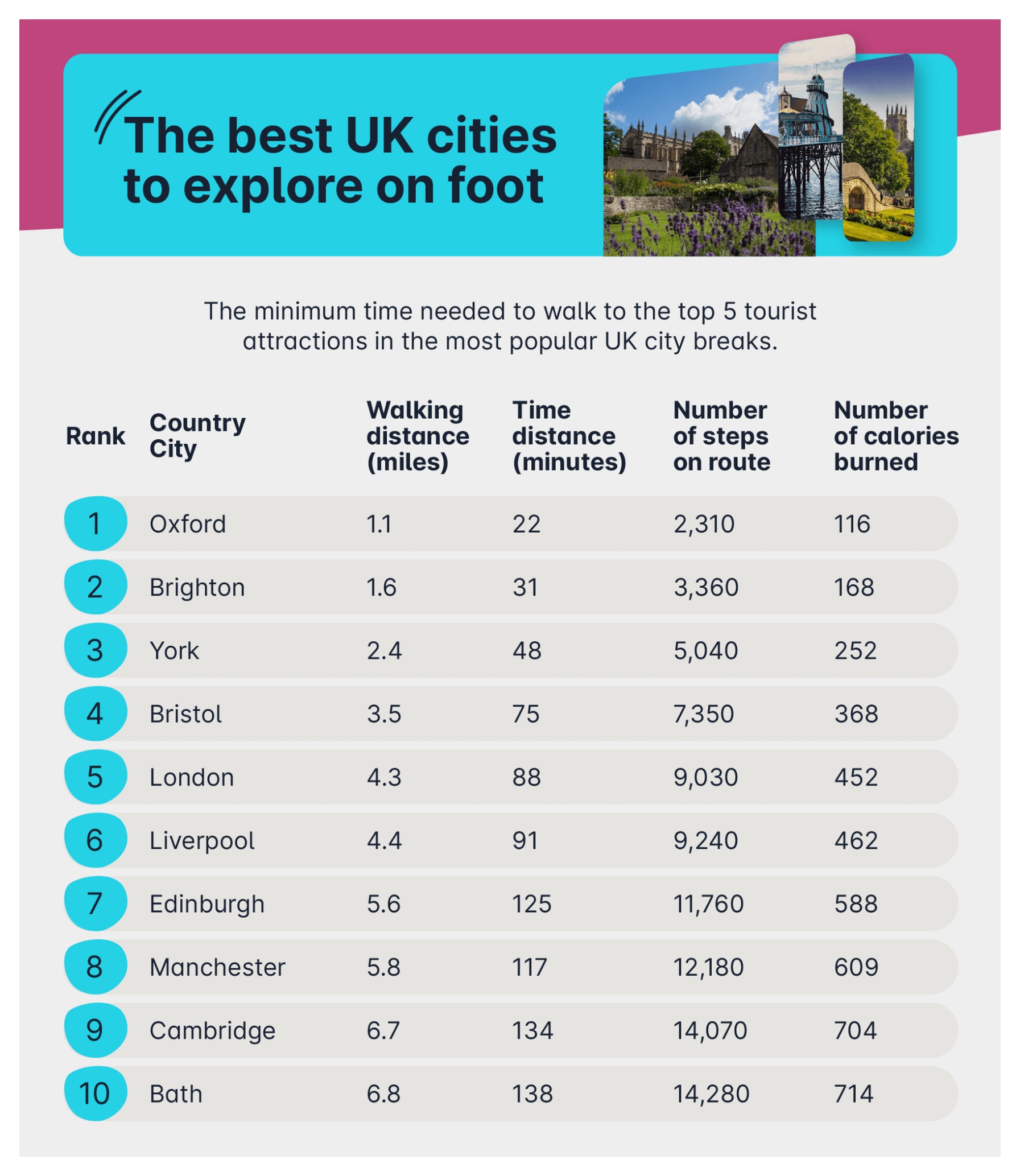
If you’re dreaming of a stroll-friendly city getaway in the UK, look no further than Oxford. You can easily explore its top five attractions in just 2,310 steps, making it an ideal destination for a delightful walking adventure.
Explore the rich tapestry of knowledge and culture at the Bodleian Library, the Oxford University Museum of Natural History, the Pitt Rivers Museum, and the Ashmolean Museum of Art and Archaeology, all set within the esteemed surroundings of Oxford University.
Brighton ranks as a close second, offering a vibrant mix of attractions within just a half-hour walk. Explore the eclectic North Laine, marvel at the fantastical Royal Pavilion, browse unique boutiques in The Lanes, enjoy thrilling rides at Brighton Pier, and take in breathtaking views from the Brighton i360 observation tower.
To truly experience the charm of York, you’ll need to log at least 5,000 steps, but this ancient walled city is more than deserving of your effort.
Learn a language online with our free learning materials.
Learn English online
Learn French online
The least walkable UK city break locations
Bath has earned the title of the UK’s least walkable city break destination, largely due to the presence of a major attraction, West of England Falconry, located just outside the city center.
Including the falconry, it takes 14,280 steps to reach its best five attractions.
If you decide to forgo falconry and explore the city center instead, you’ll find that Bath is a highly walkable destination brimming with attractions for curious adventurers.
Explore a wealth of fascinating attractions just a short stroll away, including the historic Roman Baths, the stunning Bath Abbey, the picturesque Pulteney Bridge, and the captivating No. 1 Royal Crescent Georgian museum. Each site offers a unique glimpse into the rich heritage of Bath.
After all your adventures, unwind at the Thermae Bath Spa, the only place in Britain where you can soak in natural thermal hot springs. It’s the perfect way to relax and rejuvenate!
Similarly, the out-of-centre attraction of Cambridge American Cemetery and Memorial relegates Cambridge to the second least walkable city break.
In addition to its renowned sights, Cambridge boasts a variety of other must-visit attractions, such as the Fitzwilliam Museum, The Cambridge Gin Laboratory, and the stunning King’s College Chapel, all just a stroll away. For a leisurely escape, consider hopping on a punt tour along the River Cam, where you’ll be treated to picturesque views of the historic college buildings.
Top tips for immersing yourself in local culture on foot
Exploring the walkability of European city breaks reveals an abundance of exciting options. Each city offers a unique experience, making it a delight to discover them on foot.
Here are our top tips to make the most of your next city break, wherever you decide to go.
Choose your level
This article is your ultimate guide to crafting the ideal city getaway tailored to your walking preferences. Whether you’re looking to leisurely explore with manageable distances between key attractions or you’re eager to embrace a more active adventure in a city that presents a challenge for walkers, we’ve got you covered.
Learn some language basics before you go
Culture and language are intricately linked. By learning the local language before your arrival, you can fully engage with the city’s culture and enrich your experience.
Beyond the practical skill of deciphering menus and signs, understanding the local language allows for richer communication in real-life situations. This deeper comprehension fosters genuine connections with locals, enhancing your overall experience.
Residents will greatly value your effort to communicate, even if it’s just with basic greetings, rather than assuming they should speak English. This small gesture can foster goodwill and strengthen connections within the community.
LingualNeeds has thousands of language classes and tutors at your fingertips ready to get you started on your journey.
Research the local customs
A bit of research can greatly enhance your travel experience. By familiarizing yourself with local customs, you can avoid unintentional faux pas that might dampen your trip. Additionally, understanding the culture around you allows you to appreciate and fully engage with the unique opportunities that arise during your journey.
Don’t be afraid to get a little lost
This study highlights the top five attractions in each city, but the true delight of walking is the unexpected treasures you’ll find along the way. Each step can lead to fascinating sights and experiences that enrich your journey.
Leave time for spontaneously venturing down interesting alleyways and long chats with locals.
Indulge in local food and drink
Food is a vibrant expression of culture, and each European city boasts its own unique culinary delights. Make sure to savor these local specialties during your travels—you’ll create delicious memories that you’ll cherish forever!
Take public transport
When your feet are feeling the strain and can’t take another step, hop on public transport to experience how the locals get around. Often, the journey itself becomes just as unforgettable as the destination!
Methodology and sources
To uncover Europe’s must-visit destinations, we meticulously gathered data from travel blogs, holiday booking platforms, and online articles, counting how often each city was praised. After this analysis, we identified the top 30 cities that travelers recommend most frequently.
To determine the top 10 city breaks in the UK, we employed the same methodology used for our previous rankings, ensuring a consistent and reliable selection process.
Leveraging a list of the most popular cities, we turned to a prominent travel review platform to uncover the top five tourist attractions in each location, ranked by customer ratings. For every city, we examined each attraction using Google Maps’ route planner to determine the fastest walking route that connects all five sites. We then documented the total distance and time required for this journey.
Research indicates that the average step length is approximately 2.5 feet, which translates to over 2,100 steps needed to cover a mile. This information was utilized to estimate the total steps taken while exploring various cities, specifically by visiting their top five attractions. Additionally, the calories burned during these activities were calculated, with 2,000 steps equating to roughly 0.05 calories burned per step.
Frequently Asked Questions
What are the benefits of exploring a city on foot?
Exploring a city on foot allows you to uncover hidden gems, experience the area like a local, and is an eco-friendly option that can save you money.
Which city is ranked as the most walkable in Europe?
Seville in Spain is ranked as the most walkable city, with a walking route of just 20 minutes connecting its top attractions.
What are some tips for immersing yourself in local culture while traveling?
Learn some language basics, research local customs, indulge in local food and drink, and don’t be afraid to get a little lost to discover unexpected treasures.
Which UK city is considered the best for walking?
Oxford is regarded as the best UK city for walking, allowing visitors to explore its top attractions in just 2,310 steps.
What are the least walkable cities in Europe?
Lisbon, Zagreb, and Hamburg are among the least walkable cities in Europe, requiring significant walking distances to explore their attractions.