
- Frequently Asked Questions
- What is a key challenge for non-native speakers learning American English?
- What is the schwa sound in American English?
- Why is it important to distinguish between L and R sounds?
- How can dictionaries help in improving pronunciation?
- What is the significance of practicing phrases and sentences?
One key element of American English that often puzzles non-native speakers is its pronunciation. The diverse sounds and variations can create confusion for those learning the language.
If you’ve been using American pronunciation for some time, you understand the challenges that come with mastering pronunciation, particularly for those learning English as a second language.
For instance, a student’s native language often features a distinct system of intonation, rhythm, and timing that differs significantly from American English. Additionally, there may be specific sounds in American English that don’t have direct counterparts in the student’s language, creating further challenges in communication.
This article presents ten valuable tips aimed at helping English language learners master American pronunciation.
1. Learn the sounds of English
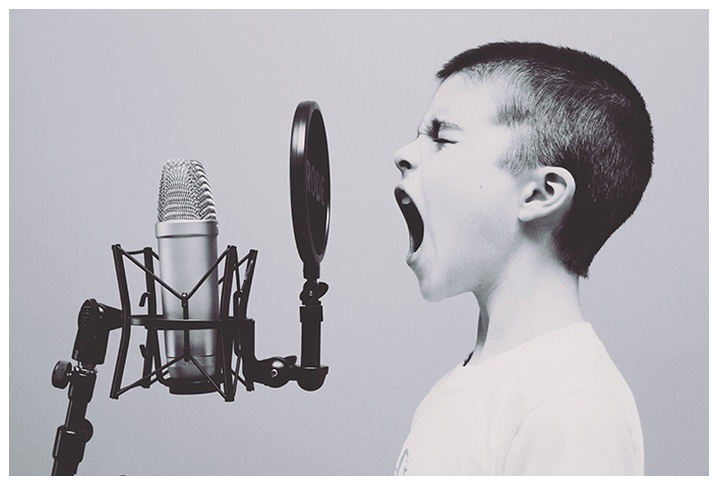
Every language has its own particular set of sounds.
While many languages may appear to share similar sounds, there are often nuanced distinctions that set them apart. These subtle variations can be quite apparent to native speakers, who can easily detect the differences when listening to the language.
For instance, the short sound “uh” in American English differs significantly from the “U” sound in Japanese due to the distinct mouth positioning required to produce each sound. This highlights the importance of mastering the pronunciation of all vowel and consonant sounds in American English.
2. Learn schwa (the neutral vowel sound)
Schwa is a unique sound which is used for almost all unstressed vowels in American English.
In essence, the schwa is a subtle, almost inaudible sound that resembles a faint “uh” and appears in nearly every spoken phrase in American English. While it may be brief and soft, the schwa plays a crucial role in the language, serving as a defining characteristic of American English pronunciation.
Now it’s time to practice!
3. Be able to distinguish the sounds L and R
In some languages, R and L are interchangeable, while in others, one or both of the sounds do not exist at all.
The “R” and “L” sounds are quite prevalent in American English, and mispronouncing either can result in significant errors in your speech. Mastering these sounds is essential for clear communication.
4. Use a dictionary

If you’re uncertain about the pronunciation of specific words or sounds in American English, there’s no need to feel embarrassed. Just consult a dictionary to find the correct pronunciation and enhance your speaking skills!
If you have Internet access, you can easily find audio dictionaries and listen to the correct pronunciation.
5. Make a list of words
Many English words can pose pronunciation challenges. To improve your skills, consider creating a list of those tricky words along with any specific sounds that give you trouble. This targeted approach will help you focus on areas that need practice.
6. Watch video lessons

Once you’ve pinpointed the specific words and sounds that challenge you in English, consider watching targeted video lessons designed to improve your pronunciation and fluency. These resources can provide valuable techniques and practice to help you master those tricky elements of the language.
There are quite a few free tutorials on AccentOnSpeaking.com.
You can also subscribe to YouTube channels that are dedicated to teaching American English.
7. Record yourself
To truly enhance your American pronunciation, it’s essential to assess your current level and conversational abilities. A great way to do this is by recording yourself speaking English and listening to the playback. This allows you to compare your pronunciation with that of native speakers, helping you identify areas for improvement and track your progress over time.
8. Speak phrases and sentences

Knowing how to pronounce every English word doesn’t guarantee that you’ll use them correctly in conversation. This challenge becomes even more pronounced if you’re only familiar with saying words in isolation, rather than incorporating them into phrases and sentences.
To truly master American English pronunciation, it’s essential to practice with real phrases and sentences rather than just isolated words. Language is inherently social, and words are designed to work together in context. After all, no one communicates using single words; we express ourselves through meaningful phrases and complete sentences. Embrace this approach to enhance your fluency and naturalness in speech!
9. Focus on just one sound in each practice session
Begin your journey to mastering sounds by tackling them one at a time. Concentrate on a single sound and explore how it’s produced using your speech organs. This focused approach is far more effective than simply skimming through all the sounds in American English without delving into their specifics.
10. Practice, practice, practice!
Mastering American English pronunciation requires dedication and practice—there are no quick fixes. To consistently articulate words correctly, you’ll need to train your speech organs to build muscle memory for the specific sounds.
The path to achieving your goal lies in consistent practice and repetition, which are essential for success. When your speech organs become familiar with pronouncing English words, you’ll find that mastering the language becomes second nature and stays with you for life.
Good luck!
Frequently Asked Questions
What is a key challenge for non-native speakers learning American English?
One key challenge is mastering the pronunciation due to diverse sounds and variations.
What is the schwa sound in American English?
The schwa is a subtle, almost inaudible sound that resembles a faint ‘uh’ and is used for almost all unstressed vowels.
Why is it important to distinguish between L and R sounds?
Mastering the L and R sounds is essential for clear communication, as mispronouncing either can lead to significant errors.
How can dictionaries help in improving pronunciation?
Dictionaries can provide the correct pronunciation of specific words or sounds, enhancing speaking skills.
What is the significance of practicing phrases and sentences?
Practicing phrases and sentences helps in using words correctly in conversation, as language is inherently social and context-driven.


