- Global English Language Statistics of 2022 in a Nutshell
- Which Countries Want to Learn English Most?
- At What Age Do Children Start to Learn English at School Around the World?
- Attitudes Towards the English Language going into 2022
- How Many Countries Have English as an Official Language?
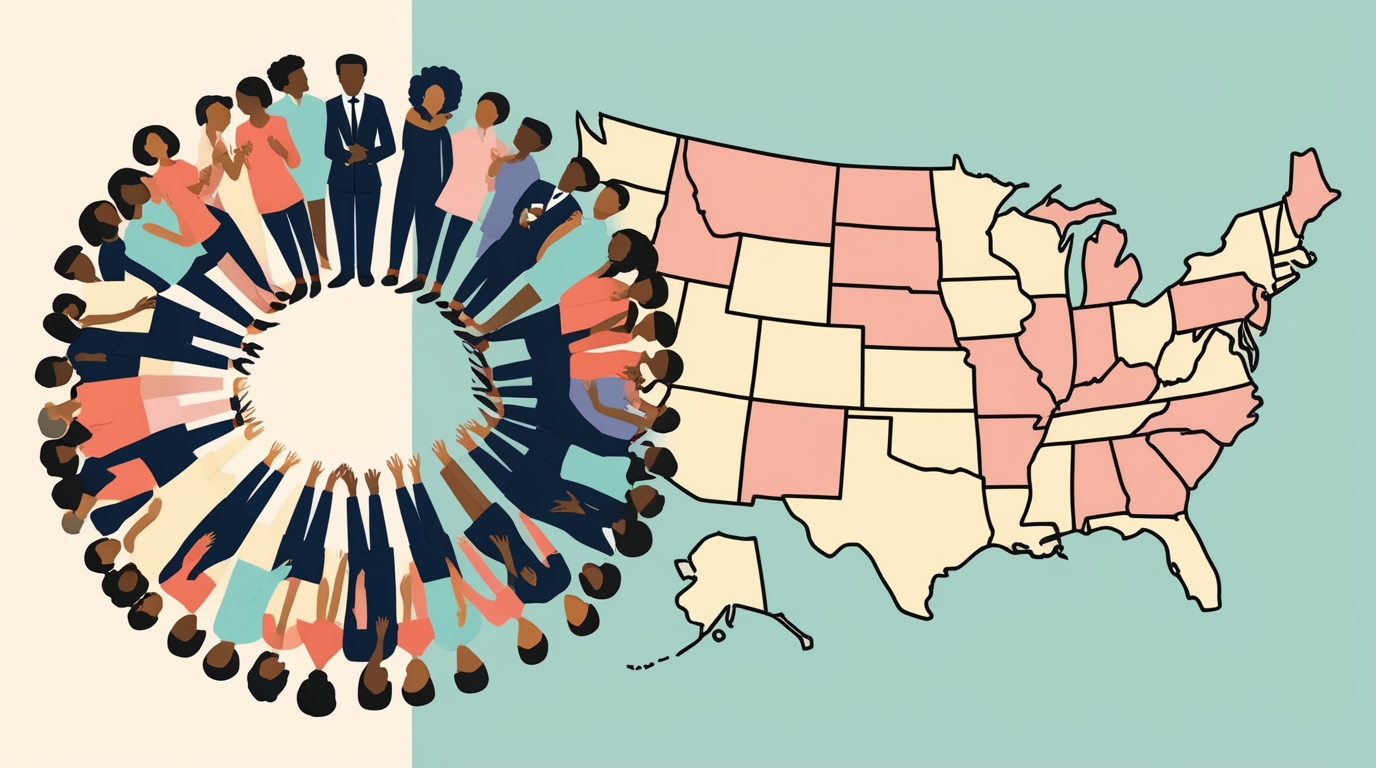
- Which US States Have the Highest Rate of People Who Don’t Speak English at Home
- Methodology
- Fun Facts About the English Language in 2022
- Frequently Asked Questions
- How many people globally speak English?
- At what age do children typically start learning English?
- Which country has the highest interest in learning English?
- What percentage of UK adults believe English is essential for non-native children to learn?
- How many countries recognize English as an official language?
Recent studies indicate that around 1.35 billion people globally speak English, making up about 17% of the world’s population. This raises important questions: At what age do children across different countries begin learning English? Moreover, how much do people value this globally influential language as of 2022?
In our quest to uncover the intricacies of the English language, we surveyed 2,000 individuals, analyzed more than 4.3 million online searches, and reviewed the latest research findings. This comprehensive approach helped us gather a wealth of insights into this fascinating subject.
Global English Language Statistics of 2022 in a Nutshell
- The United Arab Emirates has the highest global interest in learning English, with the most searches for terms like “Learn English” and “Translate to English.”
- California has the highest percentage of residents in the U.S. who speak a language other than English at home.
- 62% of UK adults believe English is the essential language for non-native children to learn in schools globally.
- English is an official language in 75 countries, representing 39% of the world’s nations.
-
The average age at which children around the world start learning English at school is 7 and a half.
Which Countries Want to Learn English Most?
With English being the dominant language in science, innovation, business, and even on the internet, it’s no wonder that so many individuals globally are eager to learn it. But which countries currently exhibit the greatest enthusiasm for mastering the English language?
To uncover the insights, we analyzed more than 4.3 million online searches from the top 100 most populous countries in 2022. Our focus was on the phrases “learn English” and “translate to English,” and the findings revealed:
- The United Arab Emirates leads the world in English learning searches, with an average of 34,800 monthly queries for “learn English” and an impressive 1.1 million searches for “translate to English” over the past year.
- In Malaysia, there is a notable interest in learning English, with 23 searches per 10,000 people for “learn English” and 801 searches per 10,000 for “translate to English” in the past year.
- Other countries that search for terms related to learning English the most include the Phillipines, Sweden and Israel.
| Rank | Country | Average yearly searches for ‘learn English‘ per 10,000 people |
| 1. | United Arab Emirates | 35 |
| 2. | Malaysia | 23 |
| 3. | Sweden | 20 |
| 4. | Israel | 18 |
| 5. | Saudi Arabia | 18 |
| 6. | Canada | 17 |
| 7. | Morocco | 17 |
| 8. | Colombia | 15 |
| 9. | Australia | 15 |
| 10. | United Kingdom | 14 |
In February 2022, data from the online search analysis tool Keyword Finder revealed which countries were most actively searching for the term “learn English.” This insight highlights global interest in English language education and the regions where it is particularly sought after.
| Rank | Country | Average yearly searches for ‘translate to English‘ per 10,000 people |
| 1. | United Arab Emirates | 1,140 |
| 2. | Philippines | 930 |
| 3. | Malaysia | 801 |
| 4. | Australia | 494 |
| 5. | United Kingdom | 490 |
| 6. | Azerbaijan | 473 |
| 7. | Sri Lanka | 345 |
| 8. | Canada | 334 |
| 9. | Saudi Arabia | 281 |
| 10. | United States | 273 |
In February 2022, data from the online search analysis tool Keyword Finder revealed which countries were most actively searching for the term “translate to English.” This information highlights global interest in English translation services and the importance of language accessibility.
At What Age Do Children Start to Learn English at School Around the World?
Our research reveals that not only are many individuals currently learning English, but a significant number also plan to start. This includes those enrolling in English courses, seeking online tutors, or using interactive apps. Furthermore, it’s worth noting that numerous non-native speakers begin their English education while still in school.
Research from the University of Winnipeg in Canada has provided valuable data that allowed us to create a detailed map showcasing the ages at which children globally begin their English education in schools.
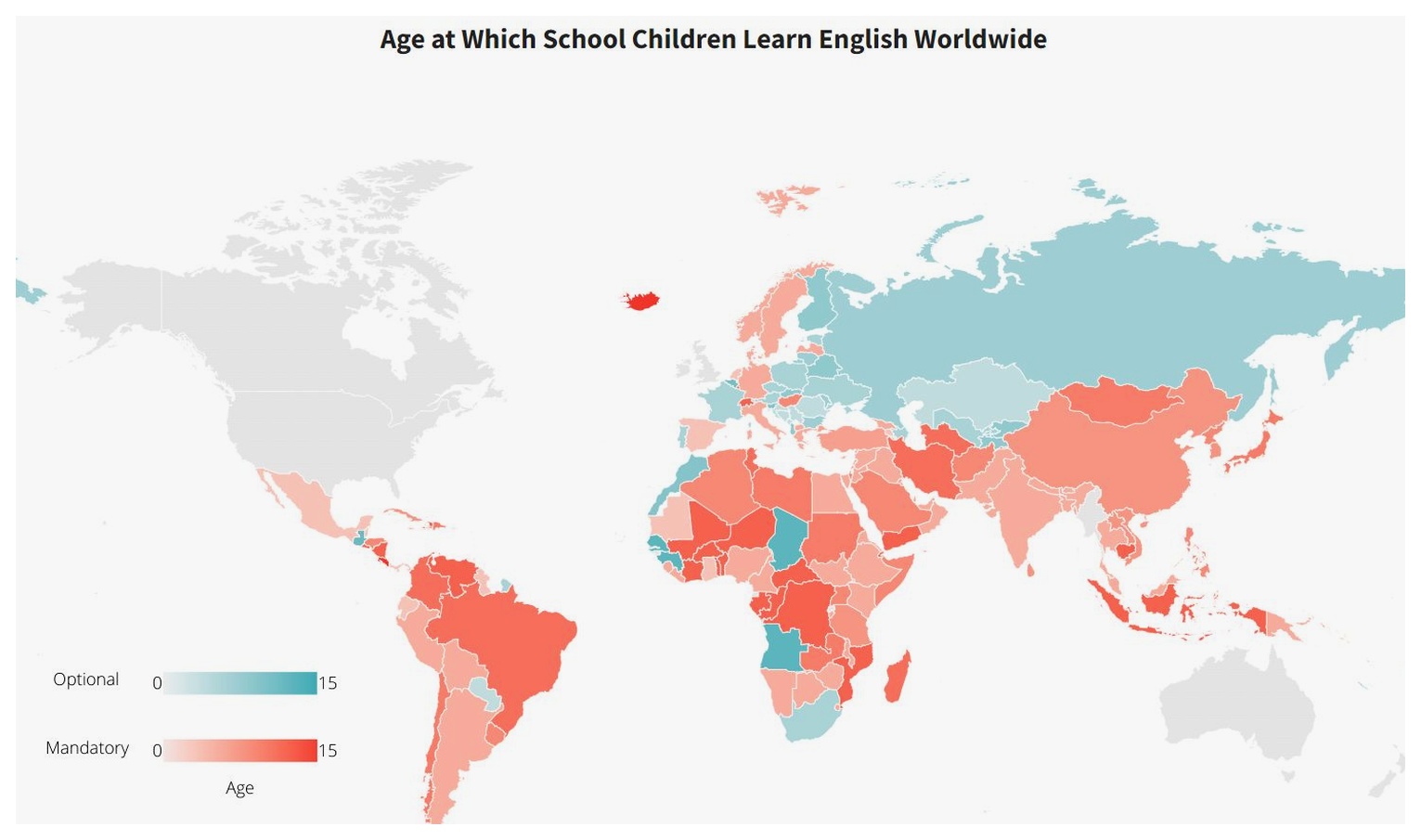
Map created using Flourish. Greyed out countries are English-dominant. Interactive version can be found here: https://public.flourish.studio/visualisation/7785913/
English plays a crucial role in education worldwide, with 138 countries incorporating it into their core curriculums. Additionally, 40 countries offer students the flexibility to select English as an optional course, providing them with the choice to enhance their language skills.
Many linguistic experts have discovered that the age at which we learn a language plays a crucial role in our proficiency. This concept, known as the critical period hypothesis, suggests that acquiring a language before the age of 10 greatly enhances the likelihood of achieving fluency. In fact, research indicates that starting to learn a language later in life can significantly reduce the chances of mastering it completely.
But which countries worldwide teach children English the earliest? And which leave it until after this critical period?
Our examination of data from the University of Winnipeg’s study reveals that in 23 countries where English is not the primary language, English lessons are required starting at age 4.
- Antigua and Barbuda
- Armenia
- Bahamas
- Barbados
- Belize
- Brunei
- Dominica
- Ecuador
- Ghana
- Grenada
- Guyana
- Jamaica
- Malta
- Marshall Islands
- Mauritania
- Mexico
- Monaco
- Netherlands
- Panama
- Singapore
- Spain
- Saint Vincent and the Grenadines
- Trinidad and Tobago
However the following countries start teaching English as a mandatory subject from the age of 12+:
- Benin (12)
- Burkina Faso (12)
- Cambodia (12)
- Central African Republic (12)
- Congo, Democratic Republic of the (12)
- Congo, Republic of the (12)
- Cote d’Ivoire (12)
- Timor-Leste (12)
- El Salvador (12)
- Gabon (12)
- Haiti (12)
- Indonesia (12)
- Mali (12)
- Mozambique (12)
- Nicaragua (12)
- Niger (12)
- Switzerland (12)
- Togo (12)
- Venezuela (12)
- Yemen (12)
- Luxembourg (14)
- Costa Rica (15)
- Iceland (15)
The next five countries offer English solely as an optional subject, available for children aged 12 and older:
- Angola
- Cape Verde
- Chad
- Guinea
- Senegal
Attitudes Towards the English Language going into 2022
Countries across the globe hold diverse perspectives on the significance of early English language education. So, what do people in the UK think about this issue?
To find out we polled 2,000 UK adults on 20/10/2021 using the market research company Censuswide asking:
What language do you believe is most crucial for children around the globe, whose primary language is not English, to learn in school?
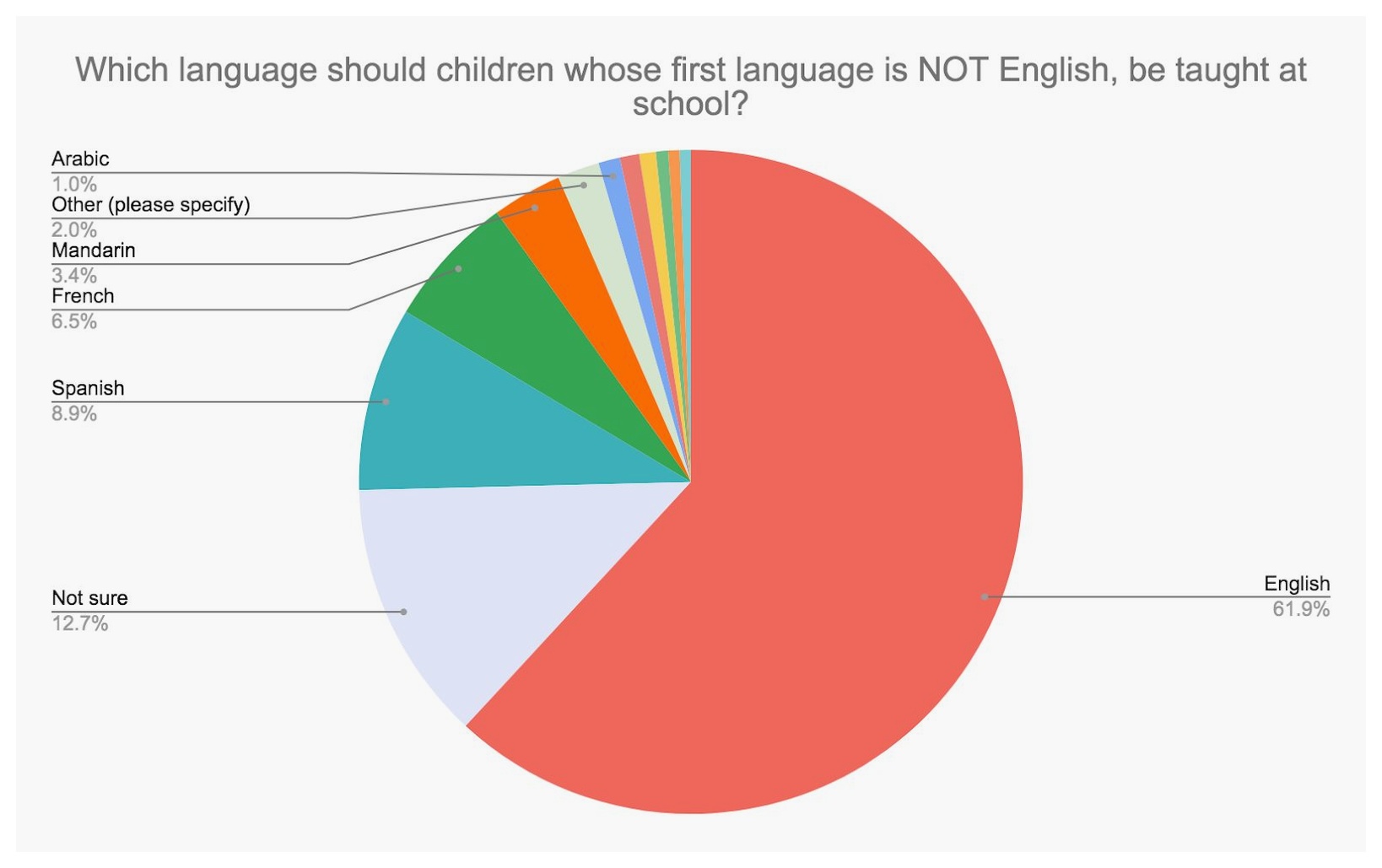
The survey revealed that:
- 62% of UK adults think that English is the most important language to teach children in non-English dominant schools.
- 9% of people say Spanish is the most important language for non-English children to learn at school.
- And 6.5% believe that children who are not native in English should be taught French at school.
- Other choices included Mandarin (3.4%), Arabic (1%) Hindi (0.9%), Russian (0.8%), Indonesian (0.6%), Bengali (0.55%) and Portuguese (0.55%).
Please note: Full survey findings and methodology can be found here.
How Many Countries Have English as an Official Language?
Now that you’re familiar with the ages at which children worldwide begin learning English and the perspectives of people in the UK on its significance, let’s explore which countries recognize English as an official language. But first, what does it mean for a language to be classified as “official”?
Well, by definition, a country’s official language is:
The official language of a country is the one recognized by its government, taught in schools, and utilized in legal proceedings.
- Our research reveals that English is legally recognized as an official language (de jure) in 55 countries, accounting for 28.5% of the world’s nations.
- Including countries where English is an unofficial but widely used language raises the total to 75, indicating that 39% of the world’s nations recognize English as an official language.
- Additionally, several territories across various countries recognize English as an official language, including Hong Kong (China), Curaçao, Sint Maarten, Saba, and Sint Eustatius (Netherlands), San Andrés and Providencia (Colombia), and the autonomous Caribbean coastal regions of Nicaragua.
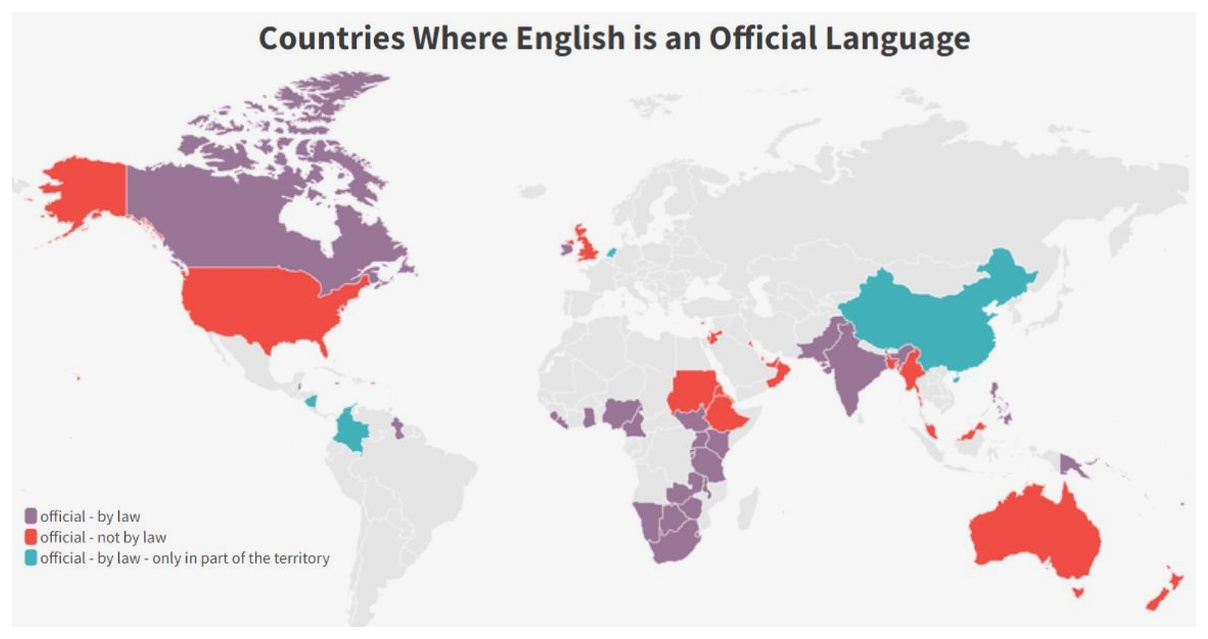
Map created using Flourish. Interactive map can be found here: https://public.flourish.studio/visualisation/7730324/ using data obtained from here.
Which US States Have the Highest Rate of People Who Don’t Speak English at Home
According to the U.S. Census Bureau, one in five Americans is bilingual, highlighting a growing linguistic diversity. However, it’s important to note that the overwhelming majority of adults in the U.S. primarily speak English as their first language.
While English reigns as the predominant language in the United States, we sought to uncover which states boast the highest percentages of residents who speak a language other than English at home.
To do this we analysed data from the US census, which enabled us to discover that:
- In California 44% of people speak a language other than English at home.
- Texas ranks second in the U.S. for the percentage of residents speaking a language other than English at home, with 35.5% of the population doing so.
- In New Mexico, 34% of residents speak a language other than English at home, highlighting the state’s linguistic diversity.
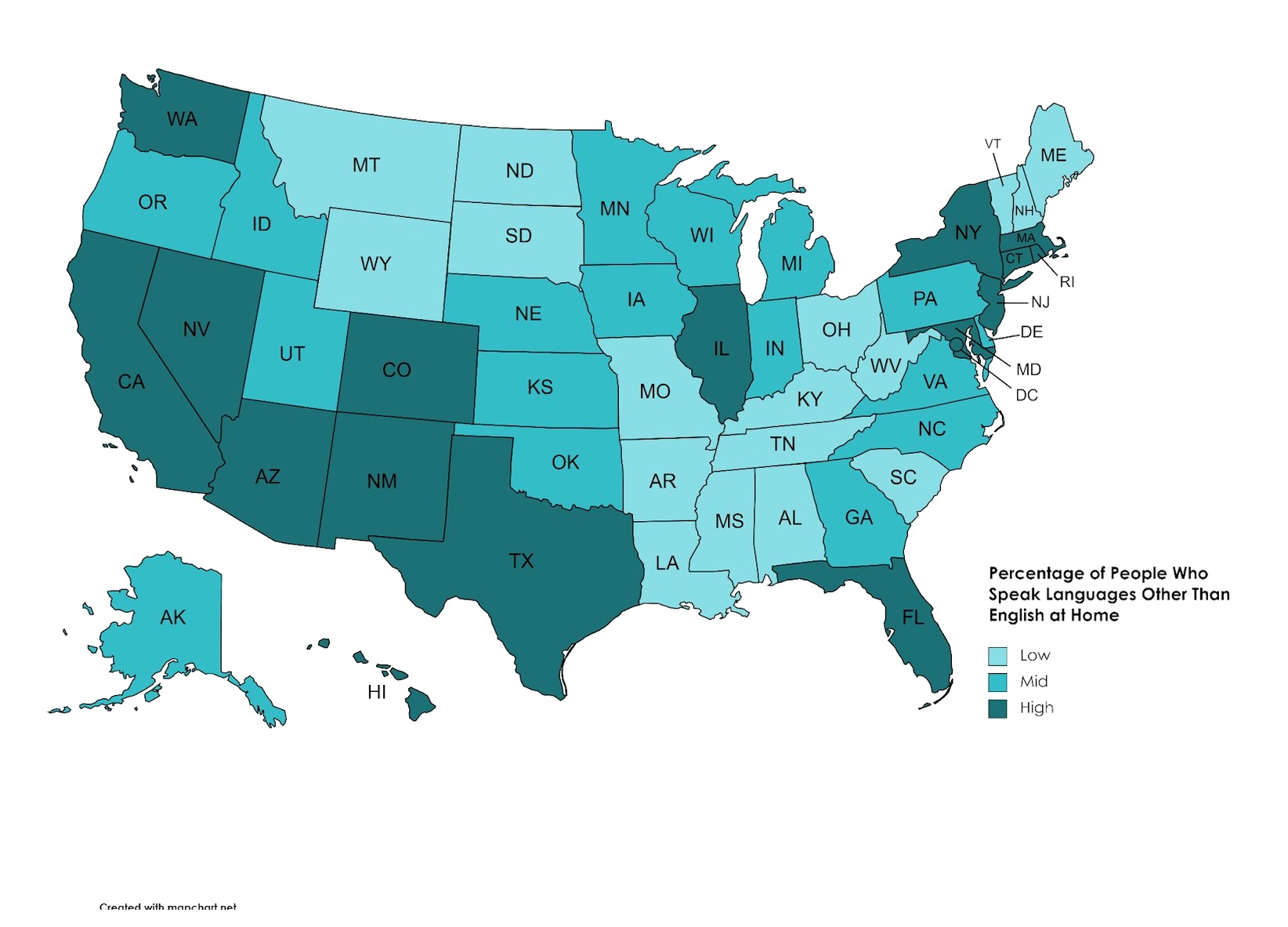
West Virginia, Mississippi, and Montana have the lowest percentages of residents who speak a language other than English at home, with only 2.6%, 4%, and 4.2% respectively.
Methodology
A full methodology detailing how we gathered the data presented in this article can be found here.
Fun Facts About the English Language in 2022
Now that you’re aware of the widespread popularity of the English language, the countries most eager to learn it, the typical age when non-native speakers start their English education, and the attitudes towards the language in 2022, there’s still a wealth of fascinating information to explore! Here are some intriguing facts and figures to pique your interest:
- English is the third most spoken native language globally, with over 527 million speakers.
- English is the most popular language among non-native speakers globally, with experts predicting it will be spoken by 2 billion people by 2050.
- Studies have concluded that the English language is one of the happiest languages in existence, along with Spanish and Portuguese!
We trust you found our compilation of the latest English language statistics, facts, and figures for 2022 both informative and engaging! If you’re considering learning English or another language, visit our website to discover top-notch online language tutors ready to help you on your journey!
Frequently Asked Questions
How many people globally speak English?
Around 1.35 billion people globally speak English.
At what age do children typically start learning English?
The average age at which children around the world start learning English at school is 7 and a half.
Which country has the highest interest in learning English?
The United Arab Emirates has the highest global interest in learning English.
What percentage of UK adults believe English is essential for non-native children to learn?
62% of UK adults believe English is the essential language for non-native children to learn in schools globally.
How many countries recognize English as an official language?
English is recognized as an official language in 75 countries.