- First things first: Key differences
- “Discover the Arabic Alphabet: The World’s Second Most Widely Used Writing System”
- 2. Arabic is written from right to left
- 3. Arabic is a phonetic language
- 4. Arabic is written in cursive, and each letter can have up to four forms
- 5. The Arabic alphabet contains 28 letters, and some of them don’t exist in English
- The Arabic alphabet chart
- Arabic letters, their different forms, and their English equivalent
- What about vowels?
- The Arabic alphabet and the different dialects
- Frequently Asked Questions
- What is the Arabic alphabet known as?
- How is Arabic written compared to English?
- What is a unique feature of Arabic letters?
- How many letters are in the Arabic alphabet?
- What are harakat in Arabic?
For many learners, the biggest hurdle in mastering Arabic is adapting to its unique alphabet and writing system. Although this can be daunting, LingualNeeds offers valuable tips to help you navigate this challenge with greater ease and confidence.
First things first: Key differences
Let’s dive into the fascinating world of the Arabic alphabet, known as al-abjadeyyah (الأبجدية), which translates to “alphabet” in Arabic. What sets it apart from many other languages, including English, is its unique structure and script.
“Discover the Arabic Alphabet: The World’s Second Most Widely Used Writing System”
Mastering Arabic not only allows you to connect with millions of speakers around the globe, but it also serves as a gateway to other languages that share its linguistic roots. For instance, learning Arabic can enhance your understanding of Urdu and even ancient languages like Hebrew, enriching your linguistic journey.
2. Arabic is written from right to left
In contrast to languages that utilize Latin scripts, such as English and French, as well as many Asian writing systems, Arabic is unique in that it is read and written from right to left.
3. Arabic is a phonetic language
Say goodbye to the confusion of silent letters like “d” or “gh” pronounced as “f” in Arabic! In this language, the way you hear words is exactly how you spell them. This straightforward approach makes it easy to write any word, even those you may not have seen before.
4. Arabic is written in cursive, and each letter can have up to four forms
Arabic script is uniquely connected, unlike English, where letters can be either joined or separated. In Arabic, letters must connect, resembling cursive writing, which allows for a dynamic representation of each character. Depending on their position within a word—whether at the beginning, middle, or end—each letter can take on up to four different forms. This characteristic adds depth and complexity to the writing system, making it both fascinating and visually appealing.
Explore the Arabic alphabet chart below to discover how each letter transforms based on its position within a word.
5. The Arabic alphabet contains 28 letters, and some of them don’t exist in English
Fortunately, most of the letters in the Arabic alphabet have corresponding sounds in English. However, a few Arabic letters produce unique sounds that don’t exist in English. To master these distinct sounds, you’ll need to practice listening to them. Curious about how many Arabic letters lack English equivalents? Don’t worry—we’ll explore that topic in detail shortly!
You can find more tips and tricks on LingualNeeds if you decide to learn Arabic online.
The Arabic alphabet chart
This Arabic alphabet chart not only showcases the different forms of each letter but also provides an insightful comparison of their sounds to those in English.
Arabic letters, their different forms, and their English equivalent
As previously noted, Arabic letters can take on different shapes based on their position within a word. The isolated forms represent how each letter appears when it stands alone, disconnected from any other letters. To explore the various shapes a letter can assume, please refer to the chart below.
|
Arabic letter name |
Arabic letters forms |
Arabic alphabet in English |
|
alif |
Isolated: ا Beginning: ا Middle: ـا End: ـا |
· English equivalent is A
|
|
baa |
Isolated: ب Beginning: بـ Middle: ـبـ End: ب |
· English equivalent is B |
|
taa |
Isolated: ت Beginning: تـ Middle: ـتـ End: ـت |
· English equivalent is T |
|
thaa |
Isolated: ث Beginning: ثـ Middle: ثـ End: ـث |
· Has no direct equivalent in English · Called academically the “unvoiced th” · Sounds like a puff of air coming out of your teeth · ie. Lethal/Thunder |
|
jeem |
Isolated: ج Beginning: جـ Middle: ـجـ End: ـج |
· English equivalent is J · In some dialects like the Egyptian, this letter is pronounced G |
|
Haa |
Isolated: ح Beginning: حـ Middle: ـحـ End: ـح |
· Has no English equivalent · Sounds like a strong H coming from the back of the throat |
|
Khaa |
Isolated: خ Beginning: خـ Middle: ـخ End: ـخـ |
· Has no English equivalent · Sounds like snorting or snoring · Almost like the Scottish ch |
|
dal |
Isolated: د Beginning: د Middle: ـد End: ـد |
· English equivalent is D |
|
dhal |
Isolated: ذ Beginning: ذ Middle: ـذ End: ـذ |
· Has no direct equivalent in English · Called academically the “voiced th” · Has a buzzy sound · ie. Weather |
|
raa |
Isolated: ر Initial: ر Middle: ـر End: ـر |
· English equivalent is R |
|
zein |
Isolated: ز Beginning: ـز Middle: ـز End: ـز |
· English equivalent is Z |
|
seen |
Isolated: س Beginning: سـ Middle: ـسـ End: ـس |
· English equivalent is S |
|
sheen |
Isolated: ش Beginning: شـ Middle: ـشـ End: ـش |
· English equivalent is sh |
|
Saad |
Isolated: ص Beginning: صـ Middle: ـصـ End: ـص |
· Similarly to the letter س or seen, the closest equivalent to it is S · However, this letter has a stronger S sound |
|
Daad |
Isolated: ض Beginning: ضـ Middle: ـضـ End: ض |
· Similarly to the letter د or daal, the closest equivalent to it is D · However, this letter has a stronger D sound |
|
Taa |
Isolated: ط Beginning: ط Middle: ـطـ End: ـط |
· Similarly to the letter ت or taa, the closest equivalent to it is T · However, this letter has a stronger T sound |
|
THaa |
Isolated: ظ Beginning: ظـ Middle: ـظـ End: ـظ |
· Similarly to the letter ذ or thal, the closest sound to it is the voiced TH · However, this letter has a stronger TH sound |
|
Ain |
Isolated: ع Beginning: عـ End: ـع Middle: ـعـ |
· Has no equivalent in English · Guttural stop. Names like Ali and Abdul start with this letter |
|
Ghain |
Isolated: غ Beginning: غـ Middle: ـغـ End: ـغ |
· Has no equivalent in English · Similar to the gh sound made when gurgling
|
|
feh |
Isolated: ف Beginning: فـ Middle: ـفـ End: ـف |
· English equivalent is F |
|
Qaf |
Isolated: ق Beginning: قـ Middle: ـقـ End: ق |
· English equivalent is Q or strong K |
|
kaf |
Isolated: ك Beginning: كـ Middle: ـكـ End: ـك |
· English equivalent is K |
|
lam |
Isolated: ل Beginning: لـ Middle: ـلـ End: لـ |
· English equivalent is L |
|
meem |
Isolated: م Beginning: مـ Middle: ـمـ End: ـم |
· English equivalent is M |
|
noon |
Isolated: ن Beginning: نـ Middle: ـنـ End: ـن |
· English equivalent is N |
|
haa |
Isolated: هـ Beginning: هـ Middle: ـهـ End: ـه |
· English equivalent is H |
|
waw |
Isolated: و Beginning: و Middle: ـو End: ـو |
· English equivalents could be O, U, or W · Pronounced “woo” |
|
yaa |
Isolated: ي Beginning: يـ Middle: ـيـ End: ـي |
· English equivalents could be E, I, or Y · Pronounced “yee” |
What about vowels?
Keep in mind that Arabic is a phonetic language, meaning that the way words are written reflects their sounds. This is why Arabic features both short and long vowel sounds, which vary based on the emphasis placed on each vowel.
Long vowels are assigned their own distinct letters in words, while short vowel sounds are denoted by special markings called harakat (حركات). These harakat function like accents, attached to consonants to signal the presence of short vowels.
There are three primary vowel sounds: “aa,” “oo,” and “ee.” Each of these sounds can be pronounced as either short or long vowels, and they are represented differently in writing to reflect this distinction.
|
Sound |
Short vowel/haraka |
Long vowel/letter |
|
Aa |
َFat-ha or فتحة is represented by a slanted line, placed above the letter. |
ا – Alif |
|
Oo |
ُDamma or ضمة is a small و letter, placed above the letter. |
و – waw |
|
Ee |
ِKasra or كسرة is represented by a slanted line, placed below the letter. |
ي – yaa |
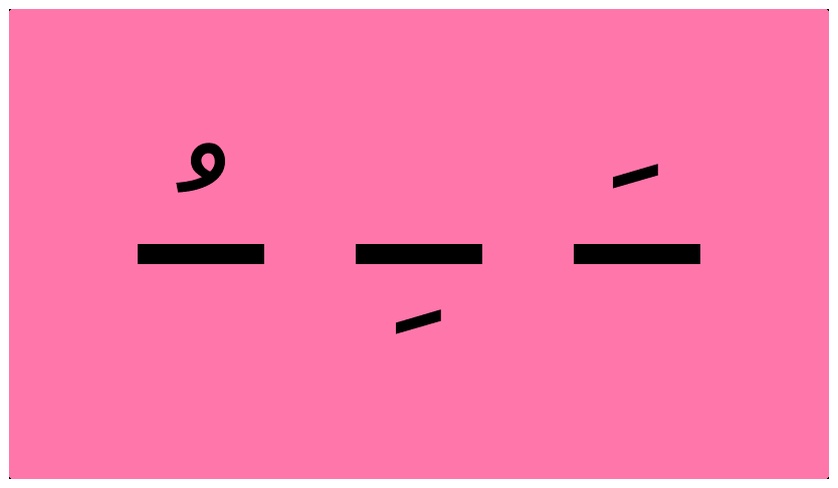
The dotted line signifies the letters in the word that require a haraka, indicating that they are followed by a short vowel sound.
Let’s explore the distinction between a vowel letter, which represents a long vowel sound, and a haraka, indicating a short vowel sound. Here’s a clear example to illustrate the difference:
- The word for sea is bahr or بَحر.
- The word for seaman is bahaar or بَحار.
In the word “bahr,” the “aa” sound that follows the consonant B is short and can be effectively represented with a simple “fat-ha” placed above the B.
In the word “bahaar,” the “aa” sound following the consonant “H” is elongated. This lengthening is why the word includes the vowel letter “alif” (ا) to accurately represent that sound.
The Arabic alphabet and the different dialects
The Arabic alphabet serves a consistent purpose across the various dialects of the Arab world. However, if you choose to focus on a specific dialect, you might notice subtle differences in pronunciation that set it apart from others.
Choosing to learn Arabic online with LingualNeeds offers you a unique advantage: access to tutors from diverse regions of the Arab world, each specializing in their own dialect. This allows you to tailor your learning experience to fit your interests and goals perfectly.
Now you should be all set to start reading and writing Arabic letters!
Frequently Asked Questions
What is the Arabic alphabet known as?
The Arabic alphabet is known as al-abjadeyyah (الأبجدية).
How is Arabic written compared to English?
Arabic is written from right to left, unlike English which is written from left to right.
What is a unique feature of Arabic letters?
Arabic letters are connected and can take on up to four different forms depending on their position within a word.
How many letters are in the Arabic alphabet?
The Arabic alphabet contains 28 letters.
What are harakat in Arabic?
Harakat are special markings that denote short vowel sounds in Arabic.