- List of family members in Spanish
- Parents
- Children
- Other close family members in Spanish
- Grammar concepts when speaking about family in Spanish
- Using the verb ‘ser’ to describe family members in Spanish
- Next steps
- Frequently Asked Questions
- What are the Spanish terms for family members?
- How do possessive adjectives work in Spanish when referring to family?
- What is the difference between ‘hijos’ and ‘hijas’?
- How does the verb ‘ser’ help in describing family members?
- What are some effective ways to improve Spanish language skills related to family vocabulary?
Family is a cornerstone of Spanish culture, where deep-rooted connections are cherished. By learning family-related Spanish vocabulary, you can forge stronger bonds with Spanish-speaking friends and enrich your understanding of their vibrant culture.
In this blog, we’ll dive into key Spanish vocabulary and phrases related to family, enhancing both your language skills and cultural insight. Read on to discover more!
List of family members in Spanish
Parents
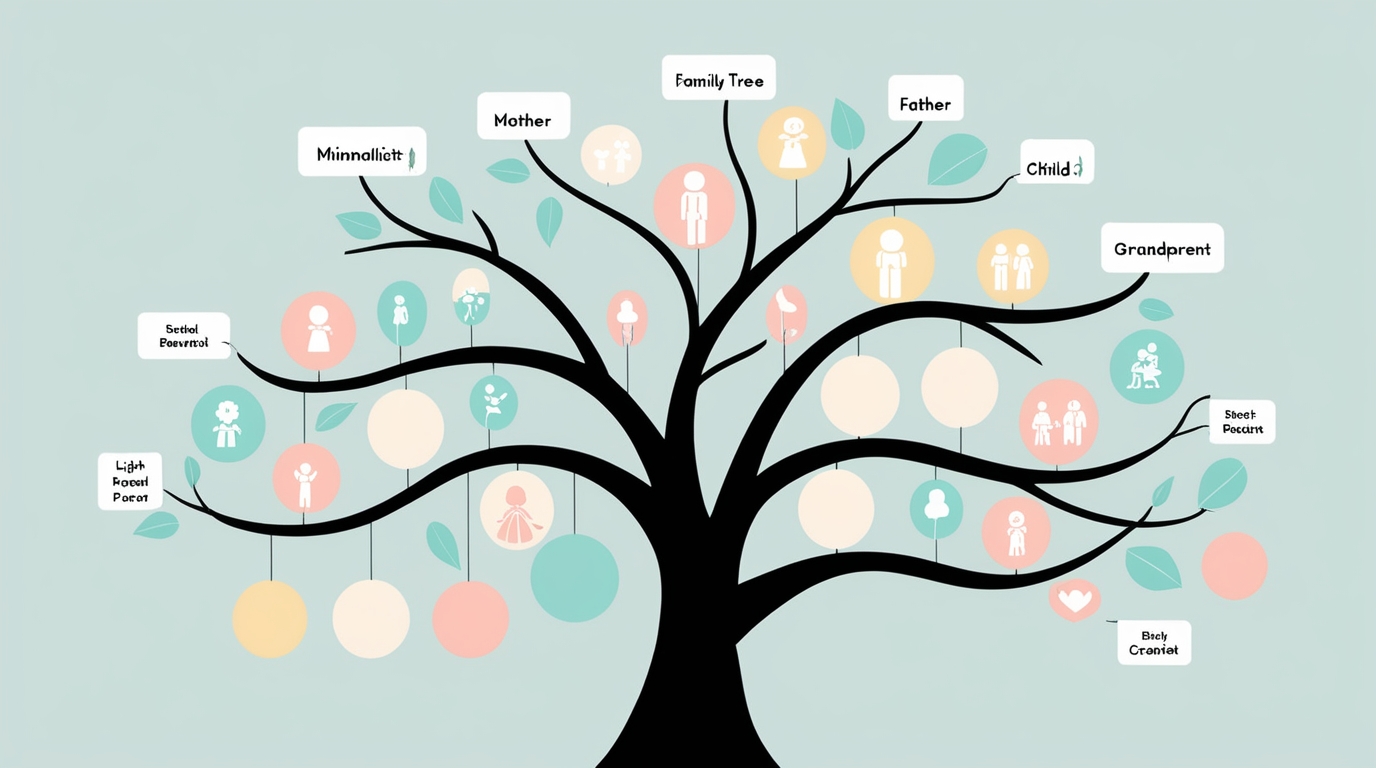
- Father – Padre/papá
- Mother – Madre/mamá
- Parents – Padres
In Spanish, certain family members can be described using different terms. For example, you can call a father “padre” or “papá,” and a mother can be referred to as “madre” or “mamá.” This variety adds richness to the language and reflects the warmth of familial relationships.
Children often call their parents “mamá” and “papá,” but it’s essential to use the accent on the last syllable. This distinction helps prevent misunderstandings with other meanings of similar-sounding words.
The word “padres” translates to “parents” and can also denote multiple fathers. It’s important to note that “parientes” means “relatives,” so it shouldn’t be used when specifically referring to your parents.
Children
- Daughter – Hija(s)
- Son – Hijo(s)
It’s important to note that Spanish nouns are gendered, which influences their plural forms. For instance, the word “hijos” denotes a group of male children or a mixed group that includes both boys and girls. In contrast, “hijas” specifically refers to a group of female children. Understanding this distinction is key to mastering Spanish noun usage!

Other close family members in Spanish
- Sister – Hermana
- Brother – Hermano
- Siblings – Hermanos (brothers or mixed) / Hermanas (sisters)
- Abuelo – Grandfather
- Abuela – Grandmother
- Bisabuelo – Great-grandfather
- Bisabuela – Great-grandmother
- Nieto – Grandson
- Nieta – Granddaughter
- Hermano – Brother
- Hermana – Sister
- Tío – Uncle
- Tía – Aunt
- Sobrino – Nephew
- Sobrina – Niece
- Primo – Male cousin
- Prima – Female cousin
- Cuñado – Brother-in-law
- Cuñada – Sister-in-law
- Suegro – Father-in-law
- Suegra – Mother-in-law
- Esposo/Esposa – Husband/Wife
- Novio/Novia – Boyfriend/Girlfriend
- Prometido/Prometida – Fiancé/Fiancée
In Spanish, feminine nouns that refer to family members typically end with the letter -a, while masculine nouns often conclude with -o. This pattern helps you easily identify the gender of family-related words.
For example:
- Niece – Sobrina
- Nephew – Sobrino
- Cousin (female) – Prima
- Cousin (male) – Primo
It’s important to note that this isn’t a strict rule in Spanish, so exercise caution when applying it to all nouns. Take the word “papá,” for instance—it ends with an ‘á’ yet is classified as a masculine noun.
Grammar concepts when speaking about family in Spanish
To effectively describe family members in Spanish, grasping the correct grammar is crucial. A key component of this is the use of possessive adjectives, which play an important role in expressing relationships.
In Spanish, possessive adjectives help us show ownership, especially when referring to family members. For instance, “mi” translates to “my,” while “su” means “his,” “her,” or “their.” Therefore, to say “my brother” in Spanish, you simply say “mi hermano.”

Grasping the plural forms of family members in Spanish is essential for effective communication. In this language, many family-related terms alter their endings when pluralized. For instance, “hijo” transforms into “hijos” to refer to sons, while “hija” changes to “hijas” for daughters. Understanding these changes will enhance your Spanish vocabulary and conversational skills.
In Spanish, nouns have gender, which means the endings of words vary based on whether they refer to a male or female. For instance, “abuelo” means grandfather, while “abuela” is the term for grandmother, highlighting this gender agreement in family terminology.
Spanish grammar can be intricate, especially when it comes to discussing family members. However, by mastering these grammatical rules, you’ll enhance your ability to communicate clearly and engage in deeper conversations with Spanish-speaking family and friends.
Using the verb ‘ser’ to describe family members in Spanish
To describe your family in Spanish using the verb “Ser,” you can use the following sentence structure:
- Mi familia es + (adjective)
For example:
- Mi familia es grande y amorosa. (My family is big and loving.)
- Mi familia es muy unida. (My family is very close-knit.)
- Mi familia es divertida y ruidosa. (My family is fun and loud.)
You can also use the verb “Ser” with specific family member names to describe their relationship to you.
For example:
- Mi madre es mi mejor amiga. (My mother is my best friend.)
- Mi hermano es muy inteligente. (My brother is very smart.)
- Mi abuelo es muy gracioso. (My grandfather is very funny.)
Always ensure that the verb “Ser” aligns correctly with the subject pronoun. Use “es” when referring to a singular third person (he, she, or it) and “son” for a plural third person (they). This alignment is essential for clear and accurate communication in Spanish.
Next steps
Exploring Spanish vocabulary related to family enriches your language skills and deepens your appreciation for the culture and values of Spanish-speaking countries. It’s an engaging way to connect with the traditions and social dynamics that shape these communities.
By mastering the vocabulary and grammar rules outlined in this article, you’ll gain the confidence to discuss your family in Spanish and connect in meaningful conversations with native speakers.
To elevate your Spanish skills, engaging in regular conversations with a native speaker is one of the most effective strategies. This immersive practice not only enhances your language abilities but also boosts your confidence and cultural understanding.
At LingualNeeds, you can effortlessly find an online Spanish tutor who fits your schedule and budget. With thousands of tutors to choose from, you can select based on their ratings, availability, and additional languages they speak, ensuring you find the perfect match for your learning needs.
Unlock your potential and gain the confidence to engage in conversations with native Spanish speakers on any topic! Sign up for your first lesson today, and if you’re not completely satisfied, you can either switch to a different tutor at no extra cost or receive a full refund. Your journey to fluency starts here!
HubSpot Call-to-Action Code [if lte IE 8]>
<div id=”hs-cta-ie-element”></div>
<![endif] end HubSpot Call-to-Action Code
Frequently Asked Questions
What are the Spanish terms for family members?
Key Spanish terms for family members include ‘padre’ for father, ‘madre’ for mother, ‘hijo’ for son, and ‘hija’ for daughter.
How do possessive adjectives work in Spanish when referring to family?
In Spanish, possessive adjectives like ‘mi’ (my) and ‘su’ (his, her, or their) are used to show ownership, e.g., ‘mi hermano’ means ‘my brother’.
What is the difference between ‘hijos’ and ‘hijas’?
‘Hijos’ refers to sons or a mixed group of children, while ‘hijas’ specifically refers to daughters.
How does the verb ‘ser’ help in describing family members?
The verb ‘ser’ is used to describe family members, e.g., ‘Mi madre es mi mejor amiga’ means ‘My mother is my best friend’.
What are some effective ways to improve Spanish language skills related to family vocabulary?
Engaging in regular conversations with native speakers and mastering vocabulary and grammar rules are effective ways to enhance Spanish language skills.