
- Key findings
- How Singaporeans use subtitles to better understand foreign languages
- The pros and cons of using subtitles
- The hardest-to-understand celebrities and accents
- Conclusion
- Methodology
- Frequently Asked Questions
- Why are subtitles increasingly popular among Singaporeans?
- What percentage of Singaporeans use subtitles to learn a new language?
- How do subtitles in cinemas aid language learning according to the survey?
- Which celebrities are considered the hardest to understand by Singaporeans?
- What are some concerns about using subtitles mentioned in the survey?
While subtitles are often seen primarily as an accessibility feature for transcribing or translating dialogue and sounds, their popularity has surged beyond that role. A recent survey revealed that 52% of Singaporeans are using subtitles more frequently than before, with many taking advantage of them as a valuable resource for language learning.
To delve into the subtitle habits of the nation, we conducted a survey with 1,502 Singaporeans. Our goal was to uncover the motivations behind their use of subtitles and to assess how often they rely on them for language learning.
At LingualNeeds, we believe that subtitles are a powerful tool for mastering various accents and making language learning enjoyable. Join us as we explore Singapore’s fascination with subtitles and discover how they enhance both educational experiences and entertainment.
Key findings
- 33% of Singaporeans use subtitles to learn a new language, making it one of the leading reasons for their use
- 53% of Singaporeans believe that subtitles in cinemas help them learn a new language
- 27% of Singaporeans use subtitles to understand celebrities, with Arnold Schwarzenegger and Sofia Vergara topping the list of those considered hardest to understand.

Learn a language with personalised 1-on-1 classes with our expert tutors from all over the world
French lessons online
Spanish lessons online
How Singaporeans use subtitles to better understand foreign languages
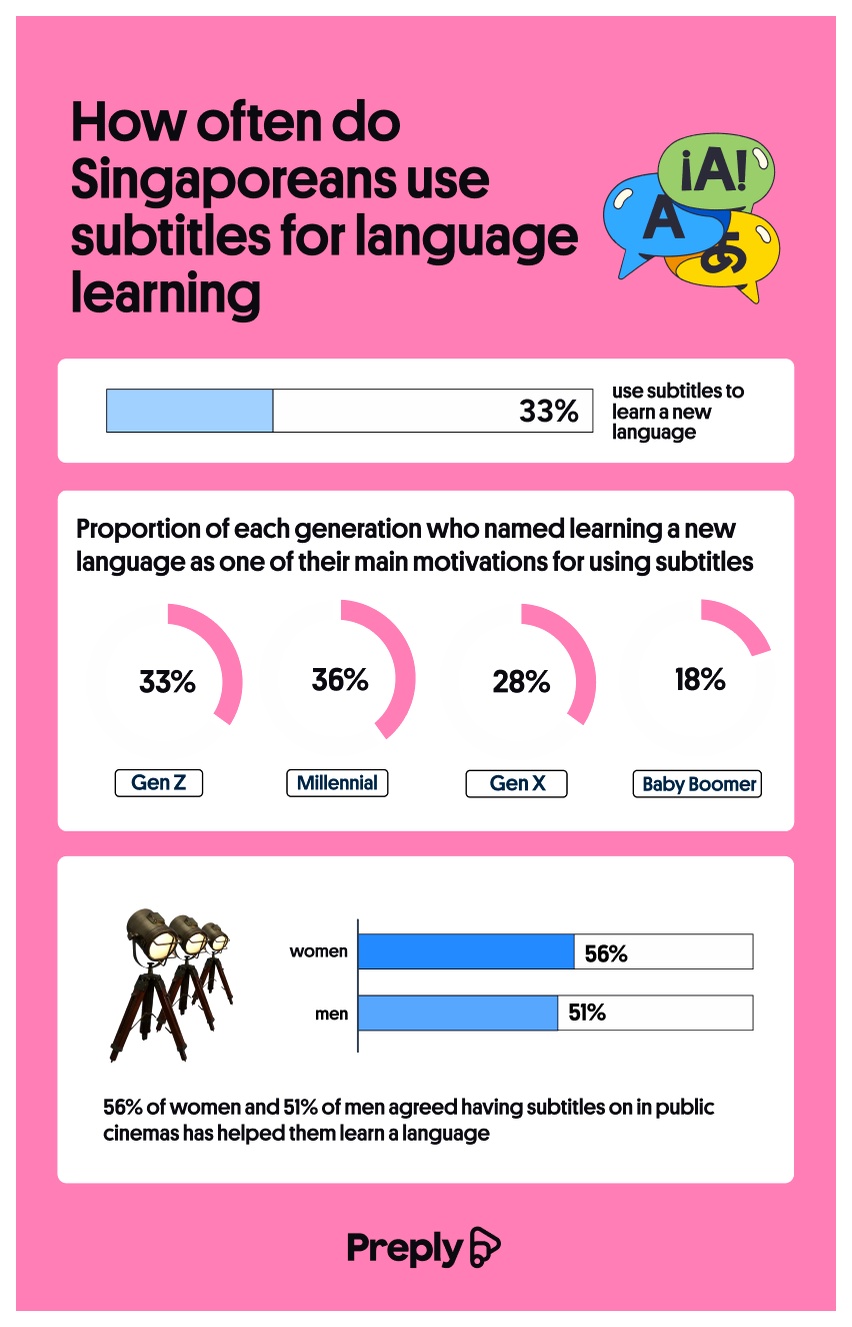
Our survey reveals that 33% of Singaporeans rely on subtitles to enhance their language learning, highlighting it as one of the primary motivations for their usage.
Language learning is a significant motivator for Millennials, with 36% of individuals aged 27-42 citing it as their primary reason for using captions. In contrast, only 17.5% of Baby Boomers, aged 59-77, share this motivation. Overall, just 18% of Americans utilize subtitles primarily for language learning, highlighting a generational difference in caption usage.
Subtitles in cinemas play a vital role in language learning, with 53% of respondents believing they aid in acquiring new languages. By showcasing international films in their original languages, audiences can better familiarize themselves with diverse linguistic sounds. This practice provides Singaporeans with unique opportunities to enhance their language skills, setting them apart from communities lacking such resources. Nevertheless, the absence of these cinematic provisions doesn’t hinder language learning; online lessons offer excellent alternatives. For those aiming to master one of Singapore’s most widely spoken languages, seeking guidance from a Chinese teacher can be particularly advantageous.
Sylvia Johnson, language expert at LingualNeeds, commented:
Subtitles are an invaluable resource for language learners, blending audio and visual elements to enhance vocabulary, listening skills, and pronunciation. They provide context that reinforces new language concepts and improve reading and spelling through consistent exposure to written text. Subtitles allow learners to progress at their own pace and help clarify challenging accents or rapid speech. Moreover, they boost confidence by making the learning process more approachable, while also offering cultural insights that are essential for grasping the nuances of social language use.
The pros and cons of using subtitles
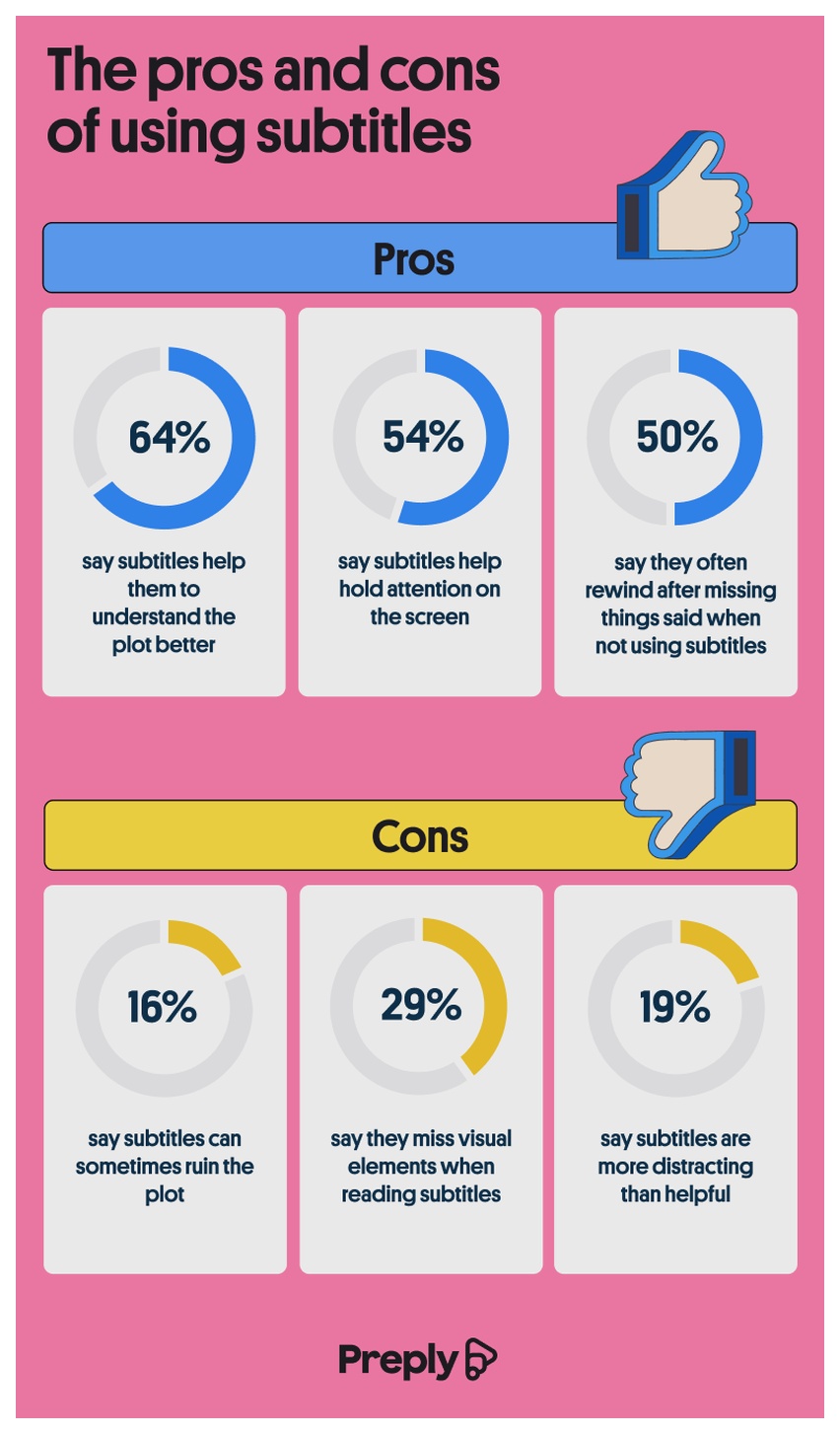
Our survey revealed that the majority of Singaporeans actually prefer subtitles, with 65% saying there are more pros than cons.
More than half of the survey participants believe that watching movies with subtitles in theaters enhances their language learning experience, underscoring a notable educational advantage. This trend illustrates how subtitles act as an effective resource for acquiring new vocabulary and understanding grammar in context.
Subtitles are essential for boosting understanding and keeping viewers engaged. Our survey reveals that 64% of participants find subtitles enhance their grasp of the plot, while 54% feel they help maintain focus, minimizing distractions from other screens or activities. Moreover, 50% of respondents frequently rewind to catch missed dialogue when subtitles are absent, underscoring their vital role in ensuring that audiences don’t overlook key details.
While many Singaporeans appreciate subtitles, our survey highlighted some concerns. About 29% of respondents mentioned that reading subtitles causes them to miss important visual elements. Additionally, 19% felt that subtitles can distract from the overall viewing experience, and 16% expressed that subtitles might spoil suspense or reveal key plot points.
Learn a language online with our free learning materials.
Learn English online
Learn French online
The hardest-to-understand celebrities and accents
Grasping dialogue in movies can often be a challenge. Accents, fast-paced conversations, and distinct vocal styles can make some actors particularly tough to understand, even for those fluent in the language. This raises an intriguing question: which actors and actresses present the greatest difficulty in comprehension?
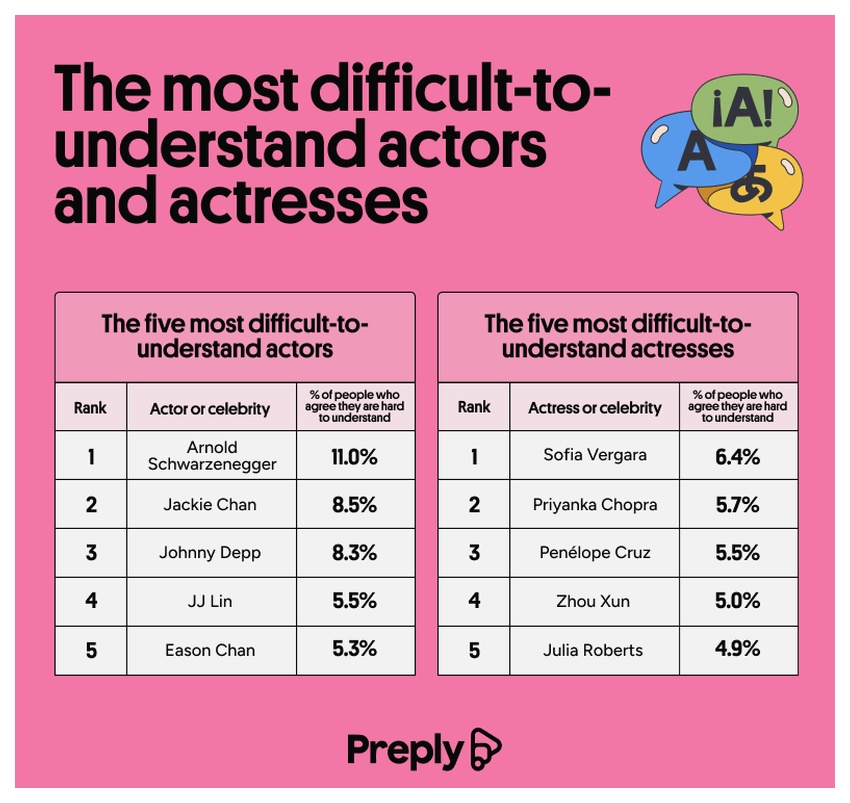
In Singapore, 27% of people often turn to subtitles because they find some celebrities difficult to understand. This contrasts with 57% of Americans and 46% of Australians who also rely on subtitles for clarity.
Arnold Schwarzenegger tops the list as the most challenging actor to understand, with 11% of respondents expressing confusion over his accent. Hailing from Austria, his distinctive speech patterns and thick accent can be particularly perplexing for many Singaporeans.
Martial arts icon Jackie Chan ranks second, with 9% of survey participants finding his speech challenging to comprehend. Renowned for his thrilling action sequences and fast-paced dialogue, Chan’s unique style can occasionally make his words difficult to grasp.
Claiming the third spot is Johnny Depp, with 8% of respondents reporting difficulty in understanding his speech. His distinctive and often eccentric characters, along with his diverse accents, can pose a challenge for viewers, making subtitles a valuable resource for his fans.
Sofia Vergara stands out as the actress who confuses the most viewers, with 6% of respondents acknowledging that her accent can be difficult to follow. Renowned for her vibrant Colombian accent and quick-paced dialogue, Vergara’s unique speech style presents a challenge for some audiences trying to catch every word.
Priyanka Chopra ranks second, with nearly 6% of survey participants finding it challenging to grasp her speech. The complexity arises from her distinctive Indian accent and the diverse characters she portrays, making her dialogue sometimes difficult to follow.
Penélope Cruz ranks third, with 5% of respondents struggling to understand her dialogue. Her distinct Spanish accent and rich performances often lead viewers to rely on subtitles, enhancing their enjoyment of her work.
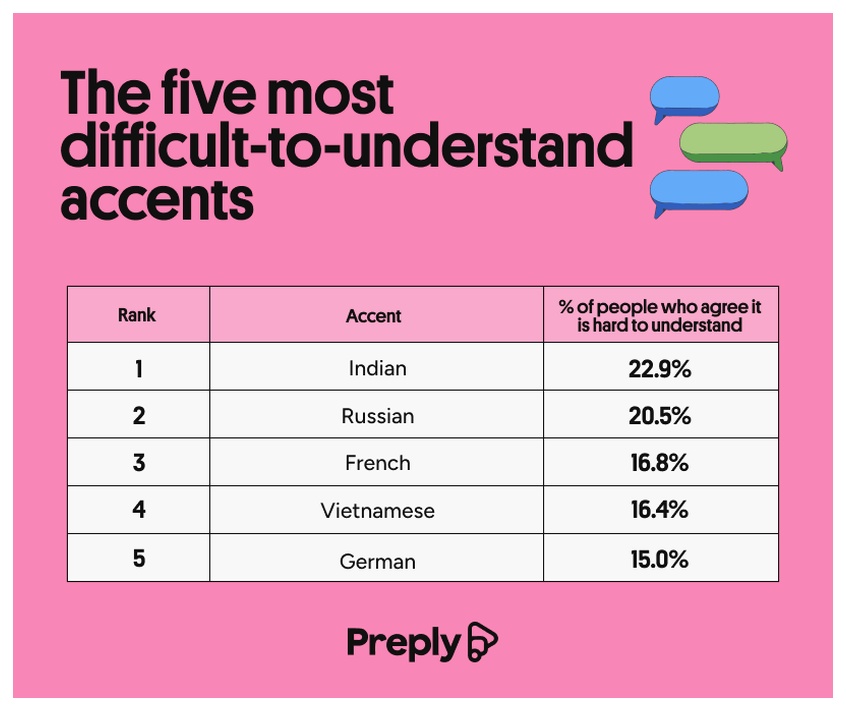
We aimed to discover which accents pose the greatest challenges for viewers trying to understand dialogue in TV shows and movies.
The Indian accent topped the list of the most challenging accents to understand, with 22.9% of respondents reporting difficulty. It was closely followed by the Russian accent at 20.5% and the French accent at 16.8%. Rounding out the top five were the Vietnamese and German accents, with 16.4% and 15.0% of respondents finding them difficult to comprehend, respectively.
Conclusion
Subtitles serve as a powerful tool for language learners, enhancing comprehension skills, exposing them to various dialects, and boosting overall language proficiency. It’s no wonder that many people are turning to subtitles to enrich their learning experience.
Accents often pose a significant challenge for understanding, particularly when someone struggles to communicate in a way that resonates with native speakers. Even though many people globally can speak and comprehend English, achieving a native-like accent can be tough. Fortunately, online English tutors and accent reduction classes are excellent resources that can help you overcome this obstacle, enabling you to converse fluently and confidently like a native speaker in no time.
Methodology
In June 2024, we conducted a survey with 1,503 individuals in Singapore to explore their experiences and preferences regarding subtitles in entertainment across streaming services and online platforms. Our diverse respondents, aged between 16 and over 55, included 49% females and 51% males, providing valuable insights into subtitle usage in today’s media landscape.
Frequently Asked Questions
Why are subtitles increasingly popular among Singaporeans?
Subtitles are seen as a valuable resource for language learning, with a recent survey indicating that 52% of Singaporeans are using them more frequently.
What percentage of Singaporeans use subtitles to learn a new language?
33% of Singaporeans rely on subtitles to enhance their language learning.
How do subtitles in cinemas aid language learning according to the survey?
53% of respondents believe that subtitles in cinemas help them learn a new language by showcasing international films in their original languages.
Which celebrities are considered the hardest to understand by Singaporeans?
Arnold Schwarzenegger, Jackie Chan, and Johnny Depp are among the toughest celebrities for Singaporeans to understand, according to the survey.
What are some concerns about using subtitles mentioned in the survey?
About 29% of respondents feel that reading subtitles can cause them to miss important visual elements, while 19% believe subtitles can distract from the overall viewing experience.