
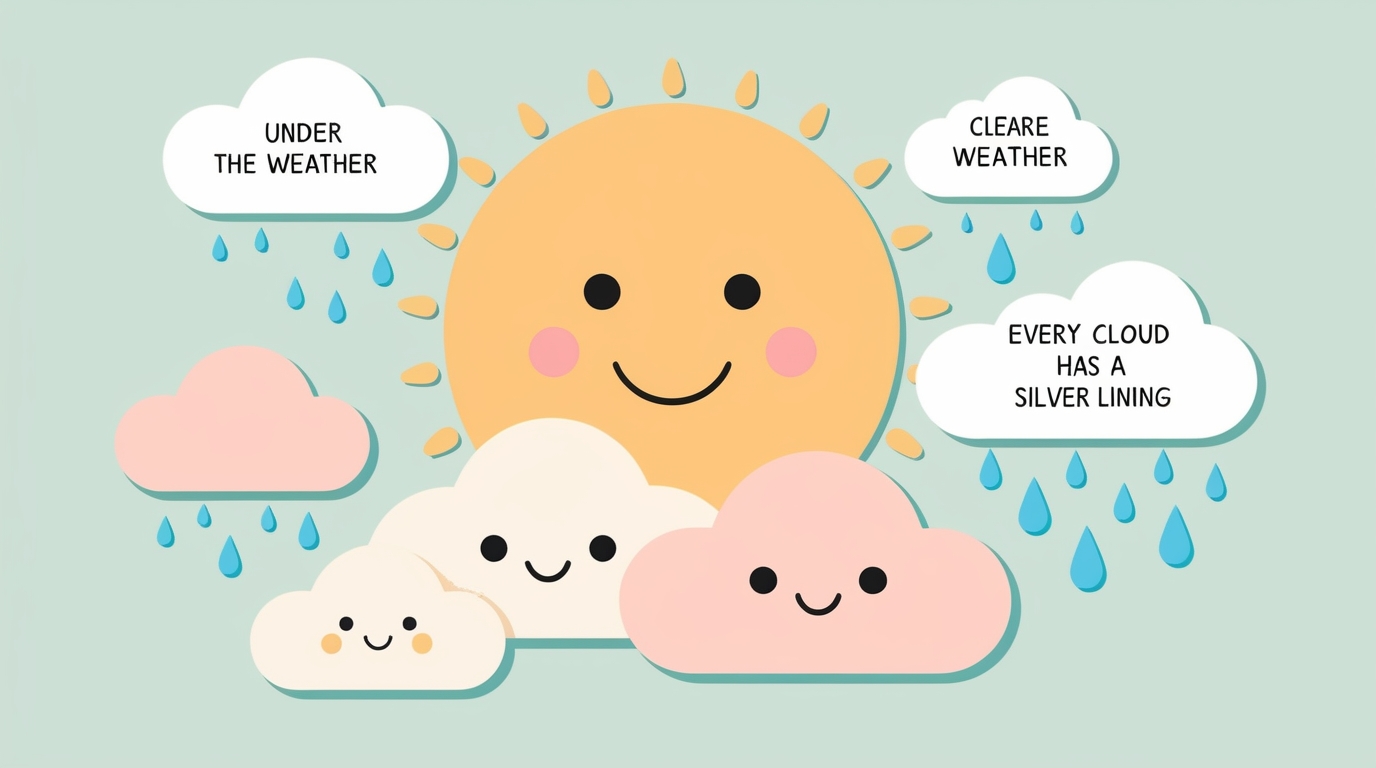
- 8 Weather-Related Idioms in English
- 1. A tempestin a teapot
- 2. A bolt from the blue
- 3. Come rain or shine
- 4. Raindrop in the drought
- 5. Get wind of
- 6. A ray of hope
- 7. Take a rain check
- 8. Under the weather
- Frequently Asked Questions
- What does ‘a tempest in a teapot’ mean?
- What is the meaning of ‘a bolt from the blue’?
- How is ‘come rain or shine’ used in conversation?
- What does the idiom ‘raindrop in the drought’ signify?
- What does it mean to ‘take a rain check’?
Discussing the weather is a universal conversation starter that anyone can engage in, making it an excellent opportunity to enhance your English skills. By learning common weather-related idioms, you can connect more easily with others. It’s no surprise that English boasts a rich variety of expressions tied to weather, reflecting its significance in everyday communication.
Today, we’re diving into the fascinating world of weather-related idioms in English! You’ll discover eight vibrant expressions that incorporate weather themes, complete with examples to illustrate their usage. While some of these idioms may be more prevalent in American English, they’re still understood across the pond in Britain. By mastering these phrases, you’ll add a splash of color and variety to your English language skills!
8 Weather-Related Idioms in English
Let’s get started!
1. A tempest in a teapot
This phrase means that someone is over-exaggerating the seriousness of a situation or problem.
Examples:
- Marcus is making a tempest in a teapot. They will be okay there.
- The reports in the media about the politician’s drunken behavior are a tempest in a teapot.
2. A bolt from the blue
When something happens completely unexpectedly, it is said to be “a bolt from the blue.”
Examples:
- His arrival was like a bolt from the blue.
- I didn’t expect to be promoted this month. It was a bolt from the blue!
3. Come rain or shine
This phrase translates to “whatever happens,” signifying that nothing can prevent an event from occurring or someone from taking action. It often describes a person’s unwavering routine, highlighting their consistency in daily activities. Additionally, it can pertain to specific circumstances, like anticipating a rainy day; in such cases, an event will proceed as planned, come rain or shine.
Examples:
- He goes to the gym every day, come rain or shine.
- We’ll have the picnic Sunday, come rain or shine.
4. Raindrop in the drought
This idiom captures the essence of someone holding onto unrealistic expectations or hopes for an outcome that is improbable. It highlights the gap between desire and reality, often reminding us to be mindful of what we wish for.
Examples:
- For many people, finding a job these days is like waiting for a raindrop in the drought.
- She was extremely sick, but we were waiting for a raindrop in the drought.
5. Get wind of
This idiom refers to the act of gaining knowledge about a topic, often without receiving the full details. It can apply to both personal matters and confidential information, highlighting how we sometimes catch snippets of news or insights without the complete story.
Examples:
- The chairman didn’t want the press to get wind of the takeover before the agreement was signed.
- I got wind of Glen’s divorce at the party last Sunday.
Another interesting wind related weather idiom is “throw caution to the wind,” which means to act recklessly.
6. A ray of hope

This idiom means something that provides a small amount of hope in a difficult situation.
Examples:
- When he was in despair, she gave him a ray of hope.
- This new medication provides a ray of hope to many people.
Another related idiom is “silver lining,” which suggests that even in challenging circumstances, there’s often a positive aspect waiting to be discovered.
7. Take a rain check
This phrase refers to the act of declining a proposal or suggestion, while proposing to revisit it at a later time.
Examples:
- Thanks for inviting me to dinner, but I can’t this week. Can I take a rain check on that?
- Thank you for the invitation to the game! Unfortunately, I can’t make it this time, but I’d love to take a rain check and plan for next month.
A person who frequently postpones plans might be labeled a “fair-weather friend.” This term describes someone who is only there during good times but disappears when challenges arise.
8. Under the weather
The final idiom in our collection refers to feeling unwell or sick, but it’s important to note that it’s not typically used for serious illnesses or diseases.
Examples:
- Subject: Sick Leave Request
Hi [Manager’s Name],
I’m feeling unwell today and suspect I might have the flu, so I will not be able to come to work. Thank you for your understanding.
Best,
[Your Name] - I heard you were ill yesterday. Are you feeling better now or are you still under the weather?
The opposite of being under the weather is being on “cloud nine,” which means feeling great or elated.
I think that the examples showing how these idioms are used will help you to remember them.
You’ll remember them even better if you come up with your own examples for each idiom.
Good luck!
Frequently Asked Questions
What does ‘a tempest in a teapot’ mean?
It means that someone is over-exaggerating the seriousness of a situation or problem.
What is the meaning of ‘a bolt from the blue’?
It refers to something that happens completely unexpectedly.
How is ‘come rain or shine’ used in conversation?
It signifies that nothing can prevent an event from occurring, highlighting a person’s unwavering routine.
What does the idiom ‘raindrop in the drought’ signify?
It captures the essence of holding onto unrealistic expectations or hopes for an improbable outcome.
What does it mean to ‘take a rain check’?
It refers to declining a proposal while suggesting to revisit it at a later time.


