
- 8 proven tips for studying English
- 1. Set yourself helpful targets
- 2. Don’t be afraid of making mistakes
- 3. Don’t put off questions until later
- 4. Find your learning style
- 5. Use what you know as soon as possible
- 6. Tie English to your passions
- 7.Study little and often
- 8. Travel
- 4 tools for studying English online
- 1.BBC Learning English
- 2.Duolingo
- 3. Tandem
- 4. Busuu
- LingualNeeds: The Ultimate Tool to Enhance Your English Learning
- Conclusion
- FAQ about studying English
- How can I be successful in studying English?
- How can I teach myself English?
- How can I learn English quickly?
- Frequently Asked Questions
- What are effective strategies for studying English?
- How can I overcome my fear of making mistakes while learning English?
- What should I do if I have questions about my English studies?
- How can I find my personal learning style for studying English?
- What is the benefit of practicing English with a native speaker?
If you’re reading this, it’s clear that you have a solid grasp of English! You’ve likely honed your skills through a variety of methods—perhaps by memorizing flashcards, attending engaging classes, listening to insightful podcasts, and studying from textbooks. Keep up the great work!
As you dedicate significant time to mastering a second language, it’s beneficial to pause and reflect on your strategy. Ask yourself, “What’s the most effective way to tackle this learning journey?”
8 proven tips for studying English
Here are our best learning tips for those on the road to advanced English skills.
1. Set yourself helpful targets
Establishing clear targets is crucial when acquiring any new skill, especially when it comes to mastering a second language. The process of setting effective English language learning goals deserves its own in-depth exploration.
To effectively reach your ultimate goal, start by breaking it down into smaller, manageable steps. Set realistic and specific targets that align with your purpose for learning English. Additionally, consider planning the time you’ll dedicate to each step. For example:
- In two months, I aim to comprehend the majority of the discussions in my English-speaking yoga class.
- This week, I want to learn the top 200 most common English verbs with flashcards.
Learning a language can be compared to scaling a mountain, where setting small, achievable goals serves as your ladder to success. By establishing realistic and measurable targets, you can track your progress more easily, keeping motivation high and reducing the risk of feeling overwhelmed or discouraged.
Many learners benefit from tracking their progress according to CEFR standard levels. When you start lessons with LingualNeeds, you’ll gain access to our “goals” feature. This useful tool allows you to estimate the time required to reach your target CEFR level. Simply input the number of hours you plan to practice each week and your desired level, and we’ll provide an estimated timeline for how many weeks of study you’ll need to achieve your goal.
2. Don’t be afraid of making mistakes
What do superglue, X-rays, and LSD have in common? Each of these groundbreaking discoveries was born from a scientist’s unexpected mistake that sparked further investigation!
For countless individuals, the anxiety of making mistakes and feeling foolish can be a significant obstacle to learning English. Education experts explain that errors often spark negative emotions, which can hinder progress. It’s essential for anyone studying a second language to confront this fear and find ways to manage it, as embracing mistakes is a vital part of the learning journey!
Embracing your mistakes is essential for mastering any language. While it’s natural to feel embarrassed when you misuse a word, this emotional response actually enhances your learning. That moment of discomfort makes it more likely that you’ll remember the correct usage next time. So, don’t shy away from errors—view them as valuable stepping stones on your language journey!
Looking to conquer your fear of making mistakes in English? One effective approach is to engage in “low-risk” practice environments where errors are less significant. Consider interacting with an English language chatbot or chatting with fellow gamers in English. These relaxed settings allow you to build confidence and improve your skills without the pressure of judgment.
Consider partnering with a LingualNeeds tutor, where you can freely explore your learning journey in a supportive environment. This safe space allows you to make mistakes and receive valuable guidance on how to grow from them!
3. Don’t put off questions until later
The only mistakes that truly hinder your progress are those you can’t learn from. If you have questions or uncertainties about your studies, seek help promptly. Delaying this could lead you to develop poor habits or repeatedly make the same errors.
If you have a teacher or tutor, be sure to jot down your question to ask during your next session. But if you can’t wait that long, you’re in luck! The internet offers a wealth of resources where you can quickly find free advice from English speakers in just minutes.
- ESL Facebook groups
- The Reddit page r/languagelearning
- LingualNeeds’s own Q&A section
What sets LingualNeeds’s Q&A section apart is that your inquiries are addressed by our knowledgeable tutors, ensuring you receive expert guidance rather than advice from a well-meaning but potentially inexperienced individual.
4. Find your learning style
Each person’s brain has a unique way of processing information. To effectively learn a new skill, it’s beneficial to identify your individual learning style. There are three primary learning styles to consider:
- Auditory learning: you learn best by hearing and speaking new information.
- Visual learning: you learn best by looking at pictures of new information.
- Kinesthetic learning: you learn best by doing physical activities related to new information.
To enhance your language learning experience, tailor your study methods to match your learning style. If you’re a visual learner, boost your memory by creating flashcards with drawings. For kinesthetic learners, associate each new word with a corresponding action to make it stick!
Here’s a quiz to work out your learning style.
5. Use what you know as soon as possible
In English, we often say, “use it or lose it,” highlighting an important truth about skills: if you don’t practice them, they fade away. This is particularly true for learning a second language, where regular use is key to retention and fluency.
To truly grasp new vocabulary or grammar rules, it’s crucial to put them into practice as soon as possible. This might involve incorporating new words into your conversations or exposing yourself to them in different contexts, such as by listening to a relevant podcast. Delaying this practice can lead to forgetting what you’ve learned, making it necessary to start from scratch when the opportunity arises again.
The most effective way to apply your knowledge is by engaging in conversation with a native speaker, like one of our talented tutors. This real-life practice not only boosts your confidence but also enhances your language skills significantly.
6. Tie English to your passions
When you find joy in learning, the information sticks with you much better. That’s why it’s beneficial to blend English learning with activities you already enjoy in your leisure time. This approach makes the process not only more enjoyable but also more effective!
If you have a passion for cooking, consider diving into English-language recipe books or tuning into cooking shows in English to enhance your skills. For history enthusiasts, exploring children’s history books in English can be a fun and engaging way to learn.
Exploring vocabulary and phrases connected to your interests is much more enjoyable than sticking strictly to a textbook. This approach transforms learning into an engaging experience rather than a chore, increasing your motivation to continue.
7. Study little and often
Balancing English learning with a full-time job can make it easy to neglect practice during the week, leading many to cram extensive study sessions on weekends. However, studies indicate that lengthy, concentrated study periods are not the most effective approach to learning. Instead, consistent, shorter practice sessions throughout the week yield better results.
To enhance retention of what you learn, maintaining focus is essential. But how long can we truly concentrate? Experts are divided on this topic. A recent study suggests that the optimal focus duration is around 52 minutes before taking a break, while others advocate for shorter, 25-minute intervals as more effective.
Research shows that short, focused study sessions combined with regular breaks can enhance your learning speed compared to prolonged study periods. Our methodology expert emphasizes that successful learners establish a routine of studying consistently, even if just a little each day. To optimize your progress, dedicate at least half an hour daily to learning English, and you’ll see significant improvements over time.

8. Travel
For an enjoyable and impactful experience, consider planning a trip to an English-speaking country—if your schedule and budget allow. This immersive adventure can significantly enhance your language skills while providing a memorable cultural experience!
Having a holiday marked on your calendar gives you a clear motivation to focus on your goals. It encourages you to immerse yourself in English around the clock, enhancing your language skills while creating lasting memories. You’ll return not only with stories to share but also with newfound confidence in your communication abilities.
4 tools for studying English online
Across the whole world, it is estimated that over 1 billion people are learning English right now.
The growing number of English learners has led to an abundance of online study tools, and the quality of these resources continues to improve. Here’s a look at some of the top options available in 2021.
1. BBC Learning English
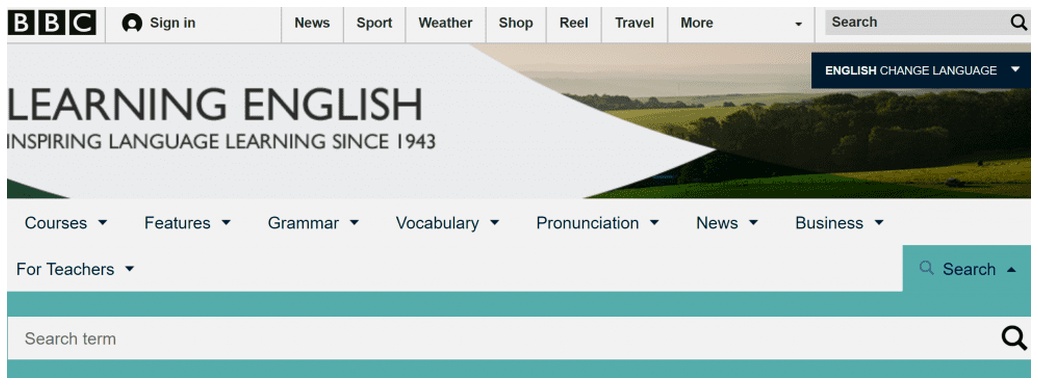
If you’re interested in mastering British English, look no further than BBC Learning English—a resourceful platform from the UK government filled with valuable learning tools. Plus, they’ve just launched a free app to enhance your language journey even further!
Pros:
- It’s completely free!
- It contains thousands of high-quality listening and reading exercises.
- Stay informed with our weekly “News Review” video in intermediate English, featuring a learning exercise and podcast. It’s an excellent way to improve your English skills while keeping up with the latest UK news!
- You can email a question in response to any of the exercises and expect an expert reply.
Cons:
- British English isn’t the most useful variation of the language.
- You can’t expect fluency with a tool that provides no speaking practice.
- The website is a little old-fashioned and boring next to more modern tools.
2. Duolingo
If you’ve attempted to learn a second language recently, you’ve likely encountered the iconic Duolingo owl! This friendly mascot has become a staple in language learning, helping millions of users on their journey to fluency.
Duolingo, with its engaging website and app packed with addictive learning exercises, transforms the process of learning English into a fun game. Its immense popularity has led us to conduct a thorough review. However, like any tool, it does have its drawbacks.
Pros:
- The free version of Duolingo is so good that there’s no need to buy a subscription.
- The owl motivates you to stay on track with lessons, making Duolingo an effective tool for developing a language-learning habit.
- It is very useful for memorizing basic vocabulary.
- If learning a language from scratch, it is useful for achieving basic knowledge.
Cons:
- Excessive time spent on this app may yield minimal real-life progress, as the games often differ significantly from actual situations. Users may find themselves playing for months without tangible results.
- It is often difficult — impossible even — to find out why a correct answer is correct.
- Those who have already mastered the basics will find Duolingo less useful.
- There is no chance to gain speaking practice.
3. Tandem
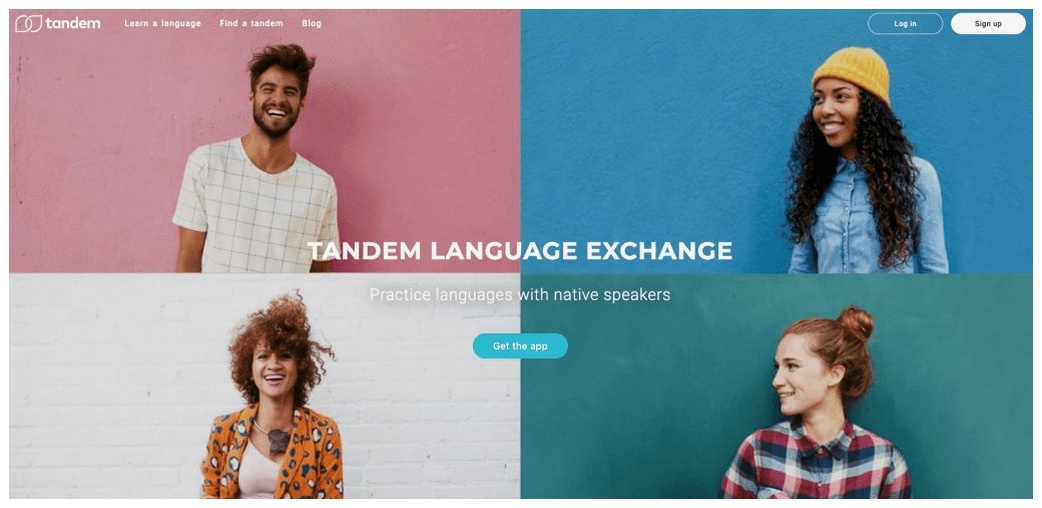
As you embark on your English learning journey, language apps like Duolingo can be incredibly helpful. However, to truly advance your skills, it’s essential to find a practice partner who can help you apply what you’ve learned in real conversations!
Tandem is a fantastic free language-exchange app that facilitates connections with English speakers eager to learn your native language. This platform allows you to engage in conversations and share language skills, making the learning process both enjoyable and effective.
Pros:
- It’s free to use — if you’re lucky, you can get hours of speaking practice at no cost.
- It’s on your phone, so you can connect to native English speakers wherever you go.
- Engage in real-time conversations to meet new friends and establish long-term, free exchange partnerships.
- Engage in video chats with exchange partners to foster trust and facilitate face-to-face conversations.
Cons:
- At the moment, you can’t use it on a desktop.
- Some users treat it more like a dating site than a language exchange app, which can be off-putting.
- Finding a language exchange partner often leads to challenges in evenly balancing conversation time between your native language and theirs, which can hinder effective learning progress. This imbalance can make language practice less efficient.
- The number of people interested in learning your native language can result in either a flood of messages or none at all.
- Other users aren’t English teachers, so you can get bad advice.
4. Busuu

Busuu stands out as a leading language-learning app, boasting an impressive 90 million users globally. What sets it apart is its dual function as both a social network and a comprehensive resource for language games and exercises. With Busuu’s innovative “community” feature, you can engage with native English speakers, making it a unique blend of a learning platform and a language exchange hub!
Pros:
- The “community” feature is a fun way to meet people.
- The premium subscription is great value if you buy a long-term package.
- It uses voice recognition software even more often than others do to get you used to speaking English aloud.
- There are specific “business” and “travel” English courses.
- Its flashcard system is very helpful when you’re first learning English.
Cons:
- Unlike Duolingo, the free version is definitely not as useful as the paid one.
- Avoid the temptation to “cheat” in Busuu’s flashcard game by randomly selecting answers, as this undermines effective learning.
- As with all language learning apps, it’s no substitute for conversation practice.
- Sometimes its explanations aren’t in-depth enough to gain real understanding of a new rule.
LingualNeeds: The Ultimate Tool to Enhance Your English Learning

Looking to make rapid progress in your English studies? Look no further than LingualNeeds! This dynamic online platform pairs students with expert tutors for personalized one-on-one lessons. With our user-friendly search filters, you can easily find the ideal tutor that aligns with your learning objectives, availability, and budget. Start your journey to fluency today!
Traditionally, private lessons have come with a hefty price tag. However, with LingualNeeds, you have the power to choose what fits your budget. Starting at just $5 per hour, there’s a tutor available for every financial plan. Unsure if it’s the right investment for you? Rest easy—if you’re not satisfied with your lesson, it’s on us. You can either get a refund or book a session with another tutor without any additional charges.
In contrast to learning apps, you’ll dive into speaking practice right from your very first lesson. This hands-on approach makes it much easier to apply what you learn in real-life situations.
Additionally, you have the flexibility to tailor your lessons to suit your specific interests. Rather than spending time memorizing vocabulary that may not be relevant, you and your tutor will collaborate to create a personalized learning plan. If you prefer a structured approach, we’ve got you covered too! Every English learner can access LingualNeeds Learning Plans—an extensive collection of expertly crafted exercises and worksheets designed to enhance your learning experience.
Similar to language learning apps, LingualNeeds is perfect for those with a hectic lifestyle. You can easily arrange lessons to fit your schedule, whether during your lunch break, after work, or even in the evening if that suits you better!
What sets LingualNeeds apart as an effective learning platform? It’s the ability to connect you with a tutor who not only meets your educational needs but also resonates with your personality.
At LingualNeeds, our tutors are truly exceptional—an interesting, diverse, and talented group that stands out. Thanks to our unique policy of offering a free lesson replacement if you’re not completely satisfied, you can confidently find a tutor who resonates with you. Many of our students develop strong, enjoyable relationships with their teachers and eagerly anticipate their weekly sessions. Having a supportive tutor can be a powerful motivator, helping you stay committed to your long-term learning goals.
Try LingualNeeds and prepare to achieve your English language goals in the most efficient, fun and human way possible.
Conclusion
This article presents valuable strategies to enhance your English study sessions, along with insights into the most beneficial apps available for learners.
Although countless websites may suggest quick tricks for achieving English fluency in just a week or two, the reality is that mastering any language requires a significant time commitment. By implementing these helpful tips, you can maximize your efforts and achieve the best results in your language-learning journey.
FAQ about studying English
How can I be successful in studying English?
Consistency is the key to your success. The more regularly you practice, the greater your achievements will be. Additionally, nothing surpasses the benefits of one-on-one interaction for enhancing language skills. To boost your progress, seek out English-speaking partners for engaging conversations!
How can I teach myself English?
The internet is brimming with fantastic resources to help you learn English, so take advantage of them! Tune into English podcasts, enjoy TV shows and movies, and record your speaking to review your progress. Start a daily journal in English to enhance your writing skills, and explore grammar and vocabulary apps to expand your language knowledge.
How can I learn English quickly?
The more you engage with English speakers, particularly native ones, the faster your language skills will grow. Language immersion programs are designed to accelerate learning through this interactive approach, and you can benefit from it as well!
FAQPage Code Generated by https://saijogeorge.com/json-ld-schema-generator/faq/
Frequently Asked Questions
What are effective strategies for studying English?
Setting clear targets, practicing regularly, and using resources like apps and tutors can enhance your English learning.
How can I overcome my fear of making mistakes while learning English?
Embrace mistakes as part of the learning process and practice in low-risk environments to build confidence.
What should I do if I have questions about my English studies?
Seek help promptly, whether from a tutor, online resources, or language learning communities.
How can I find my personal learning style for studying English?
Identify whether you are an auditory, visual, or kinesthetic learner and tailor your study methods accordingly.
What is the benefit of practicing English with a native speaker?
Engaging in conversation with native speakers boosts your confidence and helps enhance your language skills significantly.


