

- Key findings
- How Americans learn second languages
- Second languages aren’t retained
- Why America is falling behind in foreign language learning
- Why Americans regret not learning a second language
- Monolinguists miss opportunities
- The importance of learning a second language
- Methodology:
- Frequently Asked Questions
- Why is learning a second language important?
- What percentage of Americans regret not learning a second language?
- How do most Americans learn a second language?
- What are some reasons Americans struggle to retain their language skills?
- What impact does bilingualism have on job opportunities?
We live in a time of unprecedented global connectivity, where individuals from diverse cultures interact daily. While English serves as a common bridge, there are compelling reasons to embrace additional languages. Learning a new language enriches our understanding and appreciation of different cultures, fostering deeper connections. Moreover, it enhances cognitive abilities, improving critical thinking and memory, which contributes to overall brain health.
Despite over 30% of Americans studying a foreign language due to school requirements, less than 10% achieve proficiency. At LingualNeeds, a premier platform for conversational English and online lessons, we surveyed over 1,000 individuals to gain insights into their language learning experiences and perspectives. This study aims to highlight the significance of language acquisition and examine why the United States falls behind other countries in this vital skill.
“While we have a wealth of knowledge about language learning, our understanding of language retention is still evolving. As a society, we tend to focus more on acquiring new languages than on maintaining those skills over time. To truly enjoy the advantages of being multilingual, it’s essential to practice regularly and reinforce what you’ve learned. If local opportunities for practice are limited, the internet offers a fantastic solution, enabling individuals to engage in language exchanges or take online classes to enhance their skills,” remarked Dr. Melissa Baese Berk, Professor of Linguistics at the University of Chicago.
Key findings
- 9 out of 10 believe learning a second language is important.
- Of those who didn’t learn a second language, 70% regret not doing so.
- 21% have missed a career opportunity because they didn’t know a second language.
- 58% have been embarrassed by their inability to communicate with someone who spoke a different language.

Learn a language with personalised 1-on-1 classes with our expert tutors from all over the world
French lessons online
Spanish lessons online
How Americans learn second languages
In the United States, language learning primarily takes place in school, typically around the age of 17. According to survey results, a significant 56% of respondents acquired their language skills in an educational environment. In contrast, only 19% learned from a family member, while a mere 10% utilized an app-based program for their studies.
This data reveals a significant insight: the landscape of foreign language learning in America is largely driven by educational mandates. Notably, 31% of those surveyed indicated that their motivation to learn another language stemmed solely from school requirements.
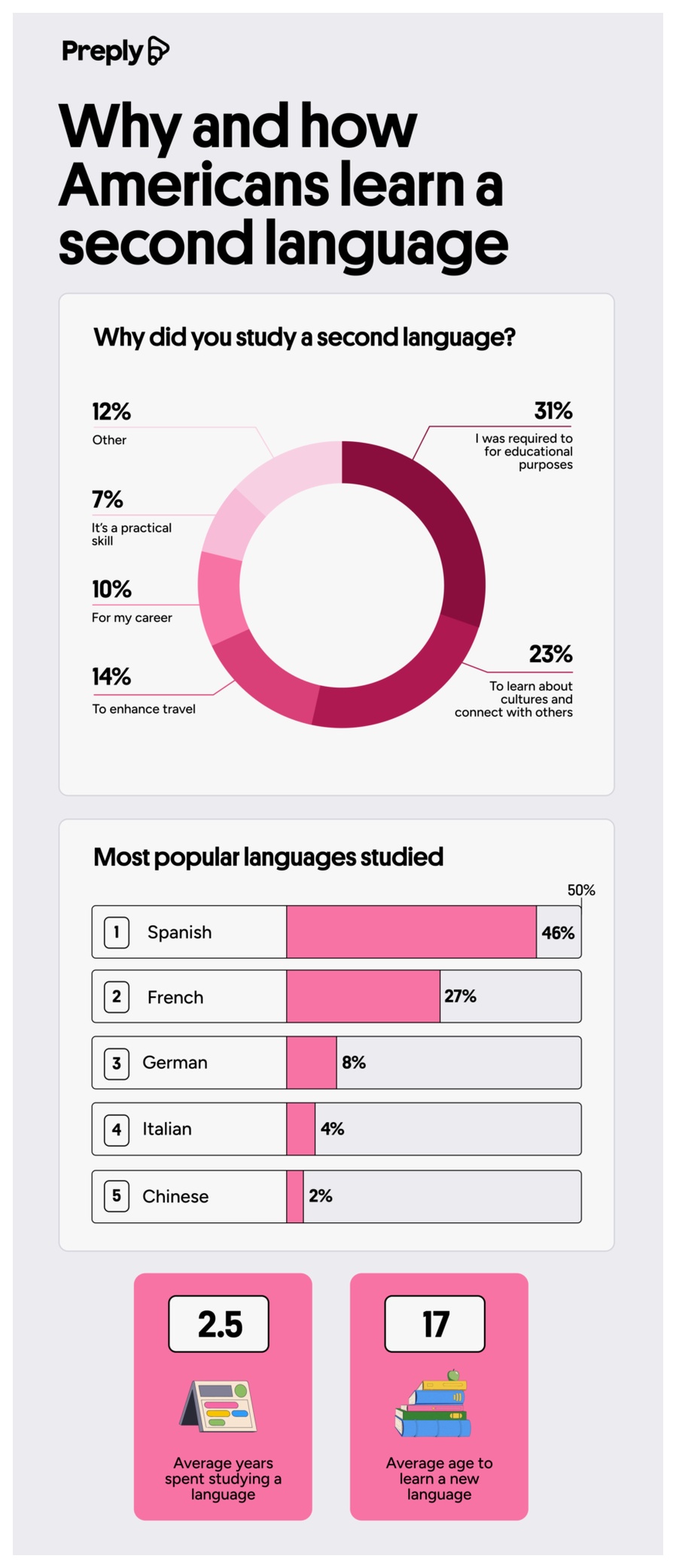
Among the languages our respondents explored, online Spanish lessons, along with classes from French and German tutors, emerged as the top choices. Notably, half of the language learners received instruction from teachers in school, with an average study duration of 2.5 years.
Many individuals pursued language learning beyond school requirements. In fact, 23% of our respondents reported that their motivation for learning a language stemmed from a desire to better understand different cultures. Learning wasn’t confined to formal education; the oldest participant began studying a second language at the age of 69. Furthermore, 13% of respondents cited friendships with native speakers as a key influence in their language education.
While many Americans express a sincere interest in learning a second language, the overall picture reveals a concerning trend. A significant number of individuals only engage in language studies because it’s mandatory, and often for just a short duration. This could be attributed to the lower priority given to language acquisition in the U.S. compared to other regions around the globe.
Second languages aren’t retained
The undervaluation of foreign language education in the United States is striking. Over 25% of individuals who have learned a second language haven’t practiced it in the last decade. Even during their studies, fewer than half (48%) considered themselves to have reached an intermediate level of proficiency. Today, around 10% of former language learners can no longer comprehend the language they once studied, and nearly 40% would struggle to navigate a single day in a country where that language is spoken, relying solely on it.
These responses highlight the ongoing neglect of foreign language education in the U.S. This issue is further underscored when we examine the reasons behind the decline in language learning programs.
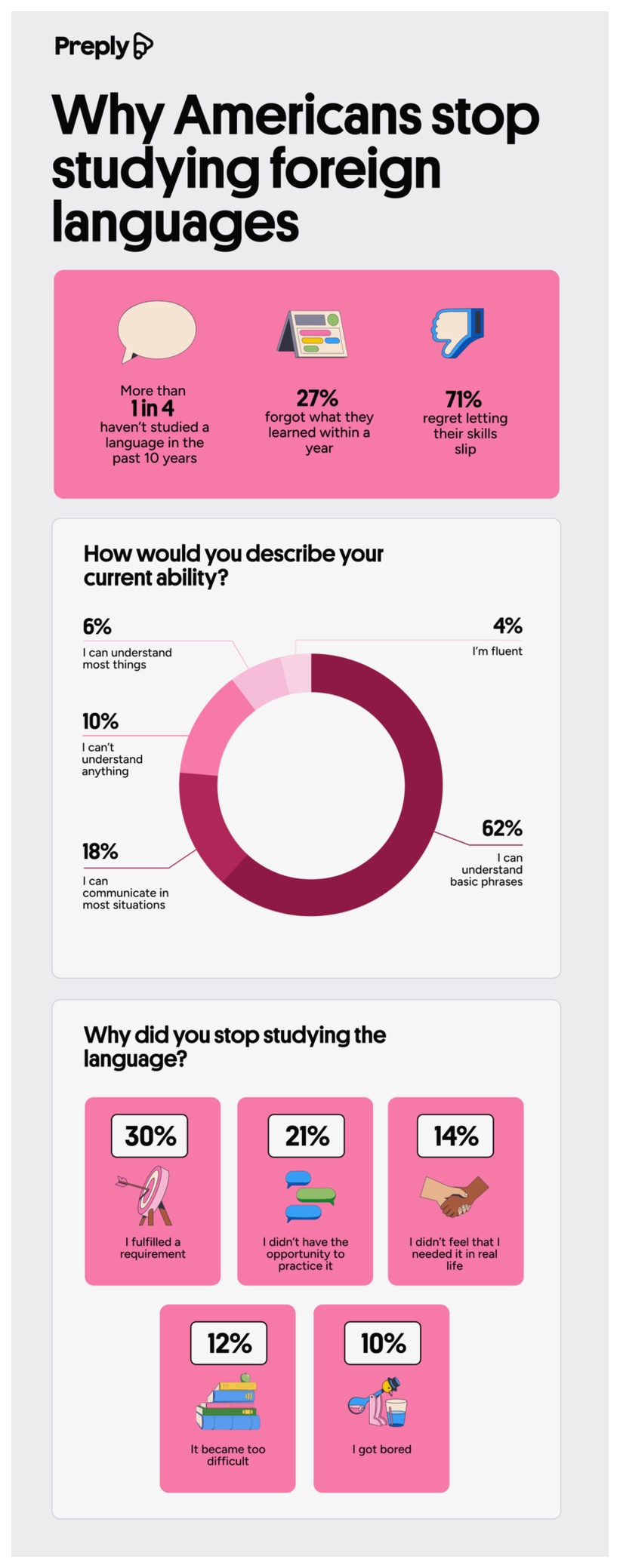
Many individuals cease learning once they fulfill educational requirements, such as earning college credits. Alarmingly, over 25% forget their language skills within a year. Some believe they won’t use these skills in real life, while others lack opportunities to practice. Regardless of the reasons, a striking 71% express regret over losing their foreign language abilities.
This leads to the following question: Why aren’t Americans retaining their foreign language skills?
Learn a language online with our free learning materials.
Learn English online
Learn French online
Why America is falling behind in foreign language learning
Analyzing the landscape of language education reveals some concerning trends. The American Council of Alumni and Trustees reports that merely 12% of the 1,100 higher education institutions in the U.S. mandate intermediate foreign language proficiency for graduation, which equates to just three semesters of language study. Additionally, the Modern Language Association highlights a worrying decline, showing that between 2013 and 2016, colleges eliminated 651 foreign language programs.
Why is this happening?
In contrast to many countries, the United States does not have federal requirements for foreign language education in schools. Instead, the responsibility for setting these standards is left to individual states. Currently, only three states, along with Washington, D.C., impose foreign language requirements for high school graduation. New York and New Jersey mandate a single year of foreign language study, while Michigan and Washington, D.C. require two years.
Out of the 47 states that don’t require foreign language education, only 20% of public school students have taken a foreign language course before heading to college. Alarmingly, this figure plummets to just 10% by the time they reach higher education.
These statistics highlight a concerning trend: America is lagging in foreign language education because many states lack mandatory language learning requirements. As a result, fewer Americans are motivated to study a foreign language.
Consequently, the United States lags behind many other nations in foreign language proficiency and cultural intelligence. Only 20% of Americans are fluent in a second language, a stark contrast to Europe, where over half of the population is bilingual. This gap highlights the importance of enhancing language education in America to foster global communication and understanding.
Why Americans regret not learning a second language
This study explored the widespread neglect of foreign language education, revealing that over 70% of participants wish they had learned another language. The findings highlight a significant undervaluation of foreign languages throughout the country.

In a recent survey, half of the respondents expressed that the widespread use of English makes learning a second language less essential. Some even claimed that many foreign languages are practically useless. Additionally, several participants pointed to time constraints and limited opportunities as factors that dampen their motivation to learn another language. While many monolingual individuals express regret over not acquiring a second language, a significant number still struggle to recognize its value.
This way of thinking has consequences.
Monolinguists miss opportunities
Individuals who haven’t explored a foreign language often find themselves missing out on valuable opportunities. In fact, a surprising 25% of people report losing potential friendships, while nearly 10% have missed romantic chances as a result. Embracing a new language can open doors to connections that enrich our lives.
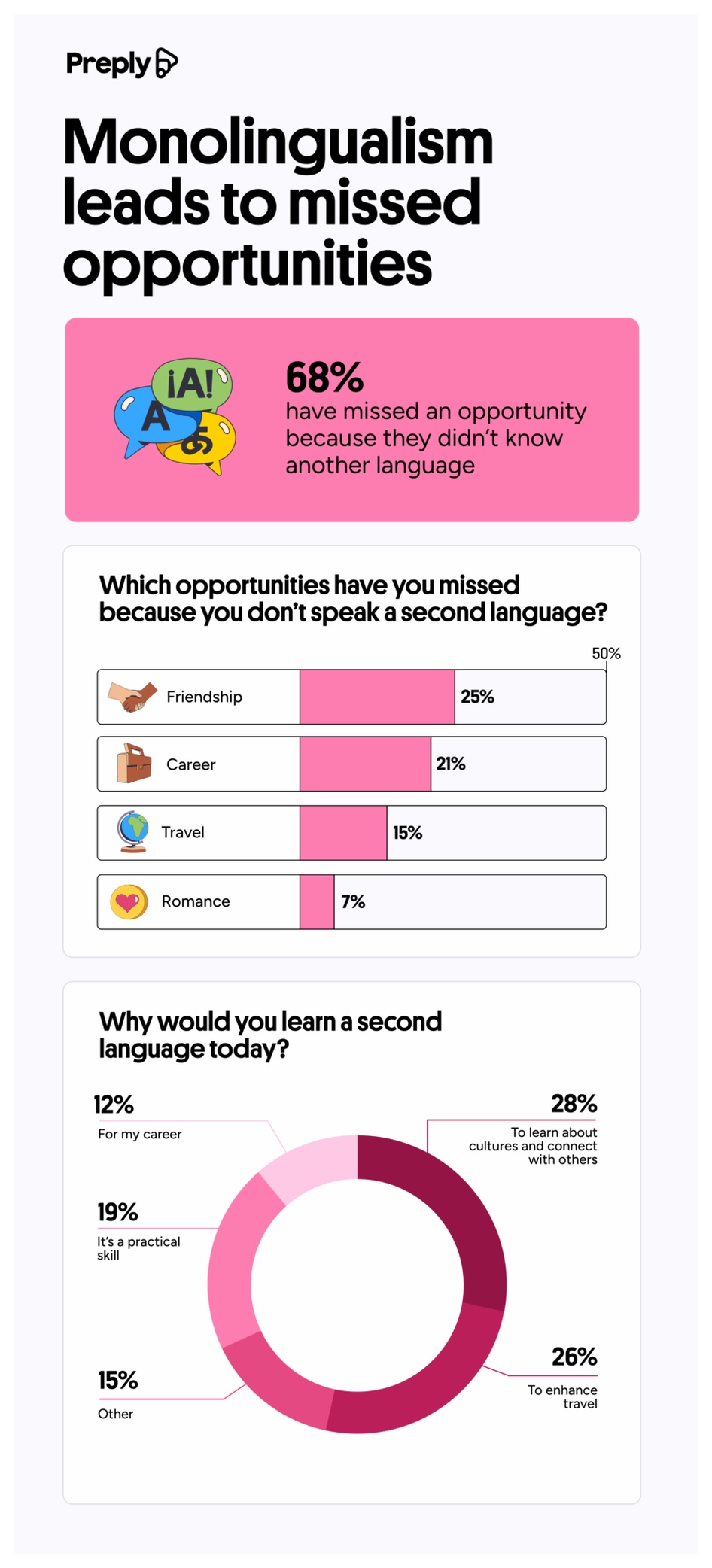
The lost opportunities extend even further. More than 20% of individuals reported missing out on career advancements, while 15% regretted missed travel experiences. Many expressed that knowing just one language restricted their life experiences, and a frequent lament among monolinguals was the inability to connect with family members. Additionally, the challenge of engaging with foreign literature added to their sense of limitation.
Most respondents are well aware of these insights. In fact, 70% express a strong desire to start learning a foreign language immediately. Their motivations reflect missed opportunities, with career advancement, cultural enrichment, and travel experiences being the top reasons for their interest.
The survey revealed a strong interest among respondents in learning Spanish, French, and Japanese. Notably, Spanish and French are already widely taught in schools, underscoring the need for more extensive language learning programs that include a broader range of options.
The importance of learning a second language
The study highlights the crucial role of bilingualism, with over 90% of participants acknowledging the value of learning a second language. Their responses reveal that bilingualism opens doors to numerous opportunities, particularly in fostering deeper human connections. Notably, 58% of respondents reported feeling embarrassed due to their inability to communicate with someone speaking a different language. This underscores the vital importance of language skills in our increasingly interconnected world.
Mastering a second language opens up a world of possibilities, quite literally! A significant 35% of travelers have found their adventures curtailed by language barriers. In contrast, those who are bilingual enjoy enhanced travel experiences and increased job opportunities, particularly for positions overseas.
The benefits of learning a second language are undeniable: bilingual individuals often enjoy more fulfilling lives. However, you don’t need to be a polyglot to experience the advantages of enhanced language skills. Acquiring a new language can enrich various aspects of your life, opening doors to personal growth and new opportunities.
There’s no reason to hesitate when it comes to learning a new language! According to bilingual participants in this study, several impactful strategies can enhance the experience. Engaging in conversations with native speakers offers practical, real-world practice, while traveling provides invaluable cultural immersion that further enriches language acquisition.
Learning a new language no longer requires you to step outside your home. Thanks to interactive language apps and personalized lessons with teachers on platforms like LingualNeeds, anyone can easily acquire language skills. The secret to mastering a foreign language is simple: choose a method that you enjoy. With countless advantages and opportunities awaiting, there’s no better time for Americans to dive into language learning!
Methodology:
On August 11, 2021, we conducted a survey with 1,078 participants on their experiences learning a foreign language through the Amazon Mechanical Turk platform. Among the respondents, 58% identified as male, 41% as female, and 1% as nonbinary. The average age of participants was 37 years. In terms of education, 10% had completed high school or less, 20% had some college experience, 51% were college graduates, and 20% had either completed some graduate studies or earned a graduate degree.
Frequently Asked Questions
Why is learning a second language important?
Learning a second language enriches our understanding and appreciation of different cultures, fosters deeper connections, and enhances cognitive abilities.
What percentage of Americans regret not learning a second language?
70% of Americans who did not learn a second language express regret over their decision.
How do most Americans learn a second language?
Most Americans learn a second language primarily in school, with 56% of respondents indicating they acquired their skills in an educational environment.
What are some reasons Americans struggle to retain their language skills?
Over 25% of individuals who have learned a second language haven’t practiced it in the last decade, and many cease learning once they fulfill educational requirements.
What impact does bilingualism have on job opportunities?
Bilingual individuals often enjoy enhanced job opportunities, particularly for positions overseas, as they can communicate effectively in multiple languages.


