- Benefits of hiring a globalized workforce
- 6 tips on attracting global talent
- Offer competitive compensation and benefits
- Consider flexible work arrangements
- Offer visa and relocation support
- Clearly communicate company’s values and potential opportunities for advancement
- Highlight non-work benefits
- Offer childcare or childcare resources
- 5 tips for retaining global talent
- Provide opportunities for professional development
- Facilitating cultural integration programs
- Promoting a diverse and inclusive workplace
- Making global mobility possible
- Promote work-life balance
- Conclusion
- Frequently Asked Questions
- What is a globalized workforce?
- Why is diversity important in the workplace?
- What are some effective strategies for attracting global talent?
- How can companies retain global talent?
- What role does work-life balance play in employee satisfaction?
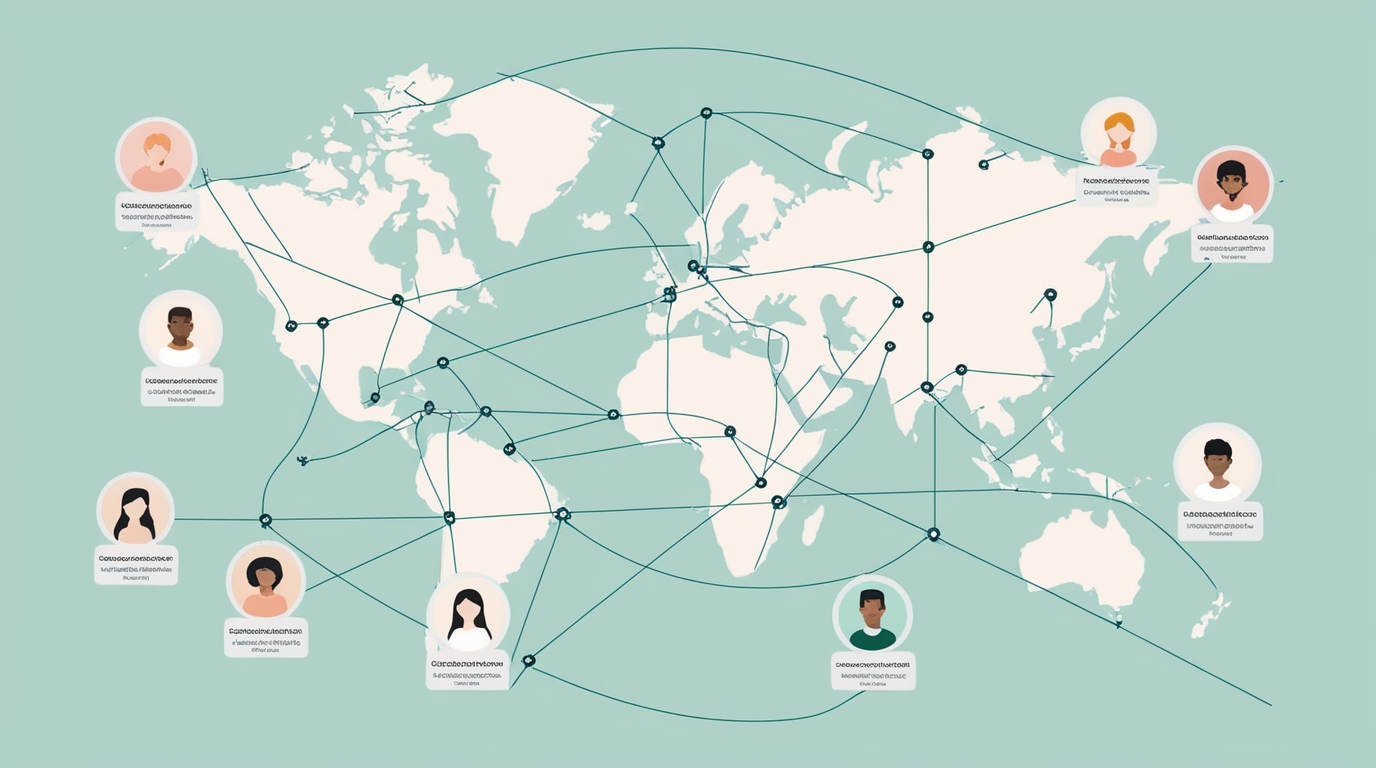
The term “globalized workforce” might sound like just another buzzword, but it holds significant weight. A report from France’s Sciences Po reveals that there are more than 60,000 multinational companies operating globally. This statistic underscores the importance for businesses to embrace a diverse hiring strategy that taps into talent from around the world.
While attracting international talent is a popular discussion in the business world, the focus should also be on retention. To successfully draw in and keep global talent, your organization must foster an inclusive environment that resonates with individuals from various backgrounds.
In this article, we’ll explore the advantages of building a diverse, global workforce. Stay tuned as we also share practical examples of how to attract and retain top talent from around the world.
Benefits of hiring a globalized workforce
There are countless advantages to hiring a globalized workforce. Let’s look over a few together.
Employing a diverse range of individuals brings a wealth of skills and perspectives to your company. By broadening your recruitment efforts, you not only attract more talent but also enhance your ability to adapt and succeed in various markets, driving your company’s growth and resilience.
Bringing on employees from diverse backgrounds enriches your team with a wide range of perspectives. Research has demonstrated that diversity boosts creativity by prompting individuals to seek out new information and ideas.
When employees approach problems from various angles, it fosters creativity and enhances the efficiency of problem-solving. Embracing diverse perspectives is invaluable for companies, as it leads to more innovative solutions!
To effectively tap into diverse markets or expand your company’s reach, there’s no better resource than the individuals who make up your target audience. Engaging directly with them provides invaluable insights into their needs and preferences.
It’s essential for employers to possess both linguistic and cultural knowledge of their clients. By doing so, companies can effectively connect with new communities, leading to enhanced customer communication and greater opportunities for growth.
6 tips on attracting global talent
Now that we understand why hiring global talent matters, let’s examine how to pique the interest of potential candidates.
In this article, we present six effective strategies to help you attract and recruit top global talent. Remember, these tips can be customized to fit the unique needs of your organization. Let’s dive in!
Offer competitive compensation and benefits
A competitive salary is undeniably a key factor that attracts potential employees. To successfully recruit top global talent, it’s essential for your company to conduct thorough research and offer appealing compensation packages.
When hiring, it’s crucial to consider several key factors: What is the average salary for the position? Are there specific skills that could lead to higher compensation? Additionally, what constitutes a living wage in the candidate’s country? Addressing these questions early in the hiring process can help ensure a fair and informed decision for both employers and potential employees.
In addition to salary, employee benefits play a crucial role in overall job satisfaction. What types of healthcare options are available to your team? Do you offer comprehensive coverage that includes dental and vision care? If your employees are required to work on-site, do you provide support for commuting expenses?
Offering fundamental benefits such as life insurance, 401(k) plans, Roth IRAs, and employee discounts can serve as a powerful incentive to attract hesitant candidates to your organization. These perks not only enhance your overall compensation package but also demonstrate your commitment to employee well-being and financial security.
Consider flexible work arrangements
In the wake of the pandemic, many companies might be reluctant to continue remote work policies. Yet, a recent survey revealed that 63% of respondents consider the ability to work remotely as the most crucial factor in their job satisfaction. This highlights the growing demand for flexible work arrangements in today’s workforce.
If your job doesn’t require you to be on-site, it’s a great time to reassess your remote work policy. Will you establish specific days for in-person attendance, or will you allow employees the flexibility to choose when they come into the office?
If you’re hiring talent from around the globe without a physical office, it’s essential to operate effectively in a remote environment. Are your communication platforms seamlessly integrated to facilitate collaboration among employees spread across different continents and time zones?
Transparency about your company’s practices around work arrangements is necessary to build trust with prospective employees.
Offer visa and relocation support
Many employees worldwide eagerly aspire to join international companies, yet often lack the necessary resources to make that leap. Challenges such as obtaining the right documentation and financial constraints can hinder their entry into the global workforce.
To facilitate the hiring of international employees, it’s essential for your company to take proactive steps. Start by ensuring that a member of your human resources team is well-versed in the intricacies of the international hiring process. This expertise will help streamline recruitment and make the transition smoother for new hires.
If the situation calls for it, consider offering training to enhance employee skills. Additionally, providing relocation support can significantly ease their transition. This support can include stipends, moving services, and helpful recommendations for temporary housing as they adjust to their new environment.
Clearly communicate company’s values and potential opportunities for advancement
Today, employees are increasingly demanding that companies back up their statements with real actions. To prevent misunderstandings, it’s essential to clearly communicate your company’s mission and core values. This transparency not only helps avoid potential conflicts but also ensures a strong alignment between the company’s culture and the employee’s expectations right from the beginning.
It’s essential to inform employees that joining the team opens up a wealth of advancement opportunities. Employees appreciate transparency regarding potential career progression and want to know how they can elevate their roles within the organization.
To foster a culture of professional development, it’s essential to outline how your company can actively support employees in their growth journeys. Highlighting success stories of individuals who have advanced within your organization can serve as inspiring examples and motivate others to pursue their own career paths.
Highlight non-work benefits
What exactly are “non-work” benefits? In essence, these perks highlight the quality of life in the area where the job is situated. For instance, if your workplace is near a beautiful natural setting, employees might enjoy outdoor activities like hiking or swimming, enhancing their overall experience beyond the office.
On the other hand, if you find yourself in a bustling city, you’ll have endless opportunities to visit fascinating museums, savor a variety of international cuisines, and immerse yourself in vibrant cultures.
Regardless of the situation, it’s essential to highlight to prospective candidates that taking a job in a new country can open the door to thrilling personal adventures in addition to professional growth. This perspective can ease their worries and alleviate any concerns they may have for themselves and their families during the relocation process.
Offer childcare or childcare resources
Providing childcare might seem challenging for some companies, particularly those that operate remotely. However, it’s important to remember that family is a universal value shared across cultures and countries, as highlighted by extensive research from the Pew Research Center.
Thus, employer-provided childcare is the difference between taking a job and passing it up for some employees.
Consider the option of establishing a small on-site childcare center specifically for infants and toddlers. If that’s not feasible, you could provide daycare reimbursement and implement flexible schedules to accommodate parents during drop-off and pick-up times.
Prioritize consideration for your employees’ needs. Providing amenities like lactation rooms, flexible work schedules, and generous maternity and paternity leave demonstrates your commitment to their well-being and can make your workplace more appealing to potential candidates.
5 tips for retaining global talent
Now that you’ve hired talented employees from across the world, how do you make sure that global talent stays?
Research shows that employees across various industries share similar desires and needs. Here are five effective strategies to ensure they receive what they’re looking for.
Provide opportunities for professional development
Employees have a strong desire for growth and advancement in their careers. To foster this ambition, companies should create meaningful opportunities for professional development. This can encompass a variety of programs, such as networking workshops and training to enhance technical skills, including language acquisition. By investing in their team’s growth, organizations not only boost morale but also cultivate a more skilled workforce.
Remarkably, 72% of employees say that language training enables them to complete tasks more efficiently. By setting up a corporate account, your organization could experience a substantial 25% boost in productivity among your global teams.
Moreover, multilingual companies can tap into three times as many business markets as those that operate in just one language, significantly broadening their global reach and enhancing their prospects for success.
Improved employee communication skills mean more support for your company in effectively reaching global markets.
Facilitating cultural integration programs
Relocating to a new country presents its challenges, but adjusting to a different culture can be even more daunting. To ease this transition for employees, your company can implement cultural integration programs that foster understanding and connection within the new environment.
If you’re new to the idea, a cultural integration program is a structured initiative designed to educate potential employees about the local culture. This program helps newcomers navigate their new environment, fostering a smoother transition and enhancing their overall experience.
Training programs can enhance workplace harmony by educating local employees about the diverse cultures of their new colleagues. These workshops often explore cultural theories, like the iceberg model, and encourage discussions on different practices. Participants may also engage in sharing food and traditions, fostering a deeper understanding and appreciation among team members.
These programs encourage employees to engage in conversations beyond work-related subjects, fostering a deeper understanding and appreciation of diverse perspectives, communication styles, and approaches to problem-solving.
Promoting a diverse and inclusive workplace
As a company, your commitment to cultural integration goes beyond mere compliance; it’s essential to consistently evaluate the atmosphere of your workplace. True diversity is not just about statistics or titles—it’s about fostering an inclusive environment where everyone feels valued and empowered.
To retain a diverse global talent pool within your organization, consider whether your employees feel a genuine sense of belonging. Are different voices and perspectives actively represented and valued?
For optimal results, your human resources department should lead this initiative. However, many organizations choose to enhance their efforts by partnering with external consultants or bringing in specialized Diversity, Equity, Inclusion, and Belonging (DEIB) experts.
To effectively prioritize and strategize your organization’s DEIB goals, these professionals could conduct an internal survey. This approach will help identify the key areas of focus, ensuring that efforts are aligned with the most important aspects of diversity, equity, inclusion, and belonging.
Making global mobility possible
Global opportunities present an exciting chance for ambitious employees to push their limits and explore new horizons. It’s natural to think that those considering relocation to a different country are also open to future moves, seeking fresh experiences and challenges along the way.
Instead of forcing employees to choose between your organization and a competitor, create opportunities that encourage them to remain with your company.
By offering diverse opportunities within your organization, you can concentrate your efforts on retaining top global talent instead of beginning the hiring process from scratch.
Another benefit is that employees can forge vital connections between different locations and markets, effectively uniting various divisions of your company as they advance in their careers.
Promote work-life balance
Employees thrive when they’re challenged and presented with opportunities to showcase their talents. However, it’s essential for companies to view their workforce as complete individuals, rather than merely cogs in a machine.
It’s essential to honor standard work hours and paid time off (PTO). If employees find themselves working outside regular hours due to time zone differences, it’s important to clearly communicate alternative times when they can take a break or disconnect from work.
By promoting a healthy work-life balance, your employees can thrive both personally and professionally. This not only enhances their well-being but also helps your company mitigate the risk of job burnout, which can lead to widespread fatigue, disengagement, and even quiet quitting.
It’s important to recognize that employees’ perceptions of work-life balance can vary significantly due to cultural differences and other influences. For instance, in Spain and China, it’s typical for workers to enjoy a midday nap, allowing them to work later into the evening. Understanding these diverse approaches can help foster a more inclusive workplace.
When hiring international candidates, it’s essential to recognize that different countries have varying norms regarding paid time off. Understanding these differences is crucial before making hiring decisions, and it’s equally important to respect these cultural variations once you welcome new team members from diverse backgrounds.
Investing in the mental and physical well-being of employees demonstrates a company’s commitment to their health. This support can take various forms, such as in-person workshops, online resources, or dedicated mindfulness spaces. Ultimately, prioritizing employee wellness fosters a positive work environment and enhances overall productivity.
Conclusion
In today’s competitive landscape, tapping into global talent is crucial for success. However, the challenge lies in how companies can effectively attract and retain skilled professionals from around the world. What strategies can organizations implement to build a diverse and engaged workforce?
At the heart of employee motivation lies the appeal of competitive salaries and a robust package of personal and professional benefits. In today’s global workforce, individuals seek recognition not only as dedicated employees but also as unique individuals. They aspire to grow both within your organization and in their own career paths.
Feeling overwhelmed about where to begin? You’re not alone! Many believe that effective communication is the cornerstone of any successful organization. In fact, a recent survey found that a striking 98% of individuals believe it’s crucial for businesses to communicate well with their customers.
Multilingual employees significantly enhance problem-solving efficiency, build stronger relationships, and expand your company’s global presence. With LingualNeeds’s corporate language training, your organization can move past basic greetings to cultivate authentic connections with partners and customers alike.
Frequently Asked Questions
What is a globalized workforce?
A globalized workforce refers to a diverse group of employees from various countries and cultural backgrounds working together within a company.
Why is diversity important in the workplace?
Diversity brings a wealth of skills and perspectives, enhances creativity, and fosters innovative problem-solving, ultimately driving a company’s growth and resilience.
What are some effective strategies for attracting global talent?
Companies can attract global talent by offering competitive compensation, flexible work arrangements, visa support, clear communication of values, and highlighting non-work benefits.
How can companies retain global talent?
To retain global talent, companies should provide opportunities for professional development, promote cultural integration, ensure work-life balance, and foster a diverse and inclusive workplace.
What role does work-life balance play in employee satisfaction?
Promoting work-life balance enhances employee well-being, mitigates job burnout, and allows employees to thrive both personally and professionally.