
- How to useadjectives in Spanish
- How to learnSpanish adjectivesfast and easy
- How to introduce yourself in Spanish
- List of Spanish adjectivesfor everyday use
- It’s time to start practicing!
- Frequently Asked Questions
- What are Spanish adjectives?
- Where can I find a list of common Spanish adjectives?
- How do Spanish adjectives change in form?
- Why is it beneficial to learn Spanish adjectives with a tutor?
- What is the best way to practice Spanish adjectives?
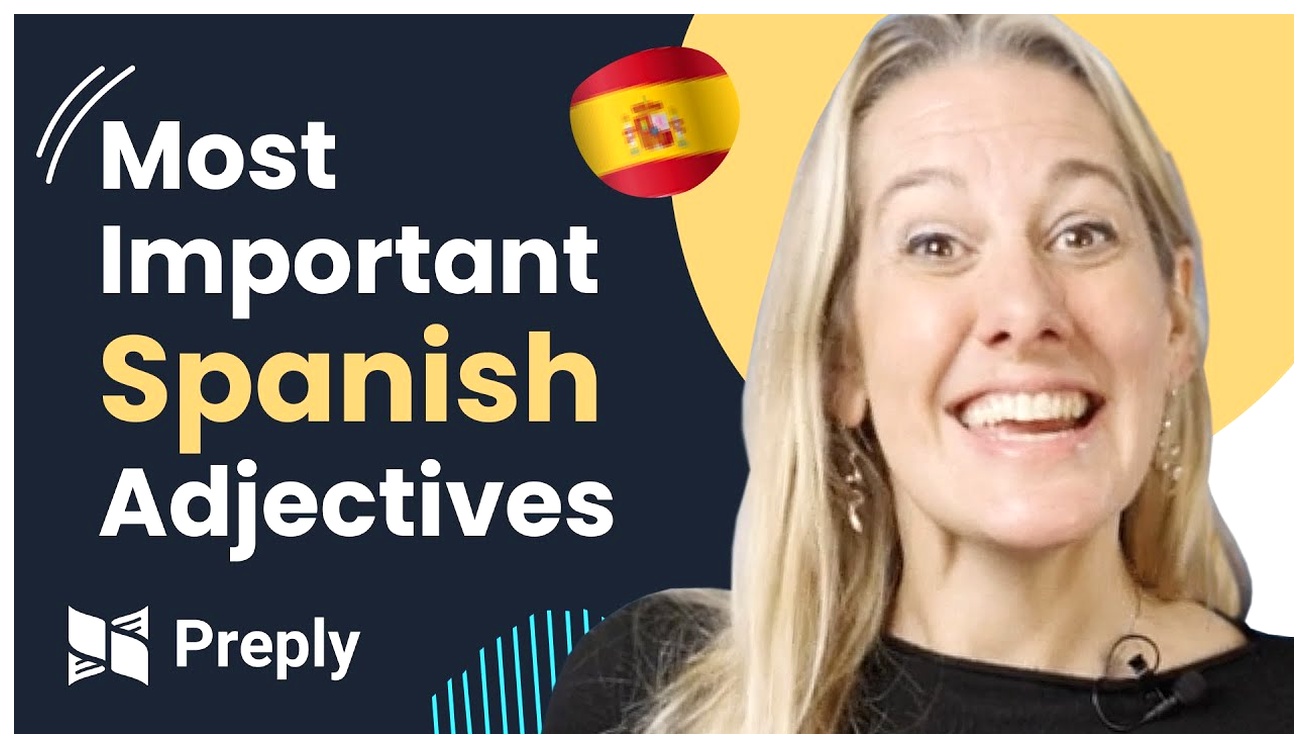
Looking to enhance your Spanish vocabulary with the most common adjectives? You’ve come to the right spot! LingualNeeds has curated an excellent list of fundamental Spanish adjectives that you can dive into immediately. Plus, you’ll be pleased to know that many of these adjectives closely resemble their English counterparts, making your learning process quicker and easier.
Keep reading to learn more or discover online Spanish classes on LingualNeeds.
How to use adjectives in Spanish
Spanish descriptive adjectives are essential words that characterize, identify, and quantify nouns or pronouns. In Spanish, these adjectives typically follow the nouns they modify, which can be confusing for beginners. However, with a bit of practice, placing adjectives after nouns will soon feel second nature. Embrace the challenge, and you’ll master this aspect of the language in no time!
Here’s an important rule to keep in mind: Spanish adjectives adjust their forms to match the gender and number (singular or plural) of the nouns or pronouns they describe. That said, there are exceptions to this rule, as some adjectives retain the same form regardless of gender.
How to learn Spanish adjectives fast and easy
Mastering Spanish independently can be challenging, as the lack of feedback and guidance often hinders progress. At LingualNeeds, we provide online lessons with native Spanish tutors from diverse backgrounds. Our experienced teachers help you concentrate on the specific skills you need, enhancing your vocabulary and enabling you to communicate confidently and effectively.
Are you eager to expand your vocabulary with positive adjectives in Spanish? Look no further! Our experienced tutors can create a personalized study plan tailored to your skill level, guiding you through all the rules and nuances of the language. Simply choose your ideal tutor, book your first video lesson, and embark on your learning journey with a native Spanish speaker through the LingualNeeds Space.
How to introduce yourself in Spanish

List of Spanish adjectives for everyday use
Discover this handy list of simple Spanish adjectives that you’ll find incredibly useful in your everyday conversations. All examples are sourced from SpanishDict.
- Bueno — Good
Beber agua frecuentemente es bueno para la salud. — Drinking water frequently is good for your health.
- Malo — Bad
Agosto es un mes especialmente malo para los mercados financieros. — August is an especially bad month for financial markets.
- Grande — Big
Compré una cobija grande. — I bought a big blanket.
- Pequeño — Small
Mi primo pequeño vive en Buenos Aires. — My little cousin lives in Buenos Aires.
- Guapo — Beautiful/Handsome
¡Qué pololo más guapo tiene! — What a handsome boyfriend she has!
- Feo — Ugly/Badly
Había una vez un patito feo. — Once upon a time, there was an ugly duckling.
- Feliz — Happy
Estoy feliz porque vienen mis primos esta Navidad. — I am happy that my cousins are coming this Christmas
- Triste — Sad
¿Qué ocurrió? ¿Por qué estás triste? — What happened? Why are you sad?
- Rápido — Fast
¿Qué tan grande y rápido es el flujo? — How large and fast is the flow?
- Lento — Slow
El subte siempre va lento y abarrotado. — The subway is always slow and crowded.
- Alto — High/Tall
Es un hombre alto con hombros amplios. — He’s a tall man with broad shoulders.
- Bajo — Low/Short
Mira qué bajo están volando los pájaros. — Look at how low the birds are flying.
- Largo — Long
Me di un paseo bien largo para despejar mi mente. — I went for a very long walk to clear my mind.
- Corto — Short
Escribió un relato corto para el concurso. — He wrote a short story for the contest.
- Caro — Expensive
El hotel era muy caro. — The hotel was very expensive.
- Barato — Cheap
¡Qué barato! Me gusta mucho el precio. — How cheap! I like the price a lot.
- Fácil — Easy
Prefiero vivir la vida fácil, sin preocupaciones. — I prefer to live the easy life, without any worries.
- Difícil — Difficult
Me resulta muy difícil recordar todas mis contraseñas. — I find it very difficult to remember all my passwords.
- Sencillo — Simple
Su estilo es sencillo pero elegante. — Her style is simple but elegant.
- Complicado — Complicated
Es demasiado complicado para explicar en cinco minutos. — It’s too complicated to explain in five minutes.
- Joven — Young
¿Cuántos años tienes? ¡Te ves tan joven! — How old are you? You look so young!
- Viejo — Old
Mi carro está viejo. — My car is old.
- Rico — Rich
Es todavía más rico que su tío. — He is even richer than his uncle.
- Pobre — Poor
Se crió en el seno de una familia pobre. — She grew up in a poor family.
- Delicioso — Delicious
Trajeron un delicioso pay de mora. — They brought a delicious raspberry pie.
- Repugnante — Disgusting
Es un procedimiento repugnante. — It is a disgusting procedure.
- Inteligente — Intelligent/Smart
Esa es la obra de una persona inteligente. — That is the work of an intelligent person.
- Listo — Smart/Ready
¡Ese chico en mi clase está tan el listo! — That boy in my class is so smart!
Estoy listo para firmar el contrato — I’m ready to sign the contract.
- Tonto — Stupid
¡Ay, qué tonto… Soy! — Oh, how stupid I am! ‘
- Común — Common
González es un apellido muy común en Latinoamérica. — Gonzalez is a very common surname in Latin America.
- Raro — Rare/Strange
Lo que pasó es muy raro. — What happened is very strange.
Eso es lo bastante raro como para que merezca la pena comentarlo. — That is rare enough to be worthy of note.
- Nuevo — New
Es una tecnología totalmente nueva. — It’s a completely new technology.
- Útil — Useful
Es una herramienta útil — It’s a useful tool.
- Importante — Important
Las redes sociales también desempeñaron un papel importante. — Social networks also played an important role.
- Fuerte — Strong
¡Mi papá es el hombre más fuerte del mundo! — My dad is the strongest man in the world!
- Débil — Weak
No seas tan débil. — Don’t be so weak.
- Abierto — Open
No dejes el refrigerador abierto. — Don’t leave the refrigerator open.
- Cerrado — Closed
Perdona, pero la cocina está cerrada. — Sorry, but the kitchen is closed.
- Vacío — Empty
El bote de champú en la ducha está casi vacío. — The bottle of shampoo in the shower is almost empty.
- Lleno — Full
Mi jardín está lleno de rosales de diferentes colores. — My garden is full of roses of different colors.
- Despierto — Awake
El bebé me tuvo despierta toda la noche. — The baby kept me awake the whole night.
- Cansado — Tired
Estaba tan cansada que me acosté sin cenar. — I was so tired that I went straight to bed without dinner.
- Limpio — Clean
Su piso siempre está bien limpio. — Their flat is always really clean.
- Sucio — Dirty
Disculpe pero mi tenedor está sucio. — Excuse me, but my fork is dirty.
- Enfermo — Sick
Te ves enfermo. ¿Estás comiendo bien? — You look sick. Are you eating right?
- Sano — Healthy
Vivimos una vida muy sana. — We live a very healthy life.
- Negro — Black
Tu traje negro es propio para la ocasión. — Your black suit is appropriate for the occasion.
- Blanco — White
¡Tengo el mismo suéter en blanco! — I have the same sweater in white!
- Rojo — Red
El cielo se tornó rojo al atardecer. — The sky turned red at sundown.
- Azul — Blue
Tengo ojos azules — I have blue eyes.
It’s time to start practicing!
With this fantastic list of common Spanish adjectives in hand, you’re ready to take your language skills to the next level! The best way to practice Spanish is by engaging in conversation with native speakers. At LingualNeeds, we offer a variety of online lessons led by experienced Spanish tutors who are passionate about teaching. Learning from a qualified expert online is not only convenient and efficient but also budget-friendly. Why not give it a shot?
Frequently Asked Questions
What are Spanish adjectives?
Spanish descriptive adjectives are essential words that characterize, identify, and quantify nouns or pronouns.
Where can I find a list of common Spanish adjectives?
LingualNeeds has curated an excellent list of fundamental Spanish adjectives that you can dive into immediately.
How do Spanish adjectives change in form?
Spanish adjectives adjust their forms to match the gender and number (singular or plural) of the nouns or pronouns they describe.
Why is it beneficial to learn Spanish adjectives with a tutor?
Learning with a native Spanish tutor provides feedback and guidance, enhancing your vocabulary and enabling you to communicate confidently.
What is the best way to practice Spanish adjectives?
The best way to practice Spanish is by engaging in conversation with native speakers and participating in online lessons.