- The months in Spanish
- The seasons in Spanish
- How to write dates in Spanish
- Abbreviating dates
- Are months capitalized in Spanish?
- Months in Spanish: Adjective forms
- The origins of months in Spanish
- Celebrations throughout the months in Spanish-speaking countries
- Master more than months with LingualNeeds
- Frequently Asked Questions
- What are the names of the months in Spanish?
- How do you pronounce the months in Spanish?
- How do you write dates in Spanish?
- Are the names of the months capitalized in Spanish?
- What are some cultural celebrations related to the months in Spanish-speaking countries?
Ready to master the names of the months in Spanish? You’ve come to the perfect spot! This comprehensive guide will help you learn the pronunciation of the months and seasons with ease. Additionally, we’ll explore how to write dates in Spanish, essential grammar tips, and the fascinating origins of each month. Dive in to discover everything you need to know about these important units of time!
The months in Spanish
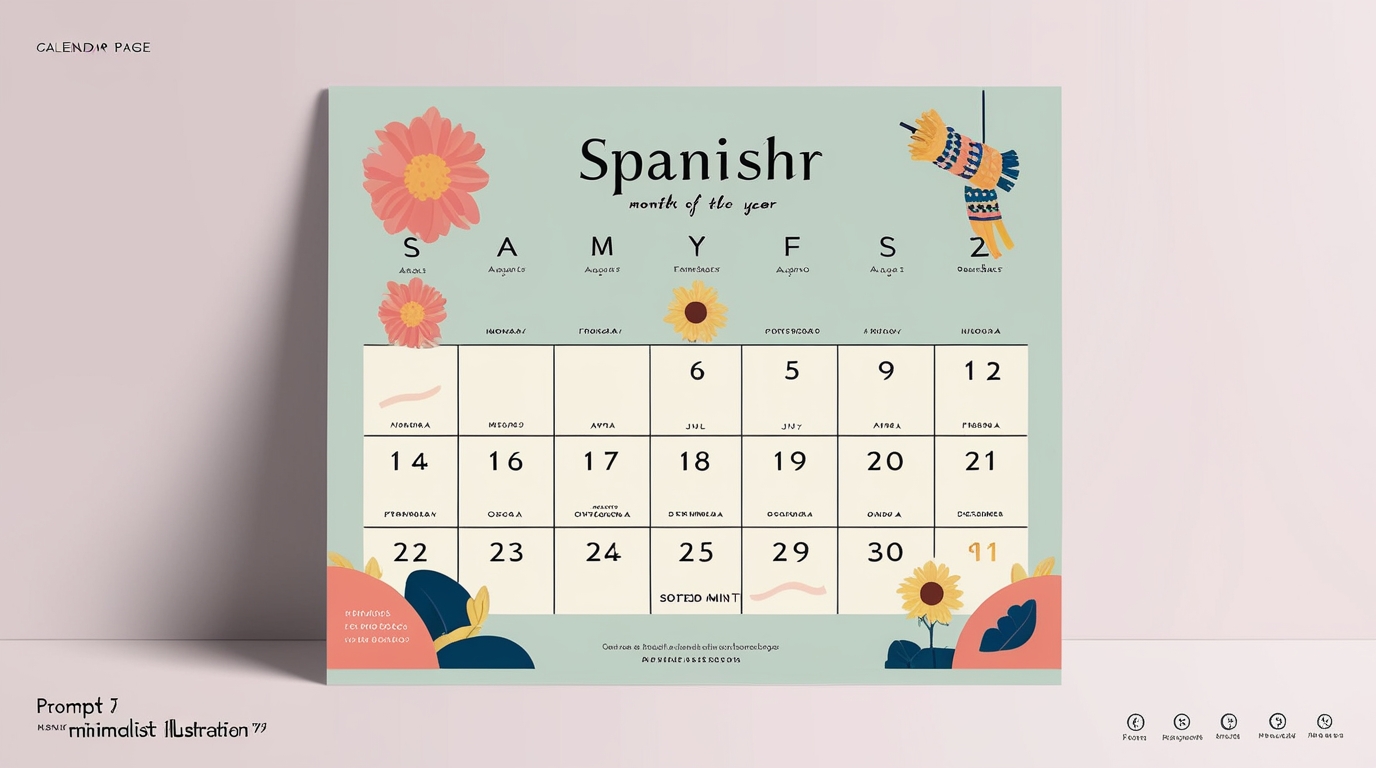
Concerned that mastering the order of the months in Spanish might be challenging? Fear not! The names of the months in Spanish closely resemble their English equivalents due to their common origins, making the learning process much easier than you might expect.
- January – Enero [eh-neh-ro]
- February – Febrero [feh-bre-ro]
- March – Marzo [mar-so]
- April – Abril [a-bril]
- May – Mayo [ma-yo]
- June – Junio [hu-nio]
- July – Julio [hu-lio]
- August – Agosto [a-gos-to]
- September – Septiembre [sep-tiem-bre]
- October – Octubre [oc-tu-bre]
- November – Noviembre [no-viem-bre]
- December – Diciembre [di-siem-bre]
The seasons in Spanish
Now that you know the months in Spanish, let’s explore the four seasons!
- Spring – Primavera [pree-mah-beh-rah]
- Summer – Verano [beh-rah-no]
- Fall (or autumn) – Otoño [oh-toh-nyo]
- Winter – Invierno [een-vyeh-rno]
In Spanish, the letter “v,” as found in words like “verano” and “invierno,” is pronounced much like a gentle “b.” Unlike English, where the “v” is pronounced with a strong emphasis, the Spanish version has a softer sound.
Curious about mastering Spanish pronunciation? Many learners find it helpful to record themselves speaking the language to evaluate their performance. However, distinguishing new sounds can be tricky, making it difficult to determine if you’re pronouncing words correctly.
To enhance your Spanish speaking skills, consider enrolling in classes with experienced tutors or connecting with native speakers through language exchange apps. Keep in mind, though, that interacting with native speakers differs from learning with a tutor. Tutors can provide targeted pronunciation guidance, like techniques for rolling your Rs, and clarify more challenging aspects of the Spanish language.
How to write dates in Spanish
Having explored pronunciation, let’s dive into how to write dates in Spanish. The format is straightforward: “el [day] de [month] de [year].” For instance:
- El 4 de julio de 1776 – The 4th of July, 1776
When discussing dates, Spanish uses a structure similar to English:
- Abril es el cuarto mes del año – April is the fourth month of the year.
- Un año bisiesto es uno con 366 días en vez de 365 – A leap year is one with 366 days instead of 365.
Abbreviating dates
While writing long-form dates in Spanish may resemble English, the abbreviation style sets it apart. In Spanish, dates are commonly shortened using Roman numerals for the month, adhering to a day-month-year format. For example, Mexico’s Independence Day, celebrated on September 16, 1810, is represented as 16-IX-1810.
In contrast to the US date format, which lists the month first (month-day-year), Spanish date abbreviations adhere to a day-month-year structure. This format is widely used across the globe, particularly in Europe, making it an important distinction to remember when discussing dates internationally.
Are months capitalized in Spanish?
In Spanish, the names of the months are not capitalized unless they appear at the beginning of a sentence or in a title. This rule highlights a key distinction from English, where month names are always capitalized. Understanding this difference is important for proper writing in both languages.
Months in Spanish: Adjective forms
In Spanish, using adjectives that come from the names of the months can infuse descriptions with a poetic flair, evoking specific times of the year. However, it’s worth mentioning that not every month has a widely recognized adjective form.
It’s important to remember that in Spanish, adjectives must agree in gender and number with the nouns they describe. This means that if a noun is masculine, the corresponding adjective must also be masculine, and if the noun is feminine, the adjective should be feminine as well. Let’s take a look at some examples to clarify this concept:
- Abrileño/a (pertaining to April)
Masculine: El clima abrileño suele ser variable – The April weather tends to be variable.
Feminine: La lluvia abrileña refresca la ciudad – The April rain refreshes the city.
- Marzal (pertaining to March)
This adjective remains unchanged regardless of whether the noun is masculine or feminine. It specifically describes qualities associated with the month of March.
Los vientos marzales anuncian la primavera – The March winds announce spring.
- Agosteño/a (pertaining to August)
Masculine: El calor agosteño puede ser agobiante – The August heat can be overwhelming.
Feminine: La noche agosteña estaba llena de estrellas –The August night was full of stars.
The origins of months in Spanish
Similar to English, the Spanish names for the months are rooted in Roman mythology, age-old traditions, and ancient calendars.
- Enero comes from Janus, the two-faced god of beginnings
- Febrero is derived from februa, linked to rites of purification
- Marzo honors Mars, the god of war
- Abril’s origins are disputed, but many believe the month takes its name from Aphrodite, the goddess of love
- Mayo may celebrate Maia, an earth goddess
- Junio is thought to honor Juno, the goddess of marriage
- Julio pays tribute to Julius Caesar, reflecting his reform of the Roman calendar
- Agosto is named after Augustus Caesar, commemorating his victories
- September, October, November, and December derive their names from the Latin words for seven, eight, nine, and ten, reflecting their positions in the ancient Roman calendar.
Celebrations throughout the months in Spanish-speaking countries
Every month, the Spanish-speaking world comes alive with vibrant celebrations that reflect rich histories and local traditions. Here are some key highlights:
- Enerobrings the excitement of the New Year, culminating in Día de Reyes (Three Kings Day) on January 6, a festive occasion celebrated with joy and gifts for children.
- February is celebrated for Carnaval, a lively festival featuring dance, music, and colorful costumes, particularly in Brazil and Colombia, marking the lead-up to Lent.
- Marzo often heralds the beginning of Lent and, in some places, the celebration of spring.
- Abril features the famous Feria de Abril, a week of flamenco, fiestas, and fun in Seville, Spain.
- Mayo sees many countries celebrating Labor Day on the 1st, honoring workers and labor movements.
- Junio is Pride month in many parts of the world, including Spanish-speaking countries, celebrating LGBTQ+ pride and rights.
- Julio is hot with summer festivals, including the running of the bulls in Pamplona, Spain.
- Agosto brings the Fiesta de San Lorenzo in Huesca, Spain, among other local festivals.
- Septiembre marks the start of the patriotic month in Mexico, culminating in Independence Day celebrations on the 16th.
- Hispanic Heritage Month is celebrated in the United States from September to October, honoring the contributions of Hispanic Americans to the nation.
- November is rich in culture, highlighted by Mexico’s Día de los Muertos (Day of the Dead) celebration on the 1st and 2nd, honoring life and remembrance.
- Diciembre is rich with holiday spirit, leading up to Christmas and New Year’s Eve celebrations.
Master more than months with LingualNeeds
Ready to master the months in Spanish? Consider partnering with a LingualNeeds language coach! This innovative e-learning platform boasts over 6,800 qualified native Spanish tutors who customize lessons to align with your personal goals. Unlike traditional language schools, LingualNeeds offers greater affordability and flexibility. With tutors available across different time zones, you can schedule 1-on-1 lessons starting at just $10! Embrace the opportunity to learn at your own pace and convenience!
Eager to learn Spanish online with expert support? Before you schedule your trial class, explore our detailed guide on selecting the perfect tutor to help you reach your language-learning aspirations!
Frequently Asked Questions
What are the names of the months in Spanish?
The names of the months in Spanish are: Enero (January), Febrero (February), Marzo (March), Abril (April), Mayo (May), Junio (June), Julio (July), Agosto (August), Septiembre (September), Octubre (October), Noviembre (November), Diciembre (December).
How do you pronounce the months in Spanish?
The pronunciation of the months in Spanish varies slightly, for example: Enero [eh-neh-ro], Febrero [feh-bre-ro], Diciembre [di-siem-bre] in Latin America and [di-thiem-bre] in Spain.
How do you write dates in Spanish?
Dates in Spanish are written in the format: ‘el [day] de [month] de [year]’, for example, ‘El 4 de julio de 1776’.
Are the names of the months capitalized in Spanish?
In Spanish, the names of the months are not capitalized unless they appear at the beginning of a sentence or in a title.
What are some cultural celebrations related to the months in Spanish-speaking countries?
Some celebrations include: Día de Reyes in January, Carnaval in February, Feria de Abril in April, and Día de los Muertos in November.