- Modals Rules: How to Use Must, Have to, May, and Might
- Rules for the Modal Verbs Must and Have To
- Rules for the Modal Verbs May and Might
- Frequently Asked Questions
- What are modal verbs?
- What is the difference between ‘must’ and ‘have to’?
- How do ‘may’ and ‘might’ differ in usage?
- Can ‘have to’ be used in negative sentences?
- How can I practice using modal verbs?

Are you venturing into the world of online English learning? If so, you’re likely aware that modal verbs play a significant role in the language. In this article, we will explore the grammar rules that dictate the use of the modal verbs must, have to, may, and might.
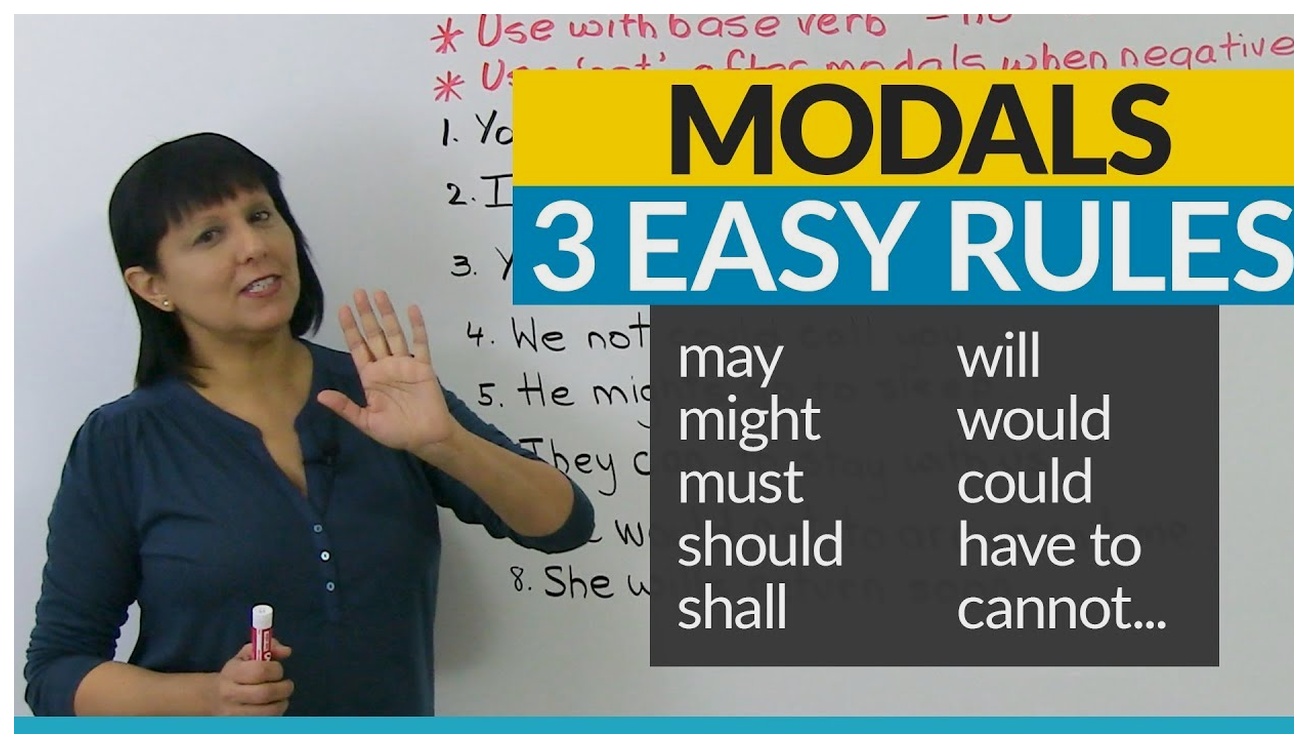
Modal verbs are unique because, unlike regular verbs, they don’t change form based on tense. Instead, they rely on alternative methods to indicate time. Additionally, when using a modal verb, the main verb that follows is always in its base form, without the preposition “to.” For example, you would say “can play,” “must pay,” or “would go.”
These modal verbs in sentences themselves play the role of auxiliary verbs:
- Can you swim?
- Would you play?
- May I go?
Modals Rules: How to Use Must, Have to, May, and Might
We’ll start with two common modal verbs: “must” and “have to.”
Rules for the Modal Verbs Must and Have To
The modal verb must is used to express obligation and necessity.
The expression “have to” may not resemble a traditional modal verb, yet it serves a similar purpose. It can function like “must” across various tenses, including the past (had to), present, and future.
These words can often be used interchangeably in English; the main difference between must and have to can be the emotional context.
The term “must” indicates that the obligation to act originates from the speaker, meaning it’s a personal directive rather than a formal rule. In contrast, “have to” suggests that the obligation is imposed by external circumstances, leaving the speaker with no option to alter it. Moreover, “must” conveys the speaker’s personal feelings about the obligation, while “have to” tends to reflect a more impersonal, objective necessity.
For example:
- I have to pay the bills because my wife is ill.
- I must stop smoking. It’s really bad for my health.
In the negative form, must expresses a strict prohibition: You mustn’t smoke here.
The phrase “have to” in negative sentences conveys the idea that while you’re not required to do something, you still have the option to do it if you wish. This construction typically includes an auxiliary verb. For example, you might say, “You don’t have to pay for this.”
The term “must” conveys a sense of obligation to adhere to societal norms and laws. It signifies that certain actions are deemed necessary because they align with what is considered acceptable behavior in our communities.
Have to expresses submission to private “laws,” that is, you are following your conscience, moral principles, or duties.
For example:
- We must pay taxes.
- He has to tell her the truth.
Rules for the Modal Verbs May and Might
The modal verbs “may” and “might” are essential tools in English, conveying the idea that something is possible. They can be applied in both present and future contexts, allowing speakers to express uncertainty or potential outcomes effectively.
For example:
- It may be true. = It might be true.
- He may know. = He might know.
- Take an umbrella with you. It might be raining later.
- We haven’t decided yet where to go for our holidays. We may go to Ireland.
In essence, may implies that there is a better likelihood or possibility of something happening than might does (maybe 70% vs. 30%).
In some instances, there is no difference. Either modal verb can be used.
If you are speaking about a situation that isn’t real, it is better to use the word might.
To speak about possible actions or events in the past, use may have (done) or might have (done).
For example:
- I wonder why Kate didn’t answer the phone. She might have been asleep.
- I can’t find my purse anywhere. Oh, I may have left it in the shop.
Secondly, in order to ask or give permission or express a desire, use may.
For example:
- Happy birthday! May all your dreams come true!
- May I stay with you tonight?
- You may have another cookie if you like.
To practice using the modal verbs may and might, do the following exercise and leave your answers in the Comments:
- Fill in the blanks with one of the modal verbs (may, might):
- You … use my computer if you need it.
- It … be freezing outside. Most people are wearing warm coats and scarves.
- … come in?
- He … have been at work.
- He who falls today, … rise tomorrow.
- … I bring my friend to the party?
- She …have been asleep when you called.
- I … come to the cinema with them. I haven’t decided yet.
- Happy New Year! … it be luckier than the previous one!
- Don’t throw it away, it … come in useful, you never know.
I’ll post the answers in the Comments in the near future.
Good luck!
Frequently Asked Questions
What are modal verbs?
Modal verbs are unique verbs that express necessity, possibility, or permission, and do not change form based on tense.
What is the difference between ‘must’ and ‘have to’?
‘Must’ expresses a personal obligation from the speaker, while ‘have to’ indicates an obligation imposed by external circumstances.
How do ‘may’ and ‘might’ differ in usage?
‘May’ suggests a higher likelihood of something happening than ‘might’, which often indicates a lower probability.
Can ‘have to’ be used in negative sentences?
Yes, ‘have to’ in negative sentences suggests that while you are not required to do something, you still have the option to do it.
How can I practice using modal verbs?
You can practice by filling in sentences with the appropriate modal verbs and sharing your answers for feedback.