- What is the difference between can vs could?
- Can vs could: Rules of use
- Could as a past tense of Can
- To express verbs of perception
- To demonstrate general ability
- To command or request something
- To ask for a permission
- Why is it important to learn the difference between can vs could?
- Learn grammar easily with LingualNeeds
- Frequently Asked Questions
- What is the primary difference between ‘can’ and ‘could’?
- When should I use ‘could’ instead of ‘can’?
- How does ‘can’ relate to likelihood?
- Is ‘could’ used for general ability?
- Why is it important to distinguish between ‘can’ and ‘could’?

Many people often confuse the modal verbs “can” and “could,” using them interchangeably. However, these words have distinct meanings and specific contexts for their use. Fortunately, we’re here to clarify the rules for using “can” versus “could” and explain why understanding this difference is important.
Both can and could are modal auxiliary verbs that express ability, permission, request, offer, or opportunity.
In this article, we’ll dive into the distinctions between “can” and “could,” helping you steer clear of common grammatical errors. By the end, you’ll be equipped to use both words confidently in your online English grammar classes with LingualNeeds.
What is the difference between can vs could?
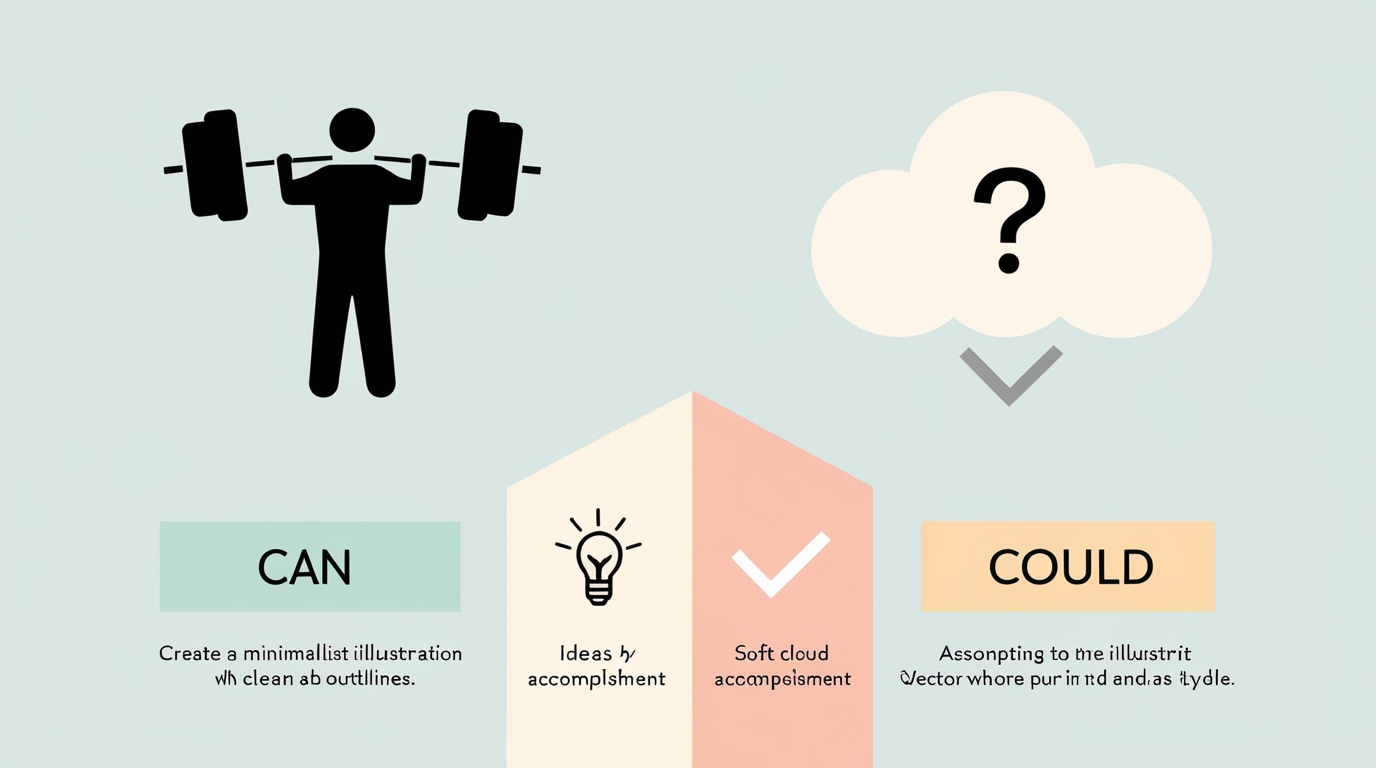
Let’s start at the very beginning. Can and could have two main differences; tense and likelihood.
When it comes to tense, could is the past tense of can. For example:
- I can bring the meat to the bbq
- I could have brought the meat to the bbq if I hadn’t ran out of time
In discussing likelihood, “can” indicates a strong probability that something will occur, whereas “could” implies that there is an equal chance of it either happening or not happening. For example:
- You can go to college
- I think you could excel at college
In addition to the examples provided, both “can” and “could” convey notions of willingness, ability, and possibility. Let’s explore the rules governing the use of “can” and “could” in these contexts.
Can vs could: Rules of use
Could as a past tense of Can
The verb “could” serves as the past tense of “can,” but its usage extends beyond that. It also plays a unique role in type 2 conditional sentences, showcasing functions that “can” does not encompass.
Examples:
- She can speak Italian very well.
- I could swim, but I couldn’t ride a bike when I was nine years old.
- You can play with Amy after you do your homework.
- Could I have some tea?
- Can I carry your bags?
- We could go somewhere tonight.
- That can’t be true.
- You could get there in time if you hurried up.
To express verbs of perception
The words “can” and “could” play a crucial role in expressing the continuous aspect of perception verbs, such as “see,” “hear,” “feel,” “taste,” and “smell,” as well as cognitive verbs like “understand” and “remember.”
Examples:
- Can you see the light over there?
- When I entered the room, I could hear something scratching.
- Harry put the keys in his pocket, but now he can’t find them.
- We couldn’t understand what the stranger was saying.
To demonstrate general ability
As a past tense form of the verb can, could is used to express general ability in past tense and indirect speech.
Examples:
- He said he could get that ticket for me.
- When I was younger, I could work out for two hours without stopping.
To command or request something
In requests, commands and sentences, it is considered more polite to use could than can.
Examples:
- Do you think you could help me with this case?
- Can I use your phone?
- Could you do me a favour?
- Do the urgent task first, and then you can check the rest.
To ask for a permission
When seeking permission, it’s advisable to use the verb “can,” as “could” is not typically employed to grant or refuse consent.
Examples:
- Can I trust you? – Of course, you can.
- You can stay here if you want to.
- Can I have another cup of coffee? – No, I’m afraid you can’t. You drank too much coffee.

Why is it important to learn the difference between can vs could?
Grasping the difference between “can” and “could” is crucial for clear communication in English. As illustrated in the examples, confusing these two terms can lead to misunderstandings.
Here are some examples of when the difference matters:
- Using “can” instead of “could” indicates your willingness and ability to take action. For instance, saying “I can clean your house” implies readiness, while “I could clean your house” suggests a possibility. Understanding this distinction helps you communicate your capabilities clearly and prevents overcommitting to tasks you’d prefer to avoid.
- Using “Could you” instead of “Can you” is a more polite way to make requests in English. This distinction is crucial for effective communication in social and business settings, especially for English learners aiming to refine their conversational skills.
Learn grammar easily with LingualNeeds
Now that you’ve mastered the distinction between “can” and “could,” it’s time to explore other modal verbs! Dive into our article that clarifies the differences between “shall” and “should,” or discover when to use “must,” “have to,” “may,” and “might.” Keep expanding your understanding of these essential verbs!
Feeling a bit stuck with your language learning? Consider booking a lesson with a LingualNeeds tutor! While online guides can be helpful, nothing beats the experience of practicing speaking and listening with a native speaker. A one-on-one session will allow you to apply what you’ve learned, especially those tricky “can vs. could” concepts. Take the plunge and enhance your skills today!
If you have additional questions on this topic, don’t hesitate to reach out in our Questions and Answers section. Our knowledgeable tutors are ready to provide you with clear explanations and support!
Frequently Asked Questions
What is the primary difference between ‘can’ and ‘could’?
‘Can’ indicates present ability or permission, while ‘could’ serves as the past tense of ‘can’ and suggests possibility.
When should I use ‘could’ instead of ‘can’?
‘Could’ is more polite and is often used for making requests or expressing conditional situations.
How does ‘can’ relate to likelihood?
‘Can’ indicates a strong probability that something will occur, whereas ‘could’ implies an equal chance of it happening or not.
Is ‘could’ used for general ability?
Yes, ‘could’ is used to express general ability in the past tense.
Why is it important to distinguish between ‘can’ and ‘could’?
Understanding the difference helps prevent misunderstandings and enhances effective communication in English.