
- Full Research
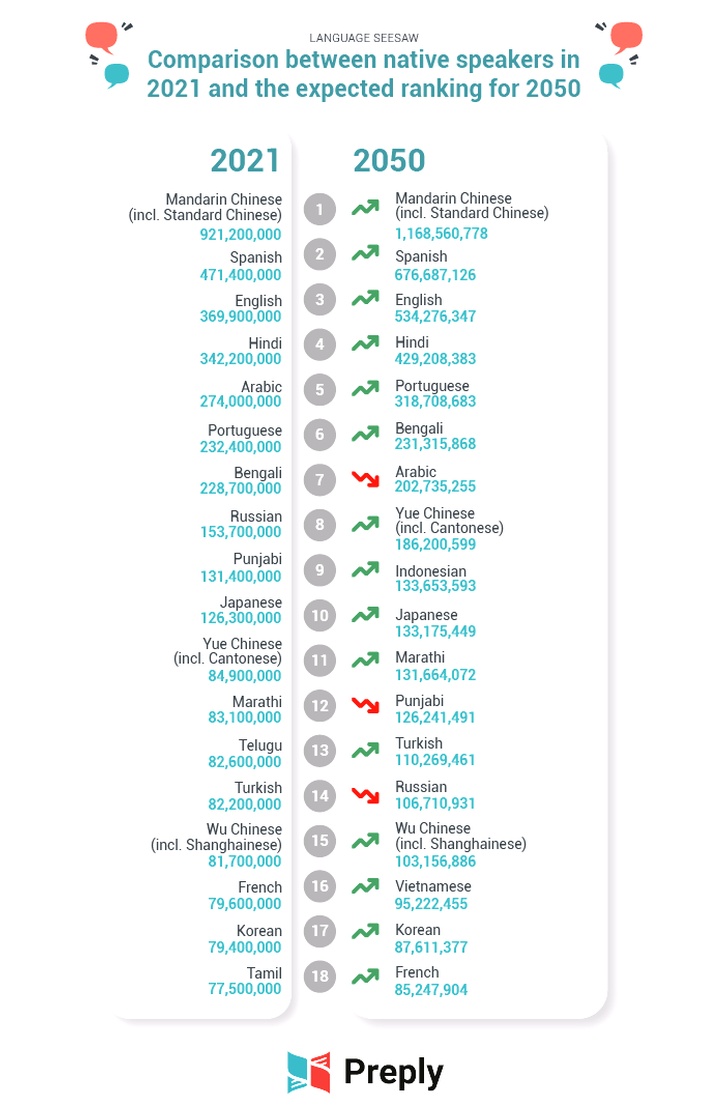
- Mandarin set to have almost 1.2 billion native speakers by 2050
- Indonesian will be the fastest growing language, increasing by more than 200% by 2050
- German speakers will decline whilst Spanish will remain in the European lead
- Welsh speakers will increase by 32% and Manx speakers will double
- Spanish and French are the most attractive foreign languages to learn in the UK
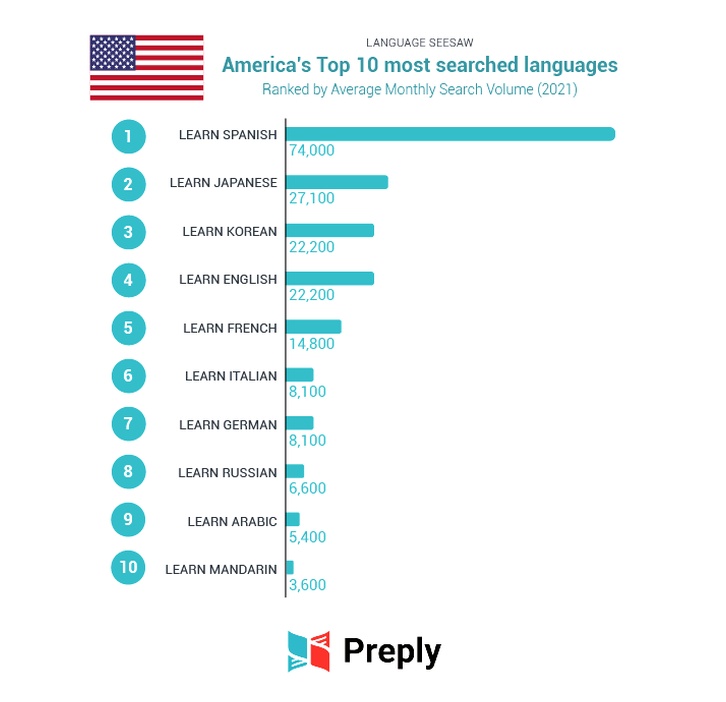
- Spanish, Japanese and Korean are America’s favourite languages
- Pop culture can contribute to language diffusion
- Films and TV shows: Half of the most popular content on Netflix is not in English
- UK audiences are more open to watch films in other languages
- Sing in English or Spanish to conquer the world
- Methodology
- Sources
- Frequently Asked Questions
- How many languages are currently in use worldwide?
- Which language is projected to have the most native speakers by 2050?
- What factors are influencing the growth of Spanish and English speakers?
- What is the projected growth rate of Indonesian speakers by 2050?
- What initiatives are helping to revive local languages in the UK?
Currently, over 7,139 languages are in use worldwide, with new ones emerging daily and others vanishing at an alarming rate. Alarmingly, about 40% of these languages are at risk of extinction. Meanwhile, the most widely spoken languages continue to gain strength and prominence.
Globalization has played a significant role in the rise of dominant languages worldwide. In ancient Roman times, Latin served as the lingua franca for culture and commerce, but today, English has taken over that role, even though it ranks third in terms of native speakers. The question remains: will this trend continue in the future?
LingualNeeds is taking a bold step into the future by forecasting which languages will be most influential by 2050. This insight will help you get a head start in preparing for the evolving global landscape.
Full Research
Mandarin set to have almost 1.2 billion native speakers by 2050
By examining historical data from native speakers of the 28 most widely spoken languages—representing 58% of the global population—as of 2013, and utilizing linear and exponential growth models, we can forecast that Mandarin Chinese, Spanish, English, and Hindi will remain the top languages. However, their growth rates will differ considerably. As a result, we anticipate a growing number of individuals choosing to learn languages like Spanish online in the years ahead.
By 2050, Mandarin Chinese is projected to remain the most widely spoken language in terms of native speakers. However, due to China’s aging population and declining birth rates, its growth is expected to be limited to just 27%. In contrast, Spanish and English are set to experience significant increases of 44%, securing their positions as the second and third most spoken languages globally.
Mandarin is primarily spoken in one country: China. However, the Chinese population recognizes the significance of learning additional languages to thrive in the global economy. This awareness helps explain why, despite having a larger number of native speakers, Mandarin is unlikely to overtake English as the dominant language for international communication.
With a staggering 400 million individuals making up China’s middle class, this dynamic group is driving the nation’s social and economic growth. They are deeply committed to raising their children as global citizens, which starts with fostering English fluency from an early age. However, as Domenica Di Lieto, CEO of the Chinese planning and digital marketing consultancy Emerging Communications, points out, many Western education systems are not equipped to teach Mandarin effectively.

Learn a language with personalised 1-on-1 classes with our expert tutors from all over the world
French lessons online
Spanish lessons online
Indonesian will be the fastest growing language, increasing by more than 200% by 2050
Other Asian languages are set to experience significant growth in native speakers. Notably, Yue Chinese, which encompasses Cantonese and is predominantly spoken in Southern China, is projected to surge by an impressive 119% by 2050. Similarly, Wu Chinese, primarily used in Shanghai and the Zhejiang Province, is expected to see a 26% increase in its number of speakers.
The number of native Indonesian speakers is projected to surge by over 200%, fueled by the country’s high birth rates, which have propelled Indonesia to become the fourth most populous nation globally. However, government initiatives aimed at encouraging smaller families could dramatically shift this trend.
India is poised for moderate growth, largely due to a recent decline in fertility rates. However, with a booming economy and a population exceeding 1.3 billion, several languages are expected to thrive. Notably, Hindi, Bengali, Marathi, Telugu, Gujarati, Bhojpuri, and Kannada are among those that will maintain strong positions in this dynamic landscape.
German speakers will decline whilst Spanish will remain in the European lead
If you’re worried about the future of European languages, there’s no need for concern—each one is set to thrive. Recent trends show that both Spanish and English speakers are projected to grow by an impressive 44%. This will position Spanish as the leading language with nearly 700 million native speakers, while English will follow closely behind with over 500 million.
The number of Portuguese native speakers is set to increase significantly, with a projected growth of 37%, primarily driven by Brazil’s substantial population of over 211 million people. In addition, we can expect a modest rise in French and Italian speakers, with increases of 7% and 2%, respectively.
Germany stands out in Europe with a notable decline in the German language, which has seen a 35% drop. Over the past decade, the number of native speakers has stagnated, primarily due to the slow or declining population growth in countries where German is spoken, such as Germany, Austria, Belgium, Liechtenstein, Luxembourg, Switzerland, and the Bolzano region of Italy. Despite this decrease in native speakers, the interest in learning German online remains strong, likely driven by Germany’s robust economic influence.
As the leading force in the European Union and home to one of the strongest and most stable economies in the region, Germany remains an attractive destination for foreign students. Many are eager to learn German as a second language to enhance their professional opportunities.
Learn a language online with our free learning materials.
Learn English online
Learn French online
Welsh speakers will increase by 32% and Manx speakers will double
By consulting official sources, we’ve successfully developed forecasts for local languages in the UK, including Irish, Welsh, and Manx.
Manx is poised for a remarkable 92% growth in the number of speakers. This Celtic language holds significant cultural value for the Isle of Man and has experienced a steady revival since 1974. Much of this resurgence can be attributed to government initiatives promoting its teaching in junior and secondary schools, fostering a new generation of speakers.
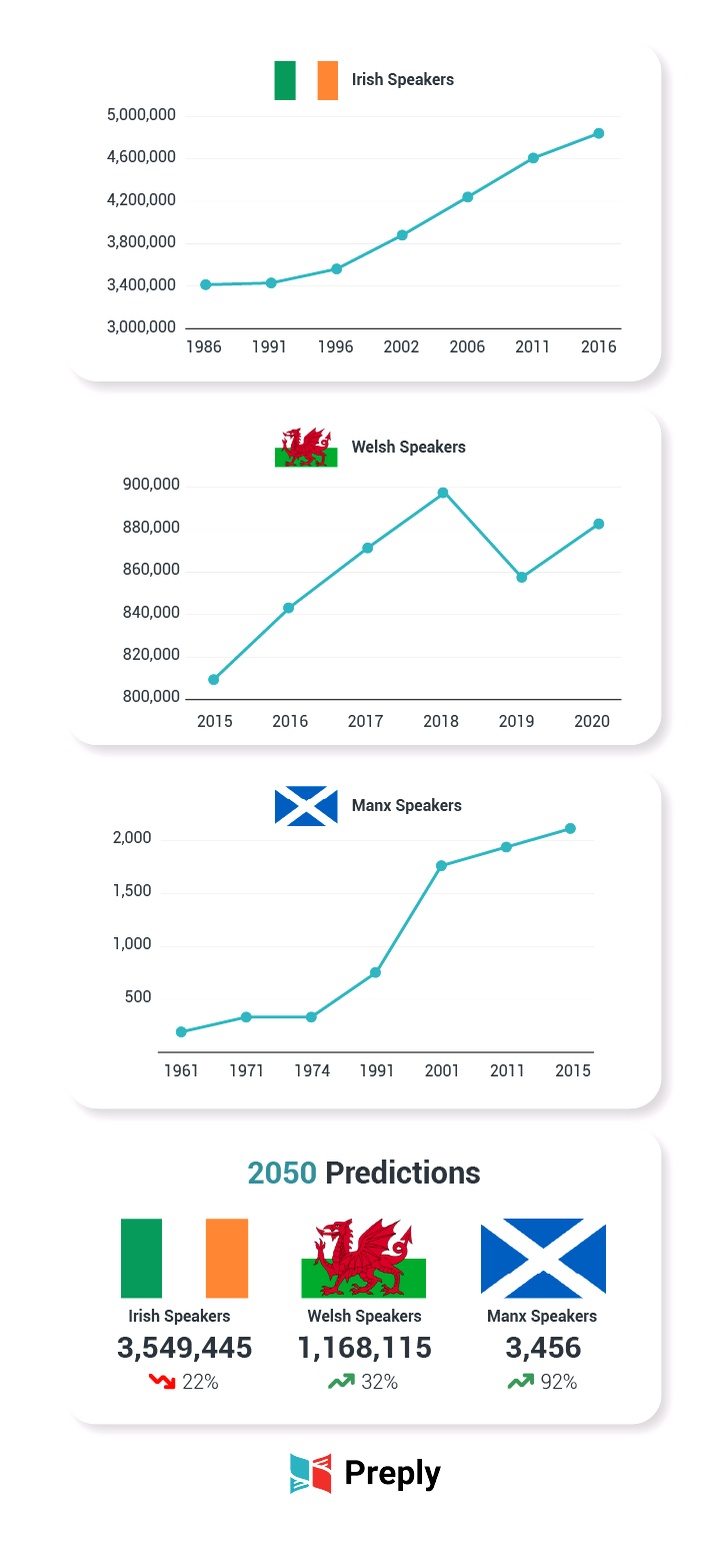
By 2050, the number of native Welsh speakers is projected to exceed 1 million. To support this goal, the Welsh government has introduced an initiative known as Cymraeg 2050, aimed at promoting and revitalizing the Welsh language.
Conversely, there are significant concerns that the number of Irish speakers could decline by 2050. Census data reveals that since 1861, the increase in Irish speakers has been modest, with only 167,150 more individuals using the language.
Spanish and French are the most attractive foreign languages to learn in the UK
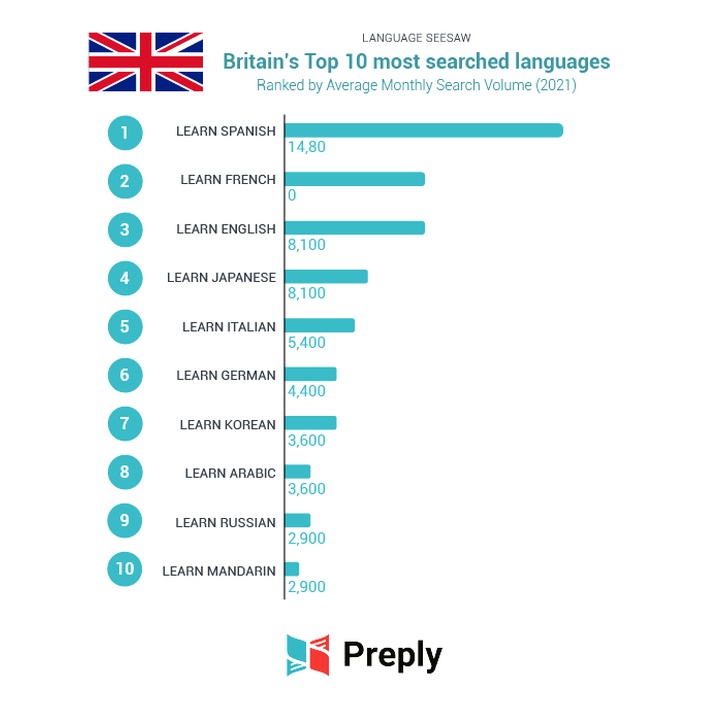
In the UK alone, there were an impressive 63,280 average monthly searches for foreign language learning between August 2020 and July 2021. Notably, “Learn Spanish” was the most popular query, generating 14,800 searches each month, while “Learn French” followed closely with 8,100 searches.
The top 10 most Googled languages in the UK include English, Japanese, Italian, German, Korean, Arabic, Russian, and Mandarin, reflecting the growing enthusiasm among Brits for learning a second language.
Spanish, Japanese and Korean are America’s favourite languages
A Pew Research Center report reveals that in 2019, the Hispanic population in the U.S. surged to 60.6 million, an increase of 930,000 from the prior year. This growth means Hispanics now make up 18% of the nation’s total population, solidifying their status as the second-largest ethnic group in the country.
Popular culture significantly influences language trends, and 2017 was a standout year for Spanish searches. This surge coincided with the release of “Despacito” by Luis Fonsi featuring Daddy Yankee, a song that dominated American music charts and Billboard rankings. Its global popularity sparked increased interest in the Spanish language.
Korean culture has made a remarkable impact globally, particularly through the rise of K-Pop boy bands such as BTS, who dominate music charts worldwide. Additionally, the critically acclaimed film “Parasite,” released in 2019, made history by winning four Academy Awards and a Golden Globe, showcasing the growing influence of Korean entertainment.
Pop culture can contribute to language diffusion
The rise of the Internet, apps, and social media has revolutionized our access to information, connecting us to diverse content from around the globe. Thanks to streaming platforms like Netflix for films and TV shows, and Spotify for music, exploring foreign languages and cultures has never been easier.
Languages serve as powerful conduits for sharing cultural values and gaining insights into underrepresented cultures often overlooked in mainstream Western media. Additionally, immersing ourselves in regular content in a different language not only enhances our understanding of that culture but also significantly boosts our language learning progress.
Which languages are leading the charts in films, TV shows, and music? How significantly are we embracing diverse cultures in an industry traditionally ruled by Hollywood and major music labels in New York and Los Angeles? Let’s explore the shifting landscape of entertainment and the growing influence of global voices.
Films and TV shows: Half of the most popular content on Netflix is not in English
Mary Gilbey, Managing Director of Anglia Translations in the UK, highlights the enriching experiences young people gain from engaging with diverse cultures and languages. Whether it’s through music, films, or social media, these connections foster understanding and appreciation, which she believes is a wholly positive development.
In today’s digital age, the abundance of accessible content has transformed language learning into a more engaging experience. Our research reveals that an impressive 99.2% of online language learners enhance their skills through various activities beyond traditional courses. These activities include watching films and TV shows in English (77.2%), enjoying English music (58.5%), tuning into podcasts (52.8%), and exploring YouTube videos (53.7%). This diverse approach not only makes learning enjoyable but also helps reinforce language skills in practical contexts.
Additionally, Netflix, a California-based company, is making significant strides in content democratization by providing a diverse array of international films and TV shows. This initiative not only broadens entertainment options but also opens doors for viewers to learn new languages and gain insights into different cultures.
How much access do we really have to the variety of languages available on today’s leading streaming platform for films and TV shows?
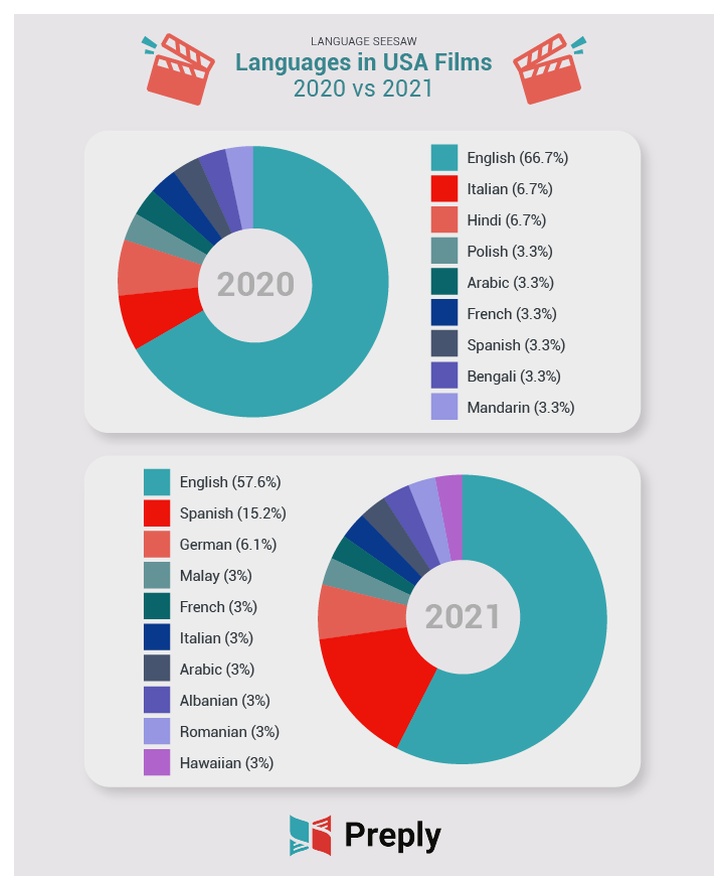
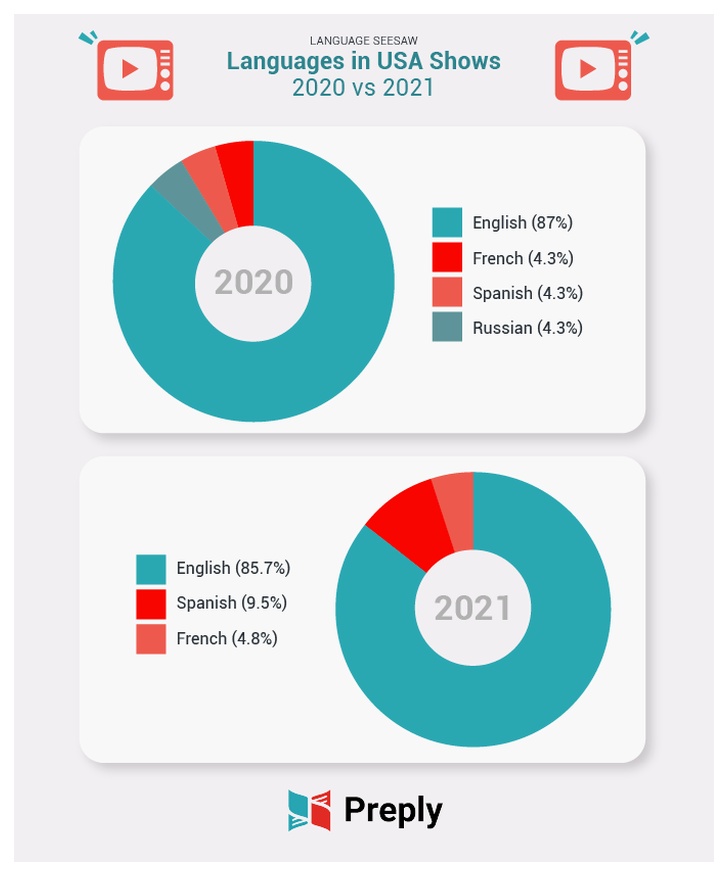
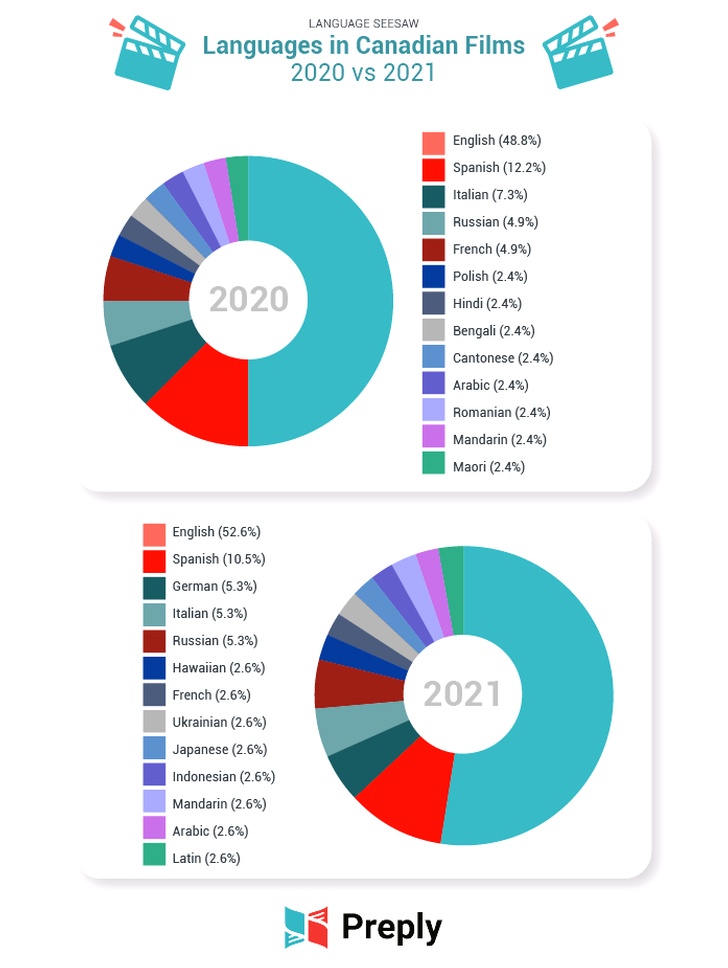
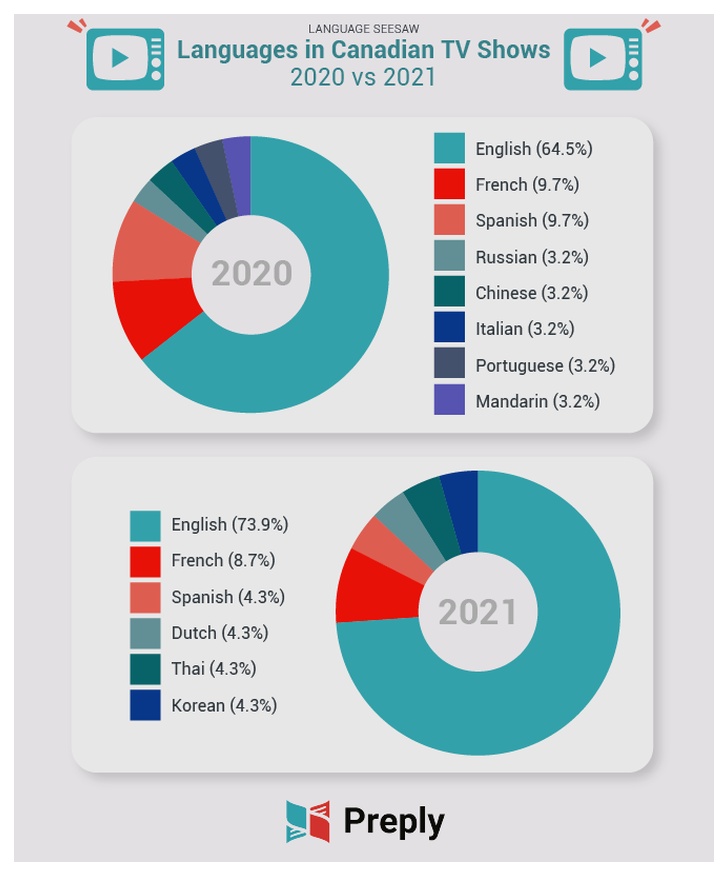
We examined the top films and TV shows on Netflix from 2020 and 2021 based on their popularity, aiming to uncover the diversity within the platform’s content offerings.
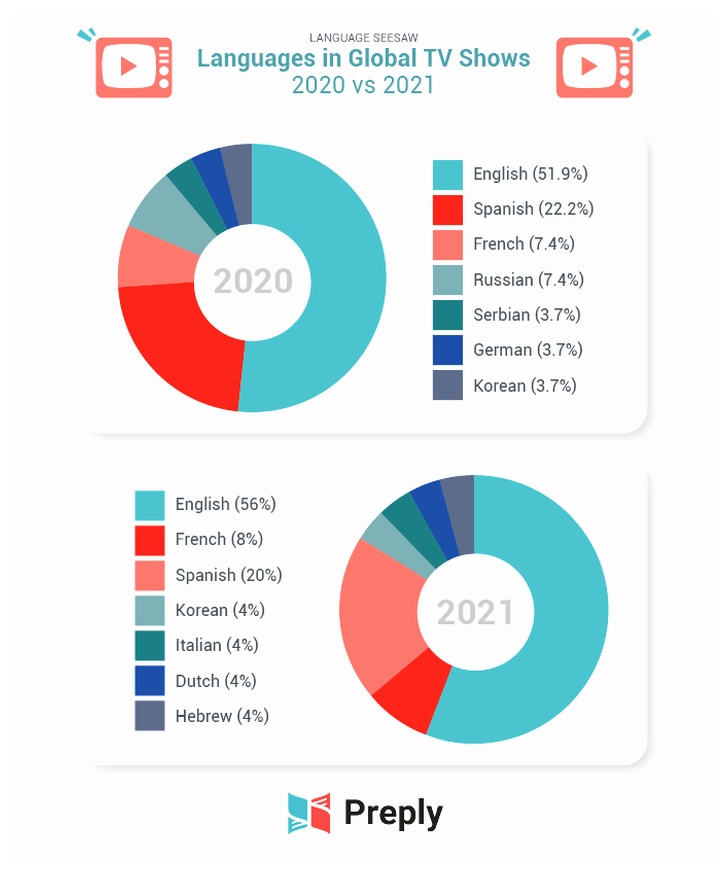
Gone are the days when English content solely ruled the global charts. While it still holds a significant presence, accounting for over half of all content, we are now witnessing a rise in the prominence of other languages that are climbing to the top ranks.
Despite facing significant criticism, the Polish erotic romantic drama, 365 Days, has soared to the top of global streaming rankings. This film, featuring dialogue in English, Polish, and Italian, showcases the power of multicultural storytelling and highlights the success of independent Polish filmmakers in the competitive streaming landscape.
Spanish secured the second spot in both 2020 and 2021, thanks in large part to the global success of TV series from Spain and Latin America. Shows like Money Heist, Yo Soy Betty La Fea, Pablo Escobar, Elite, and Who Killed Sara have captivated international viewers, showcasing the rich storytelling and vibrant cultures of the Spanish-speaking world.
UK audiences are more open to watch films in other languages
Given that the United Kingdom, the United States, and Canada are all English-speaking nations, it’s no surprise that English heavily shapes the content enjoyed by their audiences.
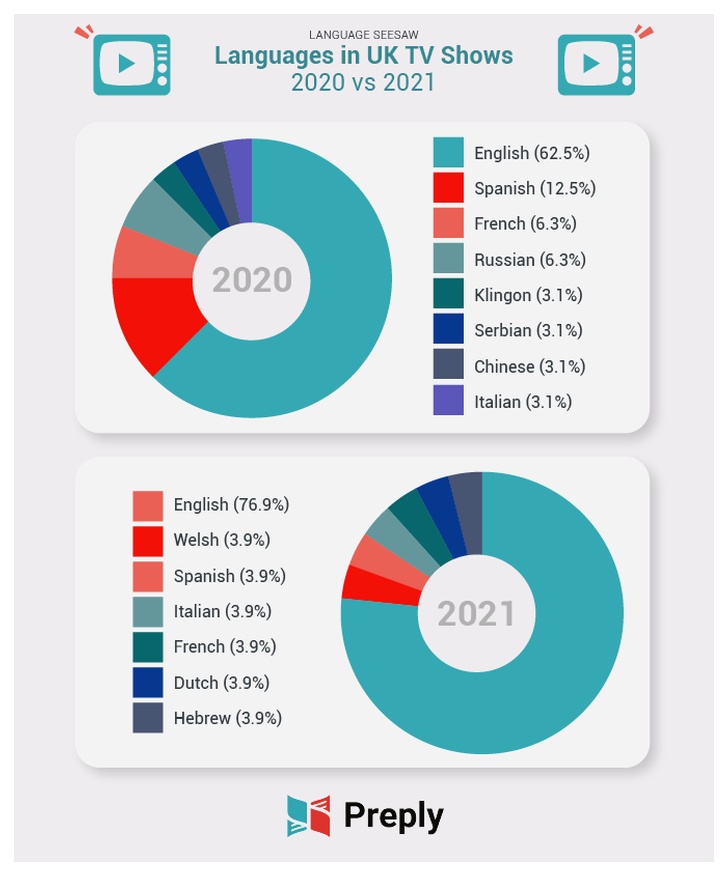
Despite the rich multicultural fabric of society, a striking 80% of the most popular TV shows on Netflix in the UK are in English, while the USA sees this number rise to 86%.
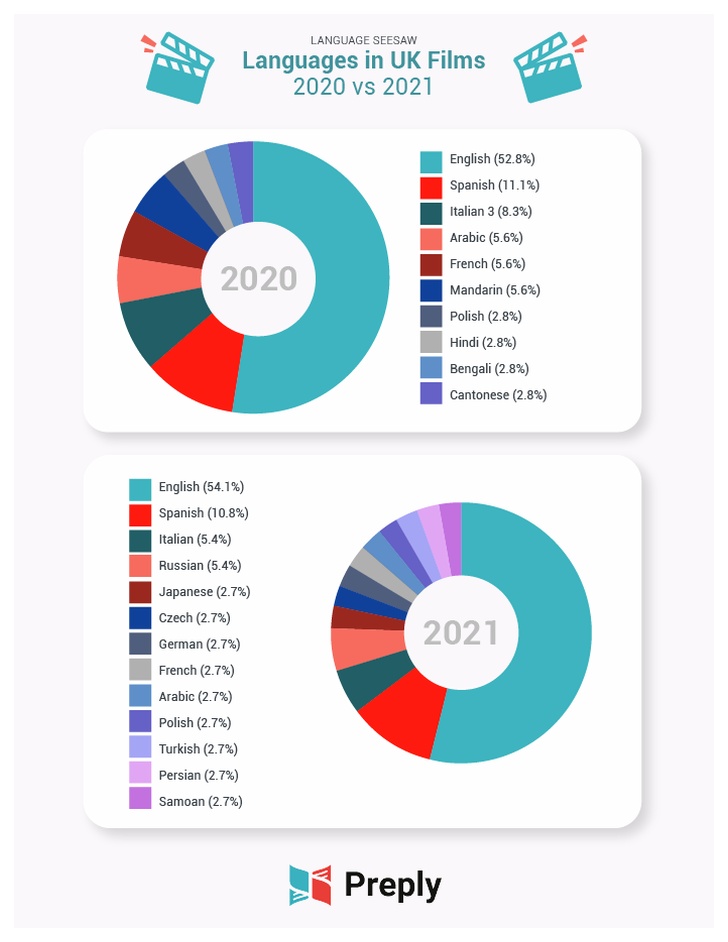
In recent years, film audiences have begun to embrace a more diverse cinematic experience. Remarkably, nearly half of the top-grossing films in the UK and Canada during 2020 and 2021 were not in English. This shift indicates a growing appreciation for international storytelling and a willingness to explore different cultures through cinema.
Sing in English or Spanish to conquer the world
Today, the influence of a song or artist in the music industry is largely gauged by their streaming numbers, with Spotify leading the charge as the world’s most popular platform.
We’ve delved into Spotify charts from 2017 to the present to uncover the languages that are shaping the music landscape. Our analysis focused on the top-charting songs during the first week of September each year, revealing trends and shifts in musical popularity over time.
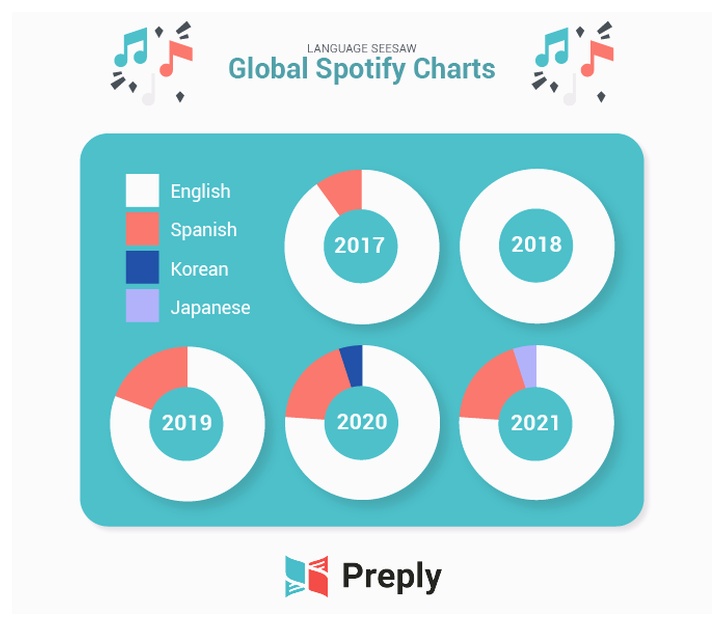
Reggaeton has made a dynamic entry into the global music scene. The hit “Despacito” by Luis Fonsi featuring Daddy Yankee captivated audiences worldwide in 2017, but it certainly isn’t a solo act. Artists like J Balvin, Anuel AA, Maluma, Karol G, and Bad Bunny have also significantly impacted the charts, collectively representing 19% of the top songs from 2019 to 2021.
Many Gen Z individuals are genuinely curious about exploring different cultures and languages, with a notable interest in Spanish. As the most diverse and educated generation to date, they hold significant potential to shape global language learning trends, according to Bethany McCarter, a certified teacher of Spanish and English as a second language in Texas.
Methodology
To forecast the number of native speakers for each language by 2050, we utilized historical data from Ethnologue, an online resource. Our analysis employed both exponential and linear growth models, which allow us to make informed predictions based on two distinct growth patterns: stagnant and increasing.
Using these models, we generated two potential predictions. We selected the prediction that most closely aligned with the latest historical data as our final forecast.
From August 2020 to July 2021, we analyzed the average monthly global volume. The figures presented for each year represent the total from August to July. Our analysis included keywords in English as well as those in the official languages of each country.
Sources
- Native Speaker Numbers: Ethnologue catalogue available on: https://web.archive.org/web/20121114133252/https://en.wikipedia.org/wiki/List_of_languages_by_total_number_of_speakers#cite_note-1″
- Keyword Search Volume: Google Keyword Planner
- Access the global and local Spotify charts, including stream counts for the UK, USA, Canada, France, Belgium, Italy, Germany, Austria, and Switzerland, for the first week of September each year since 2017 at: https://spotifycharts.com/.
- Netflix global and local chart rankings for films and shows in 2020 and 2021 across the UK, USA, Canada, France, Belgium, Italy, Germany, Austria, and Switzerland: https://flixpatrol.com
- Welsh Language: https://statswales.gov.wales/Catalogue/Welsh-Language/Annual-Population-Survey-Welsh-Language/speak-welsh-by-age-sex
- Irish Language: https://data.cso.ie/ – CNA09 – Population of Irish Speakers Aged 3 Years and Over
- Manx Language: https://en.wikipedia.org/wiki/Manx_language#Number_of_speakers_by_year
- Bhojpuri Language: https://www.censusindia.gov.in/2011Census/Language_MTs.html
- Indonesian Language: https://indonesian-online.com/wp-content/uploads/2016/08/Native-Speakers.pdf
- Hindi Language: https://www.censusindia.gov.in/2011Census/Language-2011/Statement-1.pdf
- Languages of Netflix films and TV shows: Imdb.com
Frequently Asked Questions
How many languages are currently in use worldwide?
Over 7,139 languages are in use worldwide.
Which language is projected to have the most native speakers by 2050?
Mandarin Chinese is projected to remain the most widely spoken language in terms of native speakers by 2050.
What factors are influencing the growth of Spanish and English speakers?
Spanish and English are expected to grow significantly due to globalization and the increasing number of learners choosing these languages.
What is the projected growth rate of Indonesian speakers by 2050?
The number of native Indonesian speakers is projected to surge by over 200% by 2050.
What initiatives are helping to revive local languages in the UK?
Government initiatives, such as Cymraeg 2050 for Welsh, are aimed at promoting and revitalizing local languages like Welsh and Manx.


