- Key takeaways
- A majority have experienced bullying, racism, and hate speech on gaming platforms
- Over half of gamers admit to bullying others on gaming platforms
- More than 4 in 5 parents worry about their children’s safety on gaming platforms
- Abuse on gaming platforms happens more often than we think
- Conclusion
- Methodology
- Frequently Asked Questions
- What percentage of gamers have faced emotional abuse or bullying?
- How prevalent is racism among gamers on online platforms?
- What are doxxing and swatting in the context of online gaming?
- How do parents feel about their children’s safety on gaming platforms?
- What actions do gamers support to combat toxic behavior in gaming communities?
With almost 3 billion active video game players around the globe, this number is projected to keep rising. From Canada to China, the worldwide gaming community offers a rich tapestry of online interactions, reflecting a diverse range of cultures and experiences.
Diversity among gamers on online platforms fosters friendships and provides a unique opportunity for immersive language learning. By interacting with players from different backgrounds, gamers are naturally exposed to foreign languages, enhancing their skills in a fun and engaging way.
While freedom of speech is essential, it can sometimes lead to detrimental outcomes for gamers, particularly regarding bullying and emotional abuse, such as hate speech and racism. To gain deeper insights into this issue, we conducted a survey with over 1,400 gamers, exploring their encounters with harmful language and their own communication experiences on gaming platforms. Here’s what we discovered.
Key takeaways
- Over 90% of gamers have faced or witnessed emotional abuse or bullying, with nearly 70% contemplating quitting due to these negative experiences.
- Over 40% of gamers have faced racism, and over 33% have encountered hate speech on gaming platforms.
- Xbox and PlayStation see the highest rates of bullying.

Learn a language with personalised 1-on-1 classes with our expert tutors from all over the world
French lessons online
Spanish lessons online
A majority have experienced bullying, racism, and hate speech on gaming platforms
Gaming platforms can often be challenging environments. A staggering 90% of players reported encountering emotional abuse or various forms of bullying during their gaming experiences.
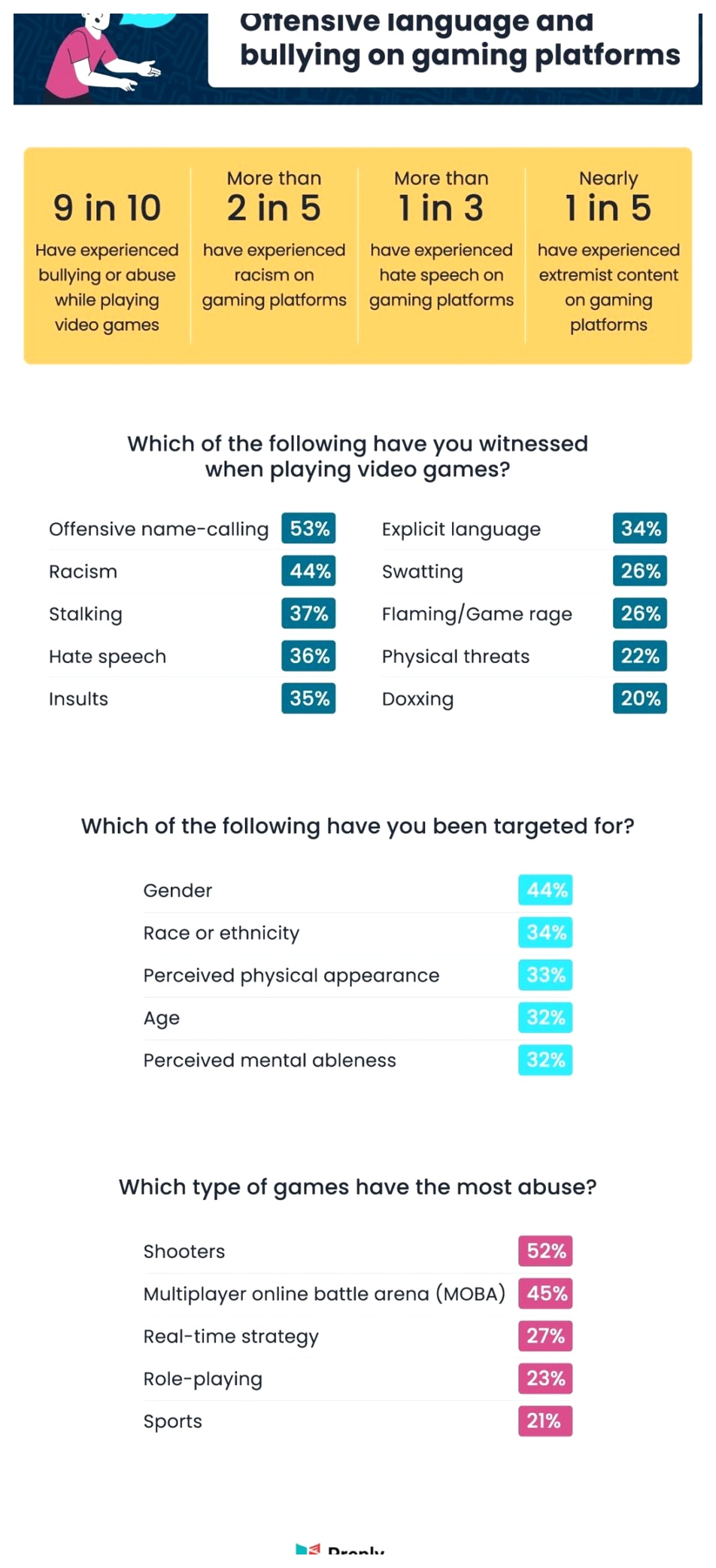
Almost 20% of gamers report encountering extremist content in their gaming experiences. However, the issue extends beyond just hateful ideologies; many players face harassment that is deeply personal and affects their enjoyment of the gaming community.
The Xbox gaming community grapples with a troubling reality: a staggering 94% of users report witnessing bullying, and 60% admit to having participated in it themselves. Meanwhile, the PlayStation community isn’t far behind, with 92% of players observing bullying and 60% engaging in such behavior. These statistics highlight a significant issue within gaming culture that needs to be addressed.
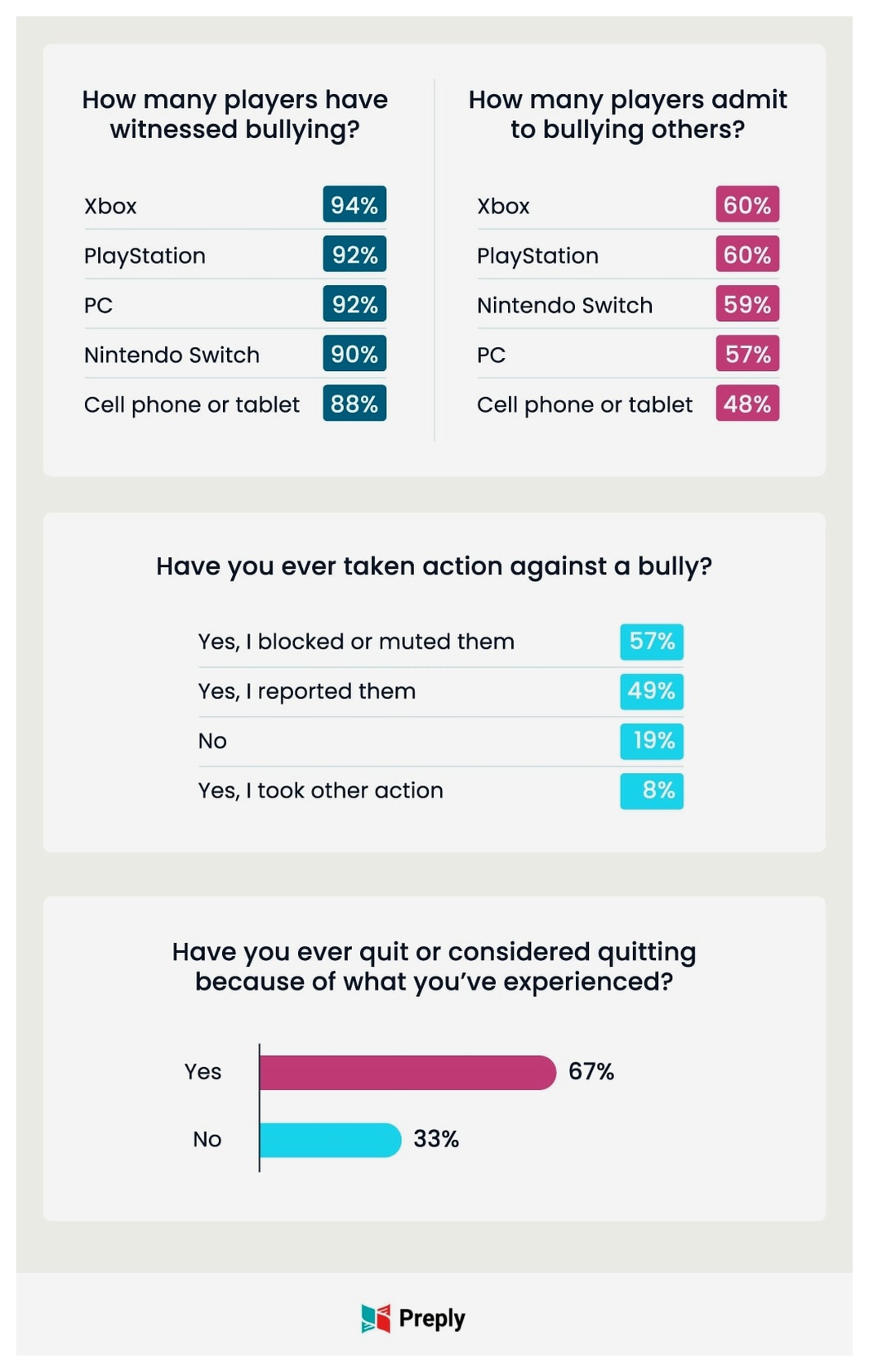
Two alarming behaviors—doxxing and swatting—contribute significantly to online abuse. Doxxing involves disclosing an individual’s private information, and shockingly, 20% of respondents have reported experiencing this violation.
More than 25% of gamers surveyed have fallen victim to swatting, a dangerous tactic where abusers falsely report violent crimes to emergency services at the victim’s address. This alarming trend puts lives at risk and highlights the darker side of online gaming.
Verbal attacks often focus on personal identity, with over 40% of individuals reporting that they’ve been targeted due to their gender. Additionally, one in three respondents has faced assaults related to their race, ethnicity, or perceived physical abilities.
Women are disproportionately affected by hateful behavior, with 53% of those identifying as female reporting attacks based on their gender, compared to 37% of males. As a result, over half of respondents have altered their identity to evade such abuse, with many choosing to change their gender or sexual orientation to sidestep conflict.
The significant toxicity in the environment is having serious consequences. Over 60% of individuals report that this behavior adversely affects their mental health, with nearly 70% either having quit or seriously contemplating leaving as a result.
Over half of gamers admit to bullying others on gaming platforms
Over half of the participants acknowledged that they have engaged in bullying behavior while gaming. Notably, 85% of these individuals faced consequences, such as being blocked, muted, reported, or banned from the game.
Bullies frequently resort to tactics like racism, doxxing, and swatting to harm their victims. These attacks typically focus on individuals based on their gender, sexual identity, or religious beliefs, making them particularly vulnerable to such aggression.
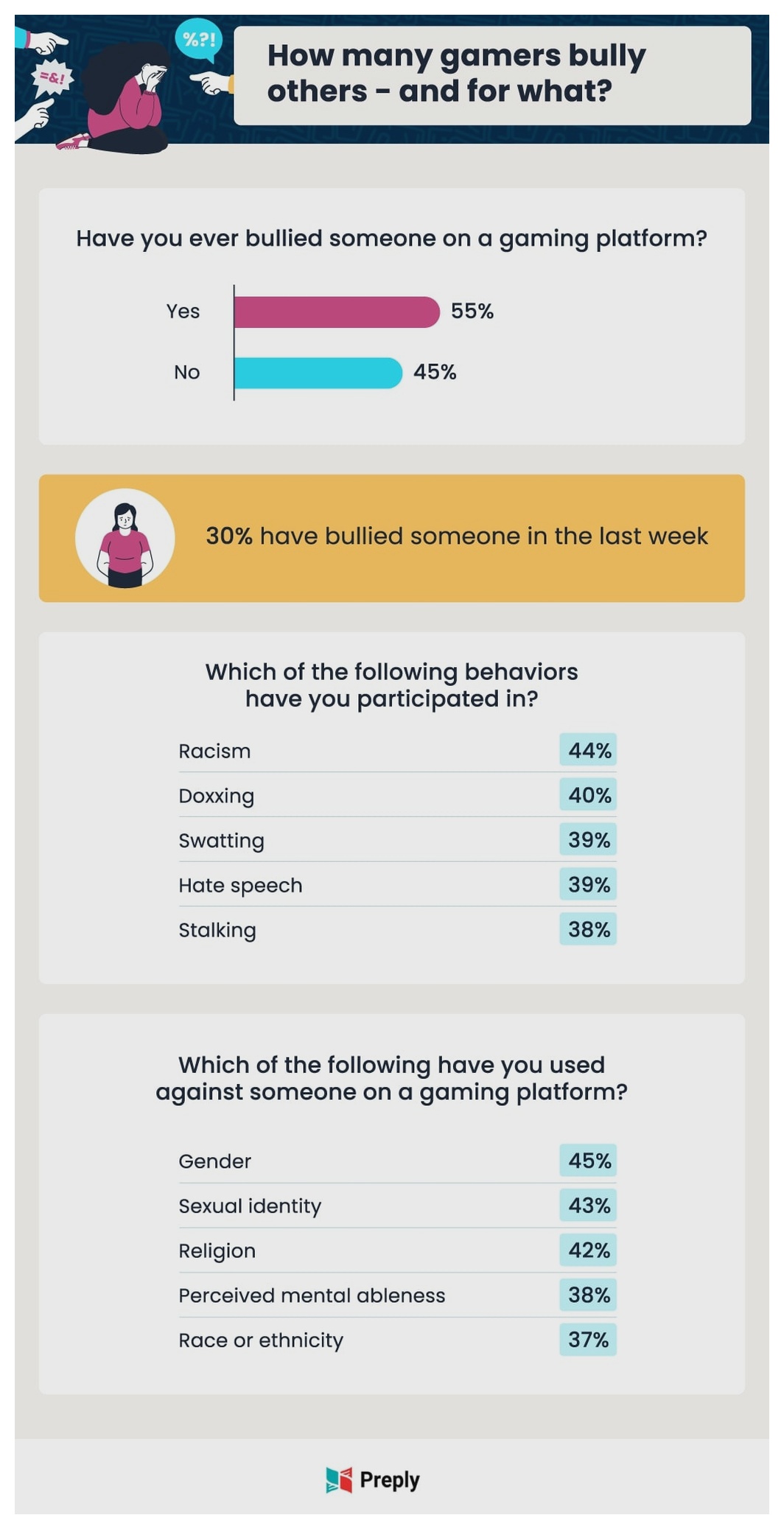
Did you know that a striking 92% of individuals who engage in bullying have themselves been victims of bullying? Furthermore, a staggering 90% report that these experiences have a significant mental impact. If you want to sidestep this toxic atmosphere, consider avoiding shooter games and multiplayer online battle arenas. Our survey reveals that bullies make up 52% of players in shooter games and 45% in battle arena games, highlighting the prevalence of hostility in these environments.
Learn a language online with our free learning materials.
Learn English online
Learn French online
More than 4 in 5 parents worry about their children’s safety on gaming platforms
Children and teenagers under 18 represent 20% of the 227 million gamers in the U.S., totaling over 45 million young players. Given the prevalence of toxic behavior in gaming communities, it’s understandable that parents may feel worried about their children’s online experiences.
Nearly 90% of parents express concerns regarding their children’s gaming safety, with 89% opting for parental controls to protect them from potential harm. However, many of these measures appear ineffective. Alarmingly, almost half of young gamers have discussed experiences with hate speech with their parents, while 35% have inquired about issues related to racism.
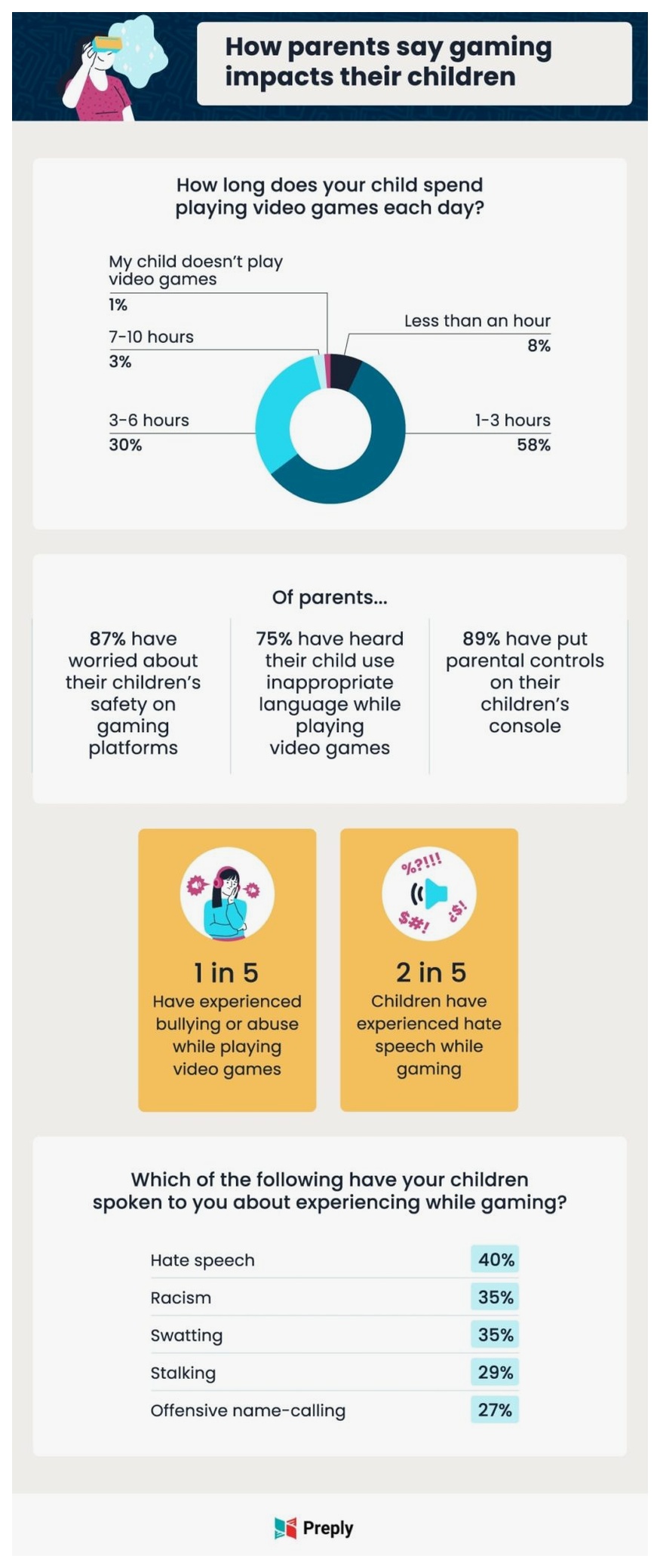
Needless to say, without guidance and a watchful eye, children can experience unhealthy amounts of hatred from gaming.
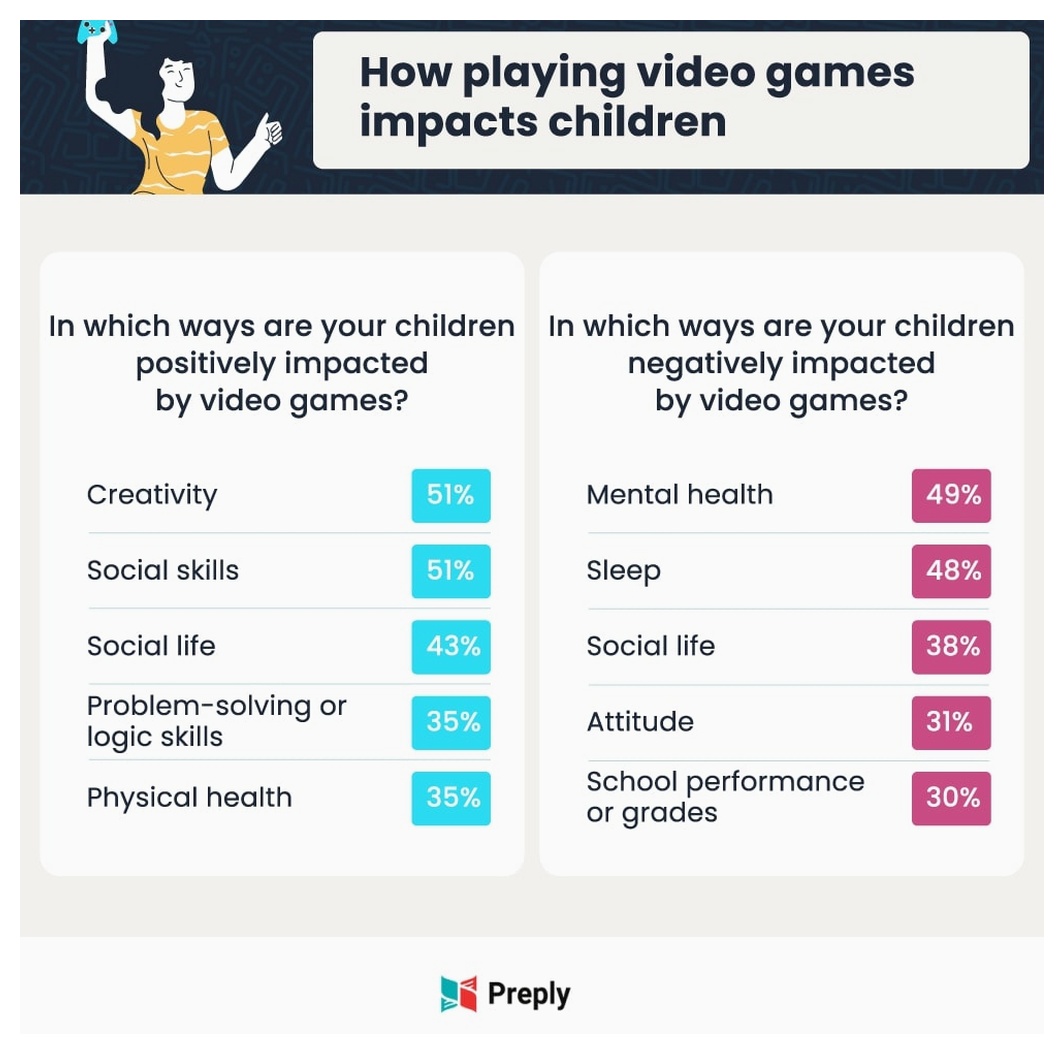
Many parents recognize the bright side of video gaming, noting that it can enhance creativity and foster social skills in their children. However, not everyone shares this optimistic view; 1 in 5 parents believe that the drawbacks of gaming outweigh the advantages for their kids.
Abuse on gaming platforms happens more often than we think
While children are particularly vulnerable to hate speech and abuse, no one is completely immune. Our goal was to explore the prevalence of toxic behavior among gamers of all ages.
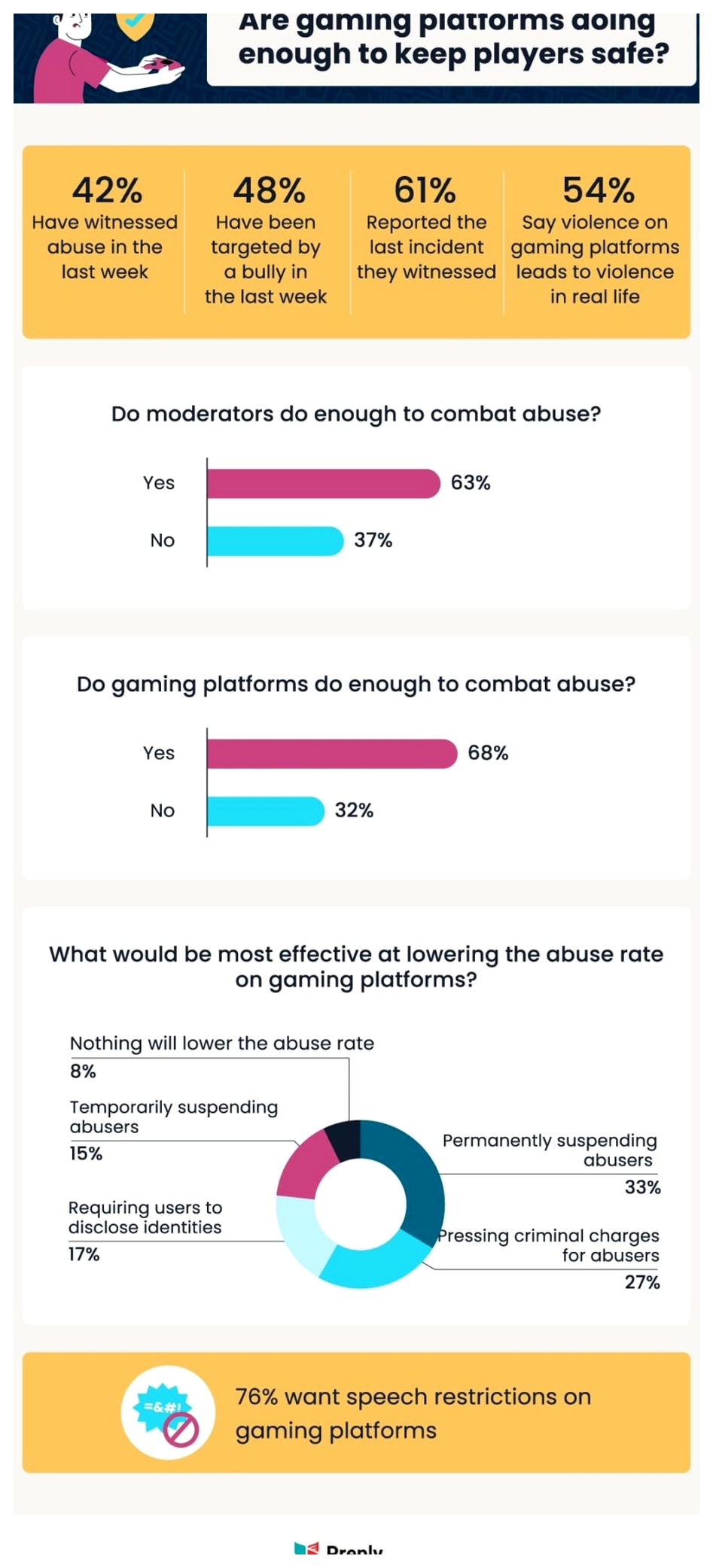
The most common response is “often.” Nearly 50% of individuals reported being targeted for abuse in just the past day or week. Additionally, 40% witnessed someone else being abused within the same timeframe. Disturbingly, 30% confessed to participating in abusive behavior recently. Perhaps most concerning, more than half anticipate that these incidents will rise over the next five years.
So, what can gamers and gaming companies alike do about it?
Reporting plays a crucial role in fighting hate. Over 60% of respondents indicated that they reported the most recent incident they observed. However, 32% feel that video game platforms fall short in addressing this abuse, while nearly 40% believe that in-game moderation is insufficient to tackle the issue effectively.
Many gamers are calling for accountability within gaming communities. In fact, three-quarters of respondents support implementing speech restrictions on gaming platforms. Additionally, one-third believe that permanently banning abusers would be the most effective way to reduce toxic behavior. Despite the widespread negativity, a significant number of gamers are determined to combat this culture of hate.
Conclusion
Hate speech, racism, and bullying have no place in society, and the same holds true for video games. Sadly, the anonymity that gaming provides can often foster these harmful behaviors. It’s crucial for the gaming community to actively combat this negativity and create a more inclusive environment for all players.
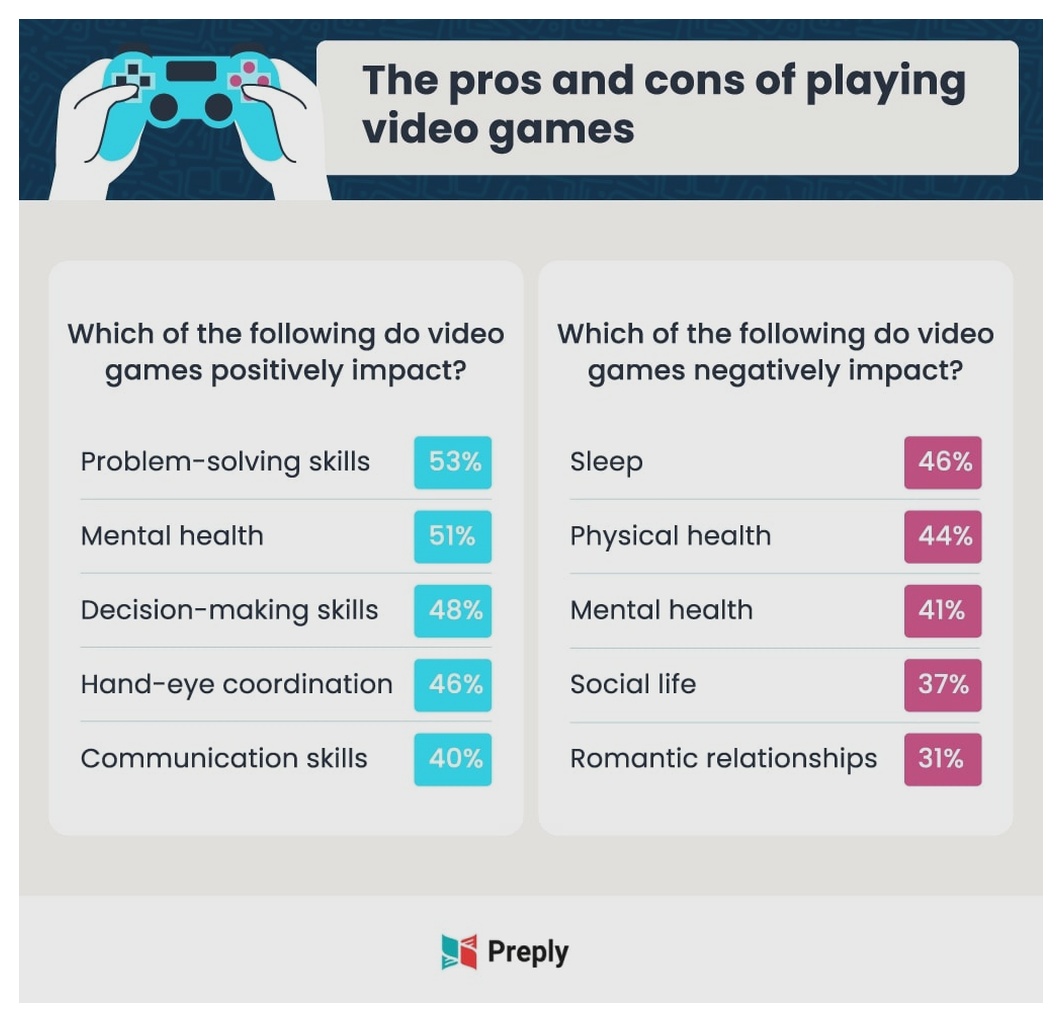
However, gaming can be a positive experience rather than just a negative one. Many apps and games offer valuable benefits for both children and adults, enhancing skills like hand-eye coordination, fostering creativity, and promoting mental well-being. Additionally, when played online, these games can create social connections that extend well beyond the confines of home.
Connecting with gamers worldwide has never been easier, opening doors to new cultures and languages. When approached with kindness, this connection fosters a safe and unique space for building international friendships and exploring diverse cultures right from home. Whether you’re taking online Spanish lessons, joining Japanese classes, or working with a private English tutor, teaming up with a foreign gaming partner can significantly enhance your language practice—all within a respectful and secure environment.
Methodology
On January 21 and 22, 2022, we conducted a survey with 1,409 regular video game players to delve into their experiences with the language used on major platforms like Xbox, PlayStation, and Nintendo Switch. The survey revealed a diverse demographic: 58% of participants identified as male, while 42% identified as female. The average age of respondents was 36 years. In terms of sexual orientation, 71% identified as heterosexual, 21% as bisexual, 6% as homosexual, and 2% as other.
In a recent survey, a significant majority of gamers—74%—prefer playing on PCs, while 57% choose PlayStations, 43% use mobile devices like cell phones and tablets, 34% opt for Xbox, and 28% enjoy gaming on the Nintendo Switch. When it comes to gaming habits, 26% of respondents play for 1-2 hours daily, 29% for 2-3 hours, 23% for 3-4 hours, 12% for 4-6 hours, and a small fraction—4%—dedicate 7-8 hours, with just 1% gaming for 9 hours or more. The survey also revealed that the most favored game genres include shooters at 55%, multiplayer online battle arenas (MOBA) at 44%, role-playing games (RPG) at 43%, sports games at 39%, and real-time strategy (RTS) games at 37%.
Among the respondents, 63% reported having children who play video games at home. Parents shared that 8% of these children spend less than an hour gaming each day. Meanwhile, 58% engage in gaming for 1 to 3 hours, 30% play for 3 to 6 hours, and 3% dedicate 7 to 10 hours to gaming. Notably, 1% of children do not play video games at all.
Frequently Asked Questions
What percentage of gamers have faced emotional abuse or bullying?
Over 90% of gamers have faced or witnessed emotional abuse or bullying.
How prevalent is racism among gamers on online platforms?
Over 40% of gamers have faced racism on gaming platforms.
What are doxxing and swatting in the context of online gaming?
Doxxing involves disclosing an individual’s private information, while swatting refers to falsely reporting violent crimes to emergency services at the victim’s address.
How do parents feel about their children’s safety on gaming platforms?
Nearly 90% of parents express concerns regarding their children’s gaming safety.
What actions do gamers support to combat toxic behavior in gaming communities?
Three-quarters of respondents support implementing speech restrictions on gaming platforms.