
- Skype Learning Pros
- Skype Learning Cons
- Rosetta Stone Pros
- Rosetta Stone Cons
- Frequently Asked Questions
- What are the main advantages of using Skype for language learning?
- What are some limitations of using Skype for language lessons?
- How does Rosetta Stone enhance language learning compared to traditional methods?
- What are the downsides of using Rosetta Stone for language learning?
- What is the recommended approach for maximizing language learning?

In today’s digital age, apps and software have emerged as strong competitors to traditional tutoring services. Many eager learners often get caught up in the allure of these non-tutoring options, mistakenly believing that a single year is sufficient to master a new language. However, they soon discover that true language proficiency demands more than just a smartphone app; it requires consistent practice and deeper engagement.
This article highlights that both language apps and online tutoring have their limitations, rather than comparing the two approaches. It’s essential for learners to understand that there is no flawless method for acquiring knowledge. Their primary goal should be not just to complete tasks, but also to identify the most effective strategies for their learning journey.
Skype Learning Pros
- You can connect to a tutor at any spot in the world.
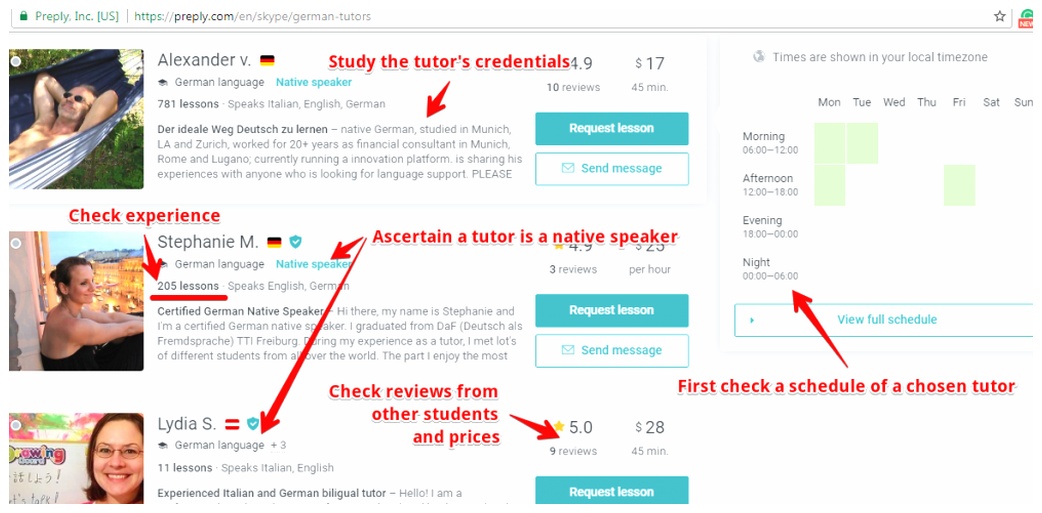
Imagine you’re eager to learn German but have a packed schedule and prefer interacting with a native speaker. Fortunately, with a reliable internet connection and a quiet space, you can make it happen! Simply find a German tutor who aligns with your availability, and you’ll be able to connect with them directly via Skype. Below, you’ll find a screenshot highlighting key factors to consider when selecting the right tutor for your language journey.
- Practically no time restrictions.
One of the great advantages of Skype lessons is their flexibility in scheduling. Whether you prefer to learn early in the morning, late at night, or at any other time, you can often find a tutor who will accommodate your availability. Most Skype tutors are willing to adjust their schedules to fit yours, provided they have open slots. Be sure to discuss your preferred times with your selected tutor to ensure a perfect match!
- Convenient safe payments.
Typically, the payment system used is a universal platform, such as PayPal. The timing of payments is determined through direct discussions with your tutor. You have the flexibility to compensate them after each lesson or opt for a monthly advance payment. In some cases, the payment terms may vary based on the platform managing the tutor’s records.
- An easy way to find and change a Skype tutor.
Online interactions differ significantly from in-person ones, often leading to a lack of personal attachment to individuals you’ve never met face-to-face. This detachment makes it easier to switch tutors if you’re not satisfied with the quality of lessons. In such cases, reaching out to a tutoring service for a new instructor is a practical solution. For example, LingualNeeds offers online English tutoring, connecting you with qualified teachers who can meet your learning needs.
Skype Learning Cons
- No community interaction with other students.
As a learner, you’ll connect with either a single tutor or a small group of friends on Skype, but you won’t have the opportunity to engage with a broader community of unfamiliar students on shared topics. Many online learning platforms, like Rosetta Stone, offer chat features for students to interact with one another, but they come with a hefty price tag of over $300. In contrast, Skype is completely free, making it a budget-friendly choice for personalized learning.
- No specialized chat room that is connected to your progress records.
Many paid programs provide a fantastic feature that enhances the learning experience. Tutors can easily create group chats that bring together individuals from diverse backgrounds—different tastes, nationalities, and religions—united by a common topic and similar language proficiency. This fosters a rich, inclusive environment for discussion and learning.
- The latest Skype versions have too many ads.
As a free communication tool, one significant downside is the emergence of advertising pop-ups in the latest versions. These ads can easily distract learners during lessons, causing them to inadvertently click on them and miss out on important instructions from their tutor.
Rosetta Stone Pros
- The approach of immersing into a language.
Unlike traditional memorization techniques that rely on translating words and phrases, this approach allows you to grasp new vocabulary directly through contextual images. When you encounter a new word on the screen, the accompanying visuals help you comprehend its meaning and even understand entire sentences without translation. This method mirrors how we naturally learn our first language as children, making the process intuitive and engaging.
- It offers both online and installed versions.
For those who prefer immediate access to their programs, using a CD-ROM set might be less convenient. In contrast, the online version provides significant advantages, allowing you to engage with the content anytime and anywhere on your smartphone, tablet, laptop, or desktop computer. This flexibility makes it easier to learn at your own pace during your free time.
- A smart combination of language activities.
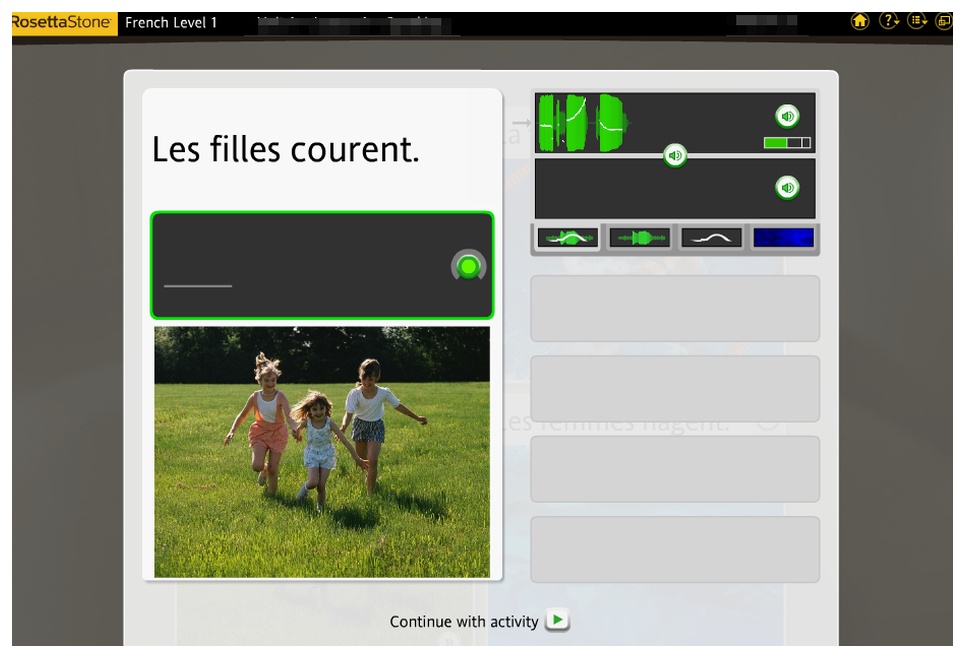
Every unit is structured into lessons and features four key language learning activities. Take a look at the screenshot from my practice session below, which highlights the effective integration of these activities.
- The newest speech recognition technology.
The engine analyzes your sound reproduction by comparing it to samples from native speakers, ensuring highly accurate results with a comparison rate of 100 times per second. Additionally, learners can visualize their performance through waveforms, spectrograms, and pitch contours, making it easy to see how they stack up against native pronunciation.
- Learners can also use Adaptive Recall activities.
In addition to the four essential review exercises included in each unit, these activities evaluate your progress and adjust to your existing skills. The frequency of Adaptive Recall exercises is tailored to your mastery of previous lessons. This innovative feature aims to transform your short-term memory into lasting knowledge.
Rosetta Stone Cons
- High price for software.
For example, you can enroll in a comprehensive 24-month online French course for just $387 or €340. This course is accessible on all your devices and includes engaging practice games and live sessions with a native speaker. However, the upfront cost might feel steep, especially when there are free interactive apps like Duolingo, Busuu, and LiveMocha available for language learning.
- No guidance during the lesson.
It’s important to note that the challenges with this software may not be unique to it alone. Many programs that lack real-time tutor support can leave students puzzled when encountering new grammar concepts or unfamiliar logic. While there are Live Sessions with a native speaker available, they only occur after you’ve made some progress, which means you can’t pause a lesson to ask for clarification on the spot.
- Speech recognition is sensitive to changes in the voice pitch.
Despite being labeled “state-of-the-art,” this technology can alter your voice’s pitch, revealing its limitations. It tends to prioritize intonation over the accurate pronunciation of individual sounds.
- Too long and time-consuming activities.
While I firmly believe in the importance of practicing a language for at least 45 minutes each day, it can be frustrating to repeatedly go over phrases you already know. This highlights a significant limitation of the current program, which lacks the ability to adapt to individual learners’ progress and needs improvement for a more personalized experience.
- The absence of translation exercises.
Creators of Rosetta Stone emphasize that immersing oneself in a language is the key to effective learning, suggesting that translation exercises are not essential to this process. However, engaging in translation can enhance a learner’s understanding by highlighting the fundamental structural differences between their native language and the new one they are acquiring.
To maximize language learning, it’s best to blend Skype tutoring with Rosetta Stone activities. This approach allows learners to harness the advantages of online resources while also getting personalized guidance from a tutor to clarify any confusing aspects of the language.
Frequently Asked Questions
What are the main advantages of using Skype for language learning?
Skype allows learners to connect with tutors worldwide, offers flexible scheduling, and facilitates convenient payments.
What are some limitations of using Skype for language lessons?
Skype lacks community interaction with other students and does not provide specialized chat rooms connected to progress records.
How does Rosetta Stone enhance language learning compared to traditional methods?
Rosetta Stone uses an immersive approach with contextual images, helping learners grasp vocabulary intuitively without relying on translation.
What are the downsides of using Rosetta Stone for language learning?
Rosetta Stone can be expensive, lacks real-time guidance during lessons, and its speech recognition technology may struggle with voice pitch changes.
What is the recommended approach for maximizing language learning?
Combining Skype tutoring with Rosetta Stone activities allows learners to benefit from personalized guidance while utilizing effective online resources.


