

- Spanish flashcard exercises
- Spanish emotions flashcards
- Spanish body parts flashcards
- Spanish shapes flashcards
- Spanish colors flashcards
- Spanish weather and seasons flashcards
- Spanish days and months flashcards
- Spanish numbers flashcards
- More Spanish flashcard resources
- Quizlet
- Chegg
- StudyStack
- Spanish KidStuff
- Conclusion
- Frequently Asked Questions
- What are some key phrases to learn when starting to study Spanish?
- How can flashcards assist in learning Spanish?
- What innovative ways can flashcards be used in language learning?
- What are the gender distinctions in Spanish nouns?
- What online resources are available for Spanish flashcards?
Words serve as the essential building blocks of verbal communication, making a strong vocabulary crucial for mastering Spanish or any foreign language. When traveling abroad, you don’t need to worry about prepositions or verb conjugations right away—those can be learned later. Instead, focus on acquiring a few fundamental Spanish words and phrases to get started on your journey.
To get started, it’s essential to learn key phrases such as “hotel,” “restaurant,” “coffee,” and, of course, “restroom.” Using the right tone will help convey your message effectively. As you expand your vocabulary, your ability to communicate will grow, opening up even more opportunities for interaction.
Flashcards serve as a valuable tool for deepening your understanding of language by exposing you to various vocabulary types and essential concepts. They can help you learn not only common words but also important elements like pronouns, numbers, and, specifically in Spanish, the distinctions between masculine and feminine forms.
Whether you’re starting to learn the essentials of Spanish or aiming to teach them to children or students, these printable Spanish flashcards are an excellent resource. Read on to find out more, or explore online Spanish classes available on LingualNeeds.
Spanish flashcard exercises
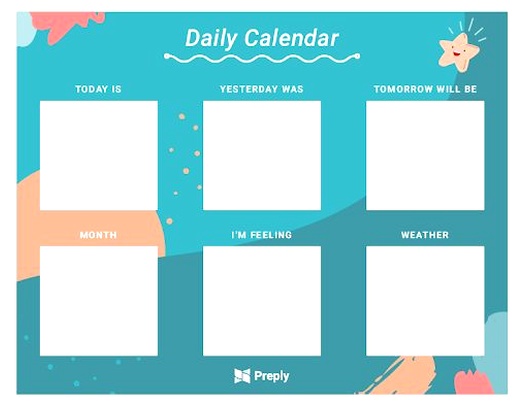
While repeatedly reviewing flashcards is effective for vocabulary acquisition, diversifying your approach can enhance focus and stave off boredom or mental fatigue. Explore innovative ways to utilize flashcards in your language learning journey—get creative and make the most of this versatile tool!
- Engage in a Spanish vocabulary matching game by arranging flashcards in a grid and pairing English cards with their Spanish equivalents.
- Create a daily calendar activity where your child describes the weather, day of the week, and their mood using Spanish flashcards.
- Play Memory with Spanish Flashcards: Print two sets of each flashcard and arrange them face down in a grid. Take turns flipping over two cards to find matching pairs. If they don’t match, turn them back over for the next player.
- Compose a catchy song using the Spanish vocabulary you’ve learned, inspired by “Heads, Shoulders, Knees, and Toes.”
- Write it out. On a separate piece of paper, copy the word on the flashcard and write its meaning.
Organize your flashcards into distinct categories like days of the week, months, colors, and numbers. This structured approach not only simplifies memorization for you and your children but also fosters meaningful connections between related concepts. Below are some helpful categories to consider for your flashcard system.
Spanish emotions flashcards
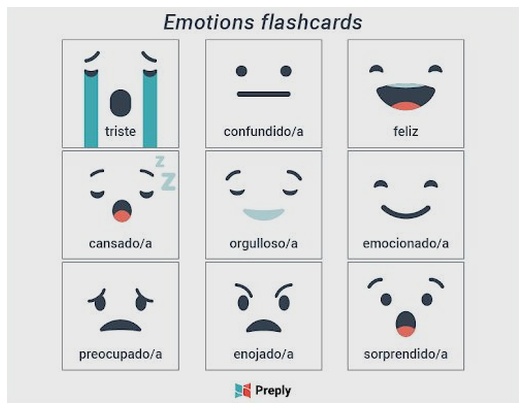
The Spanish language features two distinct genders: masculine and feminine. Typically, masculine nouns end with the letter “o,” while feminine nouns conclude with “a.” However, there are notable exceptions to this rule, which we’ll explore further below.
Moreover, Spanish offers two distinct ways to convey emotions. You can describe your emotional state with the verb “estar,” or express how you feel using “sentirse.” While these verbs are often interchangeable, using “estar” gives a more definitive sense of being happy, compared to the more subjective “feel happy.” Understanding this nuance can enhance your emotional expression in Spanish!
| Spanish word | English translation |
| feliz | happy |
| triste | sad |
| enojado/a | angry |
| emocionado/a | excited |
| preocupado/a | worried |
| cansado/a | tired |
| orgulloso/a | proud |
| frustrado/a | frustrated |
| confundido/a | confused |
Spanish body parts flashcards

You might be amazed at how frequently body parts become a topic of conversation. Whether it’s mentioning a stiff neck, discussing back pain, remembering to brush your teeth, or the need to trim your fingernails, our bodies are often at the center of our daily chats.
Exercise caution when learning Spanish, as it, like many languages, is peppered with slang that can be misleading. Take the phrase “un ojo de la cara,” which literally translates to “an eye of the face.” At first glance, this seems nonsensical since an eye is inherently part of the face. However, in reality, it’s a colorful way to express that something is very costly.
| Spanish word | English translation |
| la cabeza | head |
| el ojo | eye |
| la oreja | ear |
| la boca | mouth |
| el brazo | arm |
| la mano | hand |
| la pierna | leg |
| el pie | foot |
| el estómago | stomach |
Spanish shapes flashcards
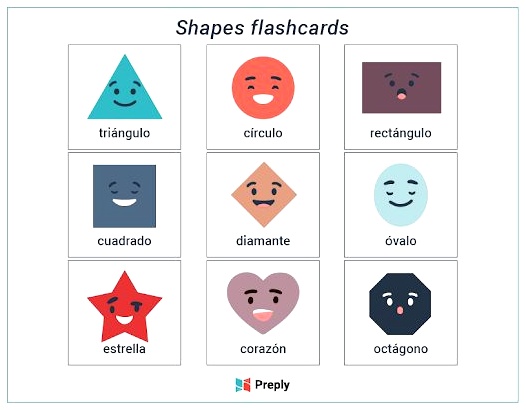
Shapes are often one of the first concepts children grasp, making them an ideal starting point for Spanish language learners as well. Recognizing shapes not only builds foundational vocabulary but also enhances cognitive skills in young learners.
Shapes frequently pop up in discussions, as they help paint vivid mental images that clarify descriptions. Additionally, they play a crucial role in mathematics, particularly in the study of geometry.
Shapes are not just abstract concepts; they often symbolize tangible objects in our world. For instance, the term “star” refers both to the geometric shape and the celestial bodies in the night sky, while “heart” describes both a shape and the vital organ in our bodies. The language we use to describe these shapes seamlessly extends to the real-world items they represent.
Consider the term “diamond.” It can evoke images of a baseball field, sparkling jewelry, or even a suit of playing cards. Each context brings a unique meaning to the word, showcasing its versatility and richness in language.
| Spanish word | English translation |
| el triángulo | triangle |
| el circulo | circle |
| el rectángulo | rectangle |
| el cuadrado | square |
| el diámante | diamond |
| el óvalo | oval |
| la estrella | star |
| el corazón | heart |
| el octágono | octagon |
Spanish colors flashcards
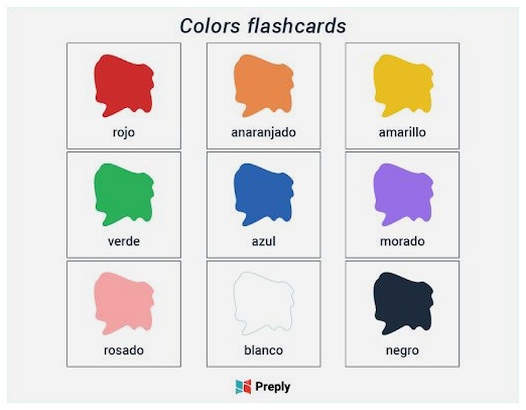
Colors play a crucial role in how we describe the world around us, whether it’s the vibrant hues of flowers, the latest fashion trends, or the sleek finishes on cars and toys. For instance, if you’re asking for directions and someone advises you to turn right at the green road sign, the color instantly helps you visualize and understand where to go.
You may be intrigued to discover how recognizable many Spanish color names are. For instance, you’re likely familiar with Amarillo, a city in Texas, but did you know it translates to “yellow” in Spanish? Similarly, the term “chili verde” refers to “green chili,” showcasing the vibrant connection between language and culture.
| Spanish word | English translation |
| rojo | red |
| anaranjado | orange |
| amarillo | yellow |
| verde | green |
| azul | blue |
| morado | purple |
| rosado | pink |
| blanco | white |
| negro | black |
Spanish weather and seasons flashcards
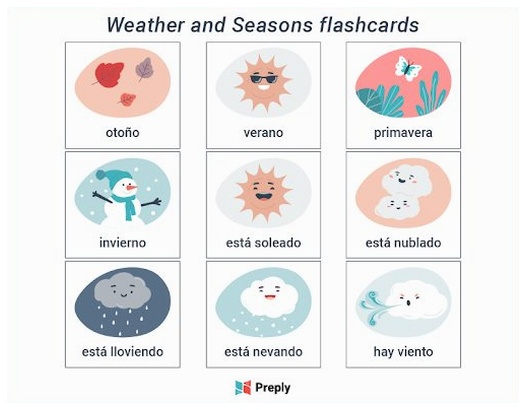
In Spanish, discussing weather conditions involves varied expressions that may seem unusual to English speakers. While English commonly relies on the verb “to be”—as in “It’s rainy,” “It’s snowing,” or “It’s windy”—Spanish employs different structures to convey these same concepts.
In Spanish, the verb “to be” is frequently used, but there are some interesting exceptions. For instance, instead of simply saying “it’s windy,” you would express it as “hay viento,” which translates to “there is wind.” Similarly, to describe temperature, the verb “hacer” (meaning “to do”) is employed. Therefore, “hace calor” translates to “it’s hot,” literally meaning “it does hot.” These nuances add richness to the language!
Understanding the four seasons is not only useful for discussing the weather but also for effectively planning events throughout the year.
| Spanish word | English translation |
| está soleado | sunny |
| está lloviendo | rainy |
| está nublado | cloudy |
| está nevando | snowy |
| hay viento | windy |
| el invierno | winter |
| la primavera | spring |
| el verano | summer |
| el otoño | fall |
Spanish days and months flashcards

Understanding how to effectively communicate the days and months of the calendar is crucial for effective planning, even more so than knowing the seasons.
In English, we say “July 1” or “July the first,” but in Spanish, the format is a bit different. Dates are presented with the numeral first, followed by the month. So, instead of saying “July 1,” you would say “el primero de julio,” which translates to “the first of July.”
In Spanish, you would express “today is Monday” as “hoy es lunes.” When it comes to stating the month, instead of saying “esta enero” for “it’s January,” the correct phrase is “es enero.” It’s also important to remember that in Spanish, days, months, and seasons are not capitalized.
| Spanish word | English translation |
| lunes | Monday |
| martes | Tuesday |
| mièrcoles | Wednesday |
| jueves | Thursday |
| viernes | Friday |
| sábado | Saturday |
| domingo | Sunday |
| enero | January |
| febrero | February |
| marzo | March |
| abril | April |
| mayo | May |
| junio | June |
| julio | July |
| agosto | August |
| septiembre | September |
| octubre | October |
| noviembre | November |
| diciembre | December |
Spanish numbers flashcards
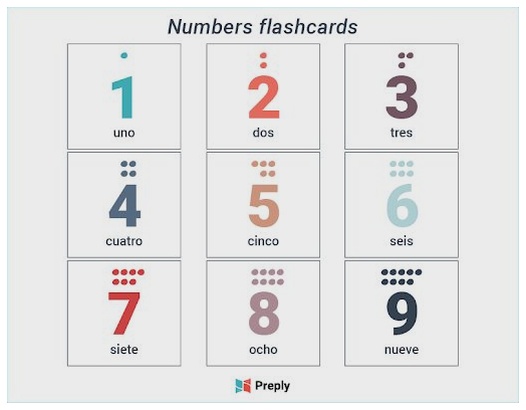
Understanding numbers is essential for various everyday tasks, from telling time to inquiring about street addresses. In any language, including Spanish, numbers form a crucial part of our vocabulary.
In English, the first twelve numbers are unique, each with its own name. However, starting from thirteen, they begin to share a common suffix. This pattern continues with each decade: for instance, the multiples of ten have distinct names like twenty, thirty, and forty, while the numbers one through nine are added as hyphenated suffixes, resulting in terms like twenty-one and thirty-five.
Spanish has a unique twist when it comes to numbers. The first 15 numbers each have their own distinct names. However, starting from 16, the naming convention shifts to a contraction system. For instance, 16 is called “dieciseis,” a blend of “diez y seis” (ten and six), while 17 becomes “diecisiete,” merging “diez y siete” (ten and seven).
The contracted style of counting in Spanish persists through the twenties, with numbers like “veinte,” “veintiuno,” and “veintidós.” However, starting from the thirties, the format shifts to resemble English, using phrases like “treinta y uno” and “treinta y dos.”
| Spanish word | English translation |
| uno | one |
| dos | two |
| tres | three |
| cuatro | four |
| cinco | five |
| seis | six |
| siete | seven |
| ocho | eight |
| nueve | nine |
| diez | ten |
| once | eleven |
| doce | twelve |
| trece | thirteen |
| catorce | fourteen |
| quince | fifteen |
More Spanish flashcard resources
After mastering the fundamentals with flashcards, it’s time to elevate your Spanish skills with the guidance of a Spanish tutor or teacher. To further enhance your learning experience, explore a variety of advanced Spanish flashcard resources available online. Here are some excellent options to consider:
Quizlet
Quizlet proudly claims the title of the largest online platform for flashcards and study games, offering over 4 million free study sets that span virtually every subject imaginable. For those seeking an enhanced experience, an upgraded subscription is available for a monthly or annual fee, unlocking even more valuable features.
Chegg
Chegg provides an extensive selection of flashcards across various subjects, including Spanish. Not only can you access pre-made flashcards, but you also have the option to create your own. With over 5 million sets available, you can easily search by subject to find exactly what you need.
StudyStack
For subject-specific flashcard sets, look no further than StudyStack! Here, you’ll discover a variety of cards covering topics such as Spanish greetings, vocabulary for different rooms, and high-frequency words. The decks vary in size too, with some containing just a handful of cards while others boast up to 100.
Spanish KidStuff
At Spanishkidstuff.com, members can explore a variety of themed card sets covering essential topics like actions, verbs, music, animals, numbers, clothing, shopping, professions, transportation, and time. Beyond just flashcards for kids, the site offers a treasure trove of resources, including hundreds of engaging worksheets and classroom readers perfect for storytime, making Spanish learning fun and interactive for children.
Conclusion
Flashcards are a powerful resource for mastering Spanish, whether you’re preparing for a trip, enhancing your job skills, or helping your children with their education. Learning Spanish not only broadens your horizons but also boosts your career prospects, as many employers value bilingual employees who can effectively communicate with clients.
Spanish language flashcards and tutors serve as invaluable tools for students at any stage of their academic journey, as well as for anyone eager to enhance their lives by learning Spanish.
Frequently Asked Questions
What are some key phrases to learn when starting to study Spanish?
Key phrases include ‘hotel,’ ‘restaurant,’ ‘coffee,’ and ‘restroom.’
How can flashcards assist in learning Spanish?
Flashcards help deepen understanding by exposing learners to various vocabulary types and essential concepts.
What innovative ways can flashcards be used in language learning?
You can engage in matching games, create daily activities, play Memory, compose songs, or categorize flashcards.
What are the gender distinctions in Spanish nouns?
Typically, masculine nouns end with ‘o’ and feminine nouns end with ‘a,’ though there are exceptions.
What online resources are available for Spanish flashcards?
Resources include Quizlet, Chegg, StudyStack, and Spanish KidStuff, which offer various themed flashcard sets.


