
- What are the days of the week in Spanish?
- Understanding the structure and origin of the days of the week in Spanish
- Lunes: The day of the Moon
- Martes: The day of Mars
- Miércoles: The day of Mercury
- Jueves: The day of Jupiter
- Viernes: The day of Venus
- Sábado: The day of rest
- Domingo: The day of the Lord
- Vocabulary for discussing the 7 days of the week in Spanish
- Essential phrases
- Expressions and idioms related to time and weekdays in Spanish
- Conclusion
- Frequently Asked Questions
- What are the days of the week in Spanish?
- Why are the days of the week in Spanish not capitalized?
- What cultural significance does ‘Lunes’ have?
- What is a common Spanish proverb related to ‘Martes’?
- How does the word ‘Sábado’ relate to rest?
In this blog post, we’ll dive into the pronunciation, linguistic roots, and the similarities and differences between the days of the week in Spanish and English. Additionally, we’ll uncover popular phrases and idioms that will enrich your understanding of Spanish, the fourth most spoken language globally.
If you’re eager to enhance your language abilities and wow your tutor in your upcoming online Spanish lesson, then keep reading!
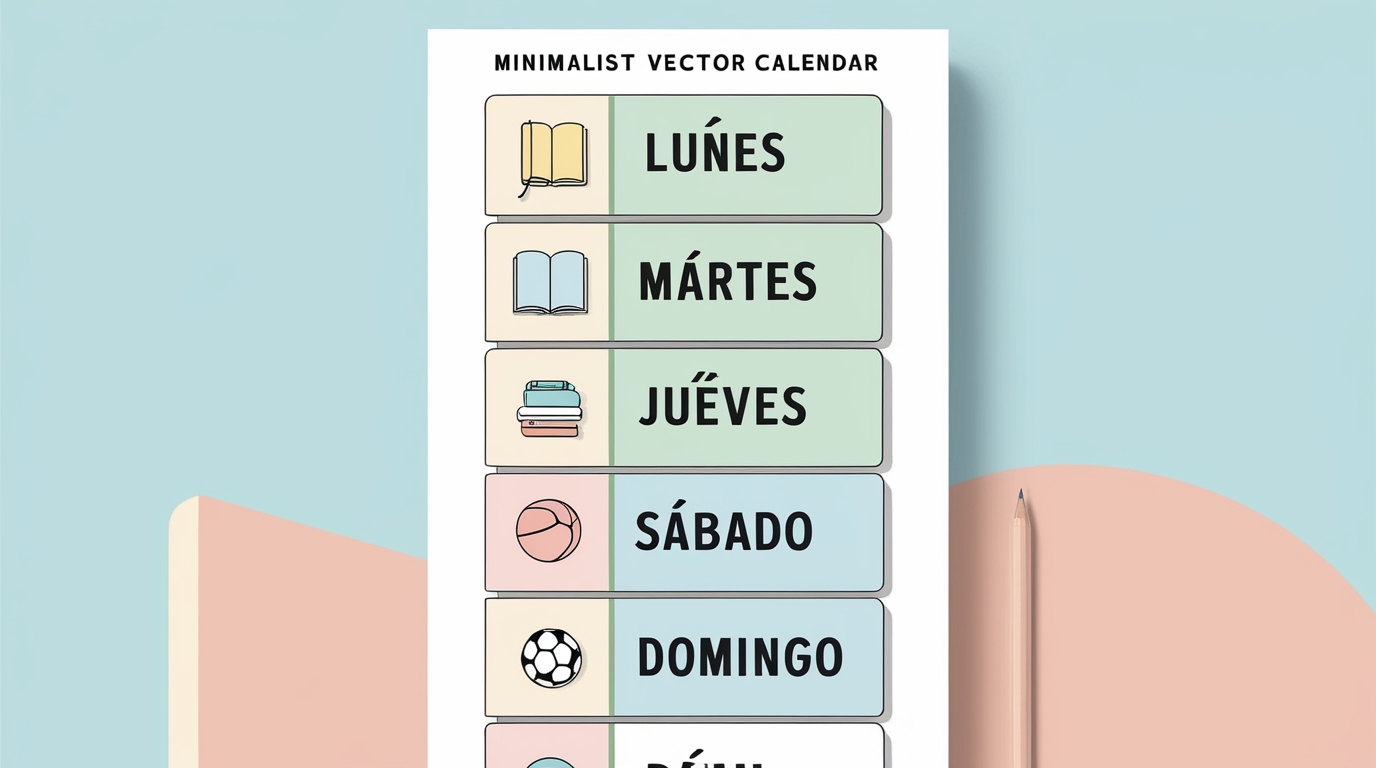
What are the days of the week in Spanish?
Each weekday has a unique name that holds both cultural and historical significance.
Here they are, starting from Monday:
- Lunes (loo-nehs): “Monday”
- Martes (mahr-tehs): “Tuesday”
- Miércoles (mee-ehr-koh-lehs)*: “Wednesday”
- Jueves (hweh-behs): “Thursday”
- Viernes (vyehr-nehs): “Friday”
- Sábado (sah-bah-doh)*: “Saturday”
- Domingo (doh-meen-goh): “Sunday”
Be sure to pay attention to the accent marks, or tildes, found over the vowels in “miércoles” and “sábado.” These marks highlight the syllables that should be emphasized during pronunciation, guiding you to say the words correctly.
Also, be aware that the days of the week in Spanish are not capitalized unless they begin a sentence.
Understanding the structure and origin of the days of the week in Spanish
The Spanish days of the week are deeply intertwined with celestial bodies and mythology, reflecting rich historical roots. Understanding the cultural significance and origins of these terms can enhance your memory, making it easier to recall this Spanish vocabulary.
So, scroll down if you tend to mix up “miércoles” with “martes.”
Lunes: The day of the Moon
“Lunes,” which comes from the Latin “Lunae dies,” meaning “day of the Moon,” evokes a blend of emotions in Spanish-speaking cultures. It marks the transition from the weekend’s leisure to the responsibilities of a new workweek, bringing both a sense of loss and a fresh beginning.
The popular Spanish proverb “Los lunes, ni las gallinas ponen,” which translates to “Even the hens don’t lay on Mondays,” perfectly encapsulates the sluggishness that many people feel at the start of the week. This saying reflects a widespread sentiment that Mondays can be particularly challenging and unproductive.
Martes: The day of Mars
The name “Martes” originates from “Martis dies,” meaning “Mars’s day,” honoring the Roman god of war and evoking themes of courage and conflict. Interestingly, in Spain, Tuesday the 13th is considered the unluckiest day of the year, contrasting with the superstition surrounding Friday the 13th in the US and UK.
The traditional Spanish proverb “En martes, ni te cases ni te embarques,” which translates to “Don’t get married or embark on a journey on Tuesday,” captures a widespread superstition. This saying reflects a belief that Tuesdays are unlucky for significant life events and travels.
Miércoles: The day of Mercury
“Miércoles,” derived from the Latin “Mercurii dies” meaning “Mercury’s day,” is typically seen as just another weekday in Spanish-speaking cultures. Yet, it holds special significance in the Christian tradition as “Miércoles de Ceniza” or “Ash Wednesday,” which heralds the start of Lent, a period of reflection and preparation leading up to Easter.
Mercury, the nearest planet to the sun, is famous for its incredibly fast orbit. This swift rotation can be likened to our collective eagerness to power through Wednesday, often referred to as hump day, as we look forward to the weekend ahead.
Jueves: The day of Jupiter
In Catholic countries such as Mexico, “Jueves,” derived from “Iovis dies” or “Jupiter’s day,” carries profound religious meaning. Notably, “Jueves Santo,” or “Holy Thursday,” is a significant observance that honors the Last Supper of Jesus Christ, marking a pivotal moment in Christian tradition.
Beyond its religious significance, “jueves” holds considerable cultural value. In Spain, for instance, it is a favored day for local markets, bustling with activity. Additionally, many people choose Thursday to launch new ventures, as it symbolizes prosperity and good fortune.
Viernes: The day of Venus
“Viernes,” derived from the Latin “Veneris dies” or “Venus’s day,” symbolizes love and beauty. In Christianity, “Viernes Santo” or “Good Friday” serves as a poignant observance of Jesus’s crucifixion. However, beyond its religious significance, “viernes” also marks the transition from the workweek to a time of rest and socializing, inviting people to unwind and connect with others.
Sábado: The day of rest
The word “sábado,” rooted in the Hebrew term “Shabbat,” represents a day of rest and stands out from the Roman-inspired names of the other weekdays in Spanish. In Spanish-speaking cultures, “la tarde de sábado” or “Saturday evening” is a cherished time for community gatherings and celebrations, embodying the spirit of togetherness and enjoyment.
Domingo: The day of the Lord
“Domingo,” translating to “of the Lord”, has strong Christian connotations: It’s a day for church services and religious observance.
Beyond its spiritual importance, “domingo” serves as a cherished day of rest and family bonding. It often features a special Sunday family meal, where relatives come together for a relaxed lunch, followed by sobremesa—an enjoyable tradition of lingering at the table to share stories and savor each other’s company after the meal.

Vocabulary for discussing the 7 days of the week in Spanish
Having uncovered the fascinating origins of the days of the week in Spanish and their cultural significance, let’s dive into additional key vocabulary that will enhance your conversations about time and scheduling!
- Hoy (ohy): “Today”
For example, “Hoy es lunes” translates to “Today is Monday.”
- Ayer (ah-yehr): “Yesterday”
For example, “Ayer fue domingo” translates to “Yesterday was Sunday.”
- Mañana (mah-nyah-nah): “Tomorrow”
For example, “Mañana será martes” translates to “Tomorrow will be Tuesday.”
- Día (dee-ah): “Day”
For example, “El día está soleado” translates to “The day is sunny.”
- Semana (seh-mah-nah): “Week”
For example, “La semana tiene siete días” translates to “The week has seven days.”
- Fin de semana (feen deh seh-mah-nah): “Weekend”
For example, “Voy a la playa este fin de semana” translates to “I am going to the beach this weekend.”
- Diario (dee-ah-ree-oh): “Daily”
For example, “Leo el periódico diario” translates to “I read the newspaper daily.”
- Semanal (seh-mah-nahl): “Weekly”
For example, “Tengo una reunión semanal cada lunes” translates to “I have a weekly meeting every Monday.”
Essential phrases
Want to learn how to use these words in everyday situations? The following phrases have got you covered:
- ¿Qué día es hoy?: “What day is it today?”
- Mañana es miércoles: “Tomorrow is Wednesday.”
- Trabajo de lunes a viernes: “I work from Monday to Friday.”
- La fiesta es el sábado: “The party is on Saturday.”
- Hago la compra el fin de semana: “I do my grocery shopping on the weekend.”
- Tenemos una reunión diaria en el trabajo: “We have a daily meeting at work.”
- Tengo clases de español dos veces a la semana: “I have Spanish classes twice a week.”
- ¿Qué tal tu día?: “How was your day?”
- ¿Qué planes tienes para este fin de semana?: “What plans do you have for this weekend?”
- Me voy de vacaciones la próxima semana: “I’m going on vacation next week.”
Expressions and idioms related to time and weekdays in Spanish
If you’ve ever participated in Spanish classes or interacted with native speakers, you might have encountered a treasure trove of vibrant expressions that left you curious and intrigued. These colorful phrases often add depth and personality to the language, making it a fascinating subject to explore.
To truly connect with native Spanish speakers and enhance your fluency, immerse yourself in the culture by mastering these essential idioms and expressions tied to time and the days of the week:
- El Día de la Marmota, o “Groundhog Day,” se refiere a un día que parece repetirse, simbolizando la rutina y la monotonía.
- “Don’t postpone today’s tasks for tomorrow.” This popular saying advises against delaying responsibilities that can be accomplished now, promoting productivity and time management.
- “Each day has enough trouble of its own” reminds us to prioritize today’s challenges rather than stress over future worries.
- “Not every day is Sunday”: This phrase serves as a reminder that while some days are meant for relaxation, others require us to focus on work and responsibilities.
- A quien madruga, Dios le ayuda translates to “God helps those who rise early,” promoting the value of waking up early and working hard, akin to the saying “The early bird catches the worm.”
- “Días de mucho, vísperas de nada” translates to “Days of plenty, eves of nothing,” highlighting the idea that periods of abundance can lead to times of scarcity.
- **Estar de lunes**: This phrase, meaning “to have a case of the Mondays,” describes the feeling of struggling at the start of the week.
Looking to add even more spice to your Spanish? Then pick up these 25 Spanish idioms and expressions.

Conclusion
Mastering “los días de la semana en español” — the days of the week in Spanish — is an essential milestone on your journey to fluency in this beautiful language. Understanding these key terms will not only enhance your vocabulary but also improve your everyday conversations and interactions.
Looking to boost your vocabulary even more? Check out the LingualNeeds self-study language app, available for both iOS and Android devices! This engaging app features an AI-driven vocabulary coach that recommends new words tailored to your interests and hobbies each day, making learning both fun and personalized.
The app also offers a convenient way to connect with affordable online Spanish tutors who fit your busy lifestyle. LingualNeeds’ professional language coaches are skilled at helping you start speaking Spanish from day one, no matter your starting level. They focus on your specific goals and identify your weaknesses to develop personalized study plans that help you achieve your objectives quickly.
Frequently Asked Questions
What are the days of the week in Spanish?
The days of the week in Spanish are Lunes (Monday), Martes (Tuesday), Miércoles (Wednesday), Jueves (Thursday), Viernes (Friday), Sábado (Saturday), and Domingo (Sunday).
Why are the days of the week in Spanish not capitalized?
The days of the week in Spanish are not capitalized unless they begin a sentence.
What cultural significance does ‘Lunes’ have?
‘Lunes’ means ‘day of the Moon’ and reflects a blend of emotions in Spanish-speaking cultures, marking the transition from leisure to work responsibilities.
What is a common Spanish proverb related to ‘Martes’?
A common saying is ‘En martes, ni te cases ni te embarques,’ meaning ‘Don’t get married or embark on a journey on Tuesday,’ reflecting a superstition about Tuesdays.
How does the word ‘Sábado’ relate to rest?
‘Sábado’ is rooted in the Hebrew term ‘Shabbat,’ representing a day of rest, and is associated with community gatherings and celebrations in Spanish-speaking cultures.


