

- Learn how to speak Spanish step-by-step
- 1. Learn to spell and pronounce Spanish words
- 2. Get the hang of basic vocabulary in Spanish
- 3. Master your grammar
- 4. Practice reading aloud
- 5. Watch movies in Spanish
- 6. Listen to music and sing along
- 7. Educate yourself on common mistakes
- 8. Immerse yourself in the language
- 9. Record yourself speaking Spanish
- 10. Get a language buddy
- 11. Remember practice makes perfect
- Comparing the best methods for learning to speak Spanish
- Online tutoring
- Pros:
- Cons:
- Classroom learning
- Pros:
- Cons:
- Immersion learning
- Pros:
- Cons:
- Software and apps
- Pros:
- Cons:
- Spanish-language media
- Pros:
- Cons:
- Learning how to speak Spanish with LingualNeeds
- Final thoughts
- Frequently Asked Questions
- What are the essential steps to start learning Spanish?
- How can I improve my Spanish pronunciation?
- What are some effective ways to practice Spanish outside the classroom?
- What resources can help me learn Spanish online?
- Is it necessary to be perfect when learning Spanish?
Want to learn Spanish but feel uncertain about where to start?
Joining the ranks of over 500 million Spanish speakers around the globe is a rewarding challenge that’s more attainable than you might believe. This engaging guide will explore 11 expert strategies to help you master the Spanish language with confidence and efficiency.
Whether you opt for self-study or enroll in online Spanish classes, these effective strategies will guide you from a beginner to a fluent Spanish speaker. Are you ready? Vamos!
Learn how to speak Spanish step-by-step
To truly master the Spanish language and speak it with confidence, you’ll need to follow some essential steps. This guide will walk you through a clear path from beginner to fluent speaker, whether you’re studying solo or working with a Spanish tutor. Get ready to embark on your language-learning journey!
1. Learn to spell and pronounce Spanish words
Spanish spelling closely aligns with pronunciation, making it simpler than English. Once you grasp a few essential rules, you’ll find that mastering Spanish spelling and pronunciation becomes a breeze!
For example:
- The “ñ” is pronounced “nyah”
- “h” is silent unless it’s after a “c”
- In Spain and Central America, double “l” is similar to a “y” in English, so paella is “pie-ey-a”
- “j” is pronounced like “h” in the Scottish “loch”
- “v” and “b” sound the same
- In certain Spanish-speaking regions, the letters “z” and “c” are pronounced as “th,” similar to the English word “bath.”
Finally, it’s essential to perfect the rolling “r” sound, especially at the start of words like “rojo” (red) and in words with a double “r,” such as “perro” (dog). Mastering this distinctive sound will greatly enhance your Spanish pronunciation!
2. Get the hang of basic vocabulary in Spanish
Initially, expanding your vocabulary will significantly enhance your comprehension of Spanish more than focusing on grammar. You’ll discover that you can grasp the main ideas of conversations by mastering just the essential nouns and verbs.
Excitingly, you can still communicate effectively even if your sentences aren’t perfectly grammatical—at least not yet! By incorporating some basic Spanish phrases, you’ll quickly find yourself engaging in meaningful conversations.
3. Master your grammar
The great news is that Spanish grammar shares many similarities with English, particularly in its basic sentence structure, following the same subject-verb-object order. Plus, forming questions is a breeze—simply raise your voice at the end of the sentence, and you’re good to go!
The bad news is that all nouns are masculine, feminine or plural, and their adjectives change accordingly.
Verbs shift their forms based on the subject—whether it’s I, you (informal), he, she, it, we, they, or you (formal). Irregular verbs, however, don’t adhere to these standard rules, so they require memorization or practice to master. Fortunately, a skilled teacher or a well-structured self-study book can greatly enhance your understanding of grammar.
4. Practice reading aloud
Reading aloud offers a fantastic opportunity to enhance your speaking skills. It allows you to concentrate on pronunciation and stress patterns without the extra mental burden of constructing sentences and considering grammar. This focused practice can significantly boost your verbal communication abilities.
Begin with brief texts to practice reading until you can do so at a smooth, natural pace. To enhance your experience, consider finding a partner to read to; this will make your practice even more beneficial.
5. Watch movies in Spanish
Spanish cinema is renowned across the globe for its unique storytelling and vibrant characters. Even if you’re not ready to dive into the nuanced films of acclaimed directors like Pedro Almodóvar or Guillermo del Toro, many streaming platforms offer the option to switch the audio to Spanish. This allows you to enjoy the rich cultural experience without fully committing to the original films.
As a beginner, opt for straightforward action movies that feature minimal dialogue, making them easier to follow. Alternatively, revisit beloved classics that you’re already familiar with, so you can enjoy the story without getting lost.
Utilizing subtitles can enhance your vocabulary and contextual understanding of phrases, allowing you to recognize the grammar concepts you’ve been studying.
6. Listen to music and sing along
Ever wonder why song lyrics stick in our minds? It’s because songs use repetition, connections, rhyme, and patterns, all of which enhance our memory. While you may initially look up the lyrics to sing along correctly, you’ll find that they quickly become ingrained in your memory!
One of the most enjoyable aspects of learning Spanish is singing along to your favorite songs. This fun approach makes the learning process feel less like a chore, encouraging you to practice more frequently. As a result, you’ll boost your skills effortlessly while enjoying the music you love!
7. Educate yourself on common mistakes
Although it’s important not to dwell on every minor mistake, being aware of the most frequent errors learners make when speaking Spanish can be beneficial.
- Confusing the verbs “ser” and “estar” – Both translate to “to be” in English, but “estar” specifically denotes a temporary state or location in Spanish.
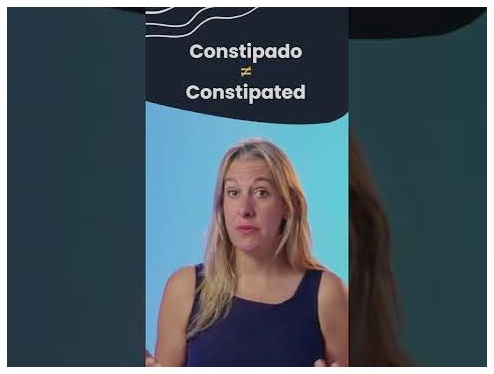
- Beware of false friends: “Embarazada” doesn’t mean what you think—it actually means “pregnant.” Plus, if someone says they’re “constipado,” they simply have a cold!
8. Immerse yourself in the language
While relocating to a Spanish-speaking country would be an incredible experience (and if you have the chance, seize it!), there are numerous other effective ways to immerse yourself in the language right where you are.
In addition to changing your Netflix language to Spanish, consider switching the language settings on your phone and laptop as well. Don’t worry; you’ll quickly navigate through the changes and, in the process, expand your vocabulary with valuable new words!
Transform your home into a Spanish language haven by labeling objects and furniture with post-it notes in Spanish. To enhance your learning experience, engage in self-talk as you move through your daily activities. For instance, while enjoying a snack, say to yourself, “Estoy comiendo pan” (I’m eating bread). This immersive approach makes language learning fun and practical!
9. Record yourself speaking Spanish
Harness the power of your smartphone or laptop by recording yourself speaking. A fantastic way to enhance your pronunciation is by utilizing the voice dictation feature found in many apps. The clearer your speech, the more precise the app’s transcription will be, helping you track your progress and refine your skills.
You can also take advantage of Siri or your device’s equivalent virtual assistant. Just give clear instructions, and watch as it effortlessly follows your commands!
10. Get a language buddy
To build your confidence in speaking Spanish, the most effective strategy is to practice with a partner. This could be a friend who is also learning the language, or you might seek out someone interested in a language exchange (intercambio). Engaging with others will enhance your skills and boost your confidence!
Many Spanish speakers are eager to practice their English skills, making it easy to connect with someone online or in your local community. Whether you choose to chat virtually or meet face-to-face, you’ll find plenty of opportunities to engage and improve together.
You can enhance your language skills with your buddy beyond just speaking and listening. By texting or emailing each other, you can also sharpen your writing and reading abilities!
11. Remember practice makes perfect
The steps outlined provide an excellent starting point for building your confidence in speaking Spanish. Now, the key to success is simple: immerse yourself in practice, practice, practice!
Create a daily routine that includes speaking, listening, reading, and writing in Spanish, and you’ll be amazed at the progress you’ll make! Consistency is key to mastering the language.
And, although we say “practice makes perfect,” remember, you don’t need to have perfect Spanish.
Learners who embrace the possibility of making mistakes—whether it’s a slip in grammar or forgetting a word—tend to become more proficient Spanish speakers than those who are overly concerned about perfection.

Comparing the best methods for learning to speak Spanish
Once you’ve made the exciting decision to learn Spanish, the next step is choosing the right approach for you. Your options will vary based on availability and accessibility, as well as what aligns with your lifestyle. Don’t forget to factor in your budget, as cost can play a significant role in your learning journey.
Here are five different ways to learn Spanish and their pros and cons.
Online tutoring
Learning a language from a real person is undeniably the most effective approach, and with the ease and flexibility that online learning offers, it’s an obvious choice. Here are some key factors to keep in mind:
Pros:
- Learn Spanish easily with an online tutor. Access affordable, qualified teachers from anywhere with an internet connection in just a few clicks.
- Flexibility is a big plus. You can arrange as many classes as you need according to your budget.
- Explore various teachers by booking a trial class before making a commitment. With LingualNeeds, if you’re not satisfied after your first lesson with a new tutor, you can either switch to another tutor for free or receive a full refund.
Cons:
- You miss out on the dynamics of interacting with classmates in an in-person group setting.
Classroom learning
Studying Spanish in a classroom setting alongside peers and a teacher can be an exciting opportunity. However, there are important factors to consider:
Pros:
- In-person Spanish language classes are available in many towns and cities with colleges or language schools.
- Classes can be a fun way to make new friends as well as learn Spanish.
Cons:
- You usually have to pay up front for at least a whole semester.
- Classes will be at set times and locations so might not offer the flexibility you’re looking for.
Immersion learning
Diving deep into a new language and its culture is one of the quickest and most effective methods to learn. However, it’s essential to consider both the advantages and challenges that come with this immersive approach. What are they?
Pros:
- You’ll learn quickly in an environment where you’ll only hear and speak Spanish.
- You’ll motivate yourself even more, having a real reason to use the language you’ve been learning.
Cons:
- Living abroad in a Spanish-speaking country could be costly, especially if you want to take some classes.
- Ideally, allocate a few weeks to maximize your experience, though we understand that not everyone can take extended time off from work or school.
Software and apps
Learning Spanish through apps is super convenient. But is it the best way to do it?
Pros:
- There are so many great (and free!) apps for learning Spanish, you’ll be spoiled for choice.
- Easily squeeze in bite-sized learning chunks on your daily commute instead of scrolling Insta one more time.
Cons:
- Apps may not always use the language you prefer, but they can enhance your self-study or supplement lessons with a teacher.
Spanish-language media
Why not spend the time you’d waste watching TV on something productive, like learning Spanish?
Pros:
- To enhance your Spanish vocabulary and expressions, utilize Spanish TV, radio, and news websites. Notable resources include El País, Spain’s largest newspaper, and global outlets like BBC Mundo and CNN Español, which also cover Latin America.
- For effective listening practice, utilize Spain’s public broadcasting network, RTVE. Alternatively, consider News in Slow Spanish, which offers audio at a slower pace, making it ideal for beginners.
Cons:
- Challenging for Beginners: The vocabulary tends to be more formal, making it less suitable for those aiming to learn casual language for chatting with friends.
Learning how to speak Spanish with LingualNeeds
LingualNeeds is a dynamic online learning platform that pairs students with expert tutors for personalized one-on-one language lessons. With over 4,000 Spanish tutors ready to assist, you’ll receive tailored instruction and valuable feedback to help you achieve your learning objectives. Join LingualNeeds and embark on your journey to becoming a fluent and confident Spanish speaker!
With LingualNeeds, you have the freedom to select your class schedule, set your budget, and tailor your learning topics to suit your interests. Plus, you’ll enjoy unlimited access to a comprehensive self-study library, allowing you to enhance your skills anytime outside of your lessons.
Final thoughts
If you’re eager to learn Spanish, the most important step is simply to begin. You’ll be amazed at how quickly you can hold basic conversations and even comprehend movies in the language!
By consistently expanding your vocabulary, mastering grammar rules, and engaging in regular practice, you’ll find that achieving fluency in Spanish is well within your reach.
Frequently Asked Questions
What are the essential steps to start learning Spanish?
The essential steps include learning to spell and pronounce Spanish words, expanding basic vocabulary, mastering grammar, practicing reading aloud, and immersing yourself in the language.
How can I improve my Spanish pronunciation?
You can improve your pronunciation by practicing the rolling ‘r’ sound, reading aloud, and using voice dictation features on apps to track your progress.
What are some effective ways to practice Spanish outside the classroom?
Effective ways include watching movies in Spanish, listening to music and singing along, recording yourself speaking, and engaging in conversations with a language buddy.
What resources can help me learn Spanish online?
Resources include online tutoring platforms like LingualNeeds, language learning apps, and Spanish-language media such as TV shows, radio, and news websites.
Is it necessary to be perfect when learning Spanish?
No, it’s important to embrace the possibility of making mistakes, as learners who are less concerned about perfection tend to become more proficient.


