

- Tips for discussing seasons in Spanish
- Definite articles are often used with seasons
- Recognize scenarios when definite articles aren’t required
- Using spring (primavera) in conversation
- Using summer (verano) in conversation
- Using autumn (otoño) in conversation
- Using winter (invierno) in conversation
- Using seasons and dates in conversation
- Common phrases for all seasons
- Practice the seasons in Spanish
- Ready to learn Spanish?
- Frequently Asked Questions
- What are the four seasons in Spanish?
- How do seasons differ in tropical regions compared to temperate regions?
- What are some conversation starters for discussing spring in Spanish?
- Why is it important to use definite articles when discussing seasons in Spanish?
- How do you express the dates for the seasons in Spanish?
Expanding your Spanish vocabulary to include the seasons can greatly enhance your travel experiences and conversations with your Spanish tutor. Both English and Spanish-speaking countries recognize the four distinct seasons: spring (primavera), summer (verano), autumn (otoño), and winter (invierno). Familiarizing yourself with these terms will make planning trips and engaging in discussions much easier and more enjoyable.
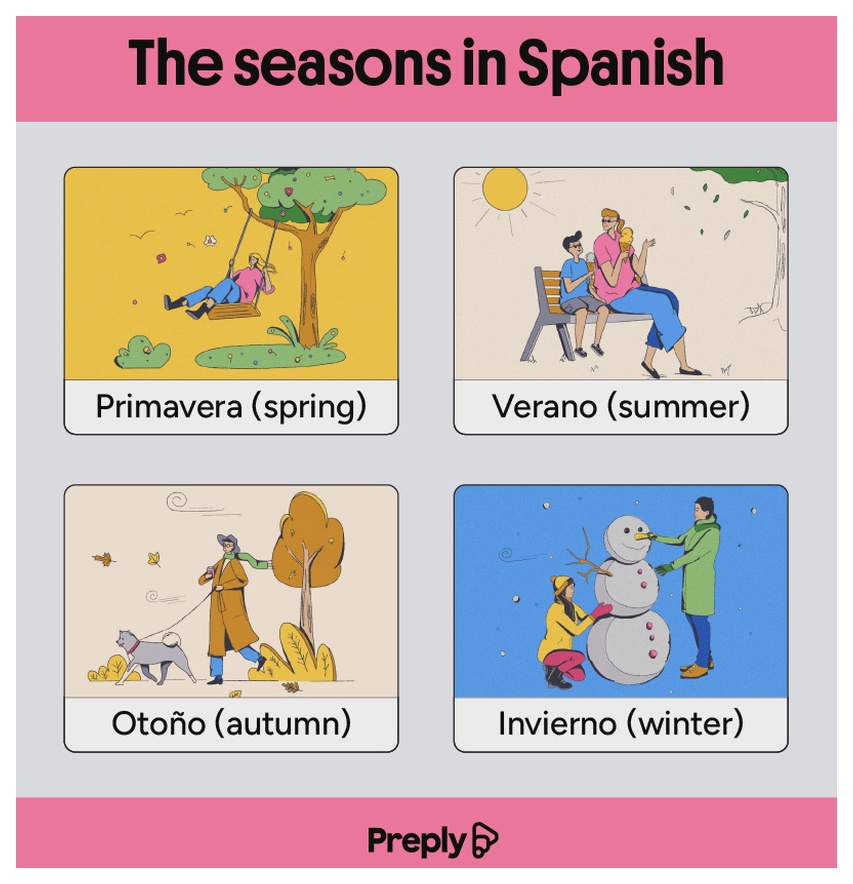
Countries situated near the equator or in tropical regions generally experience two distinct seasons: the dry season, known as “estación seca,” and the rainy season, referred to as “temporada de lluvias.” This seasonal pattern plays a crucial role in shaping the local climate and ecosystems.
In this post, we explore the classic four seasons (las estaciones del año) along with popular phrases associated with each season, the months of the year, and the ever-changing weather. Join us as we delve into the vibrant language that brings these seasonal experiences to life!
|
Season (English) |
Season (Spanish) |
Typical weather (English) |
Typical weather (Spanish) |
|
spring |
primavera |
mild, rainy |
templado, lluvioso |
|
summer |
verano |
hot, sunny |
caluroso, soleado |
|
autumn |
otoño |
cool, windy |
fresco, ventoso |
|
winter |
invierno |
cold, snowy |
frío, nevado |
Tips for discussing seasons in Spanish
When discussing the seasons, these helpful tips will enhance your conversations and writing. Keep in mind that in Spanish, the names of the seasons are not capitalized, so be sure to apply this rule as you practice!
Definite articles are often used with seasons
You may already be aware that definite articles must agree in gender (masculine or feminine) and number (singular or plural) with the nouns they accompany. This rule applies to seasons as well. Most seasons are classified as masculine—such as “el verano” (summer), “el otoño” (autumn), and “el invierno” (winter)—except for spring, which is feminine: “la primavera.”
When discussing specific traits of a season or mentioning a certain time period, remember to use definite articles. This helps clarify your message and makes your writing more precise.
Below are examples of conversation starters when talking about the seasons:
- Summer is the best time for a beach vacation.
El verano es el mejor tiempo para unas vacaciones en la playa.
- Fall has such beautiful colors in nature.
El otoño tiene colores tan bellos en la naturaleza.
- I travel to Barcelona during the winter.
Viajo a Barcelona durante el invierno.
- Spring is the time for flowers.
La primavera es la epoca de las flores.
Recognize scenarios when definite articles aren’t required
While it’s common to use definite articles when discussing seasons, there are specific instances where you might omit them.
When using general statements with the prepositions “de,” “en,” or a form of “ser,” you can skip the definite article before the names of the seasons.
For example:
- In Summer, we like to swim in the river.
En verano, nos gusta nadar en el rio.
If you are speaking about a specific point in time (last summer), a definite article should be used.
- Last summer we swam in the river.
El verano pasado nadamos en el río.
Here are additional examples of when definite articles are not required:
- The first snow of winter is the best.
La primera nevada de invierno es la mejor.
- It is a fall dance.
Es un baile de otoño.
- It is finally Spring.
Por fin es primavera.
In abstract or poetic discussions, the definite article may often be left out, reflecting the author’s stylistic choice. This creative decision can enhance the flow and impact of the writing.
For example:
- Winter closes another year.
Invierno cierra otro año.
Using spring (primavera) in conversation
For many, spring or primavera [pree-muh-veh-ruh] is a favorite season. In Spanish-speaking countries, primavera is also a beautiful time of year.
One might make a statement like this:
- Spring signifies new life.
Primavera significa vida nueva.
Depending on where you live, spring (primavera) can arrive at different times of the year.
In the Northern Hemisphere, primavera arrives in the following months:
- March = marzo [mahr-so]
- April = abril [ah-breel]
- May = mayo [mah-yoh]
In the Southern Hemisphere, you can encounter primavera during these months:
- September = septiembre [sehp-tyehm-breh]
- October = octubre [ohk-too-breh]
- November = noviembre [noh-byehm-breh]
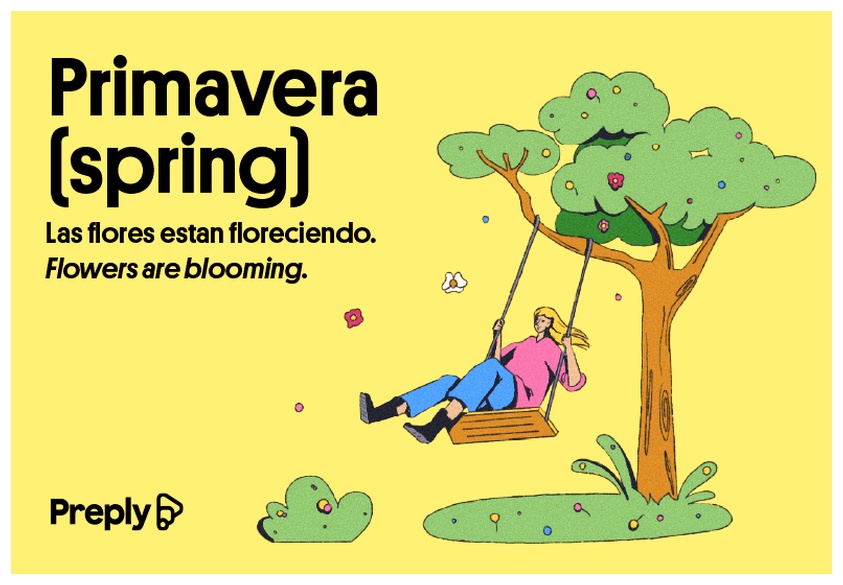
Here are some great conversation starters to help when discussing spring (primavera) in Spanish:
- What is your favorite part of spring?
¿Cuál es tu parte favorita de la primavera?
- In spring, I love to see the flowers. Is there a special place to see flowers in your city?
En primavera, me encanta ver las flores. ¿Hay algún lugar especial para ver flores en tu ciudad?
- Do you prefer spring or autumn? Why?
¿Prefieres la primavera o el otoño? ¿Por qué?
- Is there more rain in spring or fall where you live?
¿Hay más lluvia en primavera o otoño donde vives?
- I prefer spring over winter because the weather is mild. How about you?
Prefiero primavera más que invierno porque el clima es templado. ¿y usted?
- Walking in the breeze in spring always lifts my spirits. Do you like to take walks in spring?
Caminar en la brisa de primavera siempre levanta mi animo. ¿Te gusta salir a caminar en primavera?
Using summer (verano) in conversation
For countless individuals, summer signifies a well-deserved break and a chance to unwind. Known as “verano” [beh-rah-noh] in Spanish, this vibrant season is the perfect opportunity to plan a refreshing vacation or escape from the daily grind.
You might hear, or make, a statement like:
- The sun shines brightest during summer.
El sol brilla más fuerte en verano.
Just like spring (primavera), summer (verano) occurs in different months depending on your location.
For those who live in the Northern Hemisphere, summer occurs during these months:
- June = junio [hoo-nyoh]
- July = julio [hoo-lyoh]
- August = agosto [ah-gohs-toh]
In the Southern Hemisphere, the summer months are as follows:
- December = diciembre [dee-syehm-breh]
- January = enero [eh-neh-roh]
- February = febrero [feh-breh-roh]

If you want to talk about summer in conversation, try using some of these conversation starters.
- What are your plans for this summer?
¿Cuáles son tus planes para este verano?
- In summer, I like to go to the beach. What about you, what do you like to do?
En verano, me gusta ir a la playa. ¿Y a ti, qué te gusta hacer?
- What food or drink do you enjoy most in summer?
¿Qué comida o bebida te gusta más en verano?
- Summer is very hot. How do you try to keep cool in the summer?
En verano es muy caluroso. ¿Cómo te mantienes fresco en el verano?
- The summer sun is strong. Do you enjoy the sun or the shade?
El sol de verano es fuerte ¿Te gusta el sol o la sombra?
- I use sunblock during the summer to protect against harmful UV rays. How do you safeguard yourself from sun exposure?
Tengo que usar protector solar por el clima soleado de verano. ¿Cómo te proteges del sol?
Using autumn (otoño) in conversation
As summer fades, autumn, or “otoño” [oh-toh-nyoh], swiftly takes its place. This enchanting season is marked by cooler temperatures and stunning landscapes, offering a vibrant display of nature’s beauty.
Some might say:
- Autumn in many communities is a time of harvest.
Otoño en muchas comunidades es un tiempo de cosecha.
In the Northern Hemisphere, you can find otoño during these months:
- September = septiembre [sehp-tyehm-breh]
- October = octubre [ohk-too-breh]
- November = noviembre [noh-byehm-breh]
In the Southern Hemisphere, otoño comes a bit earlier during the following months:
- March = marzo [mahr-so]
- April = abril [ah-breel]
- May = mayo [mah-yoh]
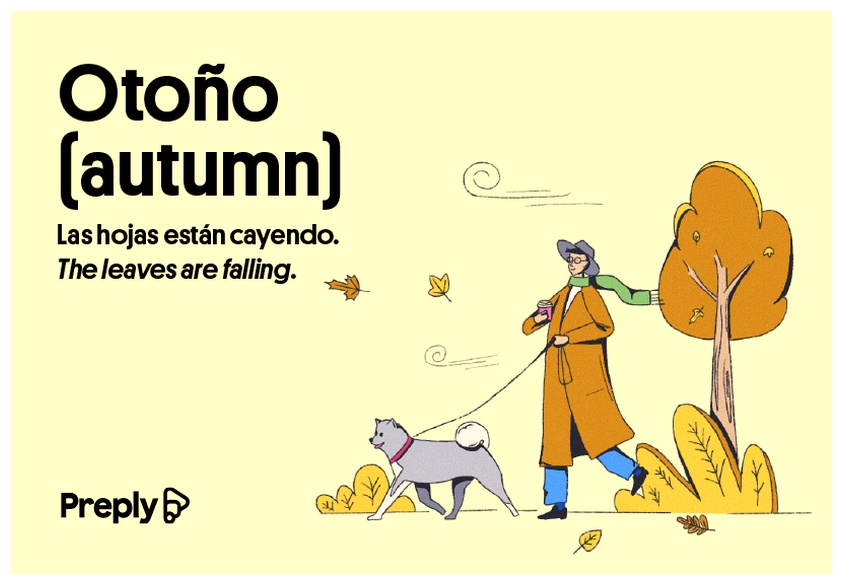
As you dive into conversations about autumn (otoño), consider using these engaging conversation starters. They not only help you connect with others on a deeper level but also provide a fun way to enhance your skills.
- Autumn is known for its beautiful colors. What’s your favorite place to enjoy the autumn scenery?
El otoño es conocido por sus hermosos colores. ¿Cuál es tu lugar favorito para disfrutar del paisaje otoñal?
- What festivals or events are celebrated in your country during autumn?
¿Qué festivales o eventos se celebran en tu país durante el otoño?
- Do you prefer autumn weather or spring weather?
¿Prefieres el clima de otoño o el de primavera?
- Autumn has cooler weather than summer. What is your favorite drink to warm up in autumn?
Otoño tiene un clima mas fresco que verano. ¿Cuál es su bebida favorita para calentarse en otoño?
- The cool air of autumn feels refreshing. What is your favorite outdoor activity?
El aire fresco de otoño se siente refrescante. ¿Cuál es su pasatiempo al aire libre favorito?
- Autumn and spring are both windy seasons. Which season do you prefer?
El otoño y la primavera son temporadas ventosas. ¿Cuál estación del año prefieres?
Using winter (invierno) in conversation
Finally, we arrive at winter, or “invierno” [een-byehr-noh]. While this season can be chilly for many, it also offers a stunning transformation of the landscape, blanketing it in beautiful snow for those who appreciate its serene beauty.
Practice this winter-weather statement:
- Winter often brings colder temperatures.
El invierno normalmente trae temperaturas más frias.
Whether or not snow is in the forecast, the Northern Hemisphere experiences invierno during the following months:
- December = diciembre [dee-syehm-breh]
- January = enero [eh-neh-roh]
- February = febrero [feh-breh-roh]
In the Southern Hemisphere, invierno comes during these months:
- June = junio [hoo-nyoh]
- July = julio [hoo-lyoh]
- August = agosto [ah-gohs-toh]

Whether you thrive in chilly temperatures or bask in the warmth of summer, we’ve got you covered! Here are some exciting phrases to help you discuss the coldest season of the year.
- What is winter like in your country? Do you like snow?
¿Cómo es el invierno en tu país? ¿Te gusta la nieve?
- During winter, do you prefer outdoor activities or staying at home?
Durante el invierno, ¿prefieres actividades al aire libre o quedarte en casa?
- Is there a special winter tradition you would like to share?
¿Hay alguna tradición invernal especial que te gustaría compartir?
- Do you like the snowy weather of winter?
¿Te gusta el clima nevado de invierno?
- Winter can be the coldest time of the year. How do you stay warm in the winter?
El invierno puede ser la temporada más fria del año. ¿Cómo se mantiene calor en el invierno?
- The winter snow can make driving difficult. Do you know how to drive in the snow?
La nieve del invierno hace difícil manejar en las calles. ¿Sabes manejar en la nieve?
Using seasons and dates in conversation
When discussing the seasons, it’s typical to refer to specific dates or times of the year. In American English, we format dates by mentioning the month first, followed by the day, like this: January 5th. In contrast, both Spanish and British English prefer the reverse order, stating the day before the month, as in “cinco de enero” (5th of January).
One key distinction in Spanish is that months are not capitalized. For instance, “enero” refers to January, and “febrero” stands for February. This is an important detail to remember when writing dates in Spanish!
The following examples demonstrate the differences in English and Spanish when speaking about dates and seasons:
- Spring starts on March 24.
La primavera empieza el 24 de marzo.
- Rainy season starts in May.
La temporada de lluvias empieza en mayo.
- Winter brings snow in January.
El invierno trae nieve en enero.
- November marks the beginning of the dry season.
Noviembre marca el principio de la temporada seca.
- Summer starts on June 20.
El verano empieza el 20 de junio.
Familiarize yourself with the geography of Spanish-speaking countries and their seasonal patterns—some experience four distinct seasons, while others have just two. This knowledge will help you accurately reference the appropriate months when discussing seasonal changes in these regions.
Common phrases for all seasons
When discussing “the weather” in a general sense, the Spanish term you would use is “el tiempo.” Here are some useful phrases to help you talk about the weather across all seasons:
|
Topic |
Spanish phrase |
English translation |
|
Today’s weather |
¿Cómo está el clima? |
How’s the weather? |
|
El clima es bueno/malo. |
The weather is good/bad. |
|
|
Weather preference |
¿Eres una persona de clima cálido o frío? |
Are you a hot weather person or a cold weather person? |
|
Soy una persona de clima frío. |
I’m a cold weather person. |
|
|
Precipitation in the forecast |
¿Crees que va a llover? |
Do you think it might rain? |
|
Parece que si. |
It seems like it will. |
|
|
Current temperature |
¿Cómo está el clima donde estás hoy? |
What is the temperature like where you are today? |
|
Está a 26 grados aqui. |
It’s about 26 degrees here. |
|
|
Cold weather |
Escuché que tal vez nieva hoy. ¿Te gusta la nieve? |
I heard it might snow today. Do you like the snow? |
|
Si, me encanta la nieve. |
Yes, I love the snow. |
|
|
Weather preference |
¿Prefieres días soleados o lluviosos? |
Do you prefer sunny or rainy days? |
|
Prefiero los días soleados. |
I prefer sunny days. |
Practice the seasons in Spanish
Now that you’ve explored all the seasons and their meanings, it’s time to put your knowledge to the test! Engage with these exercises to assess your understanding of the seasons in Spanish. If you stumble or forget anything, don’t hesitate to revisit your notes and give it another shot. Happy learning!
Match the Spanish seasons with their English equivalents.
1. Primavera
2. Verano
3. Otoño
4. Invierno
a. Winter
b. Spring
c. Autumn
d. Summer
Answers: 1B, 2D, 3C, 4A
Fill in the blanks.
- En __________, las flores empiezan a florecer. (In __________, the flowers start to bloom.)
- __________ es muy caluroso. (__________ is very hot.)
- Me gusta el color de las hojas en __________. (I like the color of the leaves in __________.)
- __________ es frío y a veces nieva. (__________ is cold and sometimes it snows.)
Answers: 1. Primavera, 2. Verano, 3. Otoño, 4. Invierno
Translate the English sentences to Spanish.
- Spring is beautiful.
- I swim in the summer.
- The autumn is windy.
- I wear a coat in the winter.
Here are some delightful observations about the seasons: 1. Spring is a time of stunning beauty. 2. I enjoy swimming during the summer months. 3. Autumn brings a refreshing breeze. 4. In winter, I bundle up in a warm coat.
Ready to learn Spanish?
Mastering the vocabulary and expressions related to the seasons in Spanish not only enhances your conversational skills but also enriches your interactions with others. Engaging in dialogue with a native Spanish speaker can significantly accelerate your language learning, providing valuable insights and practical experience that will boost your confidence and proficiency.
Looking to chat with a native Spanish speaker about the beauty of primavera or the chill of invierno? You can easily book an online Spanish lesson with us! At LingualNeeds, our tutors customize each session to match your skill level, personal goals, and busy schedule, ensuring a learning experience that suits you perfectly, no matter what stage of life you’re in.
Sign up for an online Spanish class today and experience a transformation in your language skills. As you learn, you’ll gain the confidence and fluency needed to engage in real-world conversations in Spanish.
Frequently Asked Questions
What are the four seasons in Spanish?
The four seasons in Spanish are primavera (spring), verano (summer), otoño (autumn), and invierno (winter).
How do seasons differ in tropical regions compared to temperate regions?
In tropical regions, there are typically two distinct seasons: the dry season (estación seca) and the rainy season (temporada de lluvias), while temperate regions experience four distinct seasons.
What are some conversation starters for discussing spring in Spanish?
Some conversation starters for spring include: ¿Cuál es tu parte favorita de la primavera? (What is your favorite part of spring?) and En primavera, me encanta ver las flores. (In spring, I love to see the flowers).
Why is it important to use definite articles when discussing seasons in Spanish?
Using definite articles helps clarify your message and makes your writing more precise, as seasons are often accompanied by articles that agree in gender and number with the nouns.
How do you express the dates for the seasons in Spanish?
In Spanish, the day is stated before the month, and months are not capitalized, for example: La primavera empieza el 24 de marzo (Spring starts on March 24).


