

- Key takeaways
- What do working professionals think about having foreign language skills?
- What are the most valuable accomplishments that learners believe they can achieve with language training?
- Main benefits of language learning
- Main challenges of not knowing a foreign language
- What perception do learners have of companies that invest in language training?
- Employees expect support from their companies in language learning
- Final thoughts
- Frequently Asked Questions
- Why is learning a new language considered essential in today’s world?
- What percentage of working professionals prioritize language learning as a life aspiration?
- What is the primary benefit of language training identified by survey respondents?
- What non-monetary benefits do employees seek from their employers related to language learning?
- What emotional challenges do employees face when they lack foreign language skills?
In today’s interconnected world, learning a new language is no longer just a luxury—it’s essential. Mastering a language opens doors to enhanced career prospects, fosters better communication, and broadens your worldview. Embracing this skill can significantly enrich both your professional and personal life.
What are the perspectives of working professionals on the significance of language training in the workplace? To uncover these insights, LingualNeeds Business carried out a comprehensive survey.
We surveyed over 2,500 individuals to explore the impact of foreign language proficiency on their careers and the advantages gained from language training.
Key takeaways
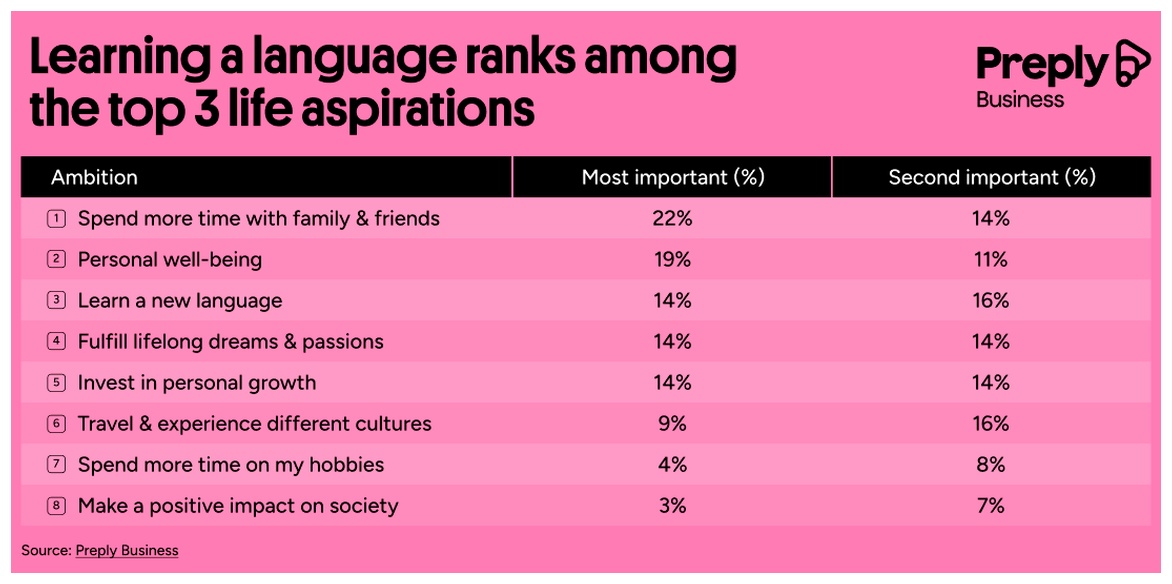
- 30% of surveyed professionals prioritize language learning as a top 3 life aspiration, surpassing lifelong dreams, passions, and personal growth investments.
- 53% of respondents identified improved external communication with customers as the top benefit, while 73% regularly use a foreign language in their daily tasks.
- 65% of respondents seek non-monetary benefits like professional development and language learning from their employers, while 94% expect support or recognition for enhancing their foreign language skills.
What do working professionals think about having foreign language skills?
Key takeaway: Learning a language ranks among the top 3 aspirations in life for 30% of working professionals
In today’s global workforce, the ability to connect with international colleagues and overseas business partners is immensely valuable. It’s no wonder that 30% of survey respondents identified learning a new language as one of their top three life goals. This skill not only enhances communication but also opens doors to new opportunities and collaborations.
For employees worldwide, especially Millennials, learning a new language has emerged as a top priority, often surpassing the desire to travel, explore diverse cultures, or dedicate time to hobbies.
In the end, honing professional skills through continuous learning proved to be far more valuable than simply seeking recognition for their efforts, launching a business, managing a team, or climbing the corporate ladder.
What drives these aspirations? A recent survey reveals that 73% of corporate language learners regularly use a foreign language in their jobs. They associate language training with improved communication skills, particularly when interacting with international clients and customers.
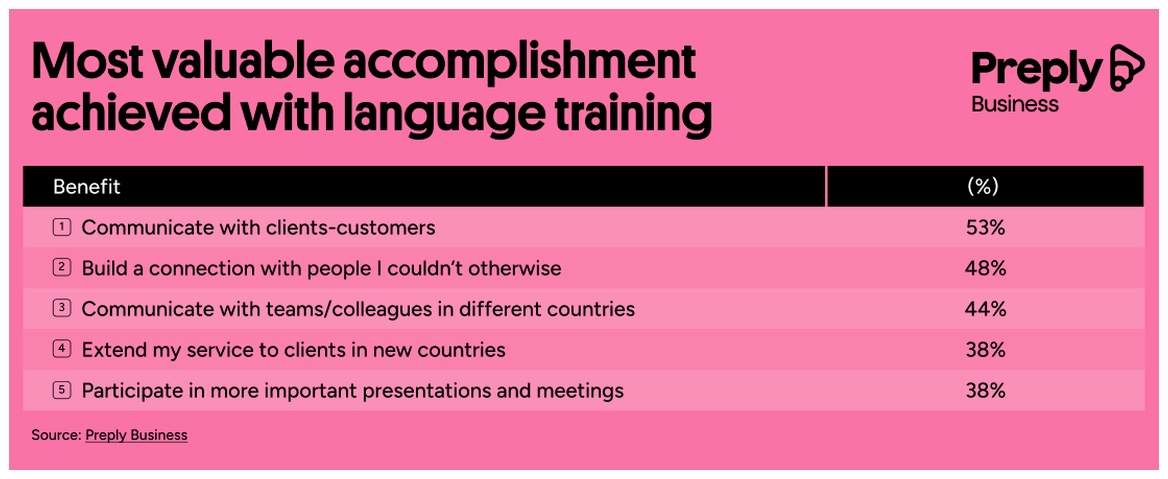
This same group also believed they would be able to participate in more important presentations and meetings.
In addition to clients and customers, survey respondents highlighted the significant role of language learning in enhancing their professional networks. An impressive 48% indicated that acquiring new languages has enabled them to forge connections with individuals they might not have met otherwise, showcasing the transformative impact of language skills in the workplace.
From there, 38% of respondents made the connection between this strength and extending their service to clients in new countries.
These results suggest that employees are far more motivated by the chance to build professional connections through language training than by any material benefits their employers might offer.
What are the most valuable accomplishments that learners believe they can achieve with language training?
Key takeaway: Communicating with international clients-customers is the main benefit of language training for 53% of respondents
In our survey, we posed an intriguing question to participants: If you had the ability to speak multiple languages in your workplace, what accomplishments do you believe you could achieve?
Among five professional advantages identified by language learners in a recent survey, the standout benefit they valued most was enhanced communication with international clients, highlighting the importance of language training in fostering global connections.
Main benefits of language learning
In addition to enhancing communication with customers worldwide, 41% of individuals believe that speaking multiple languages in the workplace would enable them to engage in more significant discussions.
Approximately one-third of survey participants felt that learning a new language could enhance their integration into the workplace and improve their involvement in key meetings. This highlights the dual benefit of corporate language training: it not only boosts productivity but also expands networking opportunities.
Remarkably, about one-third of survey respondents believe that mastering a new language can lead to valuable recognition and rewards. This includes opportunities for raises, expanding business ventures into new markets, and securing promotions.
This could shed light on why language learning is often viewed as a more significant achievement than other accomplishments. According to survey respondents, mastering a language serves as a gateway to achieving various other goals. As a result, prioritizing language training is essential.
Main challenges of not knowing a foreign language
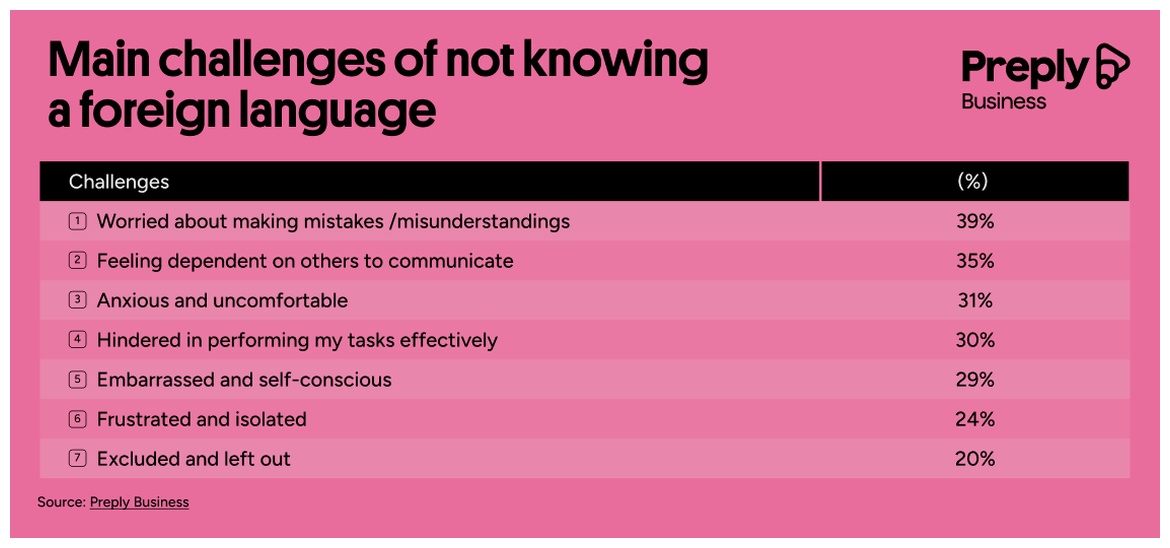
In today’s globalized economy, the importance of knowing a foreign language has never been clearer for employees. Many face significant challenges, such as anxiety, discomfort, and feelings of embarrassment. In fact, nearly one-third of survey respondents reported experiencing these emotions due to language barriers.
Employees who lack proficiency in a foreign language often express a common concern: the fear of making mistakes and facing misunderstandings. This apprehension is entirely justified, as effective communication is crucial for a successful workplace.
Efficiency plays a crucial role in effective communication, but over a third of survey participants reported feeling reliant on others when they struggle with language skills.
Not knowing a foreign language can lead to a range of emotional challenges, including frustration, isolation, and even a sense of exclusion. When employees feel disconnected from their colleagues or unable to participate fully, their motivation and chances for success often diminish significantly.
These results provide even more context for why language training is so valuable to employees.
What perception do learners have of companies that invest in language training?
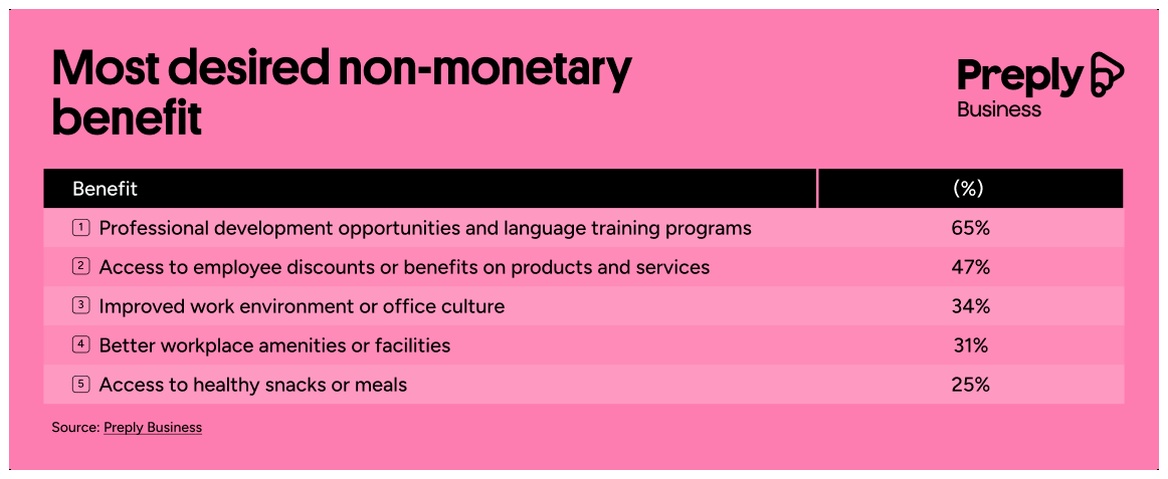
Key takeaway: Language learning is the most desired non-monetary benefit for 65% of respondents
A recent survey by LingualNeeds reveals that 65% of respondents are eager to request professional development opportunities and language learning programs from their employers, viewing them as valuable non-monetary benefits.
Among the numerous advantages of being a salaried employee—like access to workplace amenities and complimentary meals—language learning stands out as a top benefit.
In a comprehensive survey of employee preferences, professional development through language training programs emerged as the clear favorite, surpassing benefits like employee discounts, upgraded facilities, and enhanced office environments by over 18%. This highlights the growing value employees place on skill enhancement and personal growth in the workplace.
Employees expect support from their companies in language learning
Our research reveals that language learning is a highly sought-after benefit that goes beyond monetary rewards. In fact, an impressive 94% of respondents expressed a desire for their employers to provide support or acknowledgment for their efforts in developing foreign language skills.
In a recent survey of language learners, 50% expressed a strong expectation for their employers to provide substantial support and encouragement during the implementation of language training programs.
When companies offer language training to their employees, it can significantly enhance their perception of the organization’s values and culture, fostering a more positive workplace environment.
Final thoughts
While research typically highlights the cognitive and socio-emotional advantages of learning a new language, survey respondents revealed a different perspective: the primary benefit of language training lies in its ability to connect with potential customers and clients. This training is seen as a crucial gateway to building strong, meaningful relationships in the business world.
What sets successful language learning apart? The key lies in the support provided during the entire journey, both from the company and the training program itself. An impressive 90% of participants believe that their success is largely influenced by the quality of their tutor.
Excitingly, more than half of the language learners surveyed have successfully matched with their ideal student-tutor pairing!
Our survey clearly showed that mastering a foreign language is closely tied to achieving professional success. Given the strong satisfaction levels reported, it’s no surprise that today’s workforce is increasingly eager to embrace language training opportunities.
A note on methodology
This research utilized a quantitative online survey method, gathering insights from more than 2,500 working professionals across the globe who are learning new languages. Participants hailed from various countries, including the United States, Brazil, Germany, Spain, Italy, and Poland.
In our survey, 51% of participants identified as male and 49% as female. Among the age groups, 27% of respondents were Gen Z, 38% were Millennials, and 35% were Gen X.
Frequently Asked Questions
Why is learning a new language considered essential in today’s world?
Mastering a language opens doors to enhanced career prospects, fosters better communication, and broadens your worldview.
What percentage of working professionals prioritize language learning as a life aspiration?
30% of surveyed professionals identified language learning as a top 3 life aspiration.
What is the primary benefit of language training identified by survey respondents?
53% of respondents identified improved external communication with customers as the top benefit of language training.
What non-monetary benefits do employees seek from their employers related to language learning?
65% of respondents seek professional development and language learning opportunities from their employers.
What emotional challenges do employees face when they lack foreign language skills?
Employees often experience anxiety, discomfort, and feelings of embarrassment due to language barriers.


