

- What is learning in the flow of work?
- Benefits of learning in the flow of work
- Fosters happier and more successful employees
- Enhances your organization’s talent attraction
- Results in better business performance
- 4 Practices to embed learning in the flow of work into daily business operations
- 1. Culture of continuous learning
- 2. Relevant, engaging, and useful content
- 3. Learning discovery and experiences
- 4. Personalized and embedded recommendations
- How to learn in the flow of work
- Tasks must be rewarding
- Set of clear goals and a sense of progress throughout tasks
- Provide immediate feedback to employees during or following tasks
- Intense focus on the now
- Find the balance between new challenges and current skills
- How online platforms and other technologies can facilitate learning in the flow of work
- Conclusion
- Frequently Asked Questions
- What is the concept of learning in the flow of work?
- What are the benefits of implementing learning in the flow of work?
- How can organizations embed learning in the flow of work into daily operations?
- What role does technology play in facilitating learning in the flow of work?
- How can employees prioritize their learning goals within the workplace?
Co-authored by Andreas Kyprianou, Director of People Operations, Systems, and Analytics at LingualNeeds.
Consequently, the pursuit of new skills and the refinement of current abilities frequently takes a backseat. Many professionals echo a familiar refrain: “I simply don’t have the time.”
It’s no surprise that many share this sentiment, as traditional corporate training often demands employees to step away from their regular duties to focus on professional development.
The graph below highlights a significant trend in employee learning and development (L&D) practices up to 2018. During this period, many businesses primarily invested in functional learning management systems (LMS) or learning experience platforms (LXP), filling these platforms with content that employees were expected to interact with on their own time, outside of work.
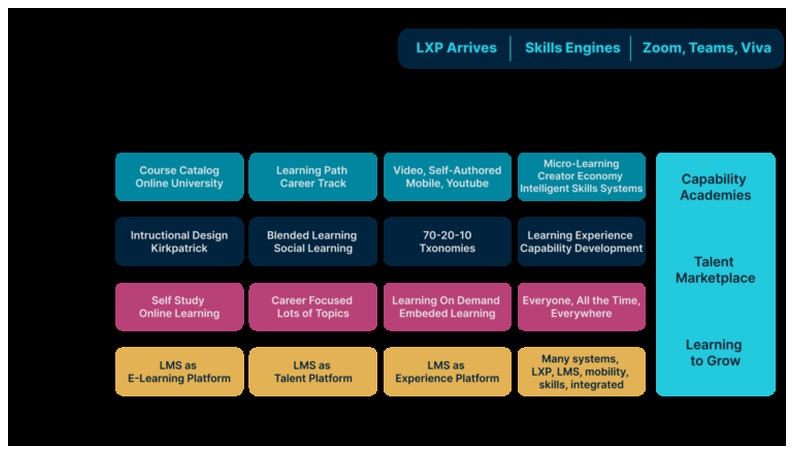
2018, Josh Bersin Company, ‘A New Paradigm For Corporate Training: Learning In The Flow of Work’
As corporate training evolves, we’re embracing a more holistic approach to learning. Instead of relying solely on online resources, we’re exploring insights from a diverse range of sources and perspectives, allowing us to learn continuously from everyone, everywhere.
Corporate Learning and Development (L&D) teams are evolving beyond just skill-building; they are now focused on creating comprehensive career frameworks, enhancing internal mobility processes, and integrating various learning systems and platforms. Additionally, they are embracing microlearning techniques and fostering a creator economy to drive engagement and innovation within the workforce.
Global industry analyst John Bersin characterizes this innovative and intricate era of professional development as “learning in the flow of work.” This concept emphasizes the integration of continuous learning into everyday tasks, making skill enhancement a seamless part of the work experience.
If you’re eager to propel your company forward with a fresh and innovative strategy for employee training and development, you’ve come to the right place. Discover the solutions that can elevate your workforce and drive your business success below.
In this article, we’ll explore the concept of learning in the flow of work, highlighting its advantages for both your organization and employees. We’ll also provide practical steps for implementation and discuss the technologies that can facilitate this approach.
Elevate your business by implementing a more dynamic and productive corporate learning strategy. This approach will empower your workforce, giving them the time and motivation they need to actively contribute to your company’s mission.
What is learning in the flow of work?
To fully grasp the idea of “learning in the flow of work,” we must first explore its roots in flow theory, which was developed by Hungarian-American psychologist Mihaly Csikszentmihalyi in the 1970s. This theory emphasizes the optimal state of engagement and productivity that occurs when individuals are fully immersed in their tasks.
Curious about the secrets to peak performance, Csikszentmihalyi reached out to athletes, musicians, and artists, inquiring about their most exceptional moments and the emotions they experienced during those times.
He found that their most impressive work emerged when they tapped into what he referred to as the “flow state.” This mental state is often characterized by a deep sense of joy and a burst of creative energy, allowing individuals to fully immerse themselves in their tasks.
It has also been depicted as a state of hyper-focus, and complete engagement, often referred to as an “optimal experience.”
Csikszentmihalyi shifted his focus to exploring flow theory within the workplace, seeking to uncover how the flow state operates in professional settings. He aimed to address pivotal questions like, “What role does flow play in enhancing work performance?” and “In what ways does creativity drive increased productivity?”
He discovered that the flow state significantly enhances both employee productivity and job satisfaction. This insight led to various theories building on Csikszentmihalyi’s flow theory, particularly the concept of learning within the flow of work.
Learning in the flow of work refers to the strategies and tools that empower employees to access the information they need precisely when they need it, all while seamlessly maintaining their workflow.
In essence, this approach allows you to connect with your team on their terms, enhancing their sense of autonomy. As a result, this boost in independence fosters greater accountability, engagement, and ultimately improves employee retention.
This effective method of corporate training not only offers significant strategic advantages for your organization but also enhances the personal and professional growth of your employees.
Benefits of learning in the flow of work
As mentioned, learning in the workflow offers many rewards for businesses and employees when executed properly.
Here are a few of the top benefits to consider:
Fosters happier and more successful employees
A recent large-scale survey of working professionals on LinkedIn revealed that employees who spend time learning while working are:
- 47% less likely to experience stress
- 39% more likely to feel successful and productive
- 23% more likely to feel prepared to shoulder extra work tasks and responsibilities
- 21% more likely to be happy and confident.
In turn, having workers who are more satisfied with their jobs is directly connected to increased employee engagement and productivity.
Enhances your organization’s talent attraction
Current research shows that employees of all ages—from baby boomers to Gen Z—want to learn at work.
A recent survey reveals that 80% of employees are enthusiastic about acquiring new skills on the job, while 75% believe that learning during work hours is essential for their professional growth and development.
Promoting your organization as a forward-thinking business that prioritizes learning in the flow of work as its main training strategy can significantly enhance your recruitment efforts. This approach not only showcases your commitment to continuous development but also helps attract top global talent eager to join an innovative workplace.
Results in better business performance
Many job responsibilities are being redesigned as the corporate landscape continues globalizing and technology keeps impacting organizational operations.
According to a recent report from the World Economic Forum, a staggering 54% of employees will require significant upskilling and reskilling within just three years. This highlights the urgent need for organizations to invest in employee development to keep pace with evolving job demands.
By integrating learning into the workflow, companies empower their employees to swiftly adapt to changes, making continuous education an essential aspect of their daily tasks.
As a consequence, their teams can consistently achieve new business objectives and rise to new challenges.
Integrating learning into the workflow provides organizations with a powerful competitive edge over their rivals. However, to truly harness this advantage, it’s essential to base your entire Learning and Development (L&D) program on this approach. Curious about how to make it happen? Keep reading!
4 Practices to embed learning in the flow of work into daily business operations
To effectively integrate a learning-as-you-work philosophy into employees’ daily tasks, it’s essential to examine the broader corporate training framework.
The image below illustrates the key components of corporate Learning and Development (L&D), which can be categorized into four main programs: leadership development, coaching and mentoring, skills enhancement, and career management. Each of these areas plays a crucial role in fostering employee growth and organizational success.
At the core of your efforts lies program design, where the principles you implement play a crucial role in developing various initiatives. These programs are essential for fostering growth and maximizing performance within your organization, empowering your team to reach their full potential.
The “learning in the flow of work” philosophy revolutionizes the learning and development (L&D) process by integrating training seamlessly into employees’ everyday tasks. This approach ensures that learning resources are readily accessible whenever employees need them, making professional development a natural part of their work routine.
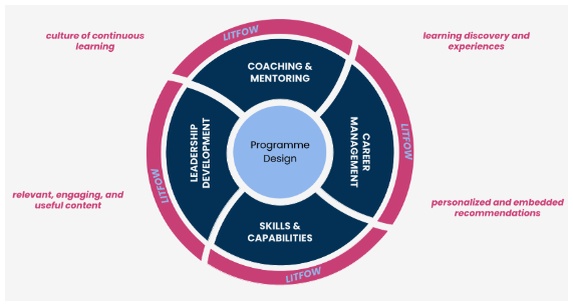
The graphic above highlights four essential elements of learning integrated into the workflow, crucial for maintaining the visibility and relevance of your Learning and Development (L&D) initiatives within your employees’ daily tasks.
1. Culture of continuous learning
If your company clings to the idea that learning can only occur in a traditional classroom with an instructor, it’s essential to challenge and change this mindset right away. Embracing diverse learning methods will enhance growth and adaptability.
To foster a culture of continuous learning within your organization, it’s essential to engage with individuals at every level. This means actively discussing the principles of modern corporate learning and highlighting the benefits it brings to your organization.
Consider this: if every individual in your organization, from leadership to entry-level employees, isn’t dedicated to ongoing learning and skill enhancement, how can your business thrive in an ever-changing landscape of markets, industries, and technologies? Continuous growth is essential for survival in today’s dynamic environment.
2. Relevant, engaging, and useful content
Individuals prioritize their time based on what matters most to them. Therefore, it’s essential that the Learning and Development (L&D) programs we create or invest in genuinely support employees in excelling at their current roles while also fostering their long-term career growth.
This approach will help them grasp the significance of these initiatives, leading to a deeper commitment and engagement in their participation.
To keep learners consistently engaged, it’s essential to incorporate diverse modalities, such as how-to videos, interactive games, hands-on activities, online assignments and quizzes, as well as templates. This variety not only enhances the learning experience but also caters to different learning styles.
3. Learning discovery and experiences
Learning in the flow of work emphasizes the importance of experiential learning, allowing employees to acquire knowledge and skills through real-life situations rather than relying solely on manuals, instructional videos, or lectures. This approach fosters a more dynamic and engaging learning environment.
For instance, this could involve creating communities of practice where members collaborate to share insights and tackle common challenges, having experienced team members mentor their less experienced colleagues, or organizing engaging learning experiences, such as role-playing scenarios.
The primary goal is to shift learning from theory to practice, enabling workers to gain skills that are directly applicable to their daily tasks. This hands-on approach ensures that employees develop competencies that enhance their performance in real-world situations.
4. Personalized and embedded recommendations
While we’ve highlighted the importance of relevant content, it’s equally vital to ensure that employees can easily access this valuable information whenever they need it.
For instance, your system could provide embedded links to short videos or tips when employees begin a particular task.
Alternatively, employees could receive quick learning materials to explore at the start of their workday. Afterward, they can take a brief quiz to evaluate their understanding. Based on their quiz results, tailored resources can be provided the next day to meet their specific learning needs.
In sum, customized and easily accessible learning content is vital to learning in the workflow.
Ultimately, learning in the flow of work is an approach that enhances productivity throughout the day rather than disrupting it.
Are you prepared to enhance your corporate training strategy to boost workplace efficiency? Now is the perfect opportunity to discover effective practices that empower every employee to learn and grow on the job!

How to learn in the flow of work
When exploring the concept of flow in the workplace, there are five essential factors to consider, as illustrated in the image below. Understanding these elements can help us harness the power of flow for greater productivity and satisfaction at work.
We leverage flow theory to create work environments and programs that seamlessly integrate learning into our daily routines, enhancing productivity and engagement.
These features combine what the organization can do for its staff and how employees can create that flow for themselves.
Explore the key factors outlined below, along with practical examples of learning integrated into the workflow. This will help you envision how this approach can be effectively implemented in your organization.
Tasks must be rewarding
To foster a deep sense of intrinsic motivation and satisfaction, it’s essential that the learning activities and experiences offered to employees are engaging and fulfilling.
Typically, these tasks align with workers’ natural interests, driven by personal or professional motivations. When employees find their learning experience rewarding, they become more engaged and motivated to excel in the activity.
Example
At LingualNeeds, we’ve launched an exciting new initiative called Data Academy, designed to enhance learning directly within the workflow. This program is rooted in the principles of learning in the flow of work, ensuring that our team can develop their skills seamlessly as they engage with their tasks.
At LingualNeeds, we prioritize making tasks rewarding by equipping our employees with valuable skills through the Data Academy. Every skill learned here is not only essential for their current roles but also supports their career advancement within the company. A key component of the academy is mastering the analytics software tool, Amplitude, which empowers our team to make data-driven decisions.
This initiative can empower employees to elevate their roles as data or project managers, while also offering individuals from different departments a chance to acquire new skills and shift their career paths within the organization.
We’re excited to introduce internal certifications for employees who successfully complete the program. These certifications can be shared both internally and on platforms like LinkedIn, allowing us to acknowledge and celebrate the hard work and achievements of these individuals!
Set of clear goals and a sense of progress throughout tasks
Regardless of whether an activity is brief or lengthy, it’s essential for employees to understand the task’s requirements and the objectives they aim to accomplish during the process.
Example
LingualNeeds’s Data Academy also sets transparent objectives for the programs that employees participate in.
In our Amplitude program training, we emphasize the importance of mastering the tool. By doing so, our teams can stay informed about the latest product updates and play a vital role in enhancing our products through data-driven insights.
Employees don’t have to guess the program’s goal or what to do to complete it.
Provide immediate feedback to employees during or following tasks
Immediate feedback empowers employees by fostering a sense of ownership over their tasks. When they receive real-time insights, they can enhance their performance on the spot, promoting personal accountability and driving their motivation to succeed.
It’s essential for them to understand their current progress and determine if they should adjust their approach or stay the course.
Example
During in-person interactions, offering immediate feedback can be done in just a few minutes—whether it’s between meetings or while watching an employee in action. This allows for timely guidance and support, enhancing overall performance.
Alternatively, managers have the option to send quick emails to their team members or utilize internal communication tools like Slack to relay brief messages efficiently.
Finally, other technology tools, like built-in quizzes or performance management systems, can give quantifiable feedback to staff members instantly.
Intense focus on the now
If you have employees who consider themselves multi-taskers and prefer juggling multiple tasks simultaneously, it’s essential to guide them towards a more focused approach. Encouraging a mindset shift to prioritize one task at a time can enhance their productivity and overall effectiveness.
This concept emphasizes the importance of mindfulness and maintaining a sharp focus on your goals. Research indicates that constantly shifting our attention between tasks leads to increased errors and decreased productivity. By staying present and concentrated, we can enhance our performance and achieve better outcomes.
Example
To help employees concentrate on their tasks, supervisors must effectively manage workflow. For example, they should avoid the practice of frequently assigning new tasks before employees have completed their existing projects. This approach allows workers to stay focused and productive.
To enhance productivity, managers should collaborate with their team members to set clear workstream priorities. This approach enables employees to concentrate on the most critical tasks first, ensuring that their efforts are directed where they matter most before tackling subsequent responsibilities.
Employees can minimize multitasking by actively reducing distractions, such as disabling notifications and utilizing productivity apps. Additionally, taking regular breaks can help them recharge mentally, leading to improved focus and efficiency.
Find the balance between new challenges and current skills
When a task is overly simple and demands minimal effort, workers may become disengaged, leading to a decline in the quality of their output. This lack of challenge can foster feelings of apathy, ultimately impacting productivity and job satisfaction.
When employees face tasks that exceed their skill levels, frustration can quickly set in, leading to disengagement and abandonment of the task. To prevent this, it’s essential for supervisors to strike a balance: they should empower their teams to utilize their existing skills in their daily responsibilities while also encouraging them to tackle challenging assignments that foster skill development. This approach not only keeps motivation high but also promotes continuous growth.
Example
At LingualNeeds’s Data Academy, we empower and challenge our employees by offering a diverse range of learning modalities. This includes collaborative activities where participants can leverage their existing skills to share insights and mentor one another, fostering a rich environment of teamwork and knowledge exchange.
In addition, we’ve implemented stretch assignments, such as hackathons, that encourage our computer programmers to collaborate, compete, and learn from one another. These dynamic challenges not only foster teamwork but also help them develop new skills and competencies.
With practical strategies in hand to seamlessly integrate learning into your workplace, it’s time to explore technology tools that can enhance and support your program.
How online platforms and other technologies can facilitate learning in the flow of work
Before we explore the numerous technological tools available to support learning in the workflow at your organization, it’s important to note: your learning initiatives shouldn’t be dictated by systems alone.
While they play a crucial role in boosting your learning and development (L&D) initiatives, it’s essential to prioritize strategy and culture first. Start by considering, “What mindset do we need to foster continuous learning within our daily tasks?” Once you establish this foundation, the appropriate systems will naturally fall into place.
A variety of technologies can play a vital role in nurturing a culture of continuous learning in the workplace. In the graphic below, we’ve outlined eight key categories of learning resources, complete with examples of specific tools for each category, to help you enhance your team’s development.
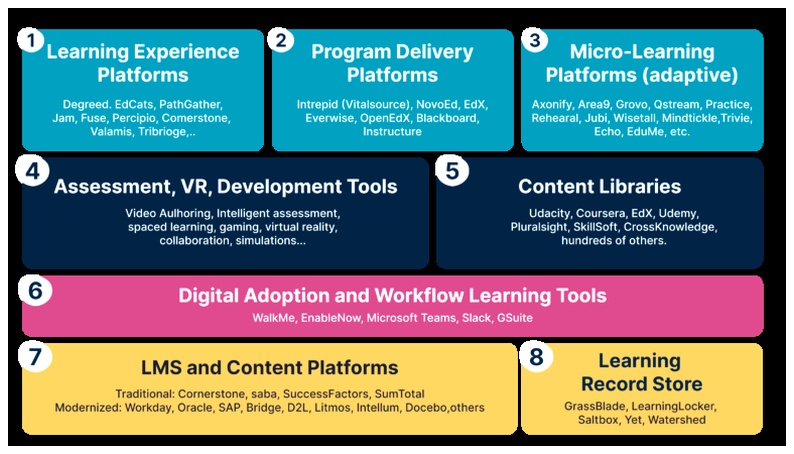
2018, Josh Bersin Company, ‘A New Paradigm For Corporate Training: Learning In The Flow of Work’
The visuals above may seem daunting at first glance, as the educational technology market is brimming with options. For consumers, choosing the right tool for your company can be a challenging task amidst this sea of choices.
Fortunately, you can feel confident that nearly any technology can enhance employee learning within their workflow, provided it is utilized effectively and tailored to the needs of the users.
At LingualNeeds, we leverage a dedicated Slack channel where our team members can easily seek advice on their current tasks whenever they need assistance. Colleagues respond directly within the channel, sharing their insights and tips. This approach allows us to integrate learning seamlessly into our daily workflow!
Online learning platforms and tech companies offering public APIs are transforming the way we learn on the job. These APIs enable businesses to create and integrate a variety of tools seamlessly into their systems, including software applications, employee apps, learning materials, and custom resources. This integration makes it easier than ever for employees to access valuable learning opportunities while they work.
An extensive array of tools within a single system creates a rich user experience, providing seamless access to high-quality programs that enhance learning in the workplace.
For instance, Salesforce is a platform for sales representatives that integrates various software programs to meet users’ needs throughout the workday.
In a unified platform, employees can access a variety of applications to discover instructional resources for mastering their tools, participate in video role-play to refine their sales pitches, and gather constructive feedback from both peers and managers. Additionally, the system empowers internal content creators to develop tailored training materials that align with the company’s specific goals.
Ultimately, it’s important to recognize that technology should serve as a facilitator of learning within the workplace, rather than the primary focus. Once you cultivate a culture of continuous learning and strategically align your Learning and Development (L&D) initiatives with this mindset, you can effectively incorporate technological tools to boost your overall effectiveness.
HubSpot Call-to-Action Code [if lte IE 8]>
<div id=”hs-cta-ie-element”></div>
<![endif] end HubSpot Call-to-Action Code
Conclusion
Learning in the flow of work is trying to enhance your productivity by learning and applying at the same time.
Adopting this philosophy can significantly boost employee job satisfaction, draw in exceptional talent from around the globe, and improve your company’s overall performance. While transforming your corporate training strategy may be challenging, the benefits will be well worth the effort.
To effectively launch your initiative, integrate continuous learning into your organization’s workflow by incorporating it into your Learning and Development (L&D) strategy, program design, and overall company culture. This approach ensures that learning becomes a natural part of everyday operations.
To successfully implement changes, it’s essential to secure support from senior leadership and engage teams throughout your organization. Embrace a visionary approach, but begin with manageable steps. Launch pilot programs, gather feedback along the way, and use those insights to scale your initiatives effectively.
Lastly, evaluate which technology tools will best enhance your delivery goals. Consider whether it’s more beneficial to purchase these tools or develop them in-house.
Encourage your employees to create a “to learn” list in addition to their “to do” lists. This list should highlight the skills and competencies they aspire to develop, such as corporate language training or enrolling in a business English course. By prioritizing their learning goals, they can enhance their professional growth and contribute more effectively to the organization.
Encourage them to share their lists with their supervisors and collaborate on innovative strategies to integrate their learning goals into their daily tasks.
Finally, create avenues for them to share their insights with colleagues. This not only helps reinforce the knowledge they’ve gained but also fosters a vibrant culture of continuous learning that everyone can contribute to and benefit from.
Frequently Asked Questions
What is the concept of learning in the flow of work?
Learning in the flow of work refers to the strategies and tools that empower employees to access the information they need precisely when they need it, seamlessly integrating learning into their everyday tasks.
What are the benefits of implementing learning in the flow of work?
Benefits include fostering happier and more successful employees, enhancing talent attraction, and resulting in better business performance by enabling continuous adaptation to evolving job demands.
How can organizations embed learning in the flow of work into daily operations?
Organizations can embed learning by fostering a culture of continuous learning, providing relevant and engaging content, emphasizing experiential learning, and offering personalized recommendations.
What role does technology play in facilitating learning in the flow of work?
Technology serves as a facilitator of learning by integrating various tools and resources into employees’ workflows, ensuring easy access to learning opportunities while they perform their tasks.
How can employees prioritize their learning goals within the workplace?
Employees can create a ‘to learn’ list alongside their ‘to do’ lists, highlighting skills they wish to develop, and collaborate with supervisors to integrate these learning goals into their daily tasks.


