- Financial stability tops the list across generations & geographies
- Gender variations: Men crave leadership, women need balance
- AI being used in every walk of life
- Percentage of people who are currently learning each skill for professional development
- ChatGPT use cases
- A values-driven generation
- Vastly different leisure preferences around the world reveal cultural richness
- Top 5 most preferred activities
- Growing appetite for foreign language learning
- Desire to learn through practical experiences and hands-on hustle
- Methodology
- Frequently Asked Questions
- What are the top life goals identified by different generations?
- How do gender roles influence work aspirations?
- What percentage of young adults are utilizing AI tools like ChatGPT?
- How do people prefer to learn new skills according to the study?
- What is the current trend in foreign language learning?
The aspirations and learning habits of today’s youth are evolving rapidly. The rapid pace of technological innovation, particularly driven by AI, is transforming how individuals approach learning and rethink their career paths. At the same time, the ongoing effects of the pandemic have led to a worldwide mental health crisis, prompting many young people to prioritize self-care and embrace values-driven behaviors.
For more than a decade, LingualNeeds has facilitated connections between millions of students and tutors worldwide, bridging diverse cultures and backgrounds. This extensive experience has given the organization valuable insights into the fast-changing landscape of education and language learning.
We embarked on an ambitious cross-generational study involving more than 5,400 adults from nine different regions across Europe, Asia, and both North and South America. Our focus was on two key age groups: Gen Z (ages 18-29) and Millennials (ages 30-43), allowing us to examine how trends evolve with age. The rich data we gathered offers an unparalleled insight into the shifting ambitions and learning habits of today’s workforce.
Financial stability tops the list across generations & geographies
You might assume that Gen Z is more environmentally conscious and Millennials are more career-driven, but an intriguing trend emerges when it comes to life ambitions. A striking 61% of respondents from various generations identified financial stability as one of their top three life goals, outpacing the next most popular ambitions—spending time with friends and family and maintaining physical health—by 24%. Notably, Argentina, Japan, and Korea showed the strongest emphasis on achieving financial stability. Interestingly, Millennials (64%) slightly edged out Gen Z (59%) in prioritizing this goal.

A striking trend emerged in people’s work aspirations, with financial stability topping the list of priorities—66% of respondents ranked it among their top three goals. Following closely were the desires for work-life balance and professional skill enhancement through learning. Notably, individuals in the US, Germany, and Japan showed a strong inclination towards acquiring new skills, while those in Argentina, Mexico, and Turkey demonstrated a robust entrepreneurial spirit, with 40% expressing a desire to launch their own businesses.

The current economic climate, marked by uncertainty, rising student loan costs, and the instability of gig and freelance jobs, is impacting financial well-being worldwide. In response, a significant number of young adults—6 out of 10—are taking proactive steps to address their financial challenges by planning to cut back on their spending this year.

Learn a language with personalised 1-on-1 classes with our expert tutors from all over the world
French lessons online
Spanish lessons online
Gender variations: Men crave leadership, women need balance
Over the past 50 years, gender roles have undergone significant transformations both in the workplace and at home. Despite these changes, survey results reveal that our aspirations still tend to reflect traditional views.

Financial stability is a shared goal for both men and women, but a recent survey highlights some intriguing differences in their priorities. Women tend to prioritize mental health, quality family time, and travel, while men are more focused on pursuing hobbies. When it comes to work-related aspirations, both genders value work-life balance and financial security, but women consistently rate these aspects higher. On the other hand, men show a greater ambition to attain management roles, become industry leaders, or launch their own businesses.

Moreover, gender differences are evident in how people choose to spend their free time. Men often prioritize activities like video gaming and exercising, ranking them among their top five leisure pursuits. In contrast, women typically enjoy reading and cooking more during their downtime.
AI being used in every walk of life
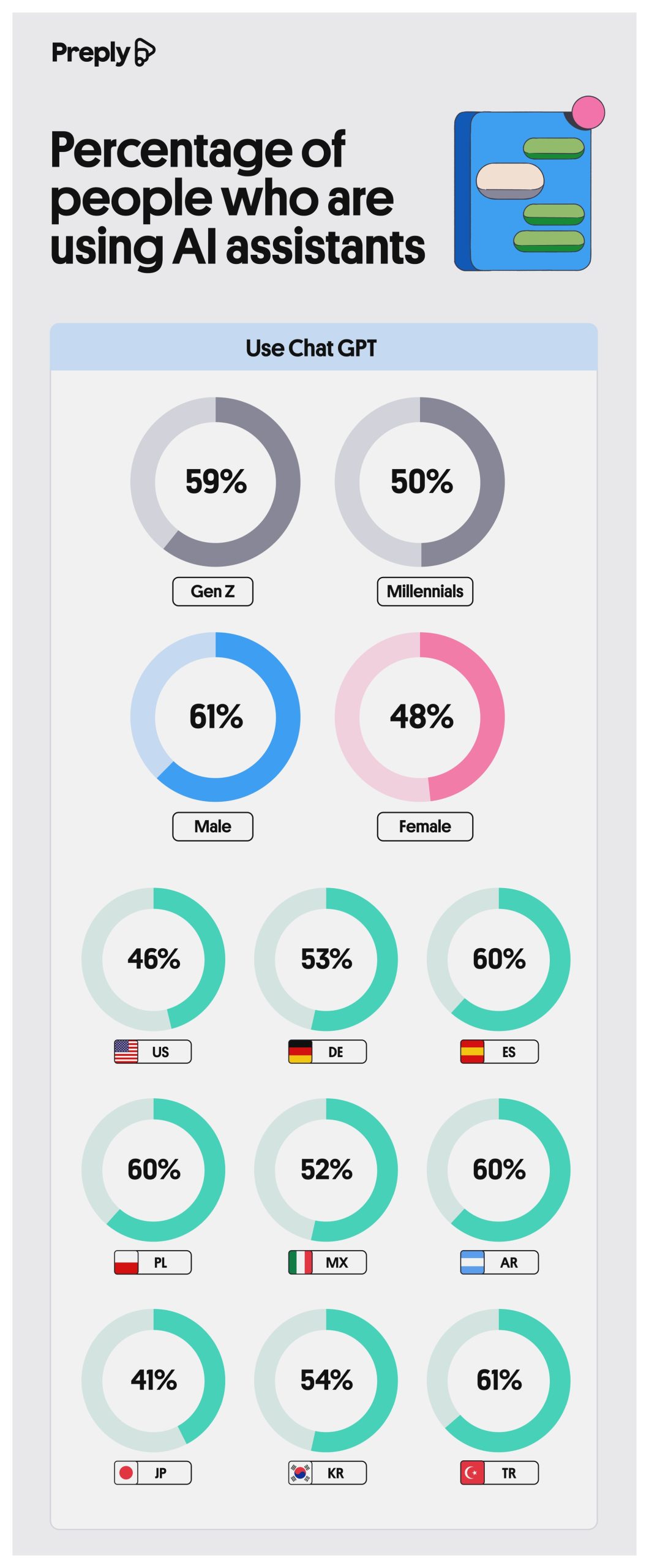
ChatGPT became widely accessible in November 2022, and since then, an impressive 54% of 5,000 respondents have embraced AI assistants. Among younger users, adoption is even higher, with 59% of Gen Z participants using AI compared to 50% of Millennials. Turkey leads the charge, boasting a remarkable 61% usage rate, followed closely by Spain, Poland, and Argentina. In the middle range, Korea, Germany, and Mexico show usage levels of 54%, 53%, and 52%, respectively. Surprisingly, the U.S. (46%) and Japan (41%) lag behind in AI adoption. The trend is poised to continue, as 44% of respondents report using AI more than they did last year. Notably, there’s a gender gap, with 61% of men using ChatGPT versus 48% of women, and 25% of men actively learning to use AI tools compared to only 19% of women.
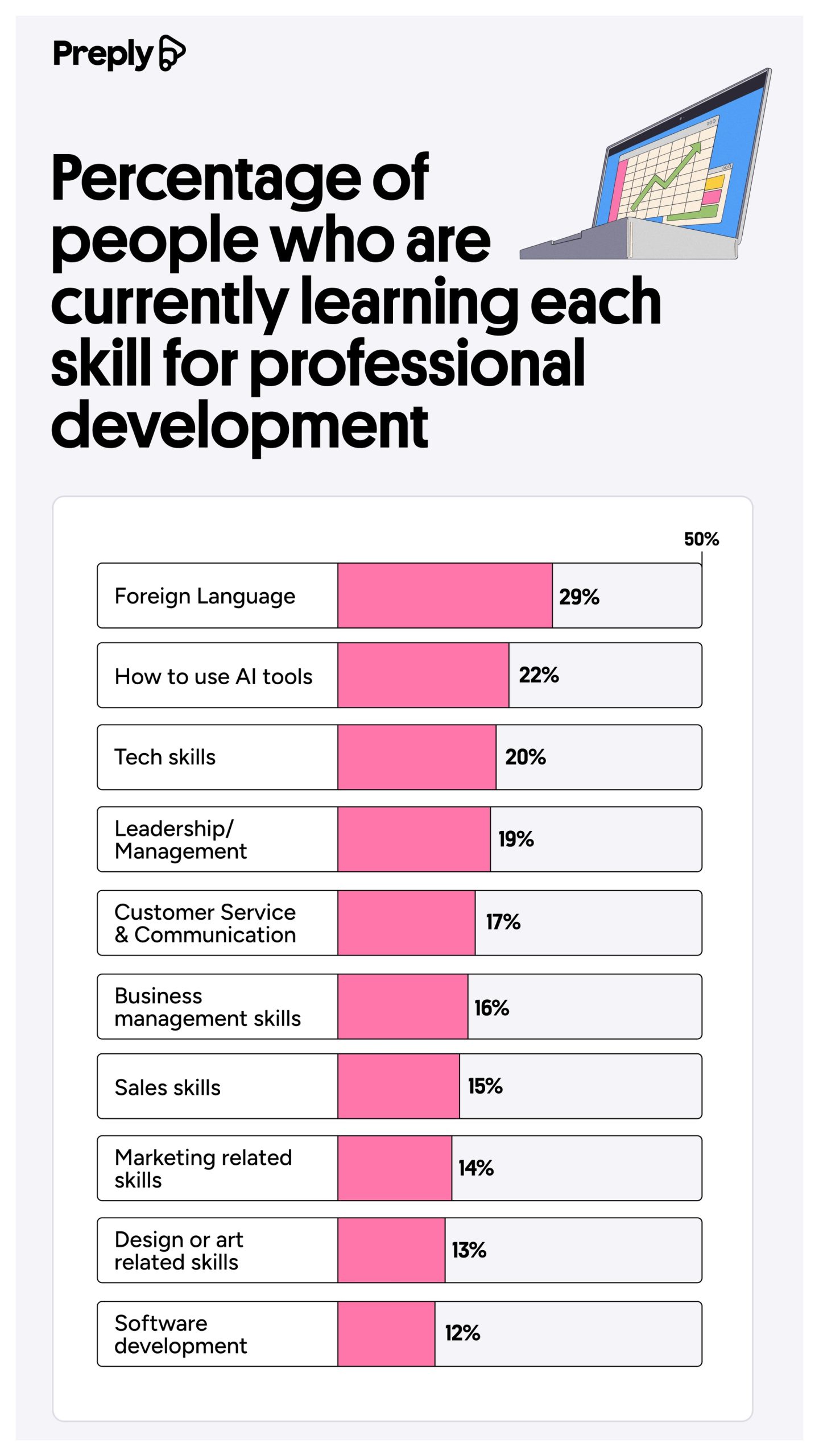
Gen Z is leading the way in AI utilization compared to Millennials, yet both generations share a strong interest in enhancing their AI skills for career growth. Notably, 22% of both groups are currently pursuing professional development in AI, making it the second most sought-after skill after language learning. Whether through formal lessons or self-study, the drive to master AI is a common goal among these young professionals.
Learn a language online with our free learning materials.
Learn English online
Learn French online
Percentage of people who are currently learning each skill for professional development
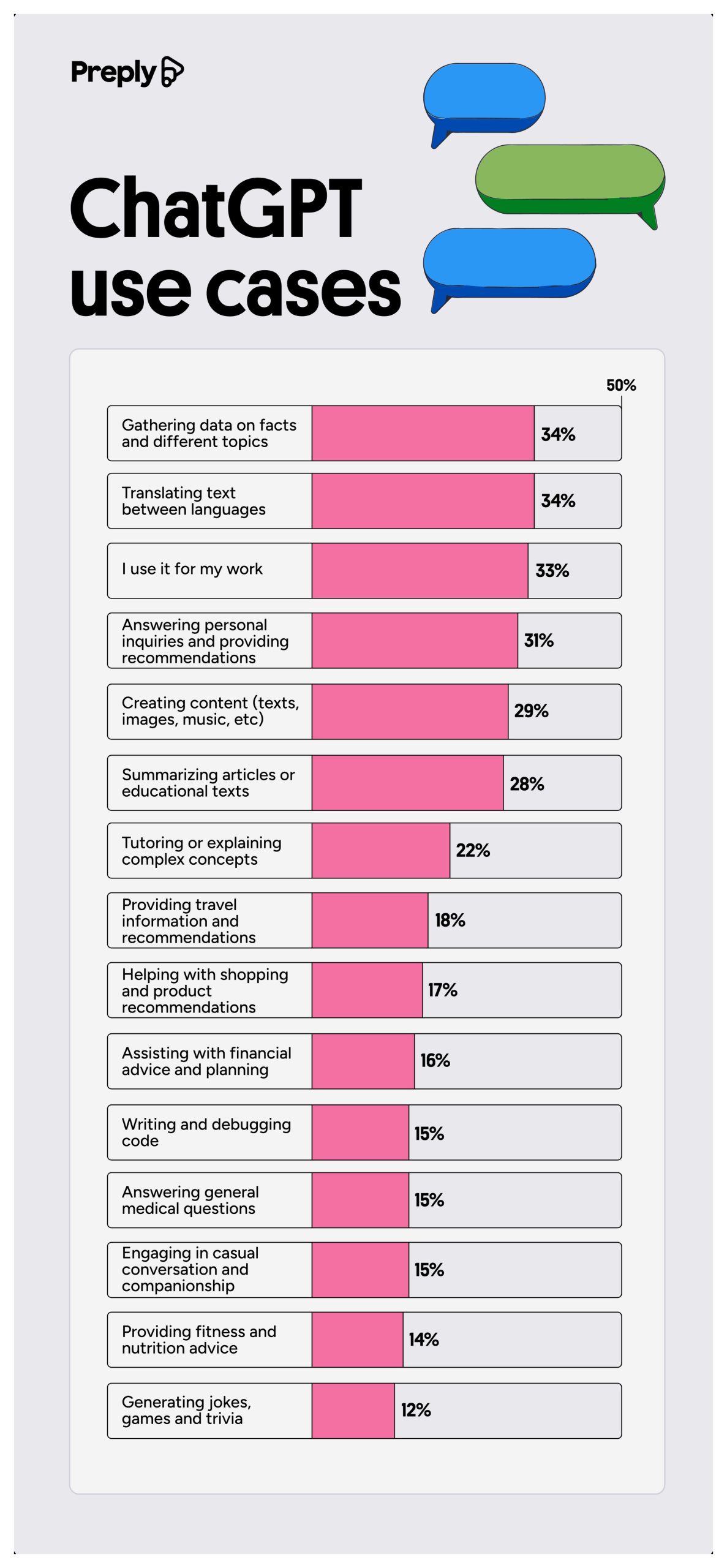
Exploring the current applications of ChatGPT reveals that users worldwide are harnessing this technology for a variety of purposes. Notably, 34% utilize it for fact gathering and language translation, while 33% employ it for work-related tasks. Additionally, 31% seek personal inquiries and recommendations, and 29% create text or image content. Interestingly, respondents from Turkey, Germany, and the U.S. tend to use AI assistants more for professional purposes, whereas a higher percentage of Japanese (40%) and Mexican (43%) users focus on data and information gathering.
ChatGPT use cases
A values-driven generation
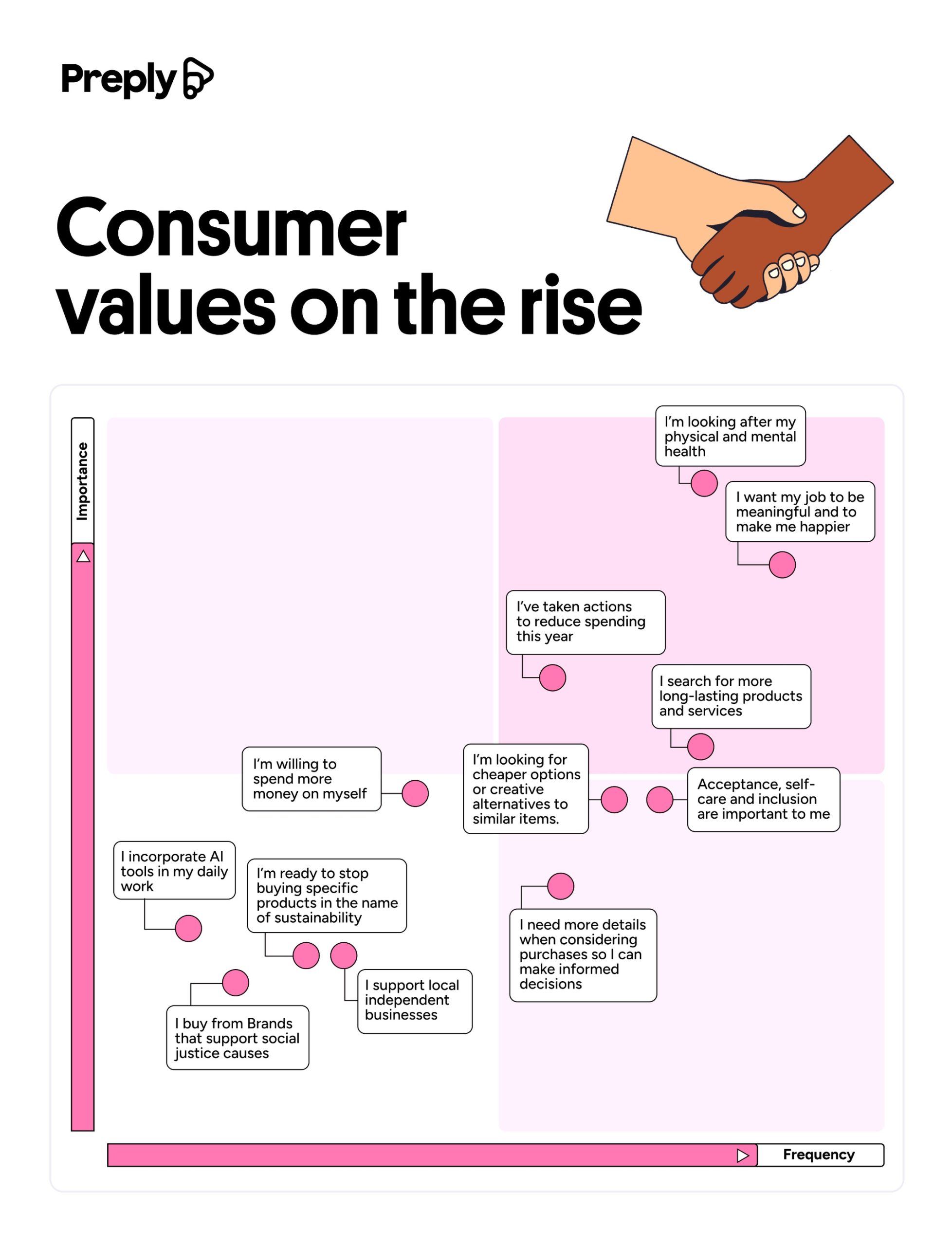
Driven by financial incentives, individuals from various generations and regions are increasingly prioritizing their mental well-being and seeking lives that resonate with their core values. Recent data reveals that 68% of respondents now place greater importance on finding a fulfilling job that enhances their happiness compared to the previous year.
A significant 65% of people worldwide are prioritizing their mental and physical health more than they did last year, with Spain taking the lead at an impressive 73%. This heightened emphasis on well-being is emerging as one of the most prominent trends across all markets.
Vastly different leisure preferences around the world reveal cultural richness
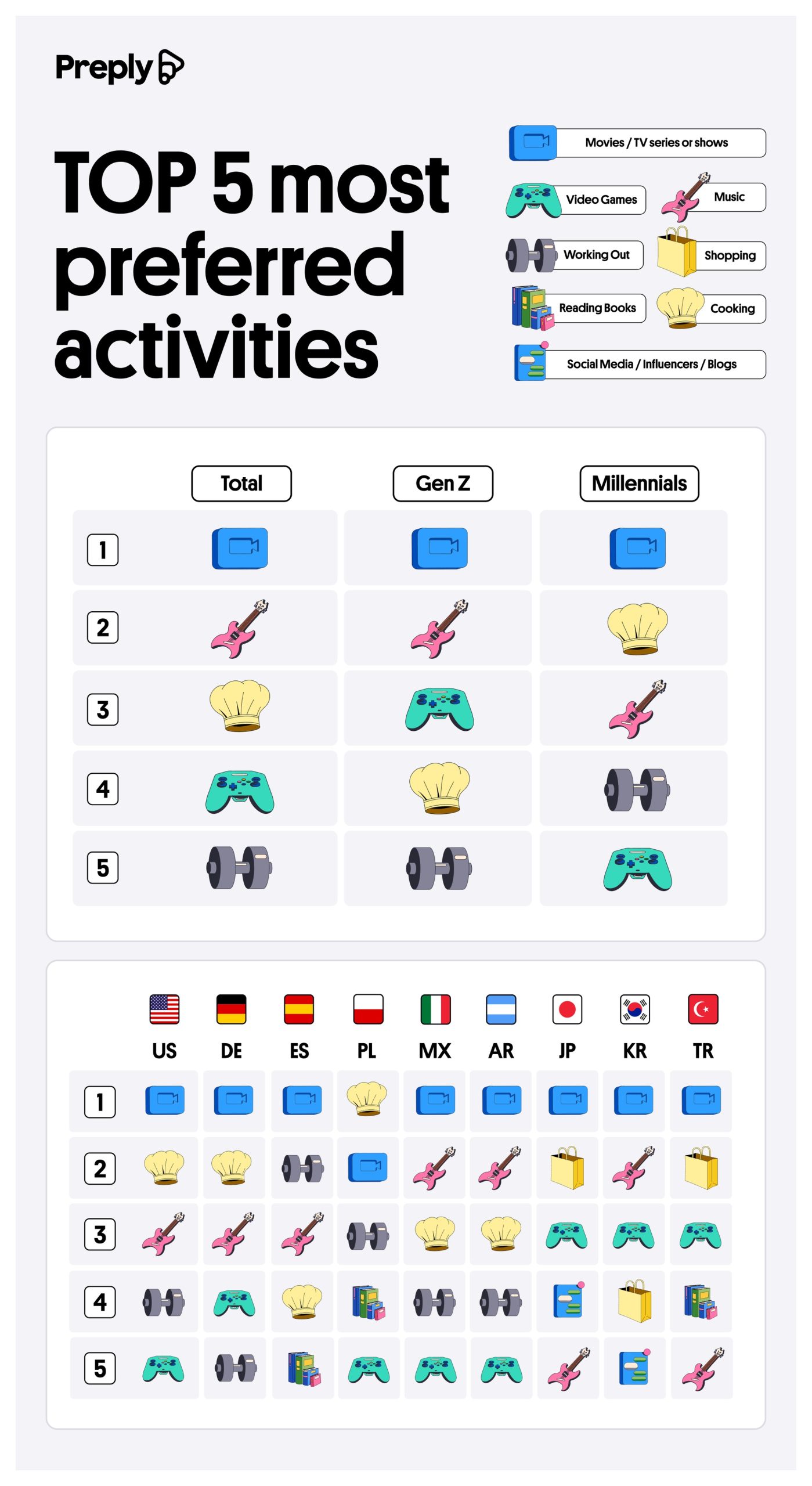
Across the globe, watching movies and TV shows is the most popular leisure activity, with the exception of Poles, who prefer cooking. Music and cooking follow closely in popularity, though Japan, Korea, and Turkey lean towards shopping and video games instead of cooking. Physical exercise, including team sports, gym workouts, and running, ranks fifth overall, with Spaniards particularly enthusiastic about fitness, placing it as their second favorite pastime.
Top 5 most preferred activities
Growing appetite for foreign language learning
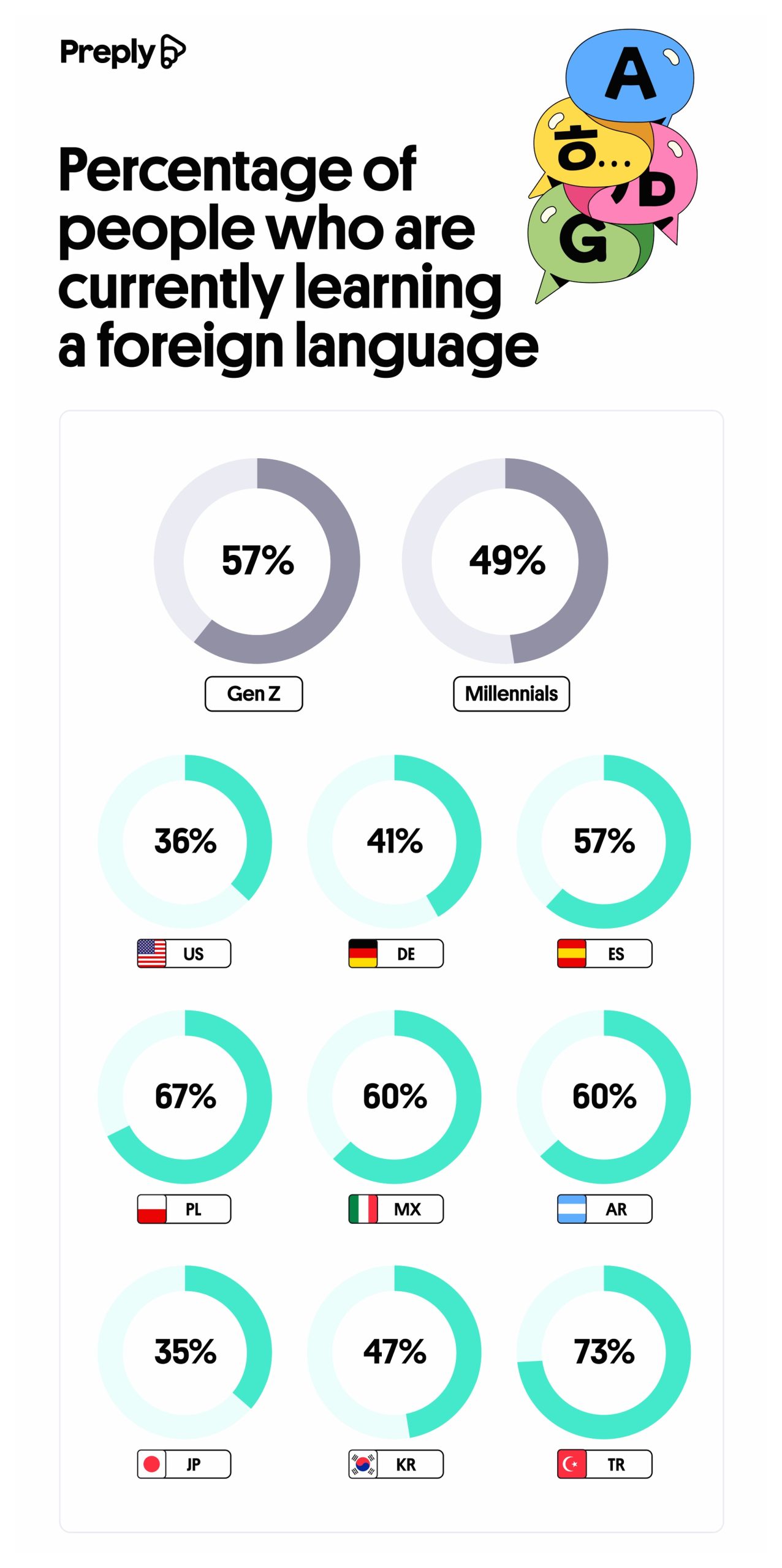
According to recent survey results, 73% of respondents reported being proficient in at least one foreign language in addition to their native tongue. In contrast, only 42% of Americans and 46% of Japanese individuals are bilingual. English emerged as the most commonly learned language, followed by French. Notably, geographical trends revealed that 38% of Koreans are more inclined to learn Japanese. Currently, 53% of respondents are actively studying a language, with Turks (73%) and Poles (67%) leading the way in expanding their linguistic skills. Among those learning a language, 43% dedicate time to practice at least once a week, and over 10% of Gen Z respondents engage in daily language practice.
Dr. Melissa Baese Berk, a Linguistics Professor at the University of Chicago and a language expert at LingualNeeds, noted, “It’s no surprise that many people are embracing language learning and AI skills for their careers. As we look ahead, AI stands out as a crucial transferable skill, but proficiency in languages remains essential in any economic landscape. While a significant number of respondents already speak a second language, there is still ample opportunity for growth in this area across different generations and regions.”
Desire to learn through practical experiences and hands-on hustle
Hands-on experience emerged as the top choice for learning, with 26% of respondents favoring this method. Notably, Poles showed the strongest preference for practical experience at 39%, while only 12% of Koreans opted for it. Online videos and in-person private lessons were also popular, particularly among Turkish and Korean respondents who leaned towards face-to-face instruction. Despite the increasing emphasis on AI skills in the workplace, only 7% of global participants preferred learning through AI platforms. Germany stood out, with 12% of respondents expressing a preference for AI-based learning.

Kirill Bigai, Co-founder and CEO of LingualNeeds, shared his insights on the growing role of AI in our lives, stating, “AI experimentation has become a standard practice in both professional and personal settings around the world. It’s thrilling to witness the diverse applications of tools like ChatGPT, particularly for instant language translation. Enhancing the speed of cross-cultural collaboration and communication is at the core of LingualNeeds’ mission. However, this global study clearly highlights the irreplaceable value of human involvement in education. Learners are not just looking for knowledge; they desire personal connections and hands-on experiences, including face-to-face lessons that are both effective and affordable. This is precisely what our LingualNeeds tutors are here to provide.”
Methodology
LingualNeeds Market Research on Generational differences (June 2024)
This research aimed to explore the learning habits, aspirations, and motivations of individuals in the active workforce, specifically those aged 18 to 43. By gaining insights into this age group, we hope to better understand their educational needs and career goals.
We carried out an extensive quantitative survey involving 5,401 online panelists from nine countries, including the United States, Germany, Spain, Poland, Mexico, Argentina, Japan, South Korea, and Turkey, with 600 responses from each nation. Our participants were categorized by gender, featuring 2,677 men and 2,695 women, as well as by generation, with 2,651 individuals from Generation Z and 2,750 Millennials.
Frequently Asked Questions
What are the top life goals identified by different generations?
Financial stability tops the list, with 61% of respondents identifying it as a top goal, followed by spending time with friends and family and maintaining physical health.
How do gender roles influence work aspirations?
While both genders prioritize financial stability and work-life balance, women tend to focus more on mental health and quality family time, whereas men show greater ambition for leadership roles.
What percentage of young adults are utilizing AI tools like ChatGPT?
54% of respondents overall are using AI, with 59% of Gen Z participants and 50% of Millennials engaging with AI tools.
How do people prefer to learn new skills according to the study?
26% of respondents prefer hands-on experience, while online videos and in-person private lessons are also popular methods.
What is the current trend in foreign language learning?
73% of respondents reported being proficient in at least one foreign language, with English being the most commonly learned language.