

- What are dialects?
- German dialects
- High German
- Bairisch (Bavarian)
- Schweizerdeutsch (Swiss German)
- Middle German
- Hessich (Hessian)
- Kölsch
- Low German
- Pennsilfaanisch Deitsch (Pennsylvania Dutch)
- Plautdietsch (Mennonite Low German)
- Mixed German dialects
- Berlinerisch
- Missingsch
- Texas German
- Final tips for learning about German dialects
- Frequently Asked Questions
- What are German dialects?
- How many distinct German dialects are there?
- What is the difference between High German and Standard German?
- What is the unique characteristic of Bavarian dialect?
- How can one learn about different German dialects effectively?
Modern German dialects are vibrant echoes of the rich tapestry of languages once spoken by numerous Germanic tribes, infusing the German-speaking world with unique local character. Approximately half of all Germans regularly converse in a dialect, highlighting their significance in everyday life. As the German language has expanded across Europe and beyond, its diverse dialects have traveled alongside it, enriching cultures and communities worldwide.
Let’s explore the three primary German dialect families and their regional distributions. We’ll also dive into some fascinating local dialects, including Bavarian, Kölsch, and Westphalian, to understand their unique characteristics and cultural significance.
What are dialects?
Even professional linguists debate about what constitutes a dialect.
Dialects are unique variations in how a language is spoken, often influenced by regional or cultural factors. While a language itself includes both its written and spoken forms, dialects reflect the distinct ways in which different groups express themselves.
Dialects that evolved from a shared origin often share noticeable similarities, but they encompass much more than just unique German accents. Each dialect features its own distinctive pronunciations, grammatical structures, and vocabulary, making them rich and varied forms of communication.
In this discussion, we’ll explore the local dialects of Standard German that have evolved from the languages of various tribes across Germany and its neighboring countries. It’s interesting to note that these dialect groups often intertwine and share characteristics.
German dialects
Linguists estimate that there are approximately 250 distinct German dialects! As you embark on your journey to learn German, you may come across several of these fascinating variations. Each dialect showcases a rich tapestry of history and culture, reflecting the diverse regions of the German-speaking world.
High German
Hochdeutsch, or High German, serves as the foundation for Standard German. While these terms are frequently used synonymously, it’s important to note that High German refers to a specific dialect, whereas Standard German represents the widely accepted form of the language used in formal settings and everyday communication.
Bairisch (Bavarian)
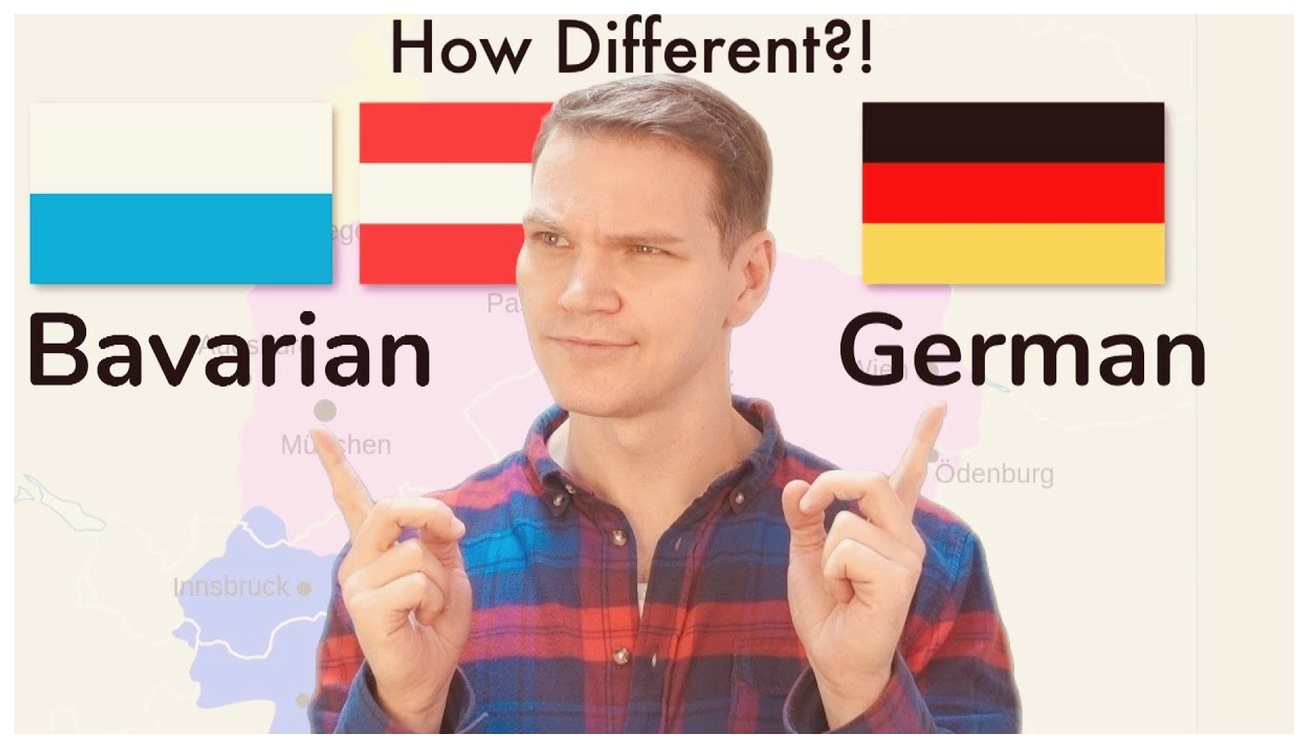
Say “Servus” (hello) to Bavarian, a unique dialect often regarded as a separate language. While it belongs to the High German dialect family, many speakers of Standard German find it challenging to comprehend. Predominantly spoken in Bavaria, it is locally known as Bairisch, Boirisch, or Boarisch. Bavarian dialects can also be found in Austria, South Tyrol in Italy, the eastern part of Switzerland, and the Sopron region of Hungary.
Bavarian dialects have made their mark as far away as Peru and Brazil. One notable variant, Hutterisch (Hutterite German), is spoken in the northwestern United States and parts of Western and Central Canada. This unique dialect blends Bavarian roots with influences from Russian and Ukrainian languages, showcasing the rich tapestry of linguistic diversity.
Bavarian dialects are rich in unique vowel sounds, which is evident in their distinct alphabet. Notably, it features six accent marks, including the familiar Umlaut from Standard German, showcasing the region’s linguistic diversity.
Schweizerdeutsch (Swiss German)
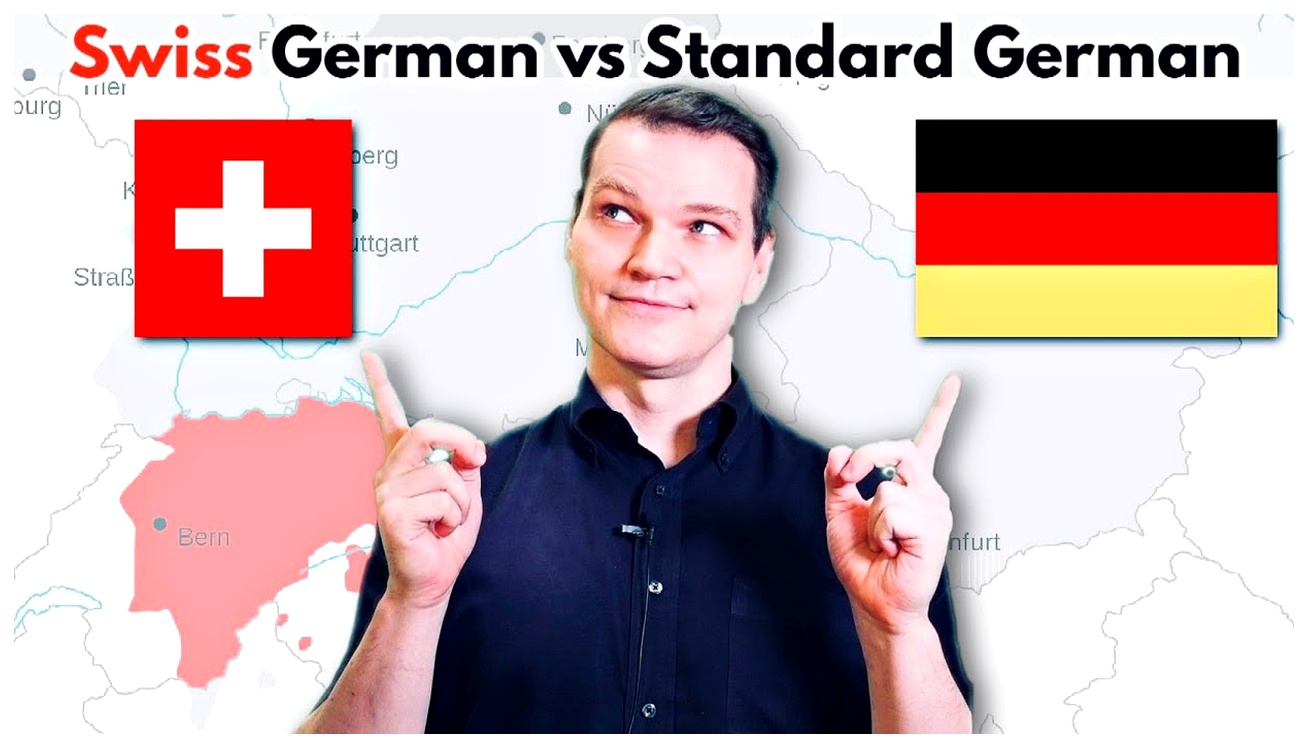
Swiss German, or Schwizerdütsch, is a unique dialect of High German that boasts its own distinct sounds and vocabulary. It’s important to note that it should not be confused with Schweizer Hochdeutsch, which refers to Swiss High German.
Swiss German features unique vocabulary and expressions that set it apart from standard German. For example, locals say “Morgenessen” or “Zmorge” to refer to breakfast, rather than the typical “Frühstück.” Instead of the common greeting “hallo,” they use “Grüezi.” Additionally, Swiss German employs distinct spellings, notably omitting the German character ß (Eszett), making it even more distinctive.
Middle German
Mitteldeutsch, or Middle German, is predominantly spoken in the western and central areas of Germany, such as the Rhineland and the states of Hesse, Thuringia, and Saxony-Anhalt. Positioned centrally within Germany, this dialect blends elements of Low German with its High German roots, creating a unique linguistic tapestry.
Hessich (Hessian)

Hessian, a vibrant Middle German dialect, can be heard in the bustling cities of Kassel, Darmstadt, and Fulda. As a member of the Rhine Franconian dialect group, it showcases the rich linguistic heritage of the region.
In Hessian dialect, consonants frequently soften, transforming words like “bisschen” (bit) into “bissi.” Additionally, many word endings are dropped, making “haben wir” (have we) sound like “hamma.” This unique phonetic style gives Hessian its distinctive flair.
Kölsch
This is the Middle German dialect spoken in Cologne (Köln) and its neighboring regions. Characterized by a distinctively nasal tone, this dialect is often described as sounding somewhat monotonous.
In Kölsch, the local dialect of Cologne, you’ll encounter unique pronunciations for common German words. For instance, “ja” (yes) is expressed as “jot,” while “genau” (exactly) becomes “yenow.” Interestingly, the letter “v” replaces the “b” in words like “halb” (half), making it sound different. Additionally, “dich” (you) is pronounced as “deesh.” These distinctive pronunciations add a charming flair to the Kölsch language!
Speakers of Kölsch also drop the final letters from some words. That’s why heute (today) is just heut, and machen becomes mache.
Low German
Plattdeutsch, also referred to as Niederdeutsch, is a fascinating blend of Old Dutch and Standard German. Recognized as a distinct language, Plattdeutsch played a crucial role as a prominent German dialect during medieval times. For four centuries, it served as the main means of communication along the northern German trade routes of the Hanseatic League, highlighting its significance in commerce and culture during that era.
Over the years, the dominance of High German has grown, leading to a steady decline in Low German speakers. However, initiatives like the Plattbeats song contest have played a vital role in revitalizing interest in Low German. Today, the language boasts between four to seven million native speakers, showcasing its resilience and cultural significance.
In Low German, the word for twenty, “zwanzig,” is pronounced as “zwanzich.” Similarly, “Pfeffer,” meaning pepper, is articulated as “feffer,” while “geht,” which means goes, sounds like “yeht.” Additionally, the “sch” in words such as “Schwein,” meaning pig, is pronounced more like “sween.”
(Westphalian)

Westphalian, also known as Low Saxon, is a Low German dialect group primarily found in North Rhine-Westphalia, Germany, and the northeastern Netherlands. Its early variant, Old Low Saxon, played a crucial role in the development of the English language, serving as one of its foundational languages.
Pennsilfaanisch Deitsch (Pennsylvania Dutch)
In Amish and Mennonite communities across North America and Brazil, unique dialects flourish, rooted in the Pfälzisch dialects of the Rhineland-Palatinate region. Notably, these dialects feature a distinctive characteristic: they typically do not use a future verb tense.
Plautdietsch (Mennonite Low German)

This unique dialect is spoken by approximately 450,000 descendants of Russian Mennonites around the globe. It is primarily rooted in East Low Saxon dialects, which have blended with influences from Low Prussian and Dutch, creating a rich linguistic tapestry.
Mixed German dialects
Some German dialects fit into more than one major dialect group. Here are a few examples:
Berlinerisch

Hello and welcome! Let’s delve into Berlinerisch, a unique dialect that originated from Low German and is predominantly spoken in Berlin and Brandenburg. Interestingly, it is often classified as a High German dialect. The vibrant tapestry of Berlin’s immigrant culture has infused Berlinerisch with influences from Huguenot French, Slavic languages, Yiddish, and Dutch, making it a fascinating blend of linguistic heritage.
The Berlinerisch dialect showcases notable differences from Standard German, particularly in pronunciation. For instance, locals often say “ick” or “icke” instead of the standard “ich” (I). Additionally, the hard “g” is frequently replaced with an “ay” sound, transforming “gut” (good) into “yoot.” Similarly, the word “das” (it) is pronounced as “dat” in Berlinerisch.
|
Standard German |
English Meaning |
Berlinerisch Pronunciation |
|
Ich kaufe |
I buy |
Ick koofah |
|
klein |
small |
kleen |
|
laufen |
to walk |
loofen |
|
Gurken |
cucumbers |
yurken |
Berlinerisch has its own special words for common objects:
|
Standard German |
English Meaning |
Berlinerisch Term |
|
Brille |
eyeglasses |
Nasenfahrrad (nose bicycle) |
|
Schuhe |
shoes |
Treter |
|
Fernseher |
television |
Mattscheibe |
Missingsch
Distinct forms of this dialect can be found in Bremen, Danzig, and Hamburg. Although it has roots in Low German and has incorporated some High German vocabulary, Missingsch defies easy classification within these dialect groups. Not only is it known for humorously depicting Hamburg’s unfortunate character, Klein Erna (Little Erna), but Missingsch also plays a significant role in enriching Standard German with Low Saxon terms like “tschüß” (bye).
Texas German
Absolutely! In Texas Hill Country, the German Belt has proudly nurtured five generations of Texas German speakers, whose ancestors immigrated from various regions of Germany. This fascinating dialect blends High, Low, and Central German influences, creating a distinctive linguistic heritage. The Texas German Dialect Project is dedicated to preserving and promoting this unique form of communication, showcasing charming words like “das Stinkkatze,” which translates to “stink cat” or skunk.
Final tips for learning about German dialects
You can easily find audio and video content online in your favorite German dialect. This allows you to hear native speakers and explore the nuances of their vocabulary, grammar, and pronunciation. For those interested in diving deeper into the history and unique features of various German dialects, travel and culture blogs serve as fantastic resources.
Collaborating one-on-one with a German tutor fluent in your preferred dialect will uncover its unique nuances. This personalized approach allows you to refine your pronunciation, expand your vocabulary, and strengthen your grammar skills.
Frequently Asked Questions
What are German dialects?
German dialects are unique variations in how the German language is spoken, influenced by regional or cultural factors.
How many distinct German dialects are there?
Linguists estimate that there are approximately 250 distinct German dialects.
What is the difference between High German and Standard German?
High German refers to a specific dialect, while Standard German is the widely accepted form of the language used in formal settings.
What is the unique characteristic of Bavarian dialect?
Bavarian dialects are rich in unique vowel sounds and can be challenging for Standard German speakers to comprehend.
How can one learn about different German dialects effectively?
Listening to audio and video content, reading travel and culture blogs, and working with a tutor fluent in the desired dialect can enhance learning.