- How to learn Dutch?
- How hard is it to learn Dutch?
- The difference between Flemish and Dutch
- Dutch has hundreds of dialects
- Pronouncing diphthongs and vowels in Dutch
- Different word order
- Beware of false friends words in Dutch
- How long does it take to learn Dutch?
- How to learn Dutch in 4 easy steps
- 1. Start with the Dutch basics
- 2. Use immersive learning techniques
- 3. Join Dutch-speaking communities
- 4. Keep practicing
- How to learn Dutch fast?
- Final thoughts:
- Frequently Asked Questions
- What are some effective methods to learn Dutch?
- How long does it typically take to learn Dutch?
- What are the main differences between Dutch and Flemish?
- What challenges do learners face when mastering Dutch pronunciation?
- How can I immerse myself in the Dutch language?
Dutch is a captivating language that many find surprisingly accessible to learn. While its grammar can pose challenges at first, countless learners go on to speak Dutch fluently, with some even mastering a native-like accent. With the right approach and strategies, you can unlock your potential to speak Dutch confidently!
Although traditional learning institutions like academies have their advantages, they may fall short for those aiming to achieve advanced proficiency in Dutch within a reasonable timeframe. Let’s delve into some alternative methods that can help you learn Dutch more efficiently.
How to learn Dutch?
The most popular and widely advertised methods for learning Dutch are through academies and schools. Both Flanders, the Dutch-speaking region of Belgium, and the Netherlands boast a variety of institutions dedicated to teaching Dutch as a second language, making it accessible for learners everywhere.
Many universities feature language centers that provide cost-effective options for students looking to learn a new language. Additionally, there is an extensive network of Dutch schools around the globe, primarily catering to the children of Belgian and Dutch expatriates.
If you’re looking to learn Dutch through unconventional methods, there are plenty of exciting options available. Consider using language apps, attending language meetups, partnering with a language exchange buddy, or hiring a tutor through LingualNeeds. Immersing yourself in the language is another fantastic approach. These strategies offer you the flexibility to learn at your own pace and convenience. Before we explore these diverse learning methods, let’s take a closer look at some key features of the Dutch language.
How hard is it to learn Dutch?
Numerous online language academies claim that English speakers find learning Dutch to be quite manageable, thanks to the similarities between the two Germanic languages. However, both native speakers and Dutch learners often acknowledge that mastering Dutch isn’t necessarily simple. While grasping the basics of communication can be straightforward, perfecting pronunciation and understanding the intricate grammatical details can be challenging without guidance from a personal tutor.
Learning Dutch can be quite a challenge, especially with its distinct guttural sounds—just think of the word “gezellig,” which fans of Ted Lasso might recognize. However, while there are hurdles to face, none are insurmountable. With dedication and practice, you can conquer them all!
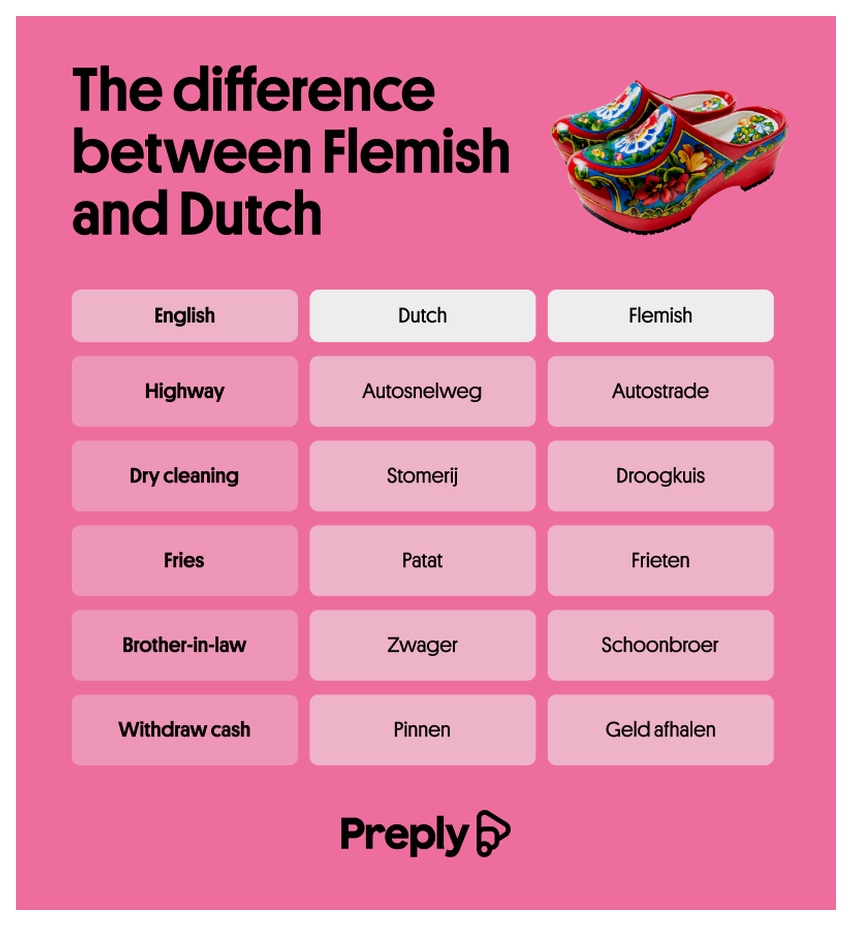
The difference between Flemish and Dutch
Approximately 25 million people speak Dutch, primarily residing in the Netherlands. A significant number also inhabit Flanders, while smaller communities can be found in Suriname and the ABC islands.
Although Dutch is spoken in several neighboring countries, there are notable differences between the Dutch used in the Netherlands and Flemish, the variant spoken in Flanders. You might think of it as similar to the distinctions between British English and American English.
Dutch and Flemish, although largely similar, possess distinct differences in pronunciation, vocabulary, and idiomatic expressions. This can pose challenges for learners who encounter both forms of the language. To address this, LingualNeeds offers users the option to choose between native tutors from Belgium or the Netherlands, ensuring a tailored learning experience that meets their specific needs.
Dutch has hundreds of dialects
The Netherlands and Flanders boast a vibrant array of regional dialects, each with its own unique charm. These dialects can vary greatly from standard Dutch, showcasing distinct differences in pronunciation, vocabulary, and grammar that reflect the rich cultural heritage of the area.
The Dutch you study in class will differ significantly from regional dialects, making it challenging for learners to communicate with native speakers. This variation is one of the primary hurdles faced by those mastering the language.
Fortunately, these dialects are mostly limited to spoken communication. Written communication and news outlets will stick to standard Dutch.
Pronouncing diphthongs and vowels in Dutch
Mastering vowel pronunciation can be a significant hurdle for learners of Dutch, as vowels can be long, short, or even combined. Many non-native speakers struggle to distinguish between long and short vowel sounds, which can lead to misunderstandings. Additionally, diphthongs—unique vowel combinations—present another layer of complexity that learners must navigate.
Take, for instance, the words “les” and “lees.” While they may sound identical to someone unfamiliar with the language, they convey entirely distinct meanings: “les” translates to “lesson,” while “lees” means “read.”
Different word order
Dutch features a word order that is both flexible and occasionally complex, particularly in subordinate clauses. This can pose a challenge for learners, as the placement of verbs adheres to specific rules that may seem unfamiliar. Depending on the context, verbs can appear at the beginning, in the middle, or even at the end of a sentence, making mastery of this aspect essential for effective communication.
Numbers in Dutch can be quite tricky, as they’re often expressed in a way that feels reversed to English speakers. For instance, instead of saying “twenty-four,” you would say “vierentwintig,” which translates literally to “four-and-twenty.” This unique structure can even perplex native Dutch speakers at times!
Beware of false friends words in Dutch
False friends are words that may appear similar but have entirely different meanings. A prime example is the word “meaning” in English and “mening” in Dutch. Although they look alike, “mening” actually translates to “opinion” in English, showcasing how easily one can be misled by their resemblance.
How long does it take to learn Dutch?
There’s no one-size-fits-all answer to this question, as language learning varies greatly from person to person. Factors like your native language, past experiences with learning languages, the intensity of your study sessions, and your personal objectives all significantly influence the process. However, the Foreign Service Institute (FSI) suggests that English speakers can achieve basic proficiency in Dutch in approximately 24 weeks, or around 600 hours of study.
The time it takes to learn Dutch varies based on your personal background, specific goals, and the dedication and time you’re ready to invest in the process.
If you’re learning for enjoyment or travel, it’s essential to build a solid foundation. Engaging in diverse conversations will enhance your experience and knowledge. However, keep in mind that measuring your progress can be challenging, as you may not have specific goals to gauge your development.
As a professional, you likely have distinct goals and specialized vocabulary needs. Engaging in customized, focused sessions can accelerate your progress and help you achieve your objectives more efficiently.
How to learn Dutch in 4 easy steps
For English speakers, approximately 24 weeks of daily English classes can help you achieve basic proficiency in Dutch. However, if attending in-person classes at a school or academy isn’t feasible for you, there are plenty of effective self-study methods available. Here are some popular practices to help you learn Dutch on your own.
1. Start with the Dutch basics
Start by mastering the basics of Dutch grammar and vocabulary. Concentrate on essential phrases and sentences that you’ll frequently encounter in daily conversations. To enhance your learning experience, consider utilizing online Dutch lessons, practical study bundles, or popular travel guides tailored for language learners.
2. Use immersive learning techniques
Dive into the vibrant world of the Dutch language and culture! As you learn Dutch online, it’s important to recognize the significant cultural distinctions between Flanders and the Netherlands.
To truly immerse yourself in Dutch, make it an unavoidable part of your daily life. Start by switching the language settings on your devices and apps to Dutch. Label items around your home in Dutch, keep a daily journal, or jot down your to-do lists in the language. These simple actions will seamlessly integrate Dutch into your routine, enhancing your learning experience in a natural way.
Looking for more ways to immerse yourself in the Dutch language? Consider tuning into Dutch radio stations, keeping up with news broadcasts in Dutch, and watching movies with subtitles in both Dutch and your native language. Additionally, connect with popular Dutch-speaking influencers or thought leaders in your area of interest. Focusing on pronunciation and honing your listening skills from the start can significantly enhance your language learning journey.
3. Join Dutch-speaking communities
Enhance your learning experience by stepping beyond textbooks and screens—consider joining Dutch-speaking groups or participating in language exchanges. Online forums, social media communities, and local meetups offer not only valuable resources and motivation but also the chance to connect with others and forge new friendships. If you’re looking for language exchange opportunities, your local library is a great place to start!
4. Keep practicing
Consistency is key to mastering a language, but it’s important to stay motivated. If you find yourself hitting a plateau or feeling bored, shake things up! Try new study methods to reignite your passion and keep your learning journey exciting.
Explore fresh strategies and resources to enhance your learning experience. It could be that the traditional textbook or your current study group isn’t the right fit for you. Why not try a language learning app for a more interactive approach? Switching your study environment to a library can also boost your focus. Take a moment to reassess your habits and ensure they align with your goals for optimal progress.
Or maybe it’s time to take your learning process to the next level…
How to learn Dutch fast?
To accelerate your Dutch learning, you’ll need to adopt effective study habits and put in some extra effort. While dedicating more hours to study is an option, few of us want to spend every day immersed in the language. Instead, focus on smart strategies that maximize your learning without overwhelming your schedule.
Investing extra effort in finding quality resources and support can greatly enhance your learning experience. Consider partnering with a friend, enlisting a language coach, or connecting with an online Dutch tutor. Engaging in conversations with native speakers, especially through personalized 1-on-1 online tutoring, can dramatically improve your fluency and pronunciation. For instance, tutors from LingualNeeds offer valuable real-time feedback and cultural insights that traditional textbooks simply can’t provide.
Collaborating with a tutor is one of the most effective ways to boost your learning journey. To ensure you find the right fit, consider these helpful tips when selecting a tutor:
- Your current language level
- Your goals (business vs family vs travel)
- Student feedback
- Price
Final thoughts:
Embarking on the journey of learning a new language can be daunting, especially when starting from square one. If you’re diving into Dutch, the key to success lies in a well-structured plan that incorporates a variety of resources. This approach will not only enhance your grasp of grammar but also refine your pronunciation skills, making the learning process both effective and enjoyable.
Frequently Asked Questions
What are some effective methods to learn Dutch?
You can learn Dutch through academies, language apps, meetups, language exchange partners, or hiring a tutor.
How long does it typically take to learn Dutch?
English speakers can achieve basic proficiency in Dutch in approximately 24 weeks, or around 600 hours of study.
What are the main differences between Dutch and Flemish?
Dutch and Flemish differ in pronunciation, vocabulary, and idiomatic expressions, similar to British and American English.
What challenges do learners face when mastering Dutch pronunciation?
Learners struggle with vowel pronunciation, diphthongs, and the distinct guttural sounds of Dutch.
How can I immerse myself in the Dutch language?
You can immerse yourself by switching your device settings to Dutch, labeling items in your home, and engaging with Dutch media.