- Common yoga terms and their meanings
- Asana (pronounced: AH-suh-nuh)
- Example:
- Pranayama (pronounced: prah-nah-YAH-mah)
- Example:
- Vinyasa (pronounced: vin-YAH-suh)
- Example:
- Savasana (pronounced: shah-VAHS-uh-nuh)
- Example:
- Namaste (pronounced: nah-MAH-stay)
- Example:
- Exploring Sanskrit terminology in yoga practice
- Tadasana (pronounced: tah-DAHS-uh-nuh)
- Example:
- Ujjayi (pronounced: oo-JAH-yee)
- Example:
- Chaturanga Dandasana (pronounced: chah-too-RAHN-guh dahn-DAHS-uh-nuh)
- Example:
- Surya Namaskar (pronounced: SOOR-yuh nah-MAHS-kahr)
- Example:
- Balasana (pronounced: bah-LAHS-uh-nuh)
- Example:
- Virabhadrasana (pronounced: veer-uh-bhuh-DRAHS-uh-nuh)
- Example:
- Trikonasana (pronounced: tree-koh-NAHS-uh-nuh)
- Example:
- Bakasana (pronounced: bah-KAHS-uh-nuh)
- Example:
- Ananda Balasana (pronounced: ah-NAHN-duh bah-LAHS-uh-nuh)
- Example:
- Mindfulness and yoga vocabulary: Enhancing awareness and well-being
- Mindfulness in practice
- The connection between yoga vocabulary and mindfulness
- Achieving mindfulness through yoga vocabulary
- Become a master of yoga terms
- Frequently Asked Questions
- What does the term ‘Asana’ mean in yoga?
- How is ‘Pranayama’ practiced and what are its benefits?
- What is the significance of ‘Namaste’ in yoga?
- Can you explain what ‘Vinyasa’ yoga involves?
- What is ‘Savasana’ and why is it important?
Whether you’re attending in-person classes or rolling out your mat at home to unwind after a long day at work, grasping yoga terminology is essential for maximizing your experience.
Dive into this all-encompassing guide that unravels the essential yoga terminology you need to enhance your practice. Discover key terms alongside examples of techniques and poses, designed to streamline your journey toward improved mental and physical well-being.
Common yoga terms and their meanings
Explore our comprehensive yoga vocabulary guide to enhance your understanding of class instructions and online tutorials, ultimately enriching your yoga experience. We offer clear pronunciation tips and illustrative examples for each technique and pose, ensuring you stay on track and fully engaged in your practice—both physically and mentally.
Asana (pronounced: AH-suh-nuh)
“Asana,” which translates to “posture” or “pose,” refers to the various physical positions practiced in yoga. With hundreds of asanas to explore, it’s important to remember that some can be quite challenging while others are more accessible. Your own experiences may have already highlighted this diversity in difficulty!
Don’t fret! Your instructor will typically provide variations suited for both beginners and advanced yogis, highlighting the distinct benefits of each version as they introduce new poses.
Example:
In a yoga class, your instructor may guide you into the Downward-Facing Dog pose, an invigorating inverted V shape. In this position, you’ll press your hands and feet firmly into the mat while lifting your hips toward the sky, creating a powerful stretch that energizes your entire body.
Pranayama (pronounced: prah-nah-YAH-mah)
Pranayam is the art of breath control, derived from the Sanskrit words “prana,” meaning life force or vital energy, and “ayama,” which means extension or regulation. By mastering these breathing techniques, individuals can effectively alleviate stress, soothe their minds, sharpen their focus, and elevate their energy levels.
Example:
Your yoga instructor might guide you through a pranayama technique called Nadi Shodhana, or alternate nostril breathing, which promotes balance and mental calmness. To practice Nadi Shodhana, simply inhale through your right nostril and then exhale through your left, or switch it up by starting with the left nostril. This simple exercise can significantly enhance your sense of peace and focus.
This practice harmonizes the left and right sides of the brain and promotes overall well-being.
Vinyasa (pronounced: vin-YAH-suh)
Vinyasa yoga is a dynamic practice that harmonizes breath with movement. In Vinyasa classes, practitioners seamlessly flow through a series of asanas, aligning each pose with their inhalations and exhalations. Additionally, the term “Vinyasa” refers to the fluid transitions between these poses, enhancing the overall rhythm and experience of the practice.
Example:
During a Vinyasa class, you may receive instructions to transition from Warrior II Pose to Triangle during one exhale.
Savasana (pronounced: shah-VAHS-uh-nuh)
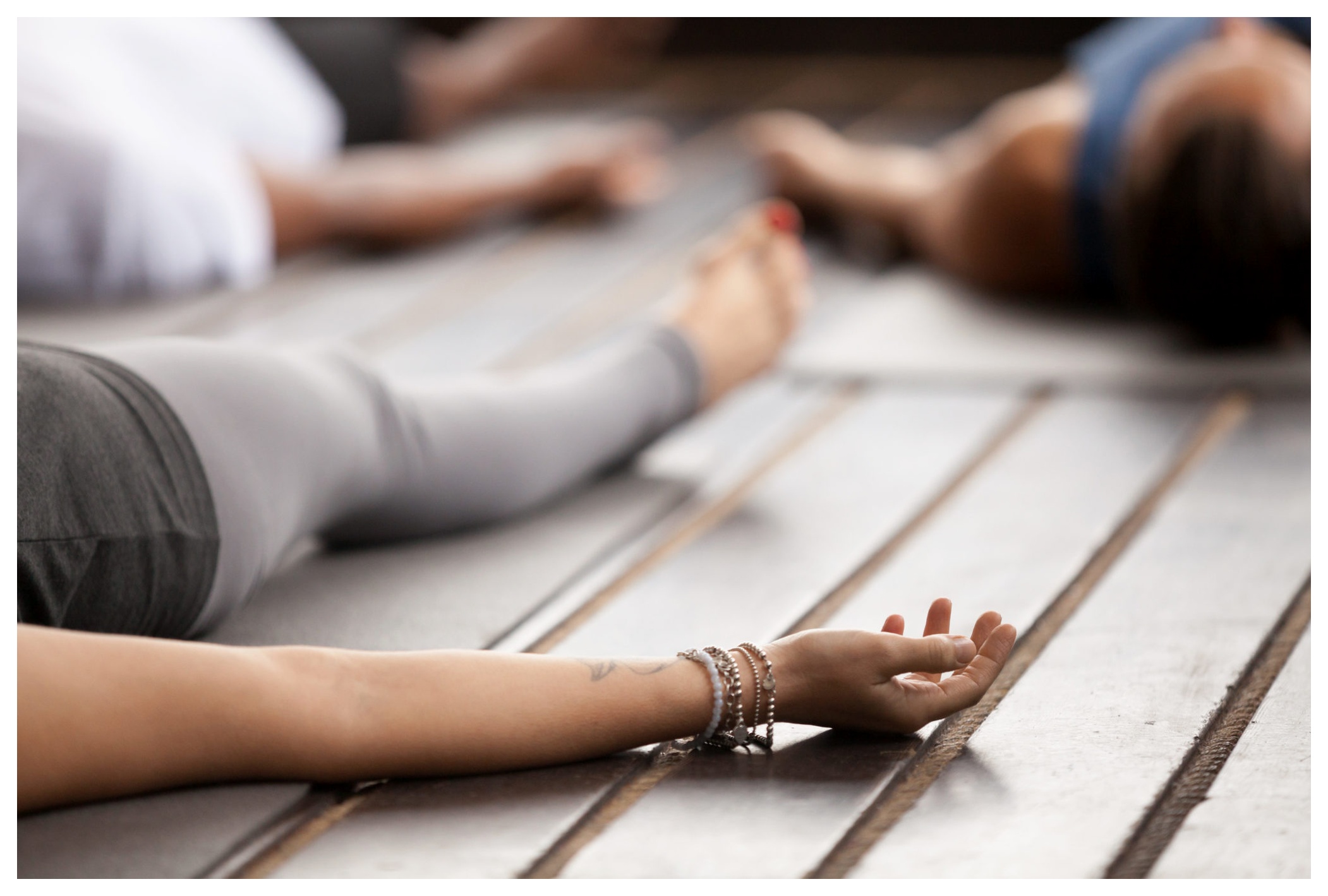
Commonly referred to as Corpse Pose, Savasana is a key relaxation posture typically practiced at the end of a yoga session. This calming position helps the body unwind, allowing it to absorb the benefits of the practice, promoting deep relaxation and alleviating stress.
Example:
After finishing your sequence of asanas, your yoga instructor will guide you into Savasana. You’ll lie comfortably on your back, allowing your arms and legs to relax, palms facing upward and eyes gently closed, embracing a moment of tranquility.
Namaste (pronounced: nah-MAH-stay)
Namaste is a meaningful greeting used in yoga and Hindu culture, signifying a deep respect for others. It translates to “the divine in me honors the divine in you.” Typically, practitioners say it at the start and end of yoga classes, placing their hands in a prayer position at the heart center, creating a moment of connection and reverence.
Example:
At the conclusion of a yoga session, your instructor might show appreciation and respect for the time spent together by saying “Namaste.” In response, you can acknowledge this gesture by repeating “Namaste” and gently bowing your head.
Exploring Sanskrit terminology in yoga practice
Sanskrit, the ancient language at the heart of yoga, plays a crucial role in the tradition. Many yoga terms and asana names are derived from Sanskrit, and mastering their pronunciation can enhance the fluidity of your practice. Furthermore, understanding this language is essential for those looking to deepen their spiritual connection within yoga.
Explore our detailed pronunciation guide, featuring key Sanskrit terms along with practical examples of their use in yoga sessions. This resource will enhance your understanding and practice!
Tadasana (pronounced: tah-DAHS-uh-nuh)
Tadasana, commonly referred to as Mountain Pose, is a fundamental standing posture in yoga. The name comes from the Sanskrit words “tada,” meaning mountain, and “asana,” meaning pose. This essential pose not only serves as a launchpad for various standing sequences but also plays a crucial role in enhancing posture and balance.
Example:
Your instructor might kick off the sequence of standing poses with Tadasana, or Mountain Pose. In this foundational position, you’ll stand tall with your feet hip-width apart and your arms relaxed at your sides, setting the stage for a strong practice.
Ujjayi (pronounced: oo-JAH-yee)
Known as the victorious breath or ocean breath, Ujjayi is a popular breathing technique used in yoga. By gently constricting the back of your throat while inhaling and exhaling through your nose, you can produce a calming sound reminiscent of ocean waves. This technique not only enhances your practice but also promotes relaxation and focus.
Example:
In a Vinyasa flow class, your instructor may encourage you to use Ujjayi breath. This technique not only helps you stay centered but also allows you to align your breathing with each movement, enhancing your overall practice.
Chaturanga Dandasana (pronounced: chah-too-RAHN-guh dahn-DAHS-uh-nuh)
Chaturanga Dandasana, also known as Four-Limbed Staff Pose, is a dynamic yoga position that effectively builds strength in the arms, shoulders, and core. The name itself reflects its essence: “chatur” means four, “anga” refers to limbs, “danda” signifies staff, and “asana” translates to pose. This pose not only enhances physical strength but also promotes stability and balance in your practice.
Example:
During a Vinyasa flow, you’ll often be guided to move from Plank Pose into Chaturanga Dandasana. This transition involves lowering your body halfway while keeping your elbows tucked in close to your sides, ensuring proper form and alignment.
Surya Namaskar (pronounced: SOOR-yuh nah-MAHS-kahr)
Surya Namaskar, commonly referred to as Sun Salutation, is a dynamic sequence of twelve interconnected poses that acts as both a warm-up and a foundational practice for various yoga styles. The term “Surya” means sun, while “namaskar” translates to salutation. This invigorating series not only stretches your muscles but also harmonizes your breath, energizing your entire body and preparing you for deeper yoga practices.
Example:
As your yoga class begins, you’ll likely start with several rounds of Surya Namaskar, or Sun Salutations. This invigorating sequence not only warms up your muscles but also prepares your body for the more challenging postures that lie ahead in the session.
Balasana (pronounced: bah-LAHS-uh-nuh)
You may know Balasana as Child’s Pose, a soothing and restorative posture often used to enhance yoga sessions. This gentle pose encourages relaxation and self-reflection, making it a perfect break in your practice. It effectively stretches the hips, thighs, and ankles, while also alleviating stress and fatigue.
Example:
Typically, this move is practiced after completing a series of more demanding poses to help soothe your breath and alleviate tension. To get into this pose, kneel on the mat and gently sit back on your heels. Then, fold forward, either extending your arms in front of you or resting them by your sides, while letting your forehead relax on the ground.
Virabhadrasana (pronounced: veer-uh-bhuh-DRAHS-uh-nuh)
Virabhadrasana, commonly known as Warrior Pose, is a powerful standing posture that enhances strength in the legs, arms, and shoulders, while also boosting balance and concentration. This pose comes in three distinct variations: Warrior I, Warrior II, and Warrior III. Each variation offers its own unique alignment and set of benefits, making it a versatile addition to any yoga practice.
Example:
In a yoga class, you can boost your stability and strengthen your body by flowing through a dynamic standing sequence that includes Warrior I, Warrior II, and Warrior III. This progression not only challenges your balance but also cultivates focus and resilience.
Trikonasana (pronounced: tree-koh-NAHS-uh-nuh)
Trikonasana, or Triangle Pose, is an invigorating standing posture that effectively stretches the legs, hips, and spine. This pose not only strengthens the lower body and core muscles but also enhances balance and sharpens concentration, making it a valuable addition to any yoga practice.
Example:
In your yoga practice, you can seamlessly move from Warrior II—where one foot is positioned forward with a bent front knee and the back foot is turned out at a 90-degree angle—into Trikonasana. To make this transition, simply straighten your front leg and extend your front hand forward.
Bakasana (pronounced: bah-KAHS-uh-nuh)
Bakasana, commonly known as Crow Pose, is an exciting arm balance that tests your strength, balance, and concentration. This advanced posture not only enhances your physical prowess but also effectively builds muscle in your arms, wrists, and core, making it a fantastic addition to any yoga practice.
Example:
Your teacher will typically lead you into Crow Pose by instructing you to place your hands firmly on the floor with your elbows bent. From there, you’ll lift your feet off the ground, finding your balance on your hands as you embrace this challenging pose.
Ananda Balasana (pronounced: ah-NAHN-duh bah-LAHS-uh-nuh)
Ananda Balasana, commonly referred to as the Happy Baby pose, is a soothing and restorative yoga position that effectively stretches the hips, inner thighs, and lower back. This gentle pose not only alleviates tension but also encourages deep relaxation, making it a perfect addition to your wellness routine.
Example:
As your session winds down, your instructor might guide you into Ananda Balasana, or Happy Baby Pose. To get into this restful position, lie on your back and bend your knees, pulling them toward your chest. Reach for the outer edges of your feet, ankles, or shins. With a secure grip, gently lower your knees toward the floor, allowing them to spread apart on either side of your torso for a soothing stretch.

Mindfulness and yoga vocabulary: Enhancing awareness and well-being
Enhancing your yoga practice with a deeper understanding of yoga vocabulary can significantly elevate your experience and amplify the benefits of this timeless discipline. By familiarizing yourself with English yoga terms, you cultivate a stronger sense of presence and self-awareness, enriching your journey both on and off the mat.
Mindfulness in practice
Mindfulness, the practice of immersing yourself in the present moment, is essential for a fulfilling yoga experience. However, you don’t have to be on the mat to reap its rewards. By weaving mindfulness techniques into your daily life, you can effectively lower stress levels, unwind after a hectic workday, alleviate anxiety, and boost your overall well-being.
The connection between yoga vocabulary and mindfulness
Many yoga terms, especially those derived from Sanskrit, hold profound meanings that promote mindfulness and awareness. By familiarizing yourself with essential yoga vocabulary, you can deepen your understanding of this ancient practice and unlock its transformative power.
Achieving mindfulness through yoga vocabulary
The following yoga vocabulary is closely related to achieving mindfulness:
- Pranayama, or breath control, is essential in yoga. Ujjayi pranayama, known as ocean breath, helps anchor your awareness to the sound and rhythm of your breath, preventing distractions from worries and external concerns.
- **Svadhyaya** – This term means self-study or self-reflection. Practicing svadhyaya fosters self-awareness and supports personal growth.
- Ahimsa, one of the five yamas in yoga, embodies the principle of non-violence and compassion. Practicing ahimsa enhances your awareness of actions and fosters greater empathy for yourself and others.

Become a master of yoga terms
Understanding yoga vocabulary is crucial for enriching your practice and strengthening your bond with this timeless discipline. In this detailed guide, we’ve highlighted the importance of various techniques, explored key Sanskrit terms, and provided insights into different asanas and mindfulness practices.
Exploring the connection between yoga terminology and mindfulness can significantly enhance your ability to manage stress, unwind after a long day at work, and boost your overall well-being.
Frequently Asked Questions
What does the term ‘Asana’ mean in yoga?
‘Asana’ translates to ‘posture’ or ‘pose’ and refers to various physical positions practiced in yoga.
How is ‘Pranayama’ practiced and what are its benefits?
‘Pranayama’ is the art of breath control, helping to alleviate stress and enhance focus through techniques like Nadi Shodhana.
What is the significance of ‘Namaste’ in yoga?
‘Namaste’ is a respectful greeting meaning ‘the divine in me honors the divine in you,’ often said at the start and end of yoga classes.
Can you explain what ‘Vinyasa’ yoga involves?
‘Vinyasa’ yoga involves a dynamic practice that harmonizes breath with movement, flowing through a series of asanas.
What is ‘Savasana’ and why is it important?
‘Savasana,’ or Corpse Pose, is a key relaxation posture practiced at the end of a session, allowing the body to absorb the benefits of the practice.