

- Why keeping a language learning journal is so useful
- Ideas on how to use your language learning journal
- Keep track of what you’re learning
- Spot gaps in your vocabulary
- Journal about your language learning habits
- Use your journal with your tutor
- Journal about your thoughts, feelings, and interests in your target language
- Conclusion
- Frequently Asked Questions
- What are the benefits of maintaining a language learning journal?
- How can I use my journal to track my language learning goals?
- What should I include in my language learning journal?
- How can journaling enhance my understanding of a new language?
- Can journaling be useful for learners at any stage?
Journaling is a powerful practice that not only aids in goal achievement and alleviates stress and anxiety but also serves as a valuable tool for self-exploration. But can it also assist you in learning a new language?
A language learning journal offers an enjoyable way to monitor your progress, reflect on your learning habits, express thoughts in a new language, and identify areas for improvement. There are various methods to maintain a journal, with two popular approaches being writing freely in your target language and using the journal for planning and tracking your language goals.
In this article, you’ll explore why successful language learners, such as Lindie Botes, emphasize the importance of maintaining a language journal. Discover the reasons behind this practice and find out what valuable content you can include in your own language learning journal.
Why keeping a language learning journal is so useful
Journaling offers an imaginative and fluid method to monitor your language-learning journey. It allows you to outline your learning goals, summarize what you’ve covered, and highlight any areas of confusion. This reflective practice not only tracks progress but also enhances your understanding and retention of the language.
Your journal can be a treasure trove of valuable content, from vocabulary lists to personal insights about your unique learning style. It’s also the perfect space to track your language learning goals and celebrate your achievements along the way.
Lindie Botes, a language coach fluent in over eight languages, began her journaling journey at a young age. This practice not only accelerated her learning of Korean and other languages but also enhanced her writing abilities. Discover the ways journaling has contributed to her success:
Ideas on how to use your language learning journal
Maintaining a language learning journal is a fantastic practice for learners at any stage. If you’re a beginner, you might feel daunted by those blank pages and wonder what to write. To help you maximize the benefits of your journal, here are some creative ideas to inspire your entries.
Keep track of what you’re learning
Keeping a language journal is a powerful tool for tracking your growth as a language learner. Picture revisiting a piece you wrote a year ago and marveling at your progress! With consistent study alongside your journaling, you’ll be able to spot the mistakes you’ve learned to correct over time. This reflection can be a significant motivator to continue your learning journey and strive for even greater improvement!
Enhancing your language learning journey through journaling can be both inspiring and insightful. Consider following the example of Lindie Botes, who effectively uses her journal to log the hours she dedicates to studying and to celebrate her memorable milestones and achievements. This practice not only helps you stay organized but also motivates you to reflect on your progress.
A sneak peek inside Lindie Botes’ language journal
Spot gaps in your vocabulary
A language learning journal is an excellent tool for identifying sentence patterns. As you write in your target language—much like you would in a traditional journal—you may find it challenging to express certain ideas or realize that you’re using the same phrases repeatedly. After this free-flow writing, you can enhance your entries by researching and integrating more relevant vocabulary to enrich your language skills.
Remember, your journal is your personal sanctuary—free from judgment and a playground for your thoughts! Embrace the freedom to make grammatical errors or use vocabulary as it flows naturally. Just be sure to revisit and refine your entries afterward.
LingualNeeds is your go-to platform for language learning, providing personalized support from a dedicated tutor. Beyond one-on-one sessions, we offer an array of tools designed to help you master challenging vocabulary at your own pace. As you identify vocabulary gaps through journaling, simply add these words to our Vocab tool, allowing you to practice whenever you have a few spare moments.
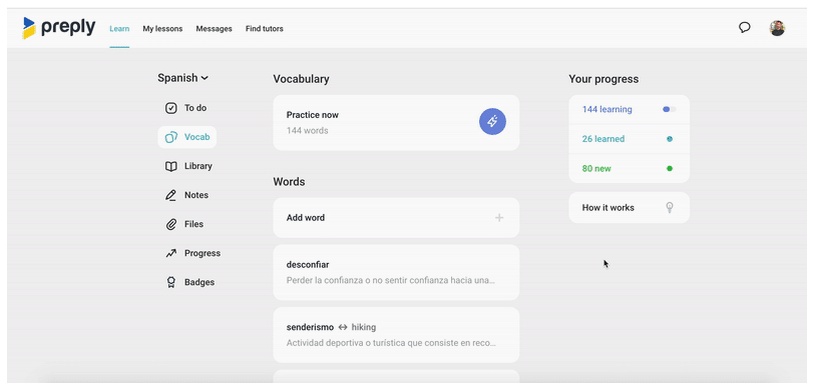
A preview of LingualNeeds’s Vocab tool
Journal about your language learning habits
Your journal is a powerful tool for analyzing your language learning habits. It’s especially beneficial for those studying on their own or feeling stuck in their progress, as it can help you identify areas for improvement and introduce new activities to refresh your routine.
Exploring your habits through journaling can be incredibly insightful. By tracking your study frequency and methods in your language journal, you can uncover your peak productivity times and identify your preferred learning styles. You may discover that you’re most effective at certain times of the day or that collaborating with others enhances your study sessions.
Journaling is an excellent tool for setting goals, organizing your plans, and tracking your progress. For instance, you can dedicate specific time slots for reading, practicing speaking, and reviewing grammar rules, then check them off each week to celebrate your achievements.
If you’re considering using your journal to plan your language studies, look at our guide to creating your study schedule.
Use your journal with your tutor
Lindie Botes shares that she utilizes her journal as a valuable tool to prepare for her lessons with her language tutor. You can adopt this practice too! Before your next session, take a few minutes to jot down a brief summary—around five sentences—about your day or any news you’d like to discuss. This will not only help you organize your thoughts but also enhance your learning experience.

When you write naturally in your target language, you’ll likely encounter confusing elements like tricky vocabulary or grammar rules. These challenges are excellent discussion points for your tutor. For instance, you might ask your tutor questions such as:
- “Which past tense form do I need to use here?”
- “What’s another way to say X?”
- “Can you explain why I’d say X instead of X?”
Having a tutor can significantly boost your motivation, especially when you’re struggling with recurring mistakes. In fact, 92% of LingualNeeds learners report that their tutors provide essential support and encouragement, helping them stay focused and committed to their learning journey.
Journal about your thoughts, feelings, and interests in your target language
One of the most exciting aspects of keeping a language journal is its flexibility—there are no strict rules! You have the freedom to explore topics that pique your interest, along with your daily thoughts and emotions. By journaling, you actively engage in language output, honing your skills in expression just like you would when speaking, rather than just passively absorbing language through reading or listening.
At some point, you’ll want to share your thoughts and opinions in a new language, and a language journal is the perfect tool for that. When you write about topics that matter to you, you’re more likely to engage in conversations about those same subjects with others.
Consider sharing your goals, ambitions, and dreams—these are essential topics that often arise in discussions. After writing about them, take the time to proofread for grammar and vocabulary mistakes. For instance, I previously documented my goals and recounted a dream in (admittedly imperfect) Spanish, which you can review as an example:

My Spanish has improved a ton since then, thanks to my LingualNeeds tutor Clara!
Conclusion
Journaling is an excellent tool for tracking your language learning journey. It allows you to reflect on your progress, pinpoint areas that need more practice, and clarify any confusing concepts. By keeping a journal, you can enhance your understanding and stay motivated along the way.
Journaling serves as a powerful tool for assessing your language learning habits and identifying areas for improvement with your tutor. It provides an opportunity to delve into your thoughts, emotions, and interests while practicing a new language, making the learning process both reflective and engaging.
Learning a language should be an enjoyable experience, not a tedious task. When you make it fun, you’re more likely to stick with it! One effective way to kick off your journey is by keeping a language learning journal. This will help you track your progress, boost your confidence, and discover your unique voice in a new language. Start early and watch your skills flourish!
Frequently Asked Questions
What are the benefits of maintaining a language learning journal?
A language learning journal helps monitor progress, reflect on learning habits, express thoughts in a new language, and identify areas for improvement.
How can I use my journal to track my language learning goals?
You can outline your learning goals, summarize what you’ve covered, and celebrate your achievements in your journal.
What should I include in my language learning journal?
Your journal can include vocabulary lists, personal insights about your learning style, reflections on your study habits, and entries about your thoughts and feelings in the target language.
How can journaling enhance my understanding of a new language?
Journaling promotes reflection on your learning journey, helps clarify confusing concepts, and allows you to practice language output actively.
Can journaling be useful for learners at any stage?
Yes, maintaining a language learning journal is beneficial for learners at any stage, whether they are beginners or more advanced.


