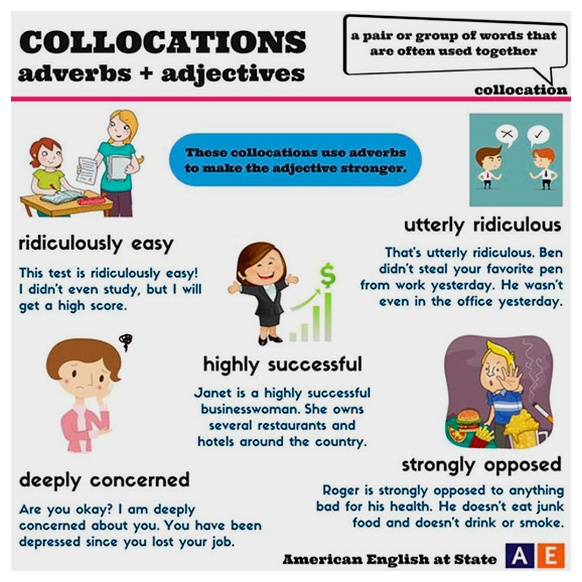
What are collocations in English? Collocations are pairs of words that frequently come together to create a distinct expression. Understanding these combinations can enhance your language skills and make your speech sound more natural.
Today you’ll learn a few of the most common collocations in English that are made of adverbs and adjectives.
This is a significant way to improve your vocabulary.
In these cases, the adverb will play the role of enhancing the adjective. Let’s get started!
Ridiculously Easy
The first expression in my short collection means “very simple; very easy.”
For example:
- The test is ridiculously easy! I didn’t even study, but I will get a high score!
- This homework is ridiculously easy – I’ll do it in a few minutes!
Highly Successful

This expression in English means “very successful” and is often used in the business world.
For example:
- His autumn collection of shoes was highly successful.
- His grocery store started small, but it became highly successful.
Strongly opposed
This phrase conveys the idea of being “strongly opposed” and is often used to describe someone who harbors intense objections to a particular concept or belief.
For example, if your friend has very strong feelings and opinions against smoking, you could say:
- My friend Alex is strongly opposed to smoking.
- My father is strongly opposed to early marriages.
Utterly Ridiculous
Sometimes we encounter completely absurd situations in life. This expression will help you to express this in English.
- This situation with tickets is utterly ridiculous, isn’t it?
- It was utterly ridiculous to follow them for so long.
Deeply concerned
This word combination can be used to describe a person who is very worried about something.
For example:
- I am deeply concerned about the future of our company these days.
- She is deeply concerned about Jim. He has been very depressed since he lost his job.
Highly profitable
If something is “highly profitable,” it means that it brings in a lot of income.
It is often used in the business world.
For example:
- Our new product is highly profitable in the European market.
- To create a highly profitable business, one needs to know the wants and demands of the public.
Deeply unhappy
This expression is used to describe a person who is very sad or disappointed about something.
For example:
- Last week I met Katherine. She seemed deeply unhappy.
- Why are you so deeply unhappy? Is something wrong?
Absolutely convinced
The final collocation in my collection is frequently used in public lectures and speeches by influential figures, including politicians and business leaders. It conveys the idea of being “absolutely certain” about something.
For example:
- We firmly believe that advertising can persuade consumers to purchase items they neither want nor need.
- I am absolutely convinced that we will sign an agreement with La’free.
I am deeply concerned about your English improving, and I’m absolutely convinced that you will learn to speak English very well!
Good luck!
Frequently Asked Questions
What are collocations in English?
Collocations are pairs of words that frequently come together to create a distinct expression.
How can collocations improve my language skills?
Understanding collocations can enhance your language skills and make your speech sound more natural.
What does ‘ridiculously easy’ mean?
‘Ridiculously easy’ means very simple or very easy.
What does the phrase ‘strongly opposed’ convey?
‘Strongly opposed’ conveys the idea of having intense objections to a particular concept or belief.
What is the meaning of ‘highly profitable’?
‘Highly profitable’ means that something brings in a lot of income.