

- The language learning process
- The challenge: The forgetting curve
- Five steps to habit building for effective language learning
- 1. Set a specific goal
- 2. Create a plan
- 3. Make the repetition fun
- 4. Foster flexibility
- 5. Find support: Human connection
- How LingualNeeds helps you build effective learning habits
- Vocabulary practice
- Progress reports
- Regular lesson booking
- Conclusion
- Frequently Asked Questions
- Is it possible to learn a foreign language in one day?
- What is the forgetting curve?
- How can I effectively retain new vocabulary?
- What are SMART goals in language learning?
- Why is human connection important in language learning?
Have you heard about a person who learned to speak a foreign language in one day? Us neither.
The truth is, a magic solution for quick language learning simply doesn’t exist. Many of us yearn for the elusive shortcut that promises to make mastering a new language effortless and speedy. However, the reality remains that acquiring a new language demands dedication, time, and consistent effort.
Learning a new language doesn’t have to feel like a chore. When approached correctly, it can transform into an exciting journey, opening doors to unexpected destinations and connecting you with people who may profoundly impact your life.
The language learning process
Embarking on the journey of learning a second language is an exciting adventure that marks the beginning of continuous growth. Language acquisition is not a one-time achievement; it’s an ongoing process. Even as we refine our skills in our native tongue, we continually expand our vocabulary and enhance our understanding.
In this guide, we’ll highlight key factors to consider during your language learning journey and outline five essential steps to cultivate effective habits that will kickstart or rejuvenate your learning process. Let’s dive in!
The challenge: The forgetting curve
Think back to your history class—do you recall all the fascinating details about the Roman Empire? Or what about the intricacies of chemical bonding from your science lessons? Unless your job or everyday activities involve this information, you’re likely to say, “not really.” It’s common to forget details that aren’t part of our daily lives!
The same principle applies to learning a new language. If you don’t regularly and actively practice the language you’re trying to master, you’re likely to encounter “the forgetting curve,” where retention of what you’ve learned diminishes over time.
The forgetting curve, a concept introduced by German psychologist Hermann Ebbinghaus, explores how our memory retention declines over time after learning new information. This theory suggests that:
- After one day, you retain only 33% of what you learned the previous day.
- After two days, you retain only 28%.
- After six days, you retain only 25%.
- After 31 days, retention drops to just 21%, meaning you remember only about 1/5 of what you learned on day one.
Now, try applying your language learning process to this model.
Picture this: you’ve diligently learned and memorized 10 new vocabulary words to enhance your language skills. However, if you neglect to review them in the days or weeks that follow, research based on Ebbinghaus’s forgetting curve suggests that you’ll likely retain only about three of those words by the end of the first day. Regular review is key to making those new words stick!
To truly excel in learning a new language, embrace the power of repetition. Consistently revisiting and engaging with the material over the days and weeks is essential. This practice helps you overcome the forgetting curve, ensuring that you retain what you’ve learned and achieve fluency faster than you might think!
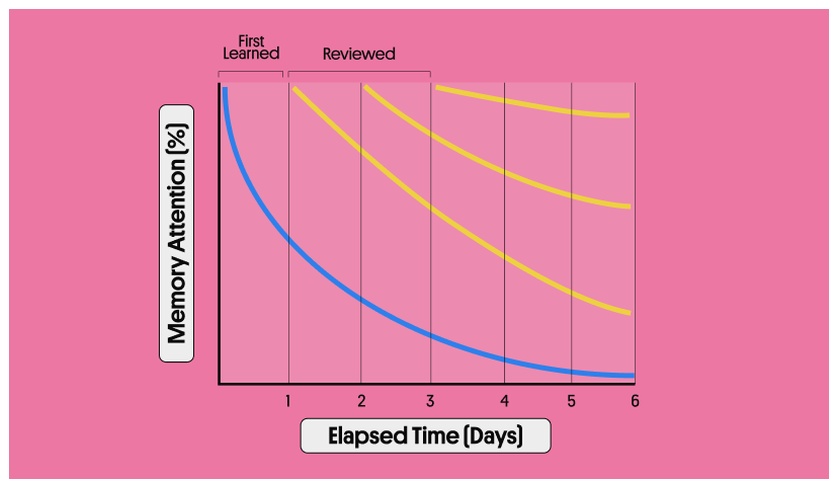
How subsequent reviews extend the forgetting curve
Now that you’re familiar with the forgetting curve, let’s explore five simple steps to establish effective language learning habits this year to help you achieve your goals. Let’s dive in!
Five steps to habit building for effective language learning
Learning a new language is all about adopting daily habits that you stick to consistently. By engaging in these practices each day, you embark on a path filled with small victories, each one bringing you closer to your ultimate goal: mastering a new language.
1. Set a specific goal
To truly own your language learning journey, start by asking yourself, “How can I hold myself accountable?” A great way to take control is by establishing clear and achievable goals. This approach not only keeps you motivated but also helps track your progress as you master your second language.
SMART goals can help you establish markers for success but also keep you motivated because they’re easily actionable.
SMART goals stand for objectives that have the following characteristics:
- Set clear and specific learning goals, detailing what you aim to accomplish and the timeline for achieving these objectives.
- **Measurable Goals**: Establish clear, quantifiable objectives by determining specific criteria for success, such as online quizzes, tutor assessments, or language proficiency tests.
- Achievable: Create achievable goals based on your current language level and study time availability.
- **Set Relevant Goals:** Select language learning objectives that align with your specific needs, such as travel, career, or education, to enhance practical skill development.
- Time-bound: Design goals that are time-bound with a clear deadline.
Rather than getting discouraged by the daunting task of “learning a foreign language,” try breaking it down into smaller, SMART goals. This approach allows you to incorporate achievable targets into your daily routine, making the process more manageable and rewarding.
2. Create a plan
The second step of creating language development habits is creating your perfect study plan.
In today’s fast-paced world, many of us feel “time poor,” struggling to find enough hours in the day to balance work and personal commitments with our desire to learn. To combat the forgetting curve and enhance your language skills, create a study plan that incorporates short, daily tasks. Even dedicating just 15 to 30 minutes each day can significantly propel you toward your goal of mastering a second language. Embrace these small, consistent efforts, and watch your progress soar!
Expert in the field of language learning process and Head of Methodology at LingualNeeds, Sylvia, comments:

A well-structured language study plan is essential for successful language learning. It not only provides a sense of accountability, encouraging learners to complete their tasks, but also transforms study time into a valuable investment. In today’s fast-paced world, focused students recognize the importance of making the most of their limited time.
Sylvias’ tip for building a study plan is as follows:
To create an effective study plan, aim to dedicate just 10–15 minutes each day to language learning. Successful learners understand the importance of regular practice, as each short session brings them closer to their goals. By studying in smaller, consistent increments rather than cramming once a week, you’ll accelerate your progress and enhance your retention. Remember, binge-watching might be great for Netflix, but when it comes to language learning, consistency is key!
Get a free study plan template and more information here.
3. Make the repetition fun
Repetition can be exciting and effective in mastering a new language! Embrace your unique learning style by incorporating activities you love into your practice. This personalized approach will help you conquer the language curve with enthusiasm.
Progressing through the levels of language proficiency, as defined by the CEFR, is a gradual process that takes time and effort. Embracing your language-learning journey with a positive mindset is essential. Celebrate those exciting “Aha!” moments and take pride in the small milestones you achieve along the way. Remember, every small task completed brings you one step closer to fluency in your new language.
If you ever find yourself lacking motivation, explore various language activities that could spark your interest. Focus on engaging with content you already love, as this transforms the task into something enjoyable rather than a chore. Here are some suggestions to get you started:
- Engage with captivating stories: Reading compelling narratives can double your reading comprehension speed and enhance your vocabulary, allowing you to grasp words in different contexts while familiarizing you with common idioms and phrases used by native speakers.
- Listen to podcasts: Podcasts enhance listening and speaking skills while improving grammar, pronunciation, and vocabulary. The option to pause and replay allows you to tailor your learning experience and progress at your own pace.
- **Watch TV in Your Target Language:** Enhance your language comprehension by watching TV shows in the language you’re learning. Begin with subtitles and gradually challenge yourself by watching without them.
- **Maintain a Language Journal**: A language journal enhances your learning by tracking progress, applying new vocabulary in writing, documenting key concepts, and revisiting past lessons. If you’re working with a tutor, your journal can help pinpoint errors and create a tailored learning plan.
Around the globe, countless learners are embracing LingualNeeds, often collaborating with two to three different tutors to enhance various facets of a language. One tutor focuses on in-depth grammar lessons, while another engages them in lively discussions about topics like the Harry Potter series or the possibility of extraterrestrial life. This diverse approach not only strengthens language skills but also makes learning enjoyable and dynamic.
Ultimately, there are numerous ways to immerse yourself in the language you wish to learn. As polyglot Olly Richards emphasizes, discovering enjoyable learning methods is key to developing an effective study plan tailored to your needs.
4. Foster flexibility
Mastering a language is a journey that requires patience, as fluency doesn’t develop in an instant. Embracing flexibility in your learning routine allows you to explore different methods to integrate language practice into your daily life, even when unexpected challenges arise. By making language learning a consistent part of your day, you can adapt to whatever life throws your way.
Head of Methodology at LingualNeeds, Sylvia, advises:
Establish “emergency reserves” or backup plans for those days when sticking to your routine feels impossible. Life can get hectic, and having flexibility in your approach can help you stay committed to your goals, even when challenges arise.
5. Find support: Human connection
Language serves as the cornerstone of human communication, making meaningful connections essential for successful language learning. To combat the forgetting curve, collaborate with peers, colleagues, and tutors. This teamwork allows you to practice the language, receive valuable feedback, and improve your skills for future conversations.
Traditionally, it was believed that language learners acquired speaking skills primarily through the grammar lessons they received. However, a 2017 study by researchers at Cambridge University revealed a more effective approach: meaningful communication between students and teachers in the target language significantly boosts language acquisition. This interactive speaking practice not only improves language proficiency but also fosters a greater sense of achievement and motivation among learners.
Sharing what you’ve learned—whether it’s pronunciation, vocabulary, or grammar—with someone else significantly enhances your ability to remember that information. This practice not only reinforces your knowledge but also boosts your confidence and helps combat the forgetting curve.
At its heart, language learning is a deeply human endeavor. Partnering with a language tutor can significantly enhance your journey. A tutor not only helps you stay accountable to your goals but also tailors their teaching approach to suit your personal learning style. They offer valuable feedback on your progress and provide the essential human connection that enriches the learning experience. Explore and compare top language courses to discover the support you need this year.
How LingualNeeds helps you build effective learning habits
At LingualNeeds, we understand that repetition is key to boosting your confidence and enhancing your fluency. That’s why we’ve developed a range of innovative learning tools and methods designed to help you cultivate positive language habits and acquire a lifelong skill. Discover how our approach can transform your language journey!
Vocabulary practice
Our vocabulary expansion feature allows you to save new words shared by your tutor during lessons as flashcards for easy review later. On the LingualNeeds “Learn” page, you can track your progress by viewing words you’ve mastered, those you’re actively learning, and the ones still ahead of you.
This essential tool helps you track your vocabulary growth, effortlessly save study materials, and retain new words in your long-term memory, all while effectively combating the forgetting curve.
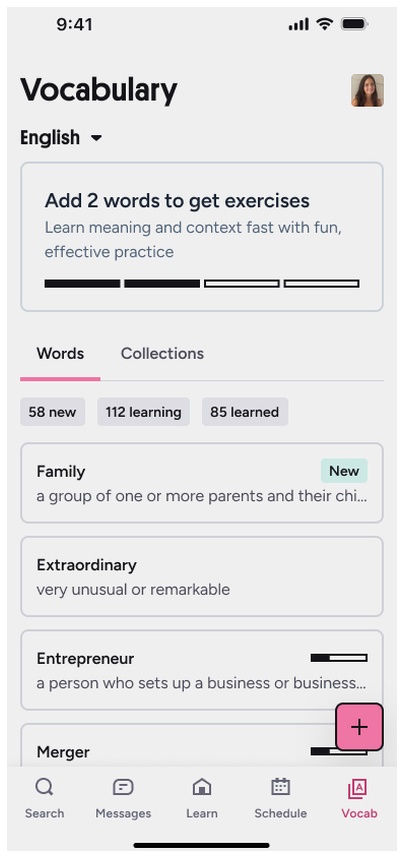
LingualNeeds’s vocabulary tool
Progress reports
On the “Progress” page, you can establish your language learning goals and monitor your journey toward achieving them. This feature also displays the number of lessons you’ve completed and lets you download a certificate to celebrate your accomplishments.
You can enhance your learning experience by collecting motivational cat stickers to acknowledge your achievements in lessons and study sessions—because learning a language should be enjoyable! This practice is crucial; we often focus on what we haven’t mastered, overlooking the progress we’ve made. Celebrate your journey and reward yourself for your hard work!
Regular lesson booking
Our lesson scheduling system allows you to easily select a consistent time to meet with your tutor, with automatic adjustments for future weeks. For instance, if you prefer to have lessons every Wednesday at 7:00 PM, that can be arranged effortlessly. With LingualNeeds, you can choose between 25-minute or 50-minute sessions, ensuring that your learning fits seamlessly into your lifestyle.
After your lesson, your next session will be scheduled right away. This approach encourages you to stay committed to your language learning journey, helping you reach your goals. Remember, even with a fantastic learning plan from your tutor, your progress depends on your consistent attendance.
Conclusion
Learning a new language is a long-distance journey rather than a quick dash. It requires regular practice and dedication to make meaningful progress. However, the experience can be incredibly rewarding if you stick to a tailored study plan, establish clear SMART goals, collaborate with language experts, and embrace the challenges along the way.
The LingualNeeds tools are designed to help you track your progress after each lesson, allowing you to celebrate those small victories that contribute to your overall language learning success. Partnering with an expert tutor can greatly enhance your skills through personalized guidance. If a weekly session can elevate your language proficiency, just think about the remarkable progress you could achieve with three lessons each week! Don’t forget to explore our comparisons of top language exchange apps for even more learning opportunities.
Embark on your language learning journey today by finding the perfect expert tutor or discovering how to select one that suits your needs. This article offers valuable tips and insights to help you combat the challenges of the forgetting curve, keeping you motivated and persistent. Good luck on your adventure, language learner!
Frequently Asked Questions
Is it possible to learn a foreign language in one day?
No, learning a foreign language requires dedication, time, and consistent effort.
What is the forgetting curve?
The forgetting curve describes how memory retention declines over time after learning new information.
How can I effectively retain new vocabulary?
Regular review and repetition are key to retaining new vocabulary and overcoming the forgetting curve.
What are SMART goals in language learning?
SMART goals are specific, measurable, achievable, relevant, and time-bound objectives that help track language learning progress.
Why is human connection important in language learning?
Collaborating with peers and tutors enhances practice, provides feedback, and boosts motivation during the language learning process.


