- The days of the week in Japanese
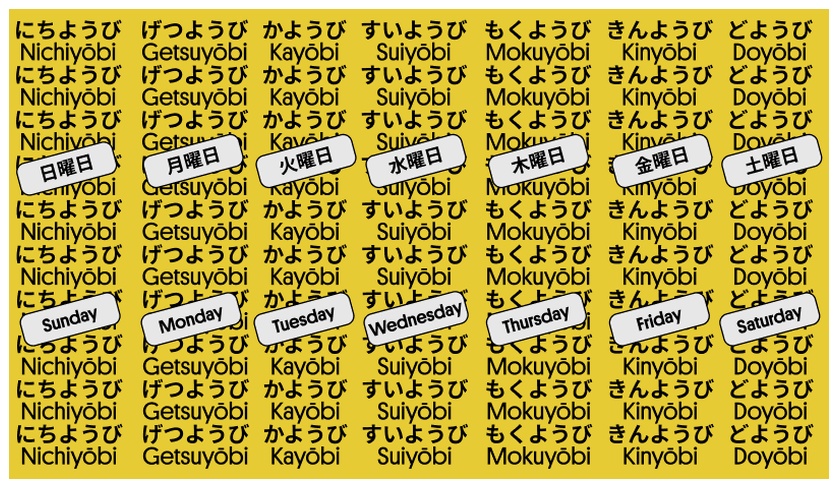
- Sunday: 日曜日 (にちようび, Nichiyōbi)
- Monday: 月曜日 (げつようび, Getsuyōbi)
- Tuesday: 火曜日 (かようび, Kayōbi)
- Wednesday: 水曜日 (すいようび, Suiyōbi)
- Thursday: 木曜日 (もくようび, Mokuyōbi)
- Friday: 金曜日 (きんようび, Kinyōbi)
- Saturday: 土曜日 (どようび, Doyōbi)
- Pronunciation
- Other useful Japanese words for talking about days of the week
- Phrases using the days of the week
- Learn the Japanese days of the week
- Frequently Asked Questions
- What are the names of the days of the week in Japanese?
- How are the days of the week in Japanese derived?
- What does the suffix ‘yōbi’ (曜日) mean?
- Why is it important to learn the days of the week in Japanese?
- What are some useful phrases related to the days of the week in Japanese?
Are you intrigued by the enchanting Land of the Rising Sun and its beautiful language? Whether you’re gearing up for a trip or diving into Japanese studies, you’re in for a treat! This article will guide you through a fundamental aspect of daily conversations: the days of the week. Mastering these terms will not only help you plan your sushi outings but also immerse you in Japan’s captivating culture.
At first glance, Japanese can appear intimidating due to its three distinct writing systems. However, when it comes to the days of the week, you’ll primarily encounter “kanji” (漢字), the characters borrowed from Chinese. Each day concludes with the suffix “yōbi” (曜日, ようび), similar to how days in English end with “day.” Plus, each day begins with a simple kanji character that’s easy to memorize. Follow this guide, and you’ll master planning your week in Japanese effortlessly!
In this article, discover the names of the days of the week, their fascinating origins, and a variety of related words and phrases that will enhance your understanding.
The days of the week in Japanese
Let’s delve into the fascinating origins of each day of the week in Japanese. Similar to many languages, the names of the days are steeped in astronomy and mythology, tracing back to ancient China. The second character, 曜 (よう, yō), is key to understanding these names, as it translates to “shining body” or “luminary” in Mandarin Chinese. The concept of the “seven luminaries” includes the sun, moon, and five visible planets: Mercury, Venus, Mars, Jupiter, and Saturn. This celestial framework serves as the foundation for the Japanese names of the days.
Sunday: 日曜日 (にちようび, Nichiyōbi)
The character 日 translates to “sun,” which is why 日曜日 is interpreted as “sun day.” This term also has ties to Amaterasu, the sun goddess revered in Shinto belief.
Monday: 月曜日 (げつようび, Getsuyōbi)
月 means “moon, and like many cultures, Japan associates Monday with the moon.
Tuesday: 火曜日 (かようび, Kayōbi)
The character 火 translates to “fire” and symbolizes the planet Mars, historically known as the “Fire Star” in ancient Japanese astronomy. This name captures Mars’ striking red hue, reminiscent of flames.
Wednesday: 水曜日 (すいようび, Suiyōbi)
水 means “water” and refers to Mercury, the “Water Star.”
Thursday: 木曜日 (もくようび, Mokuyōbi)
木 means “wood” or “tree” and refers to Jupiter, the “Wood Star” in ancient astronomy, symbolizing growth and prosperity.
Friday: 金曜日 (きんようび, Kinyōbi)
金 means “gold” or “metal” and refers to Venus, the “Metal Star.”
Saturday: 土曜日 (どようび, Doyōbi)
土 means “earth” and is related to Saturn, known as the “Earth Star.”
Pronunciation
Japanese pronunciation is quite accessible due to its phonetic nature. Each character in the basic alphabets, “hiragana” and “katakana,” corresponds to a specific sound. This means that once you learn to read the characters, you’ll be able to pronounce them accurately.
Unlike languages such as English, where spelling and pronunciation often clash—think of words like “cough,” “pneumonia,” and “what”—this language offers a much more straightforward relationship between the two.
Check out this video that demonstrates how to correctly pronounce the Japanese days of the week. Pay special attention to the elongated ‘o’ sound in 曜日 (ようび, yōbi).

Bonus tips: Dive into ひらがな (hiragana) and カタカナ (katakana) early in your Japanese learning journey. Mastering these two syllabaries will not only enhance your reading skills but also improve your pronunciation of Japanese words.
Other useful Japanese words for talking about days of the week
Here are some other Japanese words related to days of the week that are common in everyday conversation:
- 今日 (きょう, kyō) = Today
- 昨日 (きのう, kinō) = Yesterday
- 一昨日 (おととい, ototoi) = The day before yesterday
- 明日 (あした, ashita) = Tomorrow
- 明後日 (あさって, asatte) = The day after tomorrow
- この間 (このあいだ, kono aida) = The other day
- 平日 (へいじつ, heijitsu) = Weekday
- 週末 (しゅうまつ, shūnmatsu) = Weekend
Phrases using the days of the week
As you grow more familiar with the days of the week, you’ll begin to see them featured in a variety of Japanese expressions. Here are some examples to help you get started:
月曜日から金曜日まで
げつようびからきんようびまで
Getsuyōbi kara kinyōbi made
This phrase means “from Monday to Friday” and is very handy when talking about your work or school schedule.
金曜日の夜は何をしますか?
きんようびのよるはなにをしますか
Kinyōbi no yoru wa nani o shimasu ka?
This phrase translates to, “What are your plans for Friday night?” It’s an excellent way to initiate plans or simply to start a friendly chat.
日曜の憂鬱
にちようのゆううつ
Nichiyō no yū utsu
The term “日曜の憂鬱” translates to “the Sunday blues.” It captures the feelings of anxiety and sadness that many experience as the weekend draws to a close and the workweek looms ahead. This sense of dread often marks the transition back to the demands of a new week.
Every culture has its distinct approach to discussing time, and Japan exemplifies this beautifully through its days of the week. Familiarizing yourself with these expressions can significantly enhance your language skills and overall fluency.
Learn the Japanese days of the week
Learning the days of the week is a crucial first step toward effective communication in Japanese. While tackling the language may appear intimidating, it’s more manageable than you might think. Begin by familiarizing yourself with the names of the days, their pronunciations, and the corresponding kanji characters. Once you’ve got those down, consider incorporating some useful phrases into your conversations to enhance your skills further.
Discover a wealth of online resources to help you master Japanese! If you’re looking for a conversation partner to enhance your skills, look no further—LingualNeeds offers experienced online tutors ready to assist you in your learning journey.
Frequently Asked Questions
What are the names of the days of the week in Japanese?
The names are: Sunday (日曜日, Nichiyōbi), Monday (月曜日, Getsuyōbi), Tuesday (火曜日, Kayōbi), Wednesday (水曜日, Suiyōbi), Thursday (木曜日, Mokuyōbi), Friday (金曜日, Kinyōbi), and Saturday (土曜日, Doyōbi).
How are the days of the week in Japanese derived?
The names of the days are based on astronomy and mythology, tracing back to ancient China, and each day is associated with a celestial body.
What does the suffix ‘yōbi’ (曜日) mean?
‘Yōbi’ translates to ‘shining body’ or ‘luminary’ in Mandarin Chinese, indicating the celestial bodies associated with each day.
Why is it important to learn the days of the week in Japanese?
Learning the days of the week is essential for effective communication and helps in planning activities and understanding cultural expressions related to time.
What are some useful phrases related to the days of the week in Japanese?
Examples include ‘月曜日から金曜日まで’ (from Monday to Friday) and ‘金曜日の夜は何をしますか?’ (What are your plans for Friday night?).