

- So, what is Pinyin?
- How to read Mandarin Pinyin
- Tones in Mandarin
- Consonants and Vowels
- How to write Mandarin Pinyin
- Final words:
- Frequently Asked Questions
- What is Pinyin?
- Why is mastering Pinyin important for learning Chinese?
- How many tones are there in Mandarin Pinyin?
- What is the process for writing Mandarin Pinyin?
- How can I improve my Pinyin pronunciation?
Embarking on your journey to learn Chinese? Mastering Chinese Pinyin is an essential first step that will pave the way for your exploration of one of the world’s most widely spoken languages.
Pinyin (拼音 pīn yīn), which translates to “spell sound,” is a Romanization system designed to accurately depict the sounds of Mandarin Chinese. This tool is essential for learners and speakers alike, making it easier to pronounce Chinese characters correctly.
This article serves as an essential guide for beginners learning Chinese, focusing on the fundamentals of Pinyin. We’ll explore key questions, such as “What exactly is Pinyin?” Additionally, you’ll find valuable tips on how to read and write Mandarin Pinyin effectively.
So, what is Pinyin?
No matter your proficiency level in learning Chinese, mastering Pinyin is crucial. Acting as a bridge between Chinese characters and Mandarin pronunciation, Pinyin utilizes the Roman alphabet to represent the sounds of Chinese words. This makes it an indispensable resource for learners and a fundamental aspect of language education in China.
Understanding Pinyin is key for several reasons.
- Transitioning to Chinese Characters: Pinyin utilizes the Roman alphabet for phonetic spelling, aiding learners in navigating the Chinese language. This approach is particularly beneficial for beginners adapting to Chinese writing.
- The key for pronunciation: Pinyin is crucial for proper pronunciation. It ensures learners grasp the tonal nuances in Mandarin.
- **Digital Communication:** Pinyin is essential for effective digital communication in Chinese, making it crucial for anyone moving to or visiting China for an extended period. Familiarity with Pinyin will greatly enhance your experience.
Now that you understand the importance of Pinyin as a foundational element in learning Chinese, let’s elevate your skills by exploring how to read and write in the language!
How to read Mandarin Pinyin
To master Mandarin Pinyin, it’s essential to understand the pronunciation of consonants, vowels, and tones. Let’s explore each component to enhance your reading skills.
Tones in Mandarin
One of the standout characteristics of Mandarin Chinese is its tonal nature, which can be particularly challenging for those coming from European languages. In Mandarin, the tone used can change the meaning of a word entirely, adding a layer of complexity that emphasizes not just pronunciation but also the essence of communication.
Pinyin uses four tones and a neutral tone. Each is denoted by a specific diacritic mark. They are:
- ā (first tone -high level)
- á (second tone – rising)
- ǎ (third tone – falling and rising)
- à (fourth tone – falling)
- and a (neutral tone, or silent tone).
Getting it right is crucial. A slight shift in tone can completely change the meaning and evoke different emotions. Mastering tone isn’t merely an academic exercise; it’s essential for effective communication. By honing this skill, you can avoid the awkward misunderstandings that arise from miscommunication.
A simple example, you might want to strike up a conversation by asking a question saying:
“请问(qǐng wèn)”, which means “May I ask[…]?”.
But if you end up saying:
“轻吻(qīng wěn)”, which means…“kiss you softly”.
Consonants and Vowels
Pinyin features a unique collection of consonants and vowels that set it apart from English. It comprises 23 consonants, known as “initials,” and 35 vowels, referred to as “finals.” Among the vowels, you’ll find 6 simple forms and 29 compound combinations, making it a rich and diverse phonetic system.
Every Mandarin syllable is formed by combining an initial consonant with a final vowel sound, making the structure relatively straightforward. However, there’s an exception: the unique syllable “er.” This syllable is frequently heard in the northeastern dialect known as “东北话儿 (dōng běi huà-ér).”
Among the six basic vowels in the Pinyin system, ü stands out as it’s absent in many European languages. Its pronunciation resembles “eu” as found in the word “Europe.”

Getting to know these sounds is essential for mastering pronunciation. It’s especially important to focus on sounds like “zh,” “ch,” and “sh” to ensure clarity and accuracy in your speech.

Mastering the “q” sound in Mandarin can be quite challenging. Many learners mistakenly link it to the English word “queue,” but in Pinyin, it actually sounds more like “chy.” Understanding this distinction is key to improving your Mandarin pronunciation!
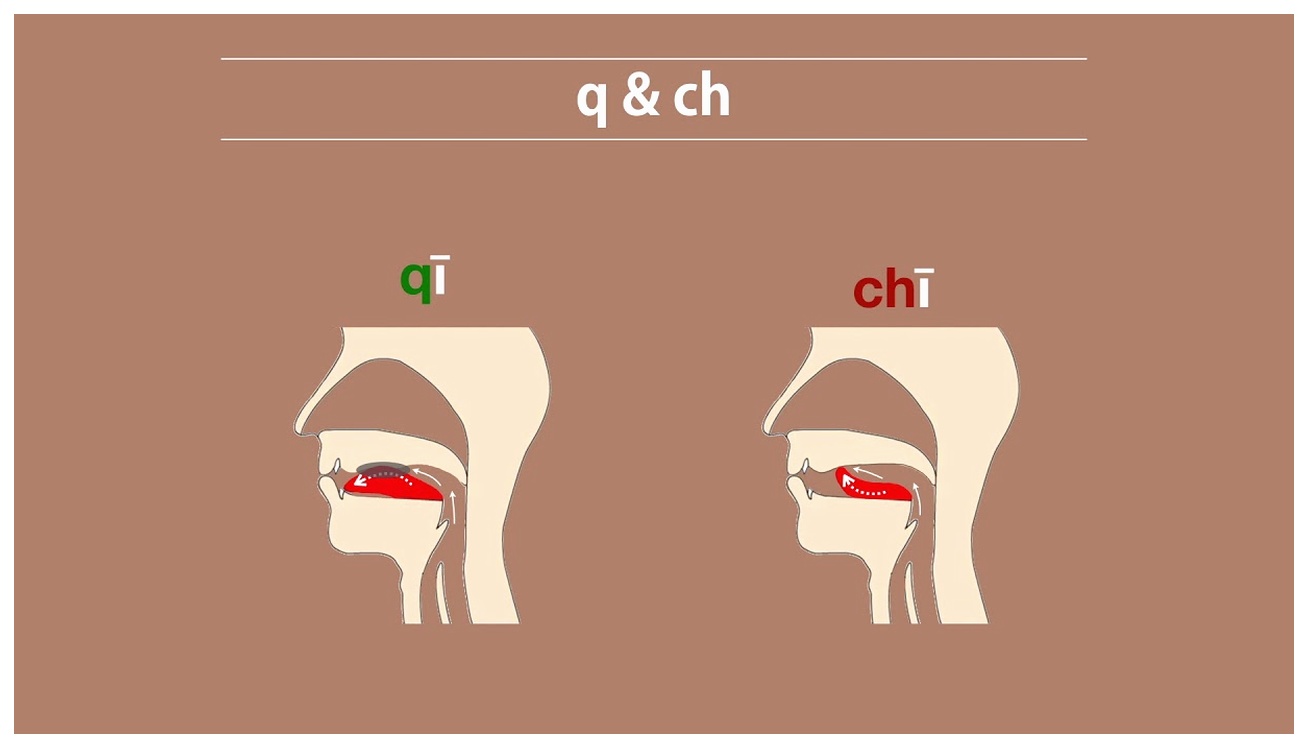
You can learn more about examples of Chinese Pinyin here.
Moreover, online Chinese lessons provide a comprehensive pronunciation guide that helps learners master the unique sounds of Mandarin. To further improve your pronunciation, regular practice with native speakers or language exchange partners is highly beneficial.
Looking for the perfect tutor to meet your learning needs? Look no further! LingualNeeds offers helpful guidelines to assist you in your search. For those starting their journey in Chinese, you’ll find a curated list of qualified Chinese tutors available right here.
How to write Mandarin Pinyin
Once you’ve grasped the sounds, writing Pinyin based on pronunciation involves following a simple order:
- Start with the consonant
- Add the (compound) vowel
- Finish with the tone.
This process enables you to produce accurate and clear Pinyin representations, enhancing your understanding of how Chinese characters are pronounced.
Let’s go through an example with: “Chinese 中文” as an example,
- Consonant – 中 zh; 文
- Vowel – 中 zh+ong, 文 w+en
- Then add tones to the compound vowel or ‘final’ – “中 zhōng”; “文 wén”
Learning Pinyin alongside Chinese characters is highly beneficial. While Pinyin is a helpful tool for pronunciation, it alone doesn’t convey the meanings of the characters. Many Chinese characters visually represent the objects or ideas they signify, making it essential to study their forms to fully understand their meanings. Embracing both Pinyin and characters will enhance your grasp of the language.
In everyday written communication, native Chinese speakers rarely use Pinyin; it’s absent from newspapers, websites, and other written formats. This highlights the importance of understanding the relationship between Pinyin and Chinese characters for effective language learning and communication.
Leverage digital tools to connect Pinyin with Chinese characters for a more immersive learning experience. For example, you can easily add Pinyin above Chinese characters in Microsoft Word. Additionally, installing the PinyinTones keyboard on your laptop can be incredibly beneficial. These resources not only help you associate the sounds of words with their written forms but also deepen your understanding of the language as a whole.
In the meantime, you can hone your Pinyin writing skills using online resources such as Learn Chinese Online. These interactive exercises not only strengthen your understanding but also enhance your writing abilities. Keep in mind that regular practice is essential; it’s the secret to mastering any skill!
Final words:
Chinese Pinyin is a vital tool in your journey to learning Mandarin, acting as a key to deciphering its complexities. Mastering Pinyin involves grasping the nuances of tones, consonants, and vowels, which are essential for effective communication in Chinese.
Mastering Pinyin in both reading and writing is essential for effective communication in Chinese. It serves as a crucial stepping stone to a richer understanding of the language and its cultural nuances. With the right resources and guidance, you can create a structured and systematic learning path that facilitates significant progress. As you advance to higher levels, the advantages of a strong Pinyin foundation will become even more evident.
Frequently Asked Questions
What is Pinyin?
Pinyin is a Romanization system designed to accurately depict the sounds of Mandarin Chinese, making it easier for learners to pronounce Chinese characters correctly.
Why is mastering Pinyin important for learning Chinese?
Mastering Pinyin is crucial as it acts as a bridge between Chinese characters and Mandarin pronunciation, helps with proper pronunciation, and is essential for effective digital communication.
How many tones are there in Mandarin Pinyin?
Mandarin Pinyin uses four tones and a neutral tone, each denoted by a specific diacritic mark.
What is the process for writing Mandarin Pinyin?
To write Mandarin Pinyin, start with the consonant, add the vowel, and finish with the tone.
How can I improve my Pinyin pronunciation?
Improving Pinyin pronunciation can be achieved through regular practice with native speakers, using online resources, and understanding the unique sounds of Mandarin.