- Modern Japanese Vocabulary: A Guide for 21st Century Students
- Price
- Pros
- Cons
- Best for
- Japanese Short Stories for Beginners
- Price
- Pros
- Cons
- Best for
- GENKI I: An Integrated Course in Elementary Japanese
- Price
- Pros
- Cons
- Best for
- Shadowing: Let’s Speak Japanese!
- Price
- Pros
- Cons
- Best for
- The Kodansha Kanji Learner’s Dictionary
- Price
- Pros
- Cons
- Best for
- Mastering Kanji, Volume 1: Your Ultimate Guide to Remembering Japanese Characters and Their Meanings
- Price
- Pros
- Cons
- Best for
- Kanji in Context
- Price
- Pros
- Cons
- Best for
- A Dictionary of Basic Japanese Grammar
- Price
- Pros
- Cons
- Best for
- Japanese from Zero!
- Price
- Pros
- Cons
- Best for
- Japanese for Busy People II
- Price
- Pros
- Cons
- Best for
- Remembering the Kana: A Guide to Reading and Writing the Japanese Syllabaries in 3 Hours Each
- Price
- Pros
- Cons
- Best for
- Kodansha’s Furigana Japanese Dictionary
- Price
- Pros
- Cons
- Best for
- Conclusion
- Frequently Asked Questions
- What are the benefits of using the book ‘Modern Japanese Vocabulary’ for language learners?
- How does ‘Japanese Short Stories for Beginners’ enhance vocabulary learning?
- What makes ‘GENKI I’ a popular choice for Japanese learners?
- What is the shadowing technique used in ‘Shadowing: Let’s Speak Japanese!’?
- Who should consider using ‘Japanese from Zero!’ as a learning resource?
Learning Japanese may seem daunting at first, and finding the right books and resources can be overwhelming. However, with the right Japanese lessons and high-quality materials, you can achieve fluency without the struggle. Dive in and discover an enjoyable path to mastering the language!
We’ve compiled a list of the 12 best books to learn Japanese below to get you started.
Modern Japanese Vocabulary: A Guide for 21st Century Students
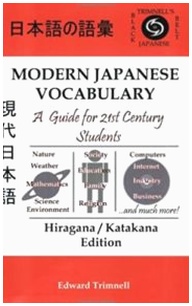
This textbook offers a blend of practical insights and in-depth academic analysis, exploring contemporary issues like the Internet, twenty-first-century politics, and environmental challenges. It’s designed to engage readers with relevant content that bridges real-world applications and scholarly discussions.
Among the numerous resources available for learning Japanese, this book shines for its exceptional approach to clarifying complex concepts. It expertly tackles tricky cases and commonly confused words, including Japanese homonyms, Sino-Japanese verbs, and various prefixes and suffixes, making it an invaluable tool for learners.
Price
$45 (Amazon, used)
Pros
- Organizes vocabulary by topic (for example, family members and colors)
- Puts Japanese characters (kanji, katakana, or hiragana) side-by-side for additional pronunciation support
- A clear, readable typeface that aids learners who are less familiar with character systems
Cons
- Non-alphabetical organization of sections; references can be difficult
- All pronunciation keys are in hiragana and/or katakana (no romaji)
Best for
Understanding how to use vocabulary in context
Japanese Short Stories for Beginners
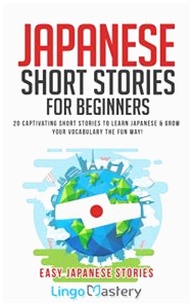
Dive into this captivating collection of 20 accessible short stories designed to enrich your vocabulary and immerse you in Japanese culture. Each story is presented exclusively in Japanese, allowing you to enhance your comprehension through context. Following the stories, you’ll find English translations that clarify new vocabulary, making your learning experience both enjoyable and effective.
In contrast to typical Japanese beginner books that emphasize basic vocabulary like numbers, colors, and animals, this collection weaves a cohesive story that enhances the learning experience.
Price
$15 (Amazon)
Pros
- English translation below each paragraph of text for easy reference
- Lesson summaries in Japanese and English, with a list of relevant vocabulary and slang
- A question-and-answer portion to test your knowledge retention
Cons
- No western lettering (Romaji) provided, so beginners must use outside sources for reference
- Smaller text and typeface can present challenges for those less familiar with the Japanese alphabet system
- It may be too basic for advanced students
Best for
Learning new vocabulary while familiarizing yourself with Japanese culture
GENKI I: An Integrated Course in Elementary Japanese
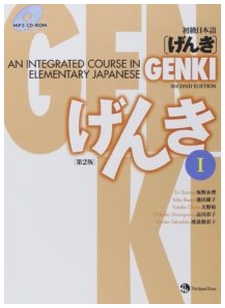
Crafted by university professors specializing in North American study abroad education, this textbook presents 23 engaging lessons that delve into the essentials of the Japanese language.
With an impressive average rating of 4.3 from 1,573 reviews on Goodreads, *Genki I* stands out as a comprehensive resource for learning Japanese. This book features a variety of engaging exercises that focus on reading, writing, and speaking, accompanied by numerous examples to enhance vocabulary comprehension. Many reviews highlight *Genki* as a top choice for individuals studying Japanese independently, making it an essential addition to any learner’s library.
Price
$47 (Amazon)
Pros
- Geared toward speakers of American English
- Workbook companion with CD audio recordings for listening practice
- Engaging storytelling that motivates you to continue studying through chapter installments
Cons
- Explanations of grammar concepts may be poor or confusing, so you may need to refer to outside sources
- Best for long-term study; not ideal for a quick refresher or ‘crash course’
Best for
All-around study for advanced or motivated self-learners
Shadowing: Let’s Speak Japanese!
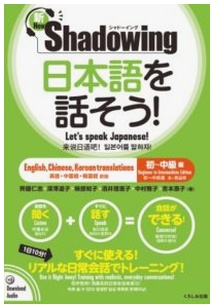
This textbook leverages the shadowing technique—a method commonly employed in training simultaneous interpreters—to enhance your grasp of spoken Japanese and boost your expressive skills. By practicing repetition, you’ll deepen your comprehension and become more fluent in communicating your thoughts.
Shadowing is uniquely designed for practical application, setting it apart from other books on this list. This method helps beginner and intermediate Japanese learners strengthen their grammar and vocabulary through real-life scenarios, making language acquisition more effective and engaging.
Price
$19.99 (Amazon, used)
Pros
- All kanji in the first three units have a reading aid (furigana) written above them for additional support
- Includes CD with 65-minutes worth of audio recordings for extra listening practice
- Includes transcripts of CD contents in Japanese, English, Chinese, and Korean, catering to a diverse audience beyond just English speakers.
Cons
- The shadowing method may be less effective without the help of a tutor or live practice
- The built-in challenge may not be ideal for beginners, as furigana is only provided above kanji once in Units 4 and 5.
Best for
Practicing pronunciation and improving conversational skills
The Kodansha Kanji Learner’s Dictionary
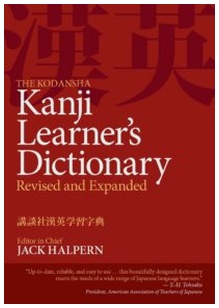
The Kodansha Kanji Learner’s Dictionary is designed as a user-friendly and portable resource that addresses the difficulties of kanji memorization. It simplifies the learning process by focusing on a single core meaning for each character, helping learners grasp its essence. Additionally, the dictionary showcases examples of how different compounds can be formed, illustrating the diverse meanings that can arise from combining characters.
Armed with five appendices, this book has over 2,230 entry characters, 31,300 words, and 7,200 character readings.
Price
$71.35 (Amazon)
Pros
- Includes homophones with core meanings to explain the differences between closely-related characters
- Covers variant forms used in pre-war literature and in names
- Offers extensive stroke order diagrams to demonstrate how to write kanji
Cons
- Adapting to the System of Kanji Indexing by Patterns (SKIP) can be difficult, as it enhances character retrieval efficiency in alphabetical dictionaries.
- There is so much information it could be overwhelming
Best for
Memorizing written character and understanding modern linguistic theory
Mastering Kanji, Volume 1: Your Ultimate Guide to Remembering Japanese Characters and Their Meanings
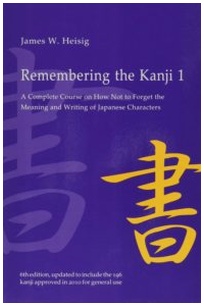
This text explores the idea that mastering kanji writing may be easier than grasping Japanese pronunciation. By comparing the forms and meanings of Japanese characters, it aims to enhance understanding and facilitate learning.
This innovative book takes a unique approach by connecting each kanji to a captivating story, making it easier for students to remember their meanings. Unlike many other Japanese learning resources, *Remembering the Kanji, Volume 1* emphasizes visual recognition rather than aiming for a comprehensive understanding of the language.
Price
$24.99 (Amazon)
Pros
- It can be employed as an easy-to-grasp memorization technique for beginners or a fresh approach for advanced students
- A non-traditional approach that can be engaging
- Ideal for learners who prefer categorizing language study into reading, writing, speaking, and listening.
Cons
- The story-based methodology may not work for everyone’s learning style
- You can’t learn pronunciation from this book alone
Best for
Remembering the meaning of kanji and practicing writing
Kanji in Context
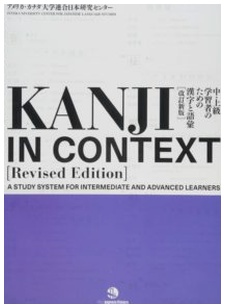
Packed with more than 150 lessons, *Kanji in Context* provides an in-depth exploration of Japanese vocabulary tailored for intermediate and advanced learners. This comprehensive resource covers over 2,000 kanji, offering 3 to 6 words for each character, along with detailed on-kun readings, forms, and stroke indices. It also serves as an excellent companion to the Genki series, enhancing your understanding of the language.
Price
$43 (Amazon)
Pros
- It’s highly comprehensive and offers more than enough new vocabulary if you prefer to stick to one book
- Language is grouped by context and word origin
- The accompanying workbooks allow you to quiz yourself on vocabulary and identify weak spots
Cons
- Not designed for beginners
- Size can be inconvenient or overwhelming for those who prefer bite-sized exercises
- It may be confusing if you don’t purchase the accompanying workbooks
Best for
Learning large numbers of new words
A Dictionary of Basic Japanese Grammar
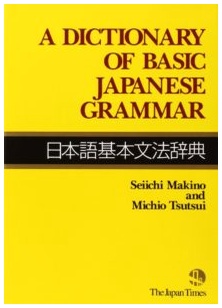
An essential book to learn Japanese grammar, A Dictionary of Basic Japanese Grammar summarizes introductory grammar knowledge in an alphabetical format.
This book provides a comprehensive collection of grammar insights, covering everything from fundamental rules to detailed comparisons of closely related grammar concepts.
Price
$45 (Amazon)
Pros
- Straightforward to use: easy reference and simple deconstruction of each grammar point
- Uses basic, beginner-level vocabulary so that you can focus on the grammar concept, not looking up unfamiliar words
- Offers examples of both correct and incorrect sentences for maximum clarity
Cons
- Not a traditional textbook it does not teach vocabulary words or any non-grammar concepts
- Includes romaji, which some learners find detrimental to the language learning progress
Best for
Grammar study, particularly for standardized test preparation like the Japanese Language Placement Test
Japanese from Zero!
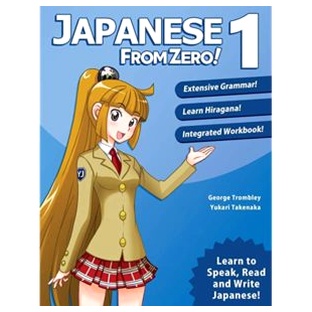
Introducing the first installment in a two-part series, *Japanese from Zero* stands out as an exceptional resource for anyone looking to learn Japanese, no matter their proficiency level. This engaging textbook employs practical example dialogues to unveil new grammar concepts, introduces over 800 vocabulary words and expressions, and provides a thorough explanation of the hiragana writing system.
Similar to several other titles on this list, “Japanese from Zero!” features a comprehensive workbook complete with an answer key, enhancing your self-study experience and boosting retention.
Price
$30 (Amazon)
Pros
- Mainly suited for native English speakers, as it’s by an English-speaking professional Japanese interpreter
- The author creates accompanying online videos for higher learner engagement
- Bilingual glossaries with kana and romaji make it accessible for learners of all levels
Cons
- The pace may be too slow or basic for more advanced learners
- You must pay for additional games and practice on the website
Best for
Introductory Japanese studies, particularly for self-learners
Japanese for Busy People II
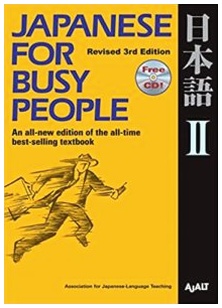
Building on the foundation laid by “Japanese for Busy People I,” which equips tourists and short-term visitors with essential survival Japanese, this textbook stands out as one of the few resources that delves into syntax—an area often challenging for native English speakers.
Japanese for Busy People II consists of five engaging units: Souvenir Shopping, Cultivating Relationships with Colleagues, Returning to Japan for Work, Vacation Planning, and Problem Solving. Each unit is designed to enhance your language skills in practical, real-world contexts.
Price
$30 (Amazon)
Pros
- Broken down into five practical units that prioritize professional and everyday vocabulary
- Uses context to illuminate syntax and grammar points, rather than rote memorization
- Includes an audio CD and accompanying drills for additional practice
Cons
- Specific vocabulary may not be suitable if you’re trying to gain a general grasp of the language
Best for
Learning practical, everyday Japanese
Remembering the Kana: A Guide to Reading and Writing the Japanese Syllabaries in 3 Hours Each
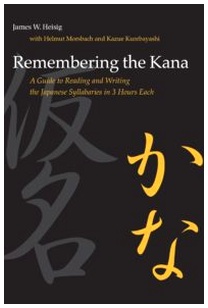
Crafted by the same author behind *Remembering the Kanji*, this book employs a comparable method to teach you the Hiragana and Katakana writing systems. It features six engaging lessons, each lasting about twenty minutes, where the author cleverly links the shapes of syllables to vivid images that highlight their unique sounds.
Price
$19 (Amazon)
Pros
- Creative storytelling may be helpful if you’ve struggled to learn kana in the past
- Ideal for aural learners, this resource organizes the kana dictionary using the melody of “Frere Jacques.”
- Focuses on remembering the kana and does not distract learners with unnecessary English translations
Cons
- The unorthodox approach may be the most efficient way to learn kana, given its differences from kanji
- It doesn’t cover anything outside of memorizing kana, including irregularities and exceptions or transcription rules
Best for
Learning a new approach to kana for those who have struggled with traditional methods
Kodansha’s Furigana Japanese Dictionary
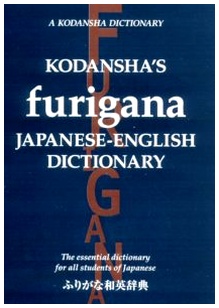
If you’re looking to master Japanese furigana, this dictionary is a fantastic resource. It specializes in the small kana that appears above or beside kanji, providing clear guidance on pronunciation.
Featuring approximately 30,000 entries of commonly used English and Japanese words, this book provides a wealth of examples that illustrate how Japanese vocabulary is applied in real-life contexts.
Price
$43 (Amazon)
Pros
- Shows multiple purposes of a word and explains semantic and usage differences between Japanese words and expressions in English
- Tailored for English speakers, this resource emphasizes words, names, and phrases especially relevant to English-speaking learners of Japanese.
- Offers additional information on verb conjugations, formality, and other aspects of Japanese grammar and usage
Cons
- No romaji means you must be able to read hiragana and katakana
- It may not be comprehensive enough for upper intermediate, or advanced students
Best for
Learning furigana
Conclusion
If you’re unsure where to begin your journey in learning Japanese, this list can serve as your roadmap. Choosing resources that align with your learning style and objectives will not only streamline your progress but also enhance your overall enjoyment of the process.
Explore our curated list of 12 exceptional books for learning Japanese, featuring top-notch resources for listening, writing, and reading. While these books provide invaluable insights and practice, they do lack the benefit of real-time feedback!
Ready to elevate your Japanese skills and connect with a native speaker? Explore over 800 Japanese tutors on LingualNeeds, and you’ll be engaging in conversations before you know it!
Frequently Asked Questions
What are the benefits of using the book ‘Modern Japanese Vocabulary’ for language learners?
‘Modern Japanese Vocabulary’ organizes vocabulary by topic and provides pronunciation support for Japanese characters, making it particularly useful for understanding vocabulary in context.
How does ‘Japanese Short Stories for Beginners’ enhance vocabulary learning?
‘Japanese Short Stories for Beginners’ presents stories exclusively in Japanese with English translations, helping learners improve comprehension and vocabulary through contextual reading.
What makes ‘GENKI I’ a popular choice for Japanese learners?
‘GENKI I’ is favored for its engaging lessons, comprehensive exercises, and its focus on reading, writing, and speaking, making it ideal for self-learners.
What is the shadowing technique used in ‘Shadowing: Let’s Speak Japanese!’?
The shadowing technique involves repeating spoken Japanese to improve comprehension and fluency, making it effective for practicing pronunciation and conversational skills.
Who should consider using ‘Japanese from Zero!’ as a learning resource?
‘Japanese from Zero!’ is suited for beginners and self-learners, as it combines practical dialogues with vocabulary explanations and online resources for enhanced engagement.