
- Understanding the word “sorry” in German
- Entschuldigung [en-tshool-dee-gung]
- Es tut mir leid [es toot meer lyt]
- Entschuldige [en-tshool-dee-geh] or Entschuldigen Sie [en-tshool-dee-gen zee]
- How to make formal apologies in German
- Use a formal address
- Employ formal phrases
- Maintain an appropriate tone and demeanor
- Navigating informal apologies in German
- Guidelines for apologizing for mistakes
- Identify and acknowledge the mistake directly
- Take responsibility
- Offer a solution
- Express genuine remorse
- Be mindful of the context
- Nonverbal ways to convey apologies
- Crafting apologies in writing
- Apologizing in business and professional settings
- Strategies for apologizing in a business setting
- Conclusion
- Frequently Asked Questions
- What is the most common way to say ‘sorry’ in German?
- How do you apologize formally in a German business setting?
- What are some informal ways to say ‘sorry’ among friends in German?
- Why is context important when apologizing in German?
- What nonverbal cues can enhance an apology in German?
If you’re gearing up for a trip to a German-speaking area or embarking on your journey to learn the German language, prioritizing the mastery of phrases for saying “sorry” is essential. These expressions can enhance your interactions and help you navigate social situations with ease.
Many beginners often overlook it, but the word “sorry” is a common fixture in everyday conversations. Just like the simple greeting “hello,” it’s easy to understand and carries significant weight in communication!
Let’s uncover the various expressions that convey “sorry” in German and the best scenarios to employ them.
Understanding the word “sorry” in German
In numerous languages, a single word typically serves as the primary expression of regret or a plea for forgiveness. In English, “sorry” covers a wide range of scenarios, from trivial mistakes to more heartfelt apologies. However, in German, the expressions of regret are more nuanced, reflecting a richer tapestry of sentiments.
Although “Entschuldigung” is the most straightforward translation of “sorry,” Germans have a rich vocabulary of words and phrases that express nuanced apologies for different situations. Let’s delve into these expressions and how they are used.
Entschuldigung [en-tshool-dee-gung]
Literal translation: “Excuse” or “apology”
Usage:
- Apology: In Berlin, if you accidentally bump into someone, simply say “Entschuldigung” to apologize.
- Polite Attention-Getter: When seeking assistance or asking a question, start with “Entschuldigung.” This German expression translates to “Excuse me” in English and serves as a courteous way to initiate conversation.
- Clarification: If you didn’t understand something someone just said, you can use “Entschuldigung?” to mean “Sorry, could you repeat that?”.
Es tut mir leid [es toot meer lyt]
Literal translation: “It does me sorrow”
Usage: This phrase conveys a deeper sense of personal connection and means “I’m sorry.” It’s often employed to express sympathy or regret, such as when you learn that someone is having a tough day or when you’ve made a personal error.
Entschuldige [en-tshool-dee-geh] or Entschuldigen Sie [en-tshool-dee-gen zee]
Literal translation: “Excuse”
Usage: The word “Entschuldige” serves as the casual way to say “excuse me” or “sorry,” perfect for conversations with friends or acquaintances. In contrast, “Entschuldigen Sie” is the formal equivalent, appropriate for professional settings or interactions with individuals you’re not well acquainted with.
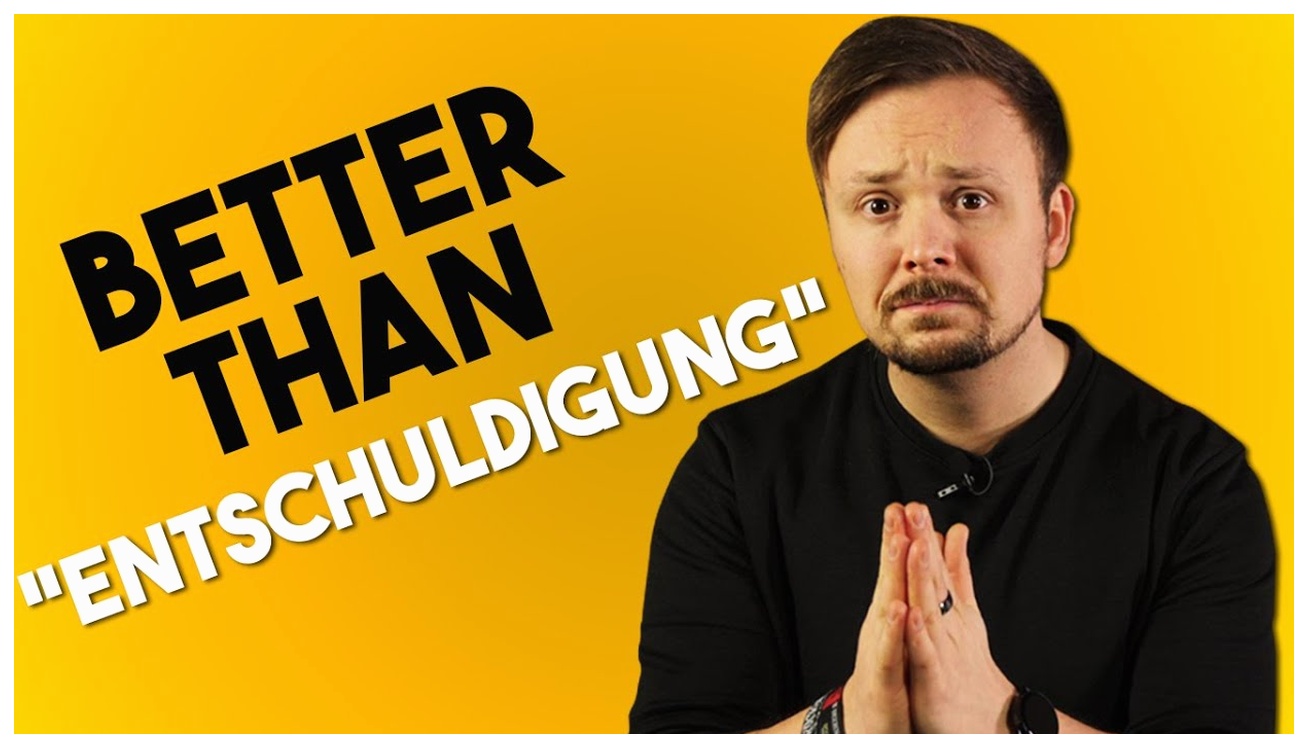
We discovered an enlightening YouTube video from the “Get Germanized” channel that serves as an excellent introduction to expressing apologies in German. It highlights not only the different ways to say sorry but also emphasizes the importance of context in making your apology effective.
How to make formal apologies in German
Apologizing goes beyond simply saying “I’m sorry”; it involves acknowledging a mistake, accepting responsibility, and showing respect. In a culture like Germany’s, characterized by precision and straightforwardness, a formal apology carries weight and requires sincerity.
Here’s how you can master the art of offering a sincere, formal German apology:
Use a formal address
Start by using the formal pronoun “Sie” (you) and refer to the individual by their last name, unless you have a close relationship that permits using their first name. This approach sets a respectful tone right from the beginning.
Example: “Entschuldigen Sie, Herr Müller, dass ich zu spät gekommen bin.” (“I apologize, Mr. Müller, for being late.”)
Employ formal phrases
There are specific phrases that immediately make an apology sound more official and respectful. Here are a few examples:
- “Ich bitte um Entschuldigung.” (“I ask for forgiveness.”)
- “Ich bedauere den Vorfall zutiefst.” (“I deeply regret the incident.”)
- “Ich hoffe auf Ihr Verständnis.” (“I hope for your understanding.”)
Maintain an appropriate tone and demeanor
In a formal environment, it’s crucial that your tone of voice and body language align with your spoken words. Demonstrating a respectful and genuine attitude can significantly enhance the impact of your apology in German, making it more effective and heartfelt.
Navigating informal apologies in German
In casual environments, apologies in Germany take on a more laid-back and direct approach. When chatting with close friends, family, or peers, Germans often use a more informal style that can even carry a playful tone.
Here’s a look at some casual apologies in German:
- “Sorry”: This English term has been integrated into German and is commonly used in informal contexts. It is widely understood and can replace traditional German expressions.
Example: “Sorry, ich bin spät.” (“Sorry I’m late.”)
- “Entschuldigung” (or the informal “entschuldige”) is commonly used among friends and in casual settings, similar to saying “excuse me” or “pardon” in English.
Example: “Entschuldige, das war mein Fehler.” (“Sorry, that was my mistake.”)
- “Mein fehler”: This phrase translates to “my mistake” and is a casual way of admitting wrongdoing.
Example: “Mein Fehler, ich habe dein Buch vergessen.” (“My mistake, I forgot your book.”)
- “Hab’s verpeilt”: A slang term popular among younger generations meaning “I spaced out” or “I messed up.” It casually acknowledges a minor oversight in everyday conversation.
Example: “Hab’s verpeilt, unsere Verabredung war ja heute!” (“I spaced out; our meet-up was today!”)
- “Da hab ich nicht gedacht” translates to “I didn’t think of that,” typically used to express oversight or a missed consideration.
Example: “Da hab ich nicht gedacht, dass du vegetarier bist!” (“I didn’t think of the fact you’re a vegetarian!”)
These expressions are more informal and are best used in situations where you know the other person well. It’s crucial to assess the context and the nature of the mistake to determine how to apologize appropriately.
Guidelines for apologizing for mistakes
Taking responsibility for our mistakes and offering a sincere apology is a universal practice that speaks volumes about our character. In German-speaking cultures, this honesty is particularly valued. Clarity and straightforwardness shine through when acknowledging errors, emphasizing the importance of genuine communication.
Here are some guidelines for apologizing for mistakes in German:
Identify and acknowledge the mistake directly
In German, clarity is key when expressing what went wrong. To illustrate how to craft an effective apology, let’s explore two examples that demonstrate the importance of specificity in your acknowledgment.
- Instead of just saying “Es tut mir leid” (“I’m sorry”), you can express a clearer acknowledgment by saying, “Es tut mir leid, dass ich deinen Anruf nicht entgegengenommen habe” (“I’m sorry that I didn’t answer your call”).
- Instead of simply saying “Es tut mir leid” (“I’m sorry”), enhance your apology by stating, “Es tut mir leid, dass ich zu spät gekommen bin” (“I’m sorry that I arrived late”). This specific phrasing clearly identifies the action that led to the inconvenience.
Take responsibility
German culture places a strong emphasis on responsibility and accountability. Here are some phrases that exemplify how to acknowledge and take responsibility for mistakes:
- “Das war mein Fehler.” (“That was my fault.”)
- “Ich habe einen Fehler gemacht.” (“I made a mistake.”)
Offer a solution
Once you’ve acknowledged the error, it’s good practice to suggest a way to rectify it. For instance:
- “Ich werde es sofort korrigieren.” (“I will correct it immediately.”)
- “Ich werde sicherstellen, dass dies in Zukunft nicht mehr geschieht.” (“I will ensure this doesn’t happen again in the future.”)
Such phrases express regret and convey a commitment to positive change in the future.
Express genuine remorse
The intensity and nature of the mistake might sometimes require you to emphasize the depth of your regret.
Expressions like “Ich bereue zutiefst, dass ich…” (“I deeply regret that I…”) and “Es war nicht meine Absicht…” (“It was not my intention to…”) serve as powerful ways to communicate sincere regret. Using these phrases can help convey your feelings authentically and foster understanding in difficult conversations.
Be mindful of the context
Tailoring your apology to fit the context is essential. For example, if you arrive late to a casual gathering with a friend, a simple “Sorry I’m late” is perfectly appropriate.
If you find yourself running late to a business meeting, it’s appropriate to say, “Ich entschuldige mich für meine Verspätung und danke Ihnen für Ihre Geduld,” which translates to “I apologize for my tardiness and thank you for your patience.” This formal expression shows respect for your colleagues’ time and acknowledges their understanding.

Nonverbal ways to convey apologies
Nonverbal communication is vital in expressing feelings, emotions, and intentions, often providing context to our spoken words.
In Germany, as in many cultures, body language, gestures, and facial expressions play a crucial role in expressing apologies. Here are some key nonverbal cues that Germans might use to communicate their feelings of remorse or regret:
- **Active Listening:** Apologizing without words can be effective through active listening. Show genuine concern by nodding and understanding the other person’s perspective, allowing for deeper empathy and connection.
- **Eye Contact:** Avoiding eye contact subtly indicates guilt, whereas direct and sincere eye contact conveys genuine remorse.
- Nodding: A nod, especially when combined with a verbal apology, can emphasize acknowledging one’s fault.
- **Facial Expressions**: A sincere, regretful facial expression, characterized by furrowed brows and a frown, effectively communicates genuine remorse.
Crafting apologies in writing
Crafting a written apology requires careful word choice to convey genuine remorse, especially since you can’t rely on body language or tone. Below are some examples designed specifically for written communication:
- “Sehr geehrte/r Herr/Frau [Nachname], ich entschuldige mich aufrichtig für [spezifischen Fehler]. Es war nicht beabsichtigt, und ich werde künftig sicherstellen, dass es nicht wieder passiert.”
“Dear Mr./Mrs. [Last Name], I want to extend my heartfelt apologies for [specific mistake]. It was unintentional, and I am committed to preventing this from happening again in the future.”
- “Liebe [Name], ich bitte um Verzeihung für mein unüberlegtes Verhalten. Ich werde in Zukunft achtsamer sein.”
“Dear [Name], I sincerely apologize for my thoughtless actions. I appreciate your understanding and promise to be more mindful moving forward.”
- “Es kam zu einem Missverständnis, und dafür möchte ich mich entschuldigen. Ich schätze Ihr Verständnis und Ihre Geduld.”
(“There was a misunderstanding, and for that, I would like to apologize. I appreciate your understanding and patience.”)
- “Ich bedauere [konkretes Ereignis oder Situation] und versichere Ihnen, dass ich alles tun werde, um die Angelegenheit zu klären.”
I want to sincerely apologize for [specific event or situation]. I assure you that I am committed to making things right and will take every possible step to resolve the issue.
These templates are versatile tools that can be tailored to fit different circumstances, providing a solid foundation for expressing heartfelt and sincere apologies in written German.
If you’re keen to master the art of apologizing in German or have other aspirations to enhance your language skills, why not take advantage of a free online German class with LingualNeeds? It’s a great opportunity to boost your proficiency!
Apologizing in business and professional settings
German corporate culture is characterized by a strong emphasis on directness and efficiency. When mistakes happen, individuals are expected to openly admit their errors without hesitation. This straightforwardness, however, is tempered by a sense of formality and respect, particularly in professional environments, ensuring that communication remains both clear and respectful.
Here are some workplace-appropriate phrases you can use to convey an apology:
- “Es tut mir leid.” (“I’m sorry.”)
- “Ich bedauere…” (“I regret…”)
- “Ich möchte mich entschuldigen für…” (“I would like to apologize for…”)
- “Ich hoffe, dass ich das wieder gut machen kann.” (“I hope I can make it up to you.”)
Utilize these phrases to create direct and specific apologies:
- “Es tut mir leid, dass ich den Bericht verspätet eingereicht habe.” (“I’m sorry for submitting the report late.”)
- “Ich bedauere die Unannehmlichkeiten, die durch meinen Fehler verursacht wurden.” (“I regret the inconvenience caused by my mistake.”)
Strategies for apologizing in a business setting
When offering apologies in a German business context, consider these crucial guidelines to make your sentiment resonate:
- Identify and acknowledge the mistake directly: Clearly state the error to demonstrate your understanding and acknowledgment of the issue.
Example: “Es tut mir leid, dass ich das Meeting verpasst habe.” (“I’m sorry that I missed the meeting.”)
- Propose a solution: After recognizing the mistake, suggest a corrective action or preventive measure to avoid similar errors in the future.
Example: “Um zukünftige Probleme zu vermeiden, habe ich eine Erinnerungsfunktion eingerichtet.” (“To avoid future problems, I have set up a reminder.”)
- Maintain Professionalism: Ensure your apology reflects a formal tone, aligning with the respectful communication standards common in German business culture.
Example: “Dear Mr. Schmidt, I sincerely apologize for the delay. I recognize the significance of this matter to you, and I assure you that we will do everything in our power to resolve it as swiftly as possible.”
Exploring the nuances of apologies in Germany’s corporate world requires a blend of directness and respect. Are you looking to boost your business skills while improving your German? LingualNeeds offers specialized business German classes designed to enhance your communication in professional settings while simultaneously advancing your language abilities.
If you’re just starting out, consider exploring this German business vocabulary list. It’s a valuable resource that will introduce you to essential keywords you’ll encounter in the workplace, helping you build a solid foundation for your professional communication.

Conclusion
Apologizing is a fundamental aspect of human connection, trust, and respect across all languages and cultures. This guide offers valuable tools for crafting a heartfelt apology in German. However, it’s important to emphasize that the essence of any sincere apology lies in genuine remorse.
As you delve deeper into the German language and culture, mastering the art of a sincere apology can enhance your journey, showcasing your dedication not only to language proficiency but also to authentic human relationships. Whether you’re addressing a minor mistake with a friend or a major misstep in a professional context, the ability to apologize genuinely is a valuable skill that will serve you well.
Looking to express more than just “Entschuldigung” in German? With LingualNeeds’s online German tutors, you’ll dive deep into both the language and its rich culture. Enjoy personalized lessons, track your progress, and gain unique insights from native speakers—all while benefiting from quality education that suits your budget.
Frequently Asked Questions
What is the most common way to say ‘sorry’ in German?
The most straightforward translation of ‘sorry’ in German is ‘Entschuldigung’.
How do you apologize formally in a German business setting?
In a formal setting, use phrases like ‘Ich möchte mich entschuldigen für…’ or ‘Es tut mir leid.’ and maintain a respectful tone.
What are some informal ways to say ‘sorry’ among friends in German?
Informal expressions include ‘Sorry’, ‘Entschuldige’, and ‘Mein Fehler’.
Why is context important when apologizing in German?
Context is crucial as it determines the appropriate expression and tone of the apology, ensuring it aligns with the relationship and situation.
What nonverbal cues can enhance an apology in German?
Nonverbal cues like eye contact, nodding, and sincere facial expressions can significantly enhance the impact of an apology.


