
- 7 tips for preparing for an English interview
- Research the company
- Get a clear picture of the perfect candidate
- Take a business English course
- Memorize vocabulary words specific to your field
- Practice answering interview questions in English with a friend or colleague
- Record yourself doing a mock job interview in English
- Take your time to answer interview questions
- 10 most common job interview questions and answers in English
- 1. Tell me about yourself
- 2. Why are you interested in this role?
- 3. What skills do you have that will make you great at this job?
- 4. Where do you see yourself in five years?
- 5. Why do you want to work here?
- 6. What are your salary expectations?
- 7. Why do you want to leave your current job?
- 8. What are your strengths?
- 9. What are your weaknesses?
- 10. Do you have any questions for us?
- 7 common behavioral interview questions in English
- Prepare with online business English tutors to take on job interviews with confidence
- Frequently Asked Questions
- What is the importance of researching the company before an interview?
- How can I prepare for common interview questions?
- What should I do if I struggle to answer a question during the interview?
- Why is it beneficial to take a business English course?
- What strategies can I use to practice for an interview?
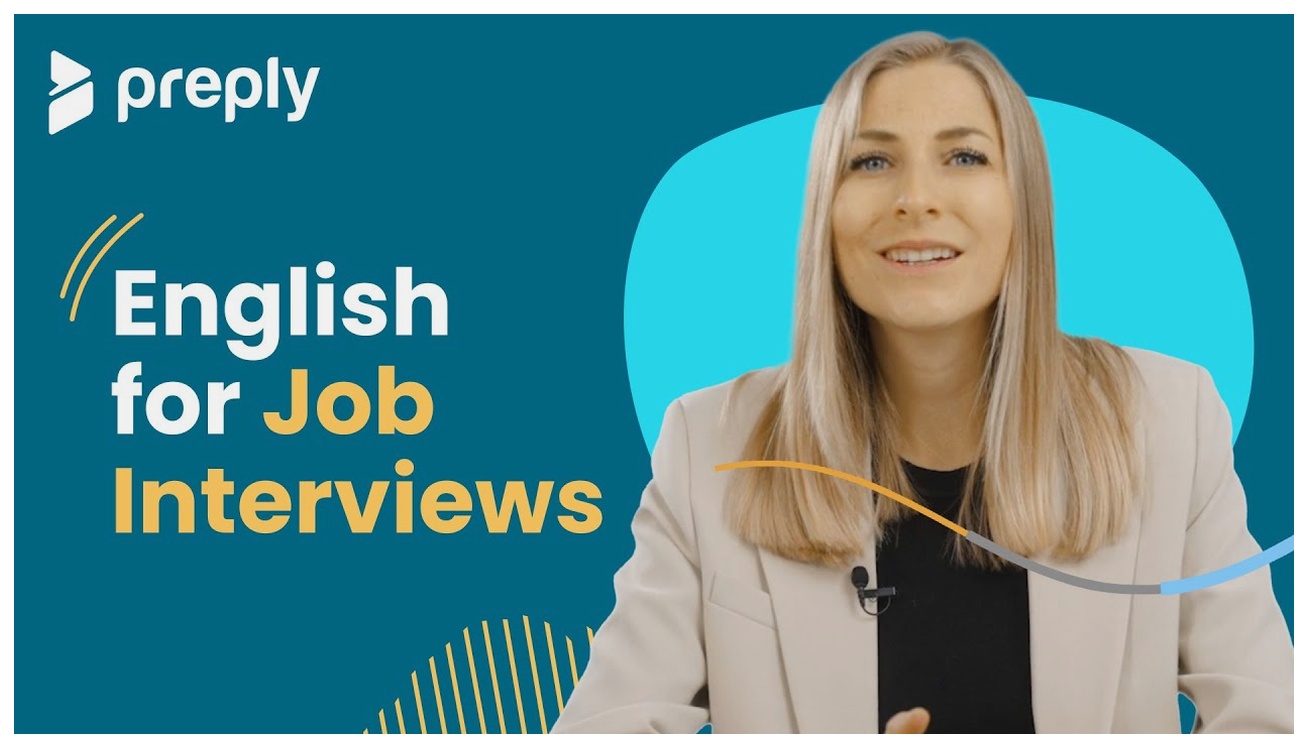
Want to ace your English interview? The key lies in thorough preparation! In this comprehensive guide, we’ll provide you with essential tips to help you get ready. We’ll also cover some of the most frequently asked interview questions, ensuring you know exactly what to anticipate. Let’s get started on your journey to success!
Preparing thoroughly for your interview will boost your confidence and help you achieve your career aspirations. Best of luck!
7 tips for preparing for an English interview
With the right preparation, you can transform a daunting interview into a chance to stand out. Let’s explore essential tips that will empower you to confidently express your skills, highlight your expertise, and leave a memorable impression on your prospective employers.
Research the company
Thoroughly researching the company you’re interviewing for can set you apart from the competition. It demonstrates your genuine commitment to its mission and values, showcasing your seriousness about building your future with them.
Begin with the fundamentals. Dive into online research about the company by exploring its website, reading customer reviews, checking out its social media presence, and looking for recent news articles. To streamline your research, consider these guiding questions:
- What is the company’s mission?
- What products or services does this company offer?
- Who are this company’s customers?
- What are the latest updates from the company, e.g., new products/services, new executives, mergers and acquisitions, or new markets?
Share several complete sentences highlighting your discoveries, particularly those that showcase the company’s strengths. Incorporating relevant facts about the business into your discussion will demonstrate your thorough preparation and commitment as a potential employee. Consider mentioning aspects such as:
- They were founded two years ago in San Francisco.
- Their marketing campaign won a prestigious national award last year.
- They recently opened up an office in Lisbon.
Take the time to research your interviewer; you might discover shared interests or experiences that can help you build a rapport during your conversation. Establishing this friendly connection can make a positive impression. Additionally, consider connecting with them on LinkedIn, which will facilitate follow-up communication after the interview.
Get a clear picture of the perfect candidate
To ace your job interview in any language, start by revisiting the job listing. Many candidates overlook this crucial step, but it’s essential to align your responses with the key details and requirements outlined in the posting. Focusing on the job listing will help you craft relevant and impactful answers!
After carefully examining the job description, pinpoint the specific skills and qualifications that the recruiters are seeking in a candidate. Next, create a list that aligns your work experience with these desired attributes, showcasing how you meet their criteria.
Identify key phrases from the job description that you can incorporate into your responses to frequently asked interview questions. Later in this article, we’ll explore the top 10 common interview questions to help you prepare effectively.
Take a business English course
To thrive in an English-speaking workplace, it’s essential to go beyond basic language comprehension. You need to grasp the subtle nuances of business English to communicate effectively and navigate professional environments successfully.
This is where enrolling in a business English course can make a significant difference. These courses provide a well-organized approach to mastering essential business vocabulary and phrases. As a result, you’ll gain the confidence needed to effectively communicate with colleagues, clients, and everyone else in the professional world.
Completing a business English course, particularly one that provides a certification, not only enhances your skills but also signals to potential employers that you are committed to personal and professional growth. This investment in yourself can set you apart in a competitive job market.
Begin your journey to mastering business English by exploring various learning options. Online platforms such as Coursera and Udemy offer some of the top business English courses available today. If you thrive in a traditional classroom setting, consider enrolling in specialized business English classes at local language schools for a more interactive experience.
For a truly tailored learning experience, consider combining one of LingualNeeds’s business English courses with personalized 1-on-1 tutoring. No matter which option you select, be sure to immerse yourself in the language and practice speaking out loud often. This approach will help you gain confidence and fluency in a foreign language, essential for effectively using it in your daily professional interactions.
Memorize vocabulary words specific to your field
To excel in job interviews, it’s essential to go beyond simply using business jargon. Focus on mastering vocabulary that’s specific to your industry; doing so will showcase your expertise and set you apart from other candidates.
Create a list of key industry terms, along with their definitions and relevance to the position you’re applying for. Look for specific words and phrases mentioned in the job listing, and also explore LinkedIn posts and YouTube videos from professionals in your field to expand your vocabulary. This will not only prepare you for the interview but also help you speak the language of the industry with confidence.
With your list in hand, it’s time to dive into an effective study technique: flashcards! You can create traditional paper flashcards for a tactile experience, or embrace technology by using apps like Anki or Quizlet. These digital tools allow you to review and quiz yourself anytime, making studying more convenient and interactive.
What makes this approach truly remarkable is its versatility. Take a software engineer, for example; their vocabulary may include terms like “agile methodology,” “full-stack,” and “API.” Conversely, a finance professional would lean towards terminology such as “amortization,” “liquidity,” and “capital expenditures.” This adaptability ensures that the language used is relevant to each specific field.
Don’t just settle for rote memorization; it’s essential to grasp the context and practical uses of these terms. Enhance your learning by adding example sentences to your flashcards, which will help you understand how to use each term effectively in conversation.
Practice answering interview questions in English with a friend or colleague
Entering an interview room can be intimidating, particularly if you’re navigating it in a language you’re still mastering. However, here’s a valuable tip: practice is key to success. Specifically, consider simulating a job interview with a friend or colleague. This approach can significantly boost your confidence and readiness.
Consider it a practice run for the main event. By engaging in role-playing for various scenarios, you’re not just preparing for your job interview; you’re also gaining valuable feedback and boosting your confidence, which is essential for success.
Practicing in a safe environment gives you the freedom to make mistakes, learn, and refine your responses. This ensures that your body language, tone, and delivery are all polished. To elevate your skills even further, consider practicing with a native English speaker who can highlight subtle nuances that will enhance your answers.
Ready to kick off your interview prep? Start by compiling a list of typical interview questions, then partner with a friend to practice. Take turns role-playing: one of you as the interviewer and the other as the candidate. For even more varied feedback, think about joining local language exchange groups. Many of these communities host sessions specifically focused on practicing interview techniques in English, providing a great opportunity to sharpen your skills!
Record yourself doing a mock job interview in English
Have you ever considered taking on the role of your own critic? Recording yourself as you navigate a mock job interview in English is an excellent way to evaluate your speaking skills and boost your confidence.
Many of us don’t realize how our pacing, tone, or repetitive phrases affect our communication. By recording ourselves, we can identify these subtle nuances and make necessary adjustments. This practice creates a supportive environment to experiment, learn, and develop our skills. Pay attention to moments of hesitation or difficulty, and use them as opportunities to enhance those specific areas.
Choose a peaceful location and prepare your camera or smartphone to tackle those interview questions. After recording, take the time to review your performance—watch it closely, analyze your responses, and jot down key observations. To enhance your practice, explore apps or software designed to give feedback on your pronunciation and fluency. Pay special attention to any challenging words or phrases, and then focus on techniques to improve your accent.
Take your time to answer interview questions
During your interview, especially if it’s your first, it’s natural to feel nervous about responding to questions. If you find yourself struggling to formulate an answer, take a moment to pause and gather your thoughts. You can buy yourself a few extra seconds by thoughtfully repeating the question back to the interviewer. Another option is to say something like:
- “That’s a good question. Can I have a moment to think about it, please?”
- “Can we circle back to that one, please? I could do with a moment to think about it.”
- “That’s a very interesting question. What exactly do you mean by that?”
If you’re seeking to enhance your professional vocabulary and fill those awkward silences, explore some of the most valuable business English terms and phrases available.
Interviewers understand that nerves are a natural part of the process, so don’t stress if your answers aren’t flawless. If you think of an important point after the interview, you can always include it in a follow-up email. This shows your enthusiasm and attention to detail!
10 most common job interview questions and answers in English
To ace your English interview, it’s essential to prepare thoughtful responses to common questions. Fortunately, these interviews typically adhere to a familiar format. While you may not encounter every question directly, rehearsing your answers will help you articulate your strengths and present yourself confidently.
Challenge yourself to craft several sentences and useful phrases for the questions below, and commit them to memory. This exercise will enhance your communication skills and boost your confidence in responding effectively.
1. Tell me about yourself
No matter if you’re aiming to become a chef, a student, or even an astronaut, you can bet that this question is likely to kick off your interview.
In many English classes, one of the first skills taught is how to introduce yourself. You might say something like, “I’m twenty-nine, I live in Brazil, I have two brothers, and I enjoy jogging and cooking.” However, in a job interview, it’s essential to craft an introduction that leaves a strong professional impression.
Craft a brief paragraph that highlights your professional journey, emphasizing your achievements along the way. Imagine how your ideal boss would portray you, showcasing not just your career milestones but also a glimpse of your personality. Incorporate a few personal touches to reflect your humanity, while maintaining a balance of 70% career highlights and 30% personal background.
A good example might sound like this:
I grew up in a charming small town in Poland before pursuing my Bachelor’s degree in Business and Hospitality Management at the International Telematic University in Milan. I thoroughly enjoyed my studies and the vibrant Italian culture, especially the incredible food! In my final year, I became a member of the Women in Business Society, which sparked my passion for professional growth. After graduation, I joined the Manager in Training program at Four Seasons Hotels, where I had the incredible opportunity to work in both New York and Oslo for six months each. The dynamic atmosphere and collaboration with international teams were exhilarating, particularly in New York, where I forged lasting friendships. I truly thrive in such lively environments, which makes this new opportunity very appealing to me.
2. Why are you interested in this role?
The truth is, your deep passion for financial stability drives you. However, we all recognize that this isn’t the kind of response that impresses employers!
When companies pose this question, they’re gauging your understanding of the role and your genuine interest in it. A strong response should convey authentic enthusiasm for the specific job at hand. To help you get started, consider using phrases like:
- This opportunity is perfect for me because…
- Something I noticed in the job advertisement really caught my eye…
Here’s an example:
This position aligns perfectly with my background as an assistant manager at a hotel during my training program, where I truly thrived. Securing a permanent role as an assistant manager would be an exciting advancement in my career. I’m also eager to take advantage of the additional training opportunities you provide, as they demonstrate your commitment to employee development. I am thrilled to discover a clear pathway for growth within your company!
3. What skills do you have that will make you great at this job?
As with many of these questions, your interviewer might phrase this in several different ways:
- Why do you think we should hire you?
- What makes you the best person/candidate for the job?
- What can you offer us?
- What can you bring to the table?
- What makes you a good fit for our company?
The key to answering this question is to effectively market yourself as the perfect candidate for the role. When crafting your response, align your skills with those highlighted in the job description. Strengthen your claims by providing concrete examples that showcase your abilities. Whenever possible, include specific numbers and metrics to give the interviewer a clear picture of your capabilities and achievements.
Below is one way you could approach this question:
I would be a valuable addition to the company due to my strong skills in people management. My college thesis focused on the psychology of leadership, which I successfully applied in my professional career. While at the Four Seasons, I managed over 30 hosts and reception staff, and an anonymous survey revealed that nearly all of them felt comfortable approaching me with any workplace issues.
4. Where do you see yourself in five years?
The future of your career is always uncertain, and that’s perfectly okay! Remember, your interviewer isn’t going to check in five years from now to see if you followed a strict plan. Instead, focus on crafting a thoughtful response that outlines both specific and broader goals, while envisioning a positive future in your field. This approach will demonstrate that you are:
- Ambitious
- Looking to stay in your industry long-term (with this company if possible)
- Applying for this job because it will help you live a life you aspire to
Here’s a response that does all of the above:
In five years, I aspire to be a hotel manager who is not only respected but also cherished by my team. I envision fostering an open-door policy that encourages every staff member to share their challenges and achievements with me. To enhance my expertise, I plan to pursue additional qualifications in human resources management and hone my skills as a sommelier. Additionally, I aim to reach a Level B1 proficiency in French to better connect with guests and colleagues.
5. Why do you want to work here?
When an employer asks this question, they’re looking to see if you took the time to thoughtfully consider their company rather than simply applying to any job that matches your title. They want to understand what specifically attracted you to their organization. To effectively answer, it’s important to do some research beforehand. Here are a few key aspects to think about:
- Company size influences your experience: large firms often set industry trends, whereas small businesses typically offer greater early responsibility.
- The company’s values and aims, which are usually found in its mission statement
- Anything the company has been in the news for lately
- The company’s reputation in the industry
- How good the company’s products or services are
- The company’s growth in recent years
Here’s what a good response might sound like:
I am eager to join a dynamic and expanding hotel chain like yours. I believe this opportunity would allow me to make a meaningful impact and take on greater responsibilities sooner than I would at a larger establishment. I’m also thrilled to see that you were awarded Good Housekeeping Magazine’s Hotel of the Year in 2019—that’s an impressive achievement! Working here would provide me with the invaluable chance to learn from industry leaders.
6. What are your salary expectations?
Answering this question can be quite tricky, regardless of the language. If you set your salary expectations too high, you might lose the opportunity to someone who is willing to work for less. On the other hand, undervaluing yourself could mean earning less than you truly deserve.
If you can, avoid being the one to set the baseline with phrases such as:
- May I ask what salary range you’re considering for this position?
- Can I ask what your budget is for this role?
- Could you provide details on the complete benefits package for staff? This information will help me determine a suitable salary figure. Thank you!
- I would be glad to talk about this later in the hiring process.
- I would prefer to learn more about the role and its responsibilities before discussing compensation.
Be ready for your interviewer to ask for a specific salary figure, so it’s crucial to come prepared with a well-researched number. Use resources like Glassdoor and Levels.fyi to find a competitive salary for your role, industry, and location. Instead of providing a single amount, offer a salary range to give yourself flexibility. Just keep in mind that interviewers often gravitate toward the lower end of that range, so strategize accordingly.
7. Why do you want to leave your current job?
Navigating tricky interview questions can be challenging. The key principle to remember is to present yourself as an ideal employee. If you’re switching jobs due to conflicts with your current boss, it’s best to keep that information to yourself during the interview. Focus on your skills and what you can bring to the new role instead!
Focus on the excitement of your new job rather than the drawbacks of your current position. It’s more productive to emphasize the opportunities ahead. Here are some positive reasons to consider for making a change:
- I feel I have outgrown my job, and I am ready for a new challenge.
- I want to relocate and experience life in a different city.
- A colleague sent me this job, and it seemed like a perfect fit.
- My current position underutilizes my skills, while this opportunity promises greater fulfillment.
- I realized that my personal values and interests are better aligned with this industry.
- This role would allow me to pursue my passions in a more meaningful way.
If you find yourself facing a gap in your CV due to leaving your last job, it’s important to address it with honesty while maintaining a positive image. Here are some thoughtful approaches to consider:
- My previous company faced financial difficulties and underwent restructuring, resulting in my layoff along with several team members.
- My company changed significantly during my time there, and unfortunately, my position was eliminated.
8. What are your strengths?
This question is an opportunity to make a good impression. There are two key components to answering it effectively.:
- Back up every adjective you use to describe yourself with a clear example from your career.
- Make sure that all of the strengths you list are relevant to the job you are applying for.
Below is an example of how you might respond:
One of my key strengths is my exceptional organizational skills. During my time as a temporary assistant manager at the Four Seasons in Oslo, I took the initiative to revamp the administrative office. While it may seem like a minor task, it had a significant impact on our daily operations. I discovered a wealth of unused staff uniforms hidden away, which meant we could forgo ordering new ones for several months, greatly enhancing our efficiency and saving costs.

9. What are your weaknesses?
We all have areas where we can improve, and your interviewer is interested in understanding whether you recognize your own weaknesses and are committed to addressing them.
An effective approach to answering this question is to choose an area where you once struggled and illustrate the proactive steps you’ve taken to enhance your skills. This not only demonstrates self-awareness but also highlights your commitment to personal growth.
Here’s an example:
At times, I find it challenging to express my thoughts at work due to the fear of upsetting my colleagues. To tackle this, I’ve taken proactive steps, including reading “The Power of Positive Confrontation” by James Oliver. This insightful book emphasizes the importance of honest communication. I’ve begun applying some of its strategies with my coworkers, and I’ve noticed a marked improvement in my communication skills. I’m committed to continuing this journey of growth.
10. Do you have any questions for us?
Regardless of how the interview unfolded, you can almost always expect this to be the last question. That’s why it’s essential to prepare a few thoughtful questions in advance. Doing so not only demonstrates your genuine interest in the role but also signals to the interviewer that you’ve considered what it would be like to join their team. Plus, it helps you avoid any uncomfortable silences at the end of the interview.
As you delve into your research on the company, you’re bound to encounter specific questions. Additionally, you might find yourself with queries during the interview. If you’re short on questions, consider asking one of these:
- What is the working culture like at your company?
- Where do you think this company will be in five years?
- What are the opportunities for growth within this role?
- How will my success in this role be measured?
- Is there anything you wish you had known before joining this company?
- When can I expect to hear back from you?
- Do you have any concerns or final questions for me?
- What are the next steps in the interview process?
7 common behavioral interview questions in English
In today’s job interviews, it’s becoming more common for interviewers to ask about your past workplace experiences, often starting with, “Tell me about a time when you…” These questions are designed to assess your professional conduct and ensure it aligns with the company’s culture.
Generating relevant examples during an interview can be tough, particularly if you’re still early in your career. The key to overcoming this challenge lies in preparation. Take some time to craft a brief paragraph that highlights:
- Your biggest career success so far
- Your biggest career failure so far
- A time when you made life easier for your team
- A time when you made a positive impact
- A time when you made a mistake but resolved it
- A time when you kept a cool head under pressure
- A time when you disagreed with your boss or a teammate
Prepare with online business English tutors to take on job interviews with confidence
Preparing thoughtful responses to these key points can feel overwhelming, but if an English-language interview is the crucial step toward landing a life-changing job, it’s absolutely worth the effort. By diving deep into your preparation, you’ll demonstrate your dedication to your career, which is sure to catch the hiring manager’s attention.
Looking to boost your confidence for interviews? Consider scheduling a few sessions with one of LingualNeeds’ online business English tutors. With a network of over 32,000 tutors available in every time zone, you’re sure to find the perfect match for your busy lifestyle. Our approachable tutors can help clarify any uncertainties about your responses and practice common interview questions with you. Allow our experts to identify and correct your mistakes before they affect your real-life interviews!
Frequently Asked Questions
What is the importance of researching the company before an interview?
Researching the company demonstrates your genuine commitment to its mission and values, setting you apart from the competition.
How can I prepare for common interview questions?
To prepare, it’s essential to craft thoughtful responses to typical questions and practice articulating your strengths and experiences.
What should I do if I struggle to answer a question during the interview?
If you struggle to answer, take a moment to pause and gather your thoughts, or ask the interviewer if you can come back to that question.
Why is it beneficial to take a business English course?
A business English course enhances your communication skills, helps you master essential vocabulary, and signals to employers your commitment to professional growth.
What strategies can I use to practice for an interview?
You can practice by simulating an interview with a friend, recording yourself, or joining local language exchange groups for feedback.


