- Wait, what’s the conditional tense?
- What’s a zero conditional sentence?
- Usage & meaning
- Structure
- Examples
- Exercises
- Final thoughts
- Answer Key
- Frequently Asked Questions
- What is the zero conditional in English?
- How do you form a zero conditional sentence?
- Can ‘if’ be replaced with ‘when’ in zero conditional sentences?
- What is the importance of clarity in zero conditional sentences?
- How can I practice zero conditional sentences?
Mastering the grammar of a foreign language can be a challenging endeavor, demanding a strong understanding of linguistic structures, a well-structured learning plan, and unwavering commitment. If you’ve been finding the zero conditional in English particularly tricky, rest assured, you’re in good company!
No need to worry! This straightforward guide will clarify the zero conditional, offer contextual examples, and include engaging exercises to reinforce your understanding. Let’s tackle this essential English grammar structure together! Read on to enhance your skills, or explore online English grammar classes at LingualNeeds for further learning.
Wait, what’s the conditional tense?
To grasp the concept of the zero conditional, it’s essential to first familiarize yourself with the conditional tense. In English, the conditional tense conveys possibilities—what could happen, might happen, or will happen—when a specific action takes place or has taken place.
Consider the common scenario where a mother might say, “You can play outside IF you finish your vegetables.” Here, the opportunity to enjoy outdoor fun is contingent upon completing a specific task—eating the rest of those veggies. This illustrates how rewards can be tied to certain actions.
There are five key types of conditional sentences: zero conditional, first conditional, second conditional, third conditional, and mixed conditional. This article will focus on helping you master the zero conditional structure before progressing to the other types.
What’s a zero conditional sentence?
Usage & meaning
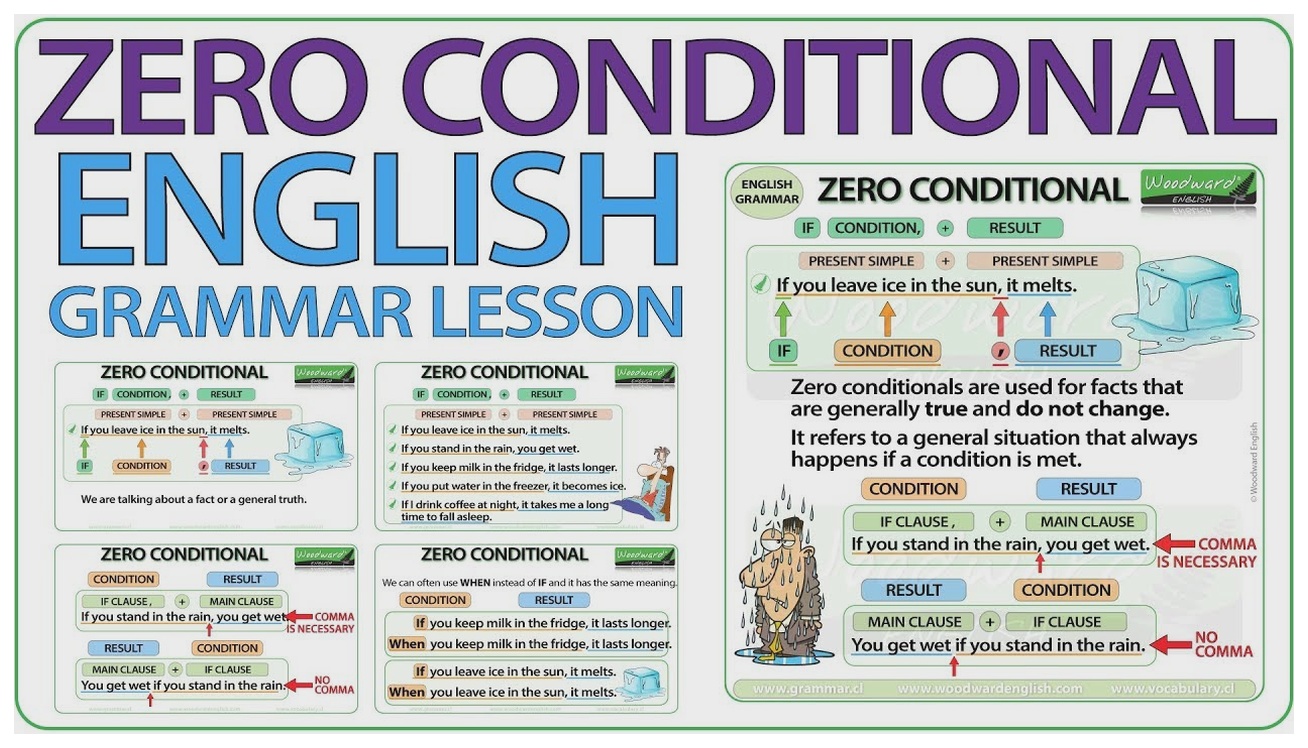
Zero conditional sentences express universal truths that apply in various contexts, including personal experiences and scientific principles. For example, the sentence “If I eat too much candy, I feel sick” demonstrates a consistent outcome that occurs whenever this specific action takes place for that individual.
Likewise, the sentence “Brown bears attack if they feel threatened” represents a permanent fact about the world around you.
Structure
There are several rules to follow when constructing a zero conditional sentence, which are outlined below:
- Clauses: Zero conditional sentences comprise an “if clause,” indicating a potential event, and a “main clause,” representing the resulting action.
| “If Clause” | + | “Main Clause” |
| if you stand in the rain, | + | you get wet |
| event that might happen | + | action that does occur |
- Tense: In zero conditional sentences, both clauses use the simple present tense to express universally accepted facts and habitual actions, such as “The bus to New York departs every half hour.”
- Order of Clauses: You can usually interchange the positions of the “if clause” and the “main clause” without altering the sentence’s meaning. Ensure the subject remains clear. Remember to use a comma when the “if clause” precedes the “main clause,” while no comma is needed when the “main clause” comes first.
| “If Clause” | + | “Main Clause” |
| if you stand in the rain, | + | you get wet |
| “Main Clause” | + | “If Clause” |
| you get wet | + | if you stand in the rain |
Remember, clarity is key in communication. Instead of saying, “They get ice cream if the kids receive good grades,” it’s essential to specify who “they” refers to, as the subject is unclear. To enhance understanding, always identify the subject in the first clause, no matter the order of the clauses. For example, say, “The kids get ice cream if they receive good grades.” This way, your message is clear and unambiguous.
- **”If” vs. “When” in Zero Conditional Sentences**: In zero conditional sentences, “if” can often be substituted with “when” without altering the sentence’s meaning.
| “If Clause” | + | “Main Clause” |
| when you stand in the rain, | + | you get wet |
Examples
Take a look at the different variations of zero conditional sentences that follow the guidelines shown above:
- If you put water in the freezer, it turns into ice.
- I buy fast food if I forget to bring my lunch to work.
- When it’s cold outside, I make hot chocolate and drink it by the fireplace.
- You gain weight when you don’t exercise and eat healthy.
- If we win our soccer game, we go out for drinks.
- My boss complains when my coworkers are late to work.
Exercises
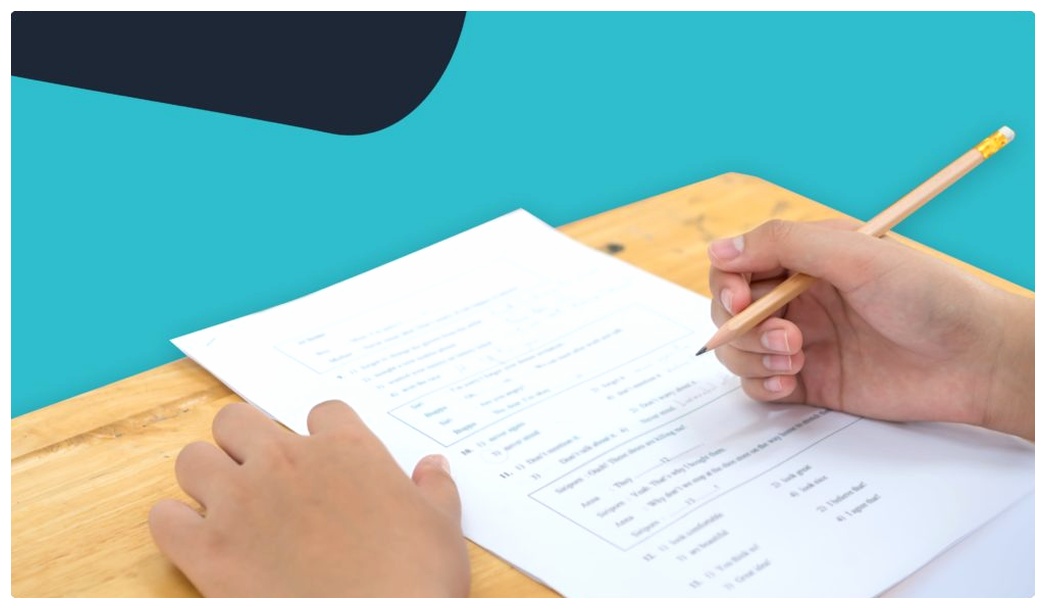
Put your knowledge of the zero conditional to the test by filling in the blanks in the sentences below. Once you’re done, you can verify your answers with the answer key provided at the end of the article. Happy learning!
Example Question – [My friend / to call] ___________________, I answer.
Example Answer – If my friend calls, I answer.
- [I / to be hungry] ___________________, I go out to eat.
- You can’t sleep [you / to drink a lot of caffeine] ___________________.
- [My mom / to get sick] ___________________, I make her soup.
- My friends and I go to the beach [we / to have a day off] ___________________.
- [The basketball team / to lose the game] ___________________, the fans are always upset.
- You can sit at our table [you / to be alone] ___________________.
- [The students / to not understand] ___________________, they ask the teacher for help.
- I cry [I / to see a sad movie] ___________________.
- [You / to miss the exam] ___________________, you fail the class.
- The customers are rude [they / to be put on hold] ___________________.
Final thoughts
Mastering the grammar of a foreign language may seem challenging, but it’s entirely achievable! Resources such as grammar guides, including this article, can simplify complex rules and enhance your comprehension. Nonetheless, the most effective way to truly grasp a nonnative language’s grammar is to collaborate with an expert language tutor.
Picture this: a personalized learning experience where an instructor guides you through the zero conditional. They can instantly address your questions, clarify confusing concepts, and correct your mistakes on the spot. Plus, as you practice speaking zero conditional sentences, they’ll help enhance your pronunciation and expand your vocabulary by suggesting alternative words and phrases. This dynamic approach ensures a deeper understanding and more effective learning!
At LingualNeeds, you can explore a wide selection of expert English tutors who specialize in creating personalized lessons tailored to your unique learning needs. With their dedicated support, you’ll be well-equipped to reach your language goals effectively.
Consider this impactful zero conditional statement: engaging in LingualNeeds’s personalized 1-on-1 online instruction can elevate your English skills significantly, allowing you to master numerous grammar concepts on your to-do list!
Answer Key
- If/when I am hungry, I go out to eat.
- You can’t sleep if/when you drink a lot of caffeine.
- If/when my mom gets sick, I make her soup.
- My friends and I go to the beach if/when we have a day off.
- If/when the basketball team loses the game, the fans are always upset.
- You can sit at our table if/when you are alone.
- If/when the students do not understand, they ask the teacher for help.
- I cry if/when I see a sad movie.
- If/when you miss the exam, you fail the class.
- The customers are rude when/if they are put on hold.
Frequently Asked Questions
What is the zero conditional in English?
The zero conditional expresses universal truths that apply in various contexts, using the structure ‘if clause’ + ‘main clause’.
How do you form a zero conditional sentence?
A zero conditional sentence is formed using the simple present tense in both the ‘if clause’ and the ‘main clause’, for example, ‘If you stand in the rain, you get wet’.
Can ‘if’ be replaced with ‘when’ in zero conditional sentences?
Yes, in zero conditional sentences, ‘if’ can often be substituted with ‘when’ without changing the meaning.
What is the importance of clarity in zero conditional sentences?
Clarity is key; it’s important to specify the subject in the first clause to avoid ambiguity in the sentence.
How can I practice zero conditional sentences?
You can practice zero conditional sentences through exercises, such as filling in the blanks in provided sentences and verifying your answers.