- How to Form the Past Tense of the English Verb “to be”
- Asking question with the verb “to be” in past
- Using the negative form of “to be” in past simple
- Exercise: identify the verb “to be” in past from this song
- Frequently Asked Questions
- What is the past simple tense of the verb ‘to be’?
- How do you form a question using the verb ‘to be’ in the past?
- What is the negative form of ‘to be’ in the past simple?
- Can you give an example of using ‘to be’ in both past and present tense?
- How can I improve my understanding of English grammar?

Learning English online can be challenging, especially when it comes to grammar. However, mastering the past simple tense is easier than you might think. For instance, phrases like “I was home” and “Where were you last night?” illustrate its straightforward usage.
To say these sentences, you need to use the simple past tense of the irregular verb “to be.”
- I was home.
- Where were you last night?
Are you curious about how to correctly use the past tense of “to be” in English? Read on to enhance your understanding, or explore online English grammar classes at LingualNeeds for more in-depth learning!
How to Form the Past Tense of the English Verb “to be”
The key distinction between past tense and present tense lies in the timing of the action being described—whether it happens now or has already occurred. For instance, consider the verb “to be”: here are examples showcasing its use in both the past and present tense.
| Verb “to be” in past simple | Verb “to be” in simple present |
| I was a huge fan. | I am a huge fan. |
| You were going to college. | You are going to college. |
| We were happier last year. | We are happier this year. |
| They were at home. | They are at home. |
Now, to understand how to formulate the verb “to be”in past simple yourself, look at the table below:
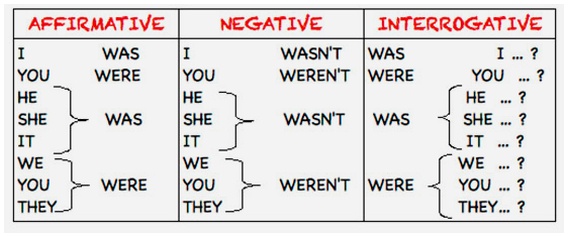
The rules are as follows:
I, he, she, it – was
You, we, they – were
For first person singular and third person singular, use the word was. In all other cases, use were.
For example:
- She was a student.
- They were doctors.
Asking question with the verb “to be” in past
In order to ask a question, was/were needs to be at the beginning of the sentence:
- Was she a student?
- Were they doctors?
Using the negative form of “to be” in past simple
In negative sentences, add the adverb not and put it before the word was/were.
Keep in mind that contractions are often used in negative sentences, such as “wasn’t” for “was not” and “weren’t” for “were not.” This makes your writing more conversational and fluid!
- He wasn’t at the cinema with us.
- We weren’t at home on Sunday.
- I wasn’t hungry.
Exercise: identify the verb “to be” in past from this song
I encourage you to check out this video featuring American pop sensation Beyoncé. As you watch, pay special attention to the moments where you hear the words “was” and “were.”
Also, think about what the words mean.
Check it out:

“I Was Here”
I wanna leave my footprints on the sands of time
Know there was something that, meant something that I left behind
When I leave this world, I’ll leave no regrets
Leave something to remember, so they won’t forget
I was here
I lived, I loved
I was here
I did, I’ve done everything that I wanted
And it was more than I thought it would be
I will leave my mark so everyone will know
I was here
I want to say I lived each day, until I died
And know that I meant something in, somebody’s life
The hearts I have touched, will be the proof that I leave
That I made a difference, and this world will see
I was here
I lived, I loved
I was here
I did, I’ve done everything that I wanted
And it was more than I thought it would be
I will leave my mark so everyone will know
I was here
I lived, I loved
I was here
I did, I’ve done everything that I wanted
And it was more than I thought it would be
I will leave my mark so everyone will know
I was here
I just want them to know
That I gave my all, did my best
Brought someone some happiness
Left this world a little better just because
I was here
I was here
I lived, I loved
I was here
I did, I’ve done everything that I wanted
And it was more than I thought it would be
I wanna leave my mark so everyone will know
I was here
I lived (I lived), I loved
I was here
I did (I did), I’ve done
I was here
I lived (I lived), I loved (I loved)
I was here (oh)
I did, I’ve done
I was here
Well, we have gotten to know the verb to be in past simple tense.
Enjoy learning English!
Good luck!
Frequently Asked Questions
What is the past simple tense of the verb ‘to be’?
The past simple tense of ‘to be’ is ‘was’ for I, he, she, it and ‘were’ for you, we, they.
How do you form a question using the verb ‘to be’ in the past?
To form a question, place ‘was’ or ‘were’ at the beginning of the sentence, such as ‘Was she a student?’ or ‘Were they doctors?’.
What is the negative form of ‘to be’ in the past simple?
In negative sentences, add ‘not’ before ‘was’ or ‘were’, using contractions like ‘wasn’t’ for ‘was not’ and ‘weren’t’ for ‘were not’.
Can you give an example of using ‘to be’ in both past and present tense?
Sure! For past tense: ‘I was a huge fan.’ For present tense: ‘I am a huge fan.’
How can I improve my understanding of English grammar?
You can explore online English grammar classes at LingualNeeds for more in-depth learning.