
- Ser vs. estar: what’s the difference?
- Ser
- Estar
- Use ser to introduce yourself with confidence in Spanish
- Decoding ser: Variations in conjugation
- Ser conjugation
- Singular
- Plural
- Soy: First-person singular
- Eres: Second-person singular
- Es: Third-person singular
- Somos: First-person plural
- Sois: Second-person plural
- Son: Third-person plural
- Ser: Uses and examples
- Description
- Occupation
- Characteristic
- Time
- Origin
- Relation
- Decoding estar: Variations in conjugation
- Estar conjugation
- Singular
- Plural
- Estoy: First-person singular
- Estás: Second-person singular
- Está: Third-person singular
- Estamos: First-person plural
- Estáis: Second-person plural
- Están: Third-person plural
- Understanding estar: Uses and examples
- Position
- Location
- Action
- Condition
- Emotion
- Learning ser andestar: Key points to remember
- Frequently Asked Questions
- What is the main difference between ‘ser’ and ‘estar’ in Spanish?
- How can I remember when to use ‘ser’?
- What acronym can I use to remember the uses of ‘estar’?
- How do I introduce myself using ‘ser’ in Spanish?
- Why is it important to distinguish between ‘ser’ and ‘estar’?
Mastering the verb “to be” in Spanish, represented by “ser” and “estar,” can be a challenge for online learners. Many struggle to grasp when and how to use each verb correctly. In this guide, we’ll clarify the distinctions between “ser” and “estar,” providing you with practical tips for their usage in various contexts. Read on to enhance your understanding, or explore online Spanish classes at LingualNeeds for further learning opportunities!
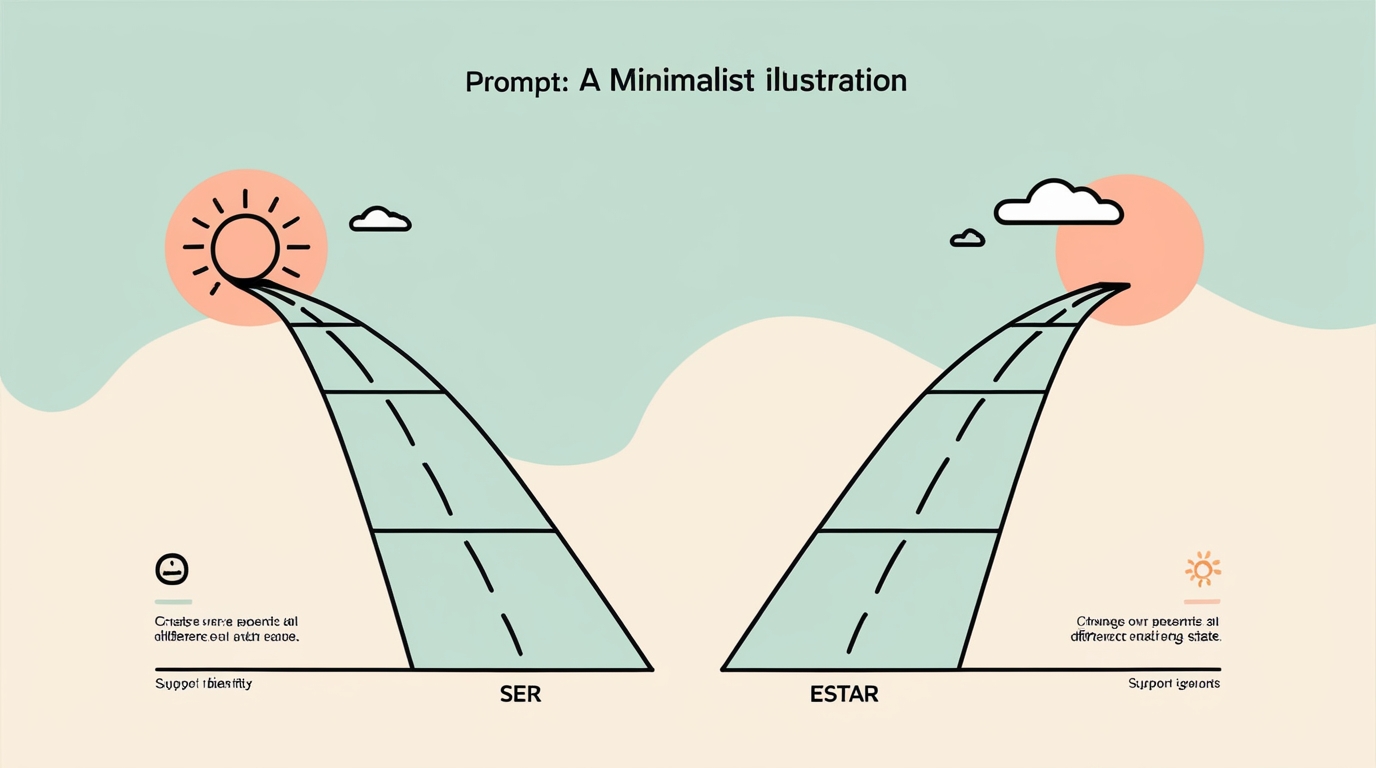
Ser vs. estar: what’s the difference?
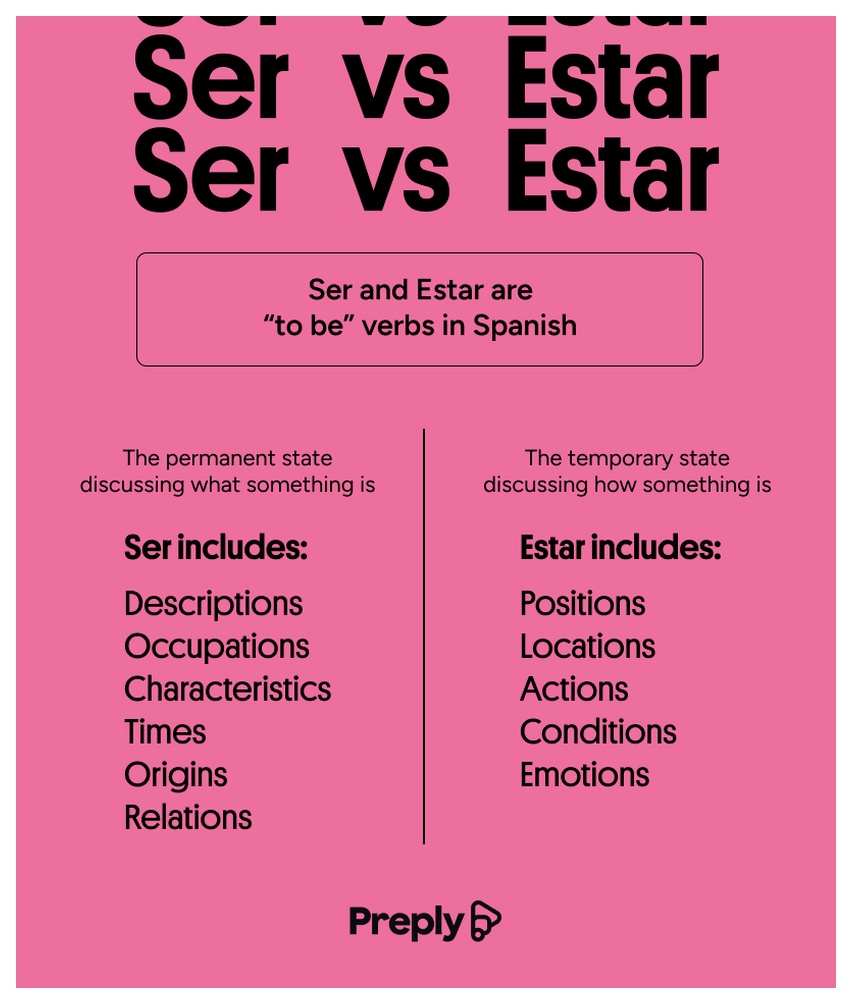
In essence, “ser” and “estar” serve distinct purposes in Spanish. “Ser” is used to describe permanent states or inherent qualities, whereas “estar” refers to temporary conditions or situations. While English uses the verb “to be” for both, Spanish differentiates between these two concepts, giving each verb its own unique significance.
Another way to explain their difference is that ser talks about what something is and estar talks about how something is.
The verbs “ser” and “estar” play a vital role in basic Spanish phrases and sentences. To clarify their usage, let’s explore some examples together.
Ser
As previously noted, the verb “ser” is essential in Spanish for conveying permanent states and defining the nature of things. Here are some of its most common applications:
- To identify something or someone
- To describe fundamental qualities and characteristics
- To talk about nationality or place of origin
- To speak about professions or occupations
- To share a religious or political affiliation
- To tell the hour, day, or date
- To address possession
- To describe the material something is made of
- To know the relationship between one person and another
Estar
When should you use the verb “estar” in Spanish? This versatile verb describes the state or condition of a person, concept, or object in relation to a place, time, or situation. It can convey moods, health status, ongoing actions, opinions, and feelings—focusing more on the “how” than the “what.” While it may seem challenging at first, you can make learning easier by familiarizing yourself with these common uses of “estar”:
- To indicate location and time
- To express conditions and states
- To use progressive tenses (-ing)
- To use various idiomatic expressions
Use ser to introduce yourself with confidence in Spanish
In Spanish, the verb “ser” is your key tool for sharing essential information during introductions, such as your name, profession, and origin. A helpful tip to remember is that you don’t always need to include “Yo” (I) before “soy” (am). The conjugation of “soy” already indicates the subject, so Spanish speakers often omit “Yo” for a more fluid conversation.
Are you meeting someone new? Kick things off by saying “Soy [insert name]” (I’m…) to establish a friendly, first-name connection. You can then add a personal touch by sharing your profession with “Soy [insert profession]” or your hometown with “Soy de [insert country or city]” (I’m from…). This not only introduces you but also gives insight into your background!
Don’t forget that you can emphasize your statement with “Yo” to convey confidence and assert your identity proudly. It’s similar to saying “I am American” instead of the more casual “I’m American” in English.
Now you know how to introduce yourself, let’s explore the conjugations of ser and estar.
Decoding ser: Variations in conjugation
Are you excited to dive into the vibrant world of Spanish verbs? For non-native speakers, particularly those whose first language is English, mastering Spanish conjugations can be quite a challenge. We’ll kick things off by exploring the conjugation of the verb **ser**, and then we’ll delve into the nuances of the verb **estar**. Get ready for an engaging journey into Spanish grammar!
“Asser is an irregular verb, meaning it doesn’t adhere to a standard pattern for forming its tenses. This is evident when you examine its present tense indicative form:”
Ser conjugation
Singular
- Yo soy (I am).
- Tú eres (You are).
- Él es (He is).
- Ella es (She is).
- Usted es (You are) – formal.
Plural
- Nosotros somos (We are) – masculine or mixed gender.
- Nosotras somos (We are) – feminine.
- Vosotros sois (You all are) – masculine or mixed gender, informal, used mainly in Spain.
- Vosotras sois (You all are) – feminine, informal, used mainly in Spain.
- Ellos son (They are) – masculine or mixed gender.
- Ellas son (They are) – feminine.
- Ustedes son (You all are) – formal, or informal in Latin America.
One key distinction between Spanish and English lies in the use of the word “you.” In Spanish, “you” can be expressed as “tú” for the second-person singular and “vosotros” for the second-person plural. This difference also applies to the verb “estar,” showcasing the variations in addressing individuals or groups in the two languages.
Let’s look at some examples of each conjugation in the present tense for a better understanding of the verb ser.
Soy: First-person singular
Yo soy un amigo honesto (I am an honest friend).
This passage explores a key aspect of one’s identity from a first-person perspective. It articulates a person’s enduring state, acknowledging the complexity of permanence without delving too deeply into philosophical musings.
Note: As mentioned earlier, Spanish grammar allows for the omission of the subject, which is a key difference from English. For instance, the sentence can simply be expressed as “Soy un amigo honesto.” This flexibility also applies to various examples and tenses where gender may be ambiguous. In these cases, the context helps the reader or listener grasp the meaning without needing a specified subject.
Eres: Second-person singular
Tú eres de Barcelona (You are from Barcelona).
This sentence highlights a person’s origin, a fixed aspect of their identity since one’s birthplace remains constant over time. In English, we can use “you” to address multiple people at once (second-person plural). However, in Spanish, the term is specifically used to refer to an individual.
Es: Third-person singular
Ella es doctora (She is a doctor).
She pursued her studies to become a doctor and might currently be practicing in that field. This highlights a lasting aspect of her identity, regardless of any career changes she might make. In Spanish, gender is explicitly indicated in such cases. Even if the subject is omitted, her title makes it clear: “Es doctora.”
Somos: First-person plural
Nosotros somos sus padres (We are their parents).
This sentence highlights the connections among family members, emphasizing their lasting relationships. In Spanish, there’s a traditional preference for the masculine form when referring to mixed-gender groups or when gender is unspecified, as seen with the term “padres.” To promote inclusivity, many people are now adopting a gender-neutral approach by replacing masculine and feminine nouns ending in “o” and “a” with the ending “e.”
Please note that we sometimes use “estar” to express family relationships, including marriage, separation, or divorce. You’ll find an example of this usage later in the article.
Sois: Second-person plural
¡Vosotros sois los mejores! (You are the best!)
The term “vosotros” refers to a group of people, highlighting their qualities or characteristics. It signifies a lasting trait that ideally remains constant. Traditionally, the masculine form is used when the group is mixed or unspecified. However, if the group consists entirely of females, “vosotros” changes to “vosotras.”
It’s important to note that the use of “vosotros” or “vosotras” is quite rare in Latin America. Instead, Spanish speakers in this region prefer the third-person plural form “ustedes,” accompanied by the corresponding verb conjugation (for example, “ustedes son los mejores”). As a result, this particular verb tense is almost exclusively found in Spain.
Son: Third-person plural
Son las tres de la tarde (It’s 3 PM)
In this example, the verb “ser” is useful for telling time. When you say, “It’s 1 PM” or “It’s 1 AM,” the plural form changes to singular since you’re referring to just one hour. So, you would say, “Es la una de la tarde” for 1 PM or “Es la una de la madrugada” for 1 AM.

Ser: Uses and examples
Understanding the distinction between permanent and temporary conditions is crucial for mastering the Spanish “to be” verbs. An effective strategy to remember when to use each verb involves two simple acronyms that many beginners learn early on: DOCTOR and PLACE. DOCTOR is associated with the verb **ser**, which describes permanent attributes, while PLACE corresponds to **estar**, used for temporary states. Keep these acronyms in mind to enhance your grasp of these essential verbs!
Let’s look at DOCTOR and ser first.
In summary, the verb “ser” is essential for describing permanent states—essentially, what something is. To help remember its key uses, you can rely on the acronym DOCTOR, which stands for Description, Occupation, Characteristic, Time, Origin, and Relation. This mnemonic is a popular and effective tool for mastering the applications of “ser.”
In the following examples, you’ll also see several new conjugations to familiarize yourself with different verb forms.
Description
Used when describing people, animals, and objects.
- For example: Este puente fue el más grande de Europa (This bridge was the largest in Europe).
Occupation
To talk about a person’s profession. Remember that you don’t use un/una to talk about occupations in Spanish.
- For example: Mi hijo será bombero (My son will be a firefighter).
Characteristic
Descriptions also include characteristics of someone’s personality and attributes.
- For example: Mis compañeros de piso son extrovertidos (My roommates are extroverts).
Time
When discussing the time, we use “user.Seris” because it focuses on the nature of the subject rather than the manner in which it is presented.
- For example: Son las tres (It’s three o’clock).
Origin
We also use ser to talk about the origin or source of something or someone, including what something is made of.
- For example: Sois de Argentina, ¿verdad? (You are from Argentina, right?)
Relation
Ser is used when you want to describe how people are related to each other.
- For example: Andrea es la tía de Miguel (Andrea is Miguel’s aunt).
Decoding estar: Variations in conjugation
The verb “estar” in Spanish translates to “to be” in English, but it’s crucial to distinguish it from “ser.” While “estar” focuses on the state or condition of an object and its relation to a specific place, this state is often temporary. Now, let’s explore the present tense forms of “estar” to better understand its usage.
Estar conjugation
Singular
- Yo estoy (I am).
- Tú estás (You are).
- Él está (He is).
- Ella está (She is)
- Usted está (You are) – formal.
Plural
- Nosotros estamos (We are) – masculine or mixed gender.
- Nosotras estamos (We are) – feminine.
- Vosotros estáis (You all are) – masculine or mixed gender, informal, used mainly in Spain.
- Vosotras estáis (You all are) – feminine, informal, used mainly in Spain.
- Ellos están (They are) – masculine or mixed gender.
- Ellas están (They are) – feminine.
- Ustedes están (You all are) – formal, or informal in Latin America.
To deepen our understanding of this verb, let’s explore examples of its present tense conjugations.
Estoy: First-person singular
Estoy disponible esta tarde (I’m available this afternoon).
As you’re currently in a temporary situation, it’s important to utilize your time wisely. This afternoon, you’ll have the freedom to work, travel, or relax with friends. However, your availability may change later in the evening or tomorrow morning, and this is not a lasting circumstance.
Estás: Second-person singular
¿Estás feliz o triste? (Are you happy or sad?)
Emotions like happiness and sadness are fleeting experiences. It’s normal not to feel happy all the time—maintaining constant happiness would be quite a challenge! Unlike fixed traits such as nationality, origin, or profession, our moods are temporary and can change from moment to moment.
Está: Third-person singular
Ella está comiendo pizza (She is eating pizza).
To express an action occurring right now in Spanish, you combine the verb “estar” with the gerund form of the main verb. For instance, “Ella está comiendo pizza” translates to “She is eating pizza,” vividly illustrating the action in real time.
It’s important to note the difference between English and Spanish when discussing future plans. In English, we commonly use the continuous form, asking, “What are you doing this weekend?” However, in Spanish, this is expressed differently. Instead of using the continuous form with “estar,” you simply use the present simple. So, you would ask, “¿Qué haces este fin de semana?” which also means, “What are you doing this weekend?”
Estamos: First-person plural
Nosotros estamos lejos de mi casa (We are far from my house).
We’re talking about our present physical location. While it may seem stable in some contexts, our location can change at any time. That’s why we need to utilize eStar.
Estáis: Second-person plural
Estáis casados (You are married).
One of the most frequent mistakes beginners encounter is understanding how to express family relationships in Spanish. It can be a bit confusing initially, but it’s important to remember that while “suertero” (single) is typically used for most family connections, the states of being married, separated, or divorced are considered temporary conditions in Spanish grammar.
Están: Third-person plural
Ellos están muy elegantes hoy (They are very elegant today).
While they may strive for elegance each day, this statement suggests that today’s elegance is a special, fleeting moment. To express that their elegance is a constant trait, you could use the phrase “Ellos son muy elegantes,” which indicates they are always stylish.
Understanding estar: Uses and examples
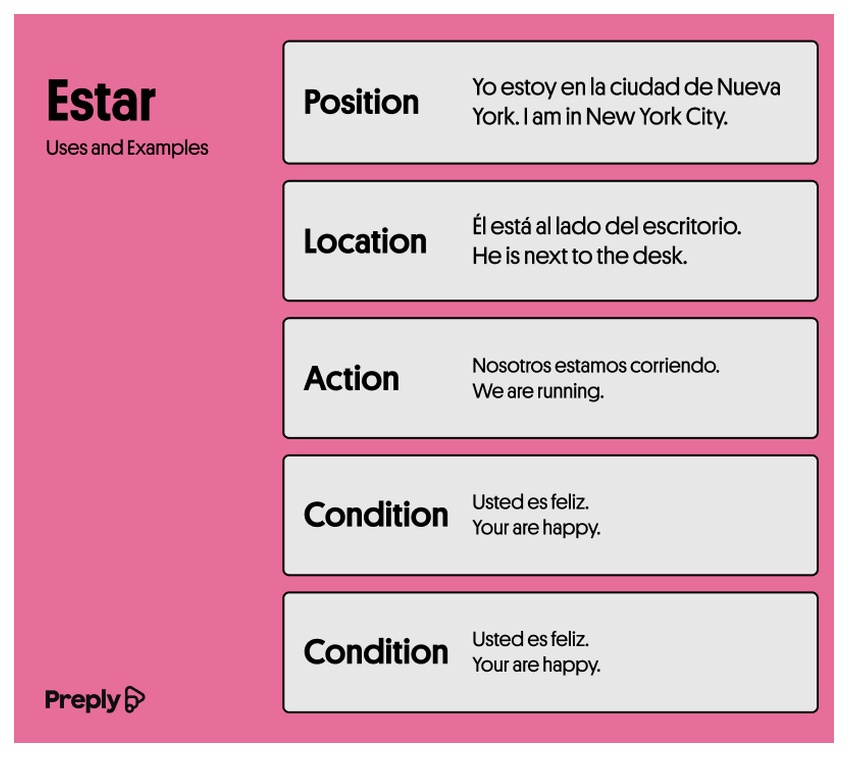
Estar is used when you talk about temporary states – about how something is.
You can remember what those temporary states are with the acronym PLACE, which stands for Position, Location, Action, Condition, and Emotion.
Position
In Spanish, estar is used to express where something is or its position.
- For example: Él está cerca de la fiesta de cumpleaños (He is near the birthday party).
Location
We use estar to talk about the place something or someone is in, even if it’s permanent.
- For example: Ahora mismo, está en el parque (Right now, she is in the park).
Action
In Spanish, to express actions happening in the present, past, or future using the gerund, you’ll need to pair it with the verb “estar.” This combination allows you to convey ongoing activities effectively.
- For example: Mi gato está caminando por el cuarto (My cat is walking around the room).
Condition
Unlike fixed personality traits and permanent characteristics, “estaris” refers to a condition—whether physical or emotional—that can change over time.
- For example: Tus padres estaban hambrientos ese día (Your parents were hungry that day).
Emotion
Estar is used to express emotional states.
- For example: Tu profesora estuvo preocupada por ti (Your teacher was worried about you).
Learning ser and estar: Key points to remember
Understanding when to use the Spanish verbs “ser” and “estar” can be tricky for beginners. You might find yourself questioning which verb to choose in different contexts as you embark on your language-learning adventure.
In this article, we’ve discovered that “ser” is used to describe permanent traits and to define what something is, whereas “estar” refers to temporary states and conveys how something is at a given moment.
Additionally, remember the helpful acronyms: DOCTOR, which stands for Description, Occupation, Characteristic, Time, Origin, and Relation, for the verb “ser,” and PLACE, representing Position, Location, Action, Condition, and Emotion, for the verb “estar.” These tools can enhance your understanding of how to use these verbs effectively in different contexts.
If you’re looking to apply these verbs in real-life situations, consider exploring online Spanish courses and tutors. To enhance your spoken Spanish, LingualNeeds offers personalized 1-on-1 sessions with experienced tutors who can help you master the nuances of “ser” and “estar,” along with other key aspects of the language. Enjoy flexible, affordable, and convenient lessons tailored to your learning needs!
¡Hasta la próxima!
Frequently Asked Questions
What is the main difference between ‘ser’ and ‘estar’ in Spanish?
‘Ser’ describes permanent states or inherent qualities, while ‘estar’ refers to temporary conditions or situations.
How can I remember when to use ‘ser’?
You can use the acronym DOCTOR, which stands for Description, Occupation, Characteristic, Time, Origin, and Relation.
What acronym can I use to remember the uses of ‘estar’?
The acronym PLACE can help you remember: Position, Location, Action, Condition, and Emotion.
How do I introduce myself using ‘ser’ in Spanish?
You can start by saying ‘Soy [insert name]’ to introduce yourself, and then add your profession or origin.
Why is it important to distinguish between ‘ser’ and ‘estar’?
Understanding the difference is crucial for accurately expressing permanent versus temporary states in Spanish.


