- What to do on your first day of tutoring online
- Before the class
- Lesson planning
- Learn the tools and platform
- Uncovering learning goals with a needs analysis
- Inform your students
- During the class
- Greeting your students
- Beginning the class
- Setting rules
- Dealing with technology
- Setting homework
- End on a positive note
- After the class
- Reflect on your first day
- Ask for feedback
- Conclusions
- Frequently Asked Questions
- What should I do to prepare for my first online tutoring session?
- How can I make my first class engaging for students?
- What are some important classroom rules to establish with students?
- How can I effectively use technology during my online tutoring sessions?
- What should I do after my first online tutoring class?
Tutors often experience two significant first days: the initial moment they step into a classroom filled with students and their debut in the online teaching world. Each of these milestones is unforgettable and presents its own unique set of challenges to navigate.
If you’re aspiring to be an online tutor and are feeling a bit anxious about your first session, that’s perfectly normal! To ease your nerves, we’ve created a helpful guide tailored for you, no matter what subject you plan to teach.
We’ll show you what to do before, during and after class, as well as offer some classroom management tips.
What to do on your first day of tutoring online
Before the class
-
Lesson planning
To kick off your teaching journey, it’s essential to prepare your material. Whether you’re using a textbook, adhering to a syllabus, or crafting your own lessons from the ground up, this step is your starting point.
Begin by identifying your students’ learning objectives before selecting activities. Ensure these activities flow logically, leading up to a final task that provides students with the opportunity to demonstrate their understanding and mastery of the material.
In online classes, it’s beneficial to complete practice activities beforehand and engage in productive tasks during the session. This approach helps reinforce your understanding and maximizes your learning experience.
This method is called the flipped learning approach. To discover more about how it transforms traditional face-to-face classes into effective online ESL teaching, check out our article, “Adapting from Face-to-Face Classes to Teach ESL Online.”
The OurLingualNeeds Learning Plan feature empowers you to organize your lessons in advance, making classroom preparation a breeze. You can break down your plan into clear, manageable steps, ensuring that both you and your students can navigate the learning process with ease.
First tutoring session ideas and tips:
- Every plan must include a clear learning objective to inform learners about the class’s purpose from the outset.
- Provide necessary resources and knowledge to students before each activity to ensure effective learning.
- Provide clear examples whenever introducing a new task. This is crucial in online settings, where communication can be challenging.
- Incorporate interactive resources like games, videos, and online quizzes into your lessons. Utilize small realia that can be showcased on camera to enhance engagement. Focus on creating an engaging experience for your students.
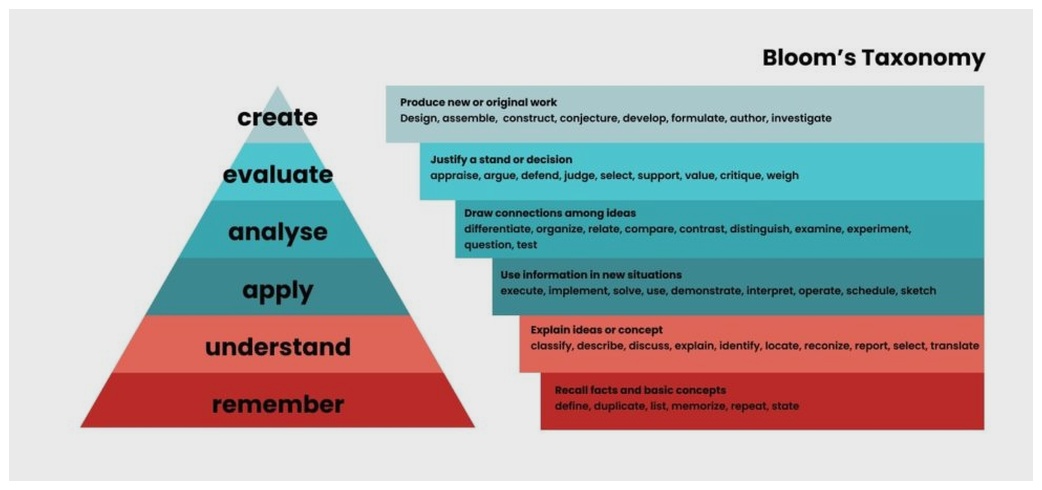
- For guidance on ordering activities, refer to Bloom’s Revised Taxonomy, which illustrates task complexity in a pyramid format (see the diagram from Vanderbilt University Center for Teaching below). The base represents the simplest cognitive skills, while the apex signifies the most advanced levels of learning.
-
Learn the tools and platform
With your online tutoring session set to go, it’s essential to get comfortable with the teaching platform you’ll be using. Take some time to explore its features, ensuring you know how to adjust your microphone and video settings, as well as access the chat functions. Consider whether you’ll need to send messages or share files with your students, and familiarize yourself with muting them during video playback. Being prepared will make your session smoother and more effective!
To enhance interactivity in your class, consider sharing your screen or utilizing a whiteboard, allowing students to actively contribute their ideas. Alternatively, you can foster collaboration through smaller group activities by using the breakout room feature.
Consider exploring the various features of your selected platform with others. This hands-on approach allows you to experience it from a student’s perspective, helping you identify potential questions or concerns they might have.
Take detailed notes on the locations and functionalities of various features. This will enable you to effectively explain them to your learners in the future.
-
Uncovering learning goals with a needs analysis
To ensure effective tutoring, create a needs analysis by developing a set of straightforward questions for each student to answer. Ideally, this should be completed before the initial session, but it can also be conducted afterward if needed. This approach will help you tailor your tutoring to meet each student’s specific needs.
This approach will enable you to grasp their learning objectives and create course content that aligns with their interests, ensuring a more engaging educational experience.
- Why are you studying this subject/language?
- For university
- For a school exam
- For my own interest
- What do you find most challenging about this subject?
- Which is your strongest skill?
- Which activities do you like to do in class?
Important: Tailor these questions to match the age and proficiency of your students. To better understand their skill level, consider administering the LingualNeeds Placement Test if you’re teaching English. This will help you provide the most effective support.
-
Inform your students
Reach out to your students to ensure they’re prepared for class. Do you have a warm-up activity they should complete? Perhaps a needs analysis to guide their learning? Whatever the requirement, now is the perfect moment to inform them and set the stage for a productive session.
As you prepare for your first day, don’t forget to gather your essential tools: headphones, a microphone, and something to take notes with. It’s also important to enter the class with your camera on and to be in a distraction-free environment. Being well-prepared will set you up for success!

During the class
You’re on the exciting path to becoming an online tutor! To kickstart your journey, here are our top recommendations:
-
Greeting your students
Before diving into the lesson, take a moment to warmly greet and welcome your students to the virtual classroom. This simple gesture fosters a comfortable atmosphere and sets a positive tone for the entire session.
-
Beginning the class
Building a connection with your learners is essential, and they’ll be eager to learn about you as well. To foster this relationship, incorporate interactive activities that reveal their interests. One fun option is to play “Two Truths and a Lie.” In this game, students share two true statements about themselves and one falsehood, encouraging engagement and sparking conversations.
This approach is effective in both one-on-one settings and group classes. As students attempt to identify the false statement, they’ll not only engage with the material but also get to know each other better.
If you want to dive deeper and ask more targeted questions, create a list on the digital board. Focus these inquiries on uncovering interesting details about them, such as:
- Where are you from?
- Do you have any hobbies or interests?
- What are your favorite school subjects?
- Where’s your favorite place to visit with your family or friends?
Note: These questions should be adapted to suit the age and level of your students.
-
Setting rules
After you’ve built rapport with your students, it’s essential to establish classroom rules. Engaging them in this process not only fosters their involvement but also gives them a sense of ownership over their behavior.
Begin by inviting everyone to brainstorm essential rules for an effective online classroom. Kick off the discussion with examples like “keep your cameras on,” “mute your microphone when not speaking,” and “avoid eating during lessons.” This collaborative approach encourages participation and helps establish a respectful learning atmosphere.
Present these guidelines in a positive light to avoid sounding overly strict, which could lead to student disengagement. By collaborating with students to create these rules, you not only foster a sense of responsibility but also increase the likelihood that they will adhere to them.
-
Dealing with technology
In a traditional classroom, teachers often guide students on a tour, highlighting where to find books, supplies, and facilities. However, in an online learning environment, the challenge shifts to navigating technology. Here, it’s essential to walk learners through the key features of the platform, ensuring they know how to access important tools and resources for a successful learning experience.
Transforming this activity into a scavenger hunt adds an element of excitement! Whether you’re working with a group or a single learner, create an engaging list of features for them to discover on your interactive whiteboard. Along with the list, provide clear instructions to guide their exploration. You might include items such as:
- Chat box: write your name
- Microphone: turn it on and off
- Video: turn it on and off
Allow participants two minutes to finish the hunt and provide constructive feedback. Once everyone feels confident with the technology, you’ll be ready to kick off the class.
-
Setting homework
Clearly and simply explain the instructions to ensure understanding. Since you’re operating in a digital setting, it’s also essential to specify how you want learners to submit their work.
For example, if students need to submit a written assignment, they can easily send a file through the chat box. If you prefer to receive submissions via email, be sure to provide them with your email address. Regardless of the method, it’s essential to communicate clearly about the assignment’s requirements, deadlines, and submission process.
-
End on a positive note
Finally, wrap up on a high note! Review the key topics discussed during class and take a moment to celebrate their achievement of completing their first day.
Infusing positivity into the learning experience inspires students and brings them one step closer to achieving their goals. This uplifting atmosphere not only motivates them but also creates anticipation for their next class.

After the class
After finishing your first day, take these next steps to help you develop for your next class.
-
Reflect on your first day
Congratulations on completing your first day of online teaching! You can finally relax—you did it! It often turns out to be less daunting than you imagined. Before diving into the planning for your second lesson, take a moment to reflect on your experiences from day one.
Ask yourself:
- What went well?
- What needs improvement?
- What new activities can I bring into the classroom?
- Do I need to go over the digital features again?
Jot down notes beside each question to serve as the foundation for your upcoming lesson plan. This approach not only supports your students in achieving their learning goals but also enhances your growth as an exceptional teacher over time.
-
Ask for feedback
Connecting with fellow online tutors can be incredibly beneficial for your growth as an educator. Share your lesson plans and reflections from your first day with them, and seek their advice on what they might approach differently. This exchange can provide valuable insights into diverse teaching methods and help you discover new strategies to enhance your online tutoring experience.
Conclusions
Starting a new job can be challenging, but by following these straightforward tips, you can excel in your online teaching role. Not only will this enhance your own performance, but it will also enrich your students’ learning experience, making them eager for future classes with you.
Learn more about how you can get online tutoring jobs at LingualNeeds.
Frequently Asked Questions
What should I do to prepare for my first online tutoring session?
It’s essential to prepare your material by identifying students’ learning objectives and selecting activities that lead up to a final task for them to demonstrate their understanding.
How can I make my first class engaging for students?
Incorporate interactive resources like games, videos, and online quizzes, and consider using activities that reveal students’ interests, such as ‘Two Truths and a Lie’.
What are some important classroom rules to establish with students?
Engage students in brainstorming essential rules like keeping cameras on, muting microphones when not speaking, and avoiding eating during lessons.
How can I effectively use technology during my online tutoring sessions?
Walk students through key features of the platform, turning it into a scavenger hunt to help them discover important tools and resources.
What should I do after my first online tutoring class?
Reflect on your experiences by asking what went well, what needs improvement, and seek feedback from fellow tutors to enhance your teaching methods.