
- What are cognates in Spanish?
- List of perfect Spanish cognates
- Words that end in -al
- Words that end in –ar
- Words that end in –ble
- Words that end in –sion
- List of near-perfect Spanish cognates
- Words that end in –ct that change to -cto
- Words that end in –ic that change to-ico
- Words that end in –id that change to -ido
- Words that end in –y that change to -ia
- Words that end in -ant that change to -ante
- Words that end in –ary that change to -ario
- Words that end in -ate that change to –ar
- Words that end in -ous that change to –oso
- Words that end in -ence that change to –encia
- Words that end in -ment that change to –mento
- Words that end in –tionthat change to –ción
- False cognates
- How to use Spanish-English cognates to improve your vocabulary
- A LingualNeeds tutor can help maximize your Spanish learning
- Frequently Asked Questions
- What are cognates in Spanish?
- How can cognates help in learning Spanish?
- What are false cognates?
- What are some tips for using cognates to improve vocabulary?
- How can a tutor help with learning cognates?
English and Spanish share a wealth of words that are either identical or quite similar due to their common Latin roots. These words are called cognates. As a native English speaker, you already have a head start in Spanish with thousands of familiar terms at your disposal!
Cognates are a fantastic way to effortlessly boost your Spanish vocabulary. They help you grasp everyday phrases, such as “No problema!” (no problem), and also more complex terms like “cuestionable” (questionable). By recognizing these familiar words, you can enhance your understanding of the language with ease.
This article highlights popular cognates in Spanish, complete with downloadable PDFs, and offers tips on how to effectively utilize them for enhanced language learning.
What are cognates in Spanish?
Cognates are words that resemble each other in spelling, pronunciation, and meaning across different languages. For English speakers diving into Spanish, the good news is that there are thousands of cognates to help ease the learning process!
Recognizing words with similar spelling and meaning can greatly enhance your ability to decode Spanish words and phrases, ultimately boosting your comprehension of the language.
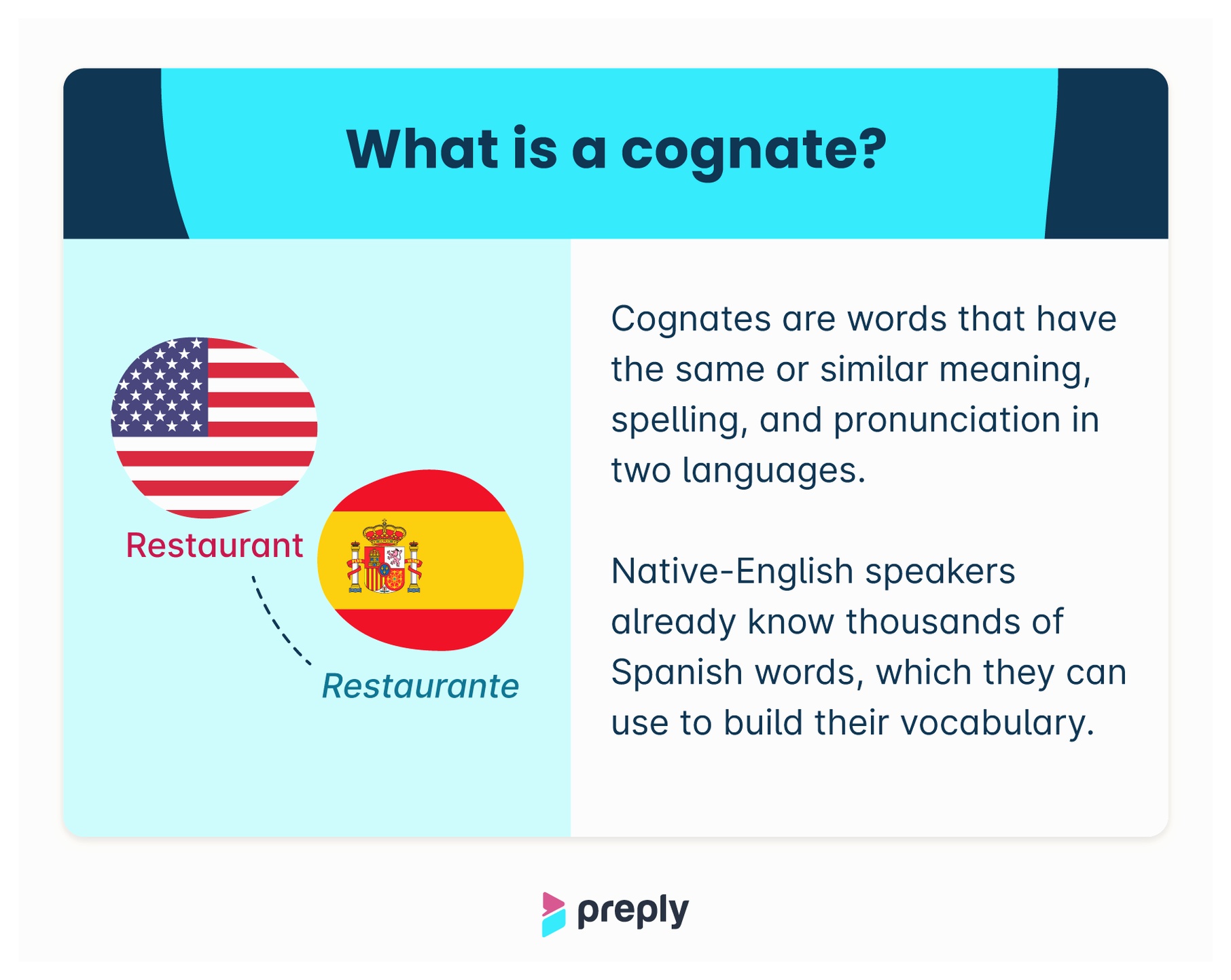
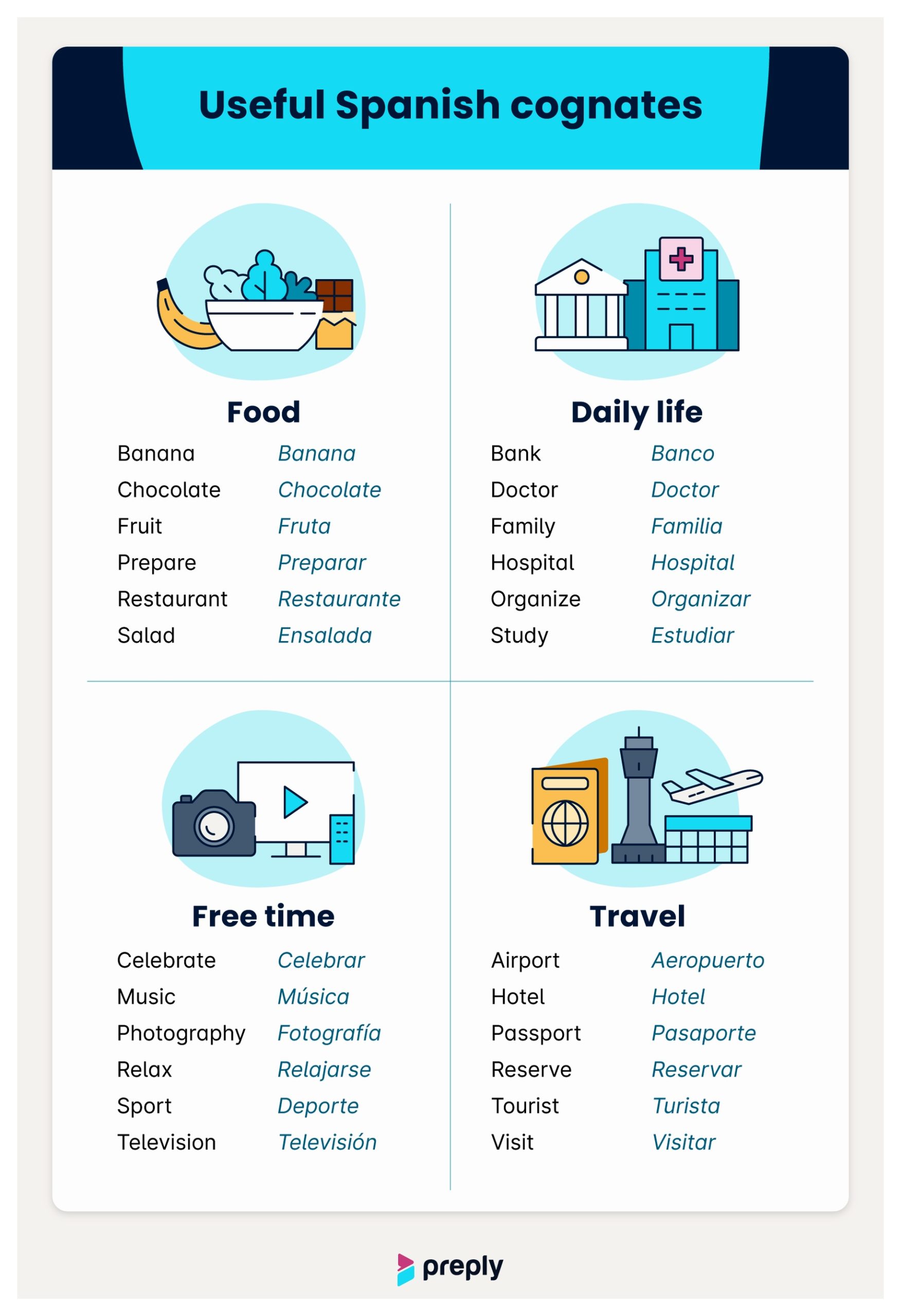
Cognates between Spanish and English fall into the following categories:
- **Perfect:** Words that are spelled and pronounced similarly in Spanish and English, often featuring diacritical marks (accents) in Spanish.
- Near-perfect: Words that are similar but might not be identical in spelling or pronunciation.
- False: Words that look the same but have different meanings.
List of perfect Spanish cognates
Download this handy list of perfect cognates between English and Spanish! Since you’re likely familiar with many of these words, they can significantly ease your journey to fluent Spanish speaking with minimal effort.
Words with the following endings in English are usually the same in Spanish, but there are some exceptions.
Words that end in -al
| English | Spanish |
|
actual animal accidental digital hospital ideal plural special tropical vital |
actual animal accidental digital hospital ideal plural special tropical vital |
Words that end in –ar
| English | Spanish |
|
circular familiar muscular particular popular regular similar vulgar |
circular familiar muscular particular popular regular similar vulgar |
Words that end in –ble
| English | Spanish |
|
admirable cable double flexible horrible impossible memorable sensible terrible visible |
admirable cable double flexible horrible impossible memorable sensible terrible visible |
Words that end in –sion
Words ending in -sion in Spanish are often the same in English but with a diacritical mark.
| English | Spanish |
|
compassion comprehension decision expansion explosion expression illusion mansion mission passion pension percussion possession television tension |
compasión comprensión decisión expansión explosión expresión ilusión mansión misión pasión pensión percusión posesión televisión tensión |
List of near-perfect Spanish cognates
This list covers Spanish and English words that are very similar but not perfect cognates.
You can download this list of near-perfect cognates for reference.
Words that end in –ct that change to -cto
| English | Spanish |
|
act insect contact correct effect perfect conflict perfect product |
acto insecto contacto correcto efecto perfecto conflicto perfecto producto |
Words that end in –ic that change to -ico
| English | Spanish |
|
alcoholic allergic athletic authentic automatic basic electric exotic fantastic scientific toxic traffic |
alcohólico alérgico atlético auténtico automático básico eléctrico exótico fantástico científico tóxico tráfico |
Words that end in –id that change to -ido
| English | Spanish |
|
fluid rapid solid valid stupid liquid vivid |
fluido rápido sólido válido estúpido líquido vívido |
Words that end in –y that change to -ia
| English | Spanish |
| academy
agency agencia copy energy energía history memoria photography technology |
academia agencia compañía copia energía familia historia memoria fotografía tecnología |
Words that end in -ant that change to -ante
| English | Spanish |
|
abundant distant elegant Important instant vacant tolerant |
abundante distante elegante importante instante vacante tolerante |
Words that end in –ary that change to -ario
| English | Spanish |
|
canary diary extraordinary glossary imaginary necessary primary salary vocabulary |
canario diario extraordinario glosario imaginario necesario ordinario primario salario vocabulario |
Words that end in -ate that change to –ar
| English | Spanish |
|
accelerate calculate celebrate communicate coordinate create decorate decorar exaggerate illuminate locate operate terminate |
acelerar calcular celebrar comunicar coordinar crear decorar evacuar exagerar iluminar localizar operar terminar |
Words that end in -ous that change to –oso
| English | Spanish |
|
ambitious contagious curious delicious famous furious generous glorious mysterious religious venomous |
ambicioso contagioso curioso delicioso famoso furioso generoso glorioso misterioso religioso venenoso |
Words that end in -ence that change to –encia
| English | Spanish |
|
adolescence audience coincidence competence difference excellence intelligence presence science violence |
adolescencia audiencia coincidencia competencia diferencia excelencia inteligencia presencia ciencia violencia |
Words that end in -ment that change to –mento
| English | Spanish |
|
argument cement department document element instrument moment |
argumento cemento departamento documento elemento instrumento momento |
Words that end in –tion that change to –ción
| English | Spanish |
|
abbreviation acceleration attention cancelation collection direction exception identification information invitation pronunciation vacation |
abreviación aceleración atención cancelación colección dirección excepción identificación información invitación pronunciación vacación |
False cognates
For those embarking on the journey of learning a second language, encountering “false cognates” can be quite frustrating. These are words that appear similar in both languages but carry entirely different meanings. Often referred to as “false friends,” these deceptive terms can easily mislead learners, making them an important aspect to watch out for in language studies.
For example:
- Embarazada: means “pregnant” not “embarrassed” (avergonzada)
- Constipado: means “a cold” not constipated (estreñido)
- Éxito: means “success” not “exit” (salida)
- Introducir: means insert not introduce (presentar)
Remember, there are numerous false cognates out there, so it’s important to stay aware of them as you expand your vocabulary.
How to use Spanish-English cognates to improve your vocabulary
English and Spanish share thousands of cognates, providing a significant advantage for learners of either language. To help you make the most of these similarities, here are some effective tips to enhance your learning experience.
- Master cognate endings. Understanding common patterns in cognate endings enhances your reading and listening skills, allowing you to easily identify them. Simply adjust the endings to incorporate them into your speech.
- Create Spanish flashcard decks using the lists from this article to enhance your language learning. Focus on cognates or customize themed decks to broaden your vocabulary.
- Watch out for false cognates. Don’t apply the rules without exception, and remember to be aware of false cognates.
A LingualNeeds tutor can help maximize your Spanish learning
Recognizing cognates can significantly enhance your vocabulary learning experience. These words, which share similarities across English and Spanish, enable you to leverage your existing knowledge, making it easier and more enjoyable to acquire new terms. This connection not only boosts motivation but also serves as a natural progression toward achieving fluency in Spanish.
After expanding your vocabulary with cognates, the next step is to apply these words in real-life scenarios to reinforce your understanding. Engaging in conversations with a native speaker is the most effective way to practice and solidify your learning.
At LingualNeeds, you can connect with a native Spanish tutor who will help you speak naturally, moving beyond mere translation. Your tutor will refine your pronunciation, clarify the nuances between similar words, and guide you to pronounce cognates accurately. They’ll work with you to practice these terms and alert you to any misleading false cognates that might cause confusion.
Elevate your Spanish skills by taking online lessons with a LingualNeeds tutor today! Enhance your vocabulary, accelerate your language learning, and gain the confidence to speak Spanish fluently in everyday situations.
Frequently Asked Questions
What are cognates in Spanish?
Cognates are words that resemble each other in spelling, pronunciation, and meaning across different languages.
How can cognates help in learning Spanish?
Cognates provide a significant advantage for learners as they help in recognizing familiar terms, boosting vocabulary, and enhancing comprehension.
What are false cognates?
False cognates are words that appear similar in both languages but have entirely different meanings, often referred to as ‘false friends’.
What are some tips for using cognates to improve vocabulary?
Master cognate endings, create flashcard decks, and be aware of false cognates to enhance your language learning experience.
How can a tutor help with learning cognates?
A tutor can refine pronunciation, clarify nuances between similar words, and help practice the application of cognates in real-life conversations.


