- The definition of “to”
- How to use “to” correctly
- The definition of “too”
- How to use “too” correctly
- What’s the difference between “to” and “too”?
- “To” vs. “too” vs. “two”
- The definition of “two”
- How to use “two” correctly
- “To” vs. “too” vs. “two” in practice
- Conclusion
- Frequently Asked Questions
- What is the primary difference between ‘to’ and ‘too’?
- How can I determine when to use ‘to’ in a sentence?
- What does the word ‘two’ signify?
- Can you provide an example of how to use ‘too’ correctly?
- What is a good way to practice distinguishing between ‘to,’ ‘too,’ and ‘two’?
If you’re taking online English lessons, you might still find it tricky to distinguish between “to” and “too.” Although these words sound identical, their meanings differ significantly. In spoken conversation, the surrounding context often clarifies which word is intended. However, when it comes to writing, this can lead to confusion.
Fortunately, mastering the use of the correct term is easier than you might think! In this article, we’ll explore the distinctions between the two words, highlight frequent mistakes to steer clear of, and provide guidance on choosing the right one for various contexts. Keep reading to enhance your understanding!
The definition of “to”
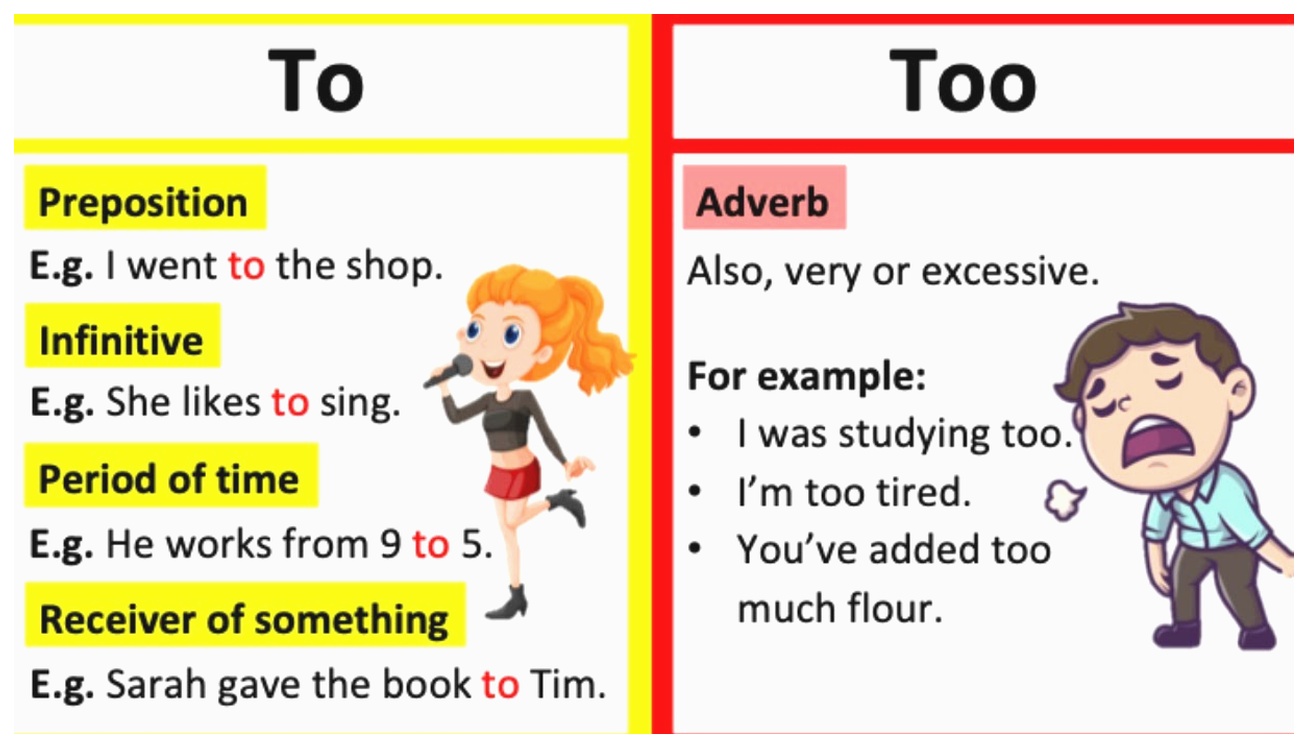
The word “to” serves as a preposition, which is a term that illustrates the connection between two words or phrases. It often signifies direction, location, or movement toward a particular point, place, or individual. For instance, in sentences like “I’m going to the store” or “He was running to the city center,” “to” clearly indicates where the action is directed.
The word “to” can precede both nouns and verbs to form an infinitive phrase, which represents the basic form of a verb. Typically, this main verb is accompanied by an auxiliary verb. For instance, in the sentence “I wanted to go to the beach,” “to go” is the infinitive phrase that follows “wanted.”
How to use “to” correctly
When deciding between “to” and “too,” consider if your sentence conveys movement, direction, or location. If it does, then “to” is the word you should choose.
When creating an infinitive, always remember to include “to” before the main verb. If you’re unsure about its necessity, add “to” to the sentence and check if it still conveys the intended meaning. This simple test can help clarify your writing!
The definition of “too”
“Too” is an adverb that means “also,” “excessively,” or “very.” For example:
- “He ate too much and ended up getting sick.”
- “My brother was too busy to help me.”
- “I am too tired to work today.”
How to use “too” correctly
The word “too” primarily conveys a sense of excess, but it also serves as a powerful tool for emphasis or affirmation. For instance, you might say, “That was too good,” to highlight just how impressive something was.
To enhance your conversational flow, it’s important to understand the differences between “too,” “also,” and “as well.” By comparing these options, you can select the one that best fits the context of your discussion, making your speech sound more natural and engaging.
What’s the difference between “to” and “too”?
Although “to” and “too” sound the same, they serve different purposes in language. “To” functions as a preposition, establishing a relationship between words in a phrase or sentence. In contrast, “too” acts as an adverb, modifying verbs, adjectives, or other adverbs. Understanding this distinction can enhance your clarity in writing and speaking.
“To” vs. “too” vs. “two”
Now that you’ve grasped the difference between “to” and “too,” let’s add another layer to your knowledge! In English, the word “two” is pronounced the same way as both of those terms, making it essential to recognize the context in which each is used.
Each of these words—“to,” “too,” and “two”—carries its own unique meaning and serves different purposes in language. In this section, we’ll delve into the essential distinctions among them, complete with examples to help you easily differentiate between their uses.
The definition of “two”
The term “two” is a cardinal number that signifies the quantity of items when counting, representing the number that comes after one. For instance, in the sentence “You have two apples,” the word “two” clearly indicates the amount of apples you possess.
How to use “two” correctly
The word “two” is specifically used to denote a quantity or to count items. For instance, you might say, “There were two horses in the field.”
“To” vs. “too” vs. “two” in practice
Now that you’ve grasped the distinctions between “to,” “too,” and “two,” it’s time to apply your knowledge! Challenge yourself by filling in the blanks in the following sentences:
- He told me he was going ___ the store.
- There was way ___ much food at the party.
- She collected ___ records at the Olympics.
- This is ___ cool!
- They were going ___ and fro.
- He said he would get me on the way ___ the office.
- She was the proud owner of ___ cats.
- Is he going ___ come here?
- I want to go to the football match, ____.
- What are you ____ doing?

Conclusion
Next time you face the dilemma of choosing between “to” and “too,” keep this article in mind as a helpful reference. It will guide you through the decision-making process with ease!
Practicing is one of the most effective ways to reinforce your understanding of challenging English grammar concepts. Make sure to work through the exercises provided in this article to enhance your skills!
Looking to sharpen your English grammar skills? Consider booking a lesson with an online tutor at LingualNeeds. You can easily find tutors based on their ratings, pricing, availability, and other preferences. Before your lesson begins, you can communicate your specific areas of focus, allowing your tutor to customize their lesson plan just for you. Get ready to enhance your understanding of English grammar in a way that suits your learning style!
Frequently Asked Questions
What is the primary difference between ‘to’ and ‘too’?
‘To’ is a preposition indicating direction, location, or movement, while ‘too’ is an adverb meaning ‘also,’ ‘excessively,’ or ‘very.’
How can I determine when to use ‘to’ in a sentence?
Use ‘to’ when your sentence conveys movement, direction, or location, or when forming an infinitive phrase.
What does the word ‘two’ signify?
‘Two’ is a cardinal number that represents the quantity of items, specifically the number that comes after one.
Can you provide an example of how to use ‘too’ correctly?
An example of ‘too’ in a sentence is: ‘He ate too much and ended up getting sick.’
What is a good way to practice distinguishing between ‘to,’ ‘too,’ and ‘two’?
You can practice by filling in blanks in sentences with these words to reinforce your understanding of their correct usage.