
- Getting gender right when saying thanks in Portuguese
- How to say ‘‘thank you very much’’ in Portuguese
- How to say ‘‘thanks’’ in informal Portuguese
- How to say “thank you for coming” in Portuguese
- Being more formal when saying ‘‘thank you’’ in Portuguese
- How to respond politely to “thanks” in Portuguese
- At a store:
- At a Restaurant:
- Receiving Directions on the Street
- At a Coffee Shop
- Bringing it all together
- Sending a thank you letter in Portuguese
- Addressing the recipient:
- Expressing gratitude:
- Closing remarks:
- Signing off:
- So long and thanks for everything
- Frequently Asked Questions
- What is the standard way to say ‘thank you’ in Portuguese?
- How can I express deeper gratitude in Portuguese?
- What are informal ways to say ‘thanks’ in Portuguese?
- How do I say ‘thank you for coming’ in Portuguese?
- What should I include in a thank you letter in Portuguese?
When visiting Portugal or Brazil, knowing how to say “thank you” (obrigado) is crucial. Even if you’re primarily speaking English with your travel companions or are in tourist-friendly spots, using this simple phrase to express gratitude will greatly enhance your experience and show respect for the local culture.
In Portuguese, expressing gratitude can take various forms, much like in other languages. The way you say “thank you” can vary based on the situation, your relationship with the people involved, and whether you identify as male or female.
In this guide, you’ll discover various ways to express gratitude in Portuguese. With helpful examples, you’ll be equipped to use these phrases confidently in your conversations. Ready to dive into the world of Portuguese chatting? Let’s get started!
Getting gender right when saying thanks in Portuguese
In Portuguese, unlike in English but similar to many other languages, certain words change based on the speaker’s gender—male or female. Mastering this aspect is crucial as you embark on your language-learning journey, as it plays a fundamental role in effectively communicating in Portuguese.
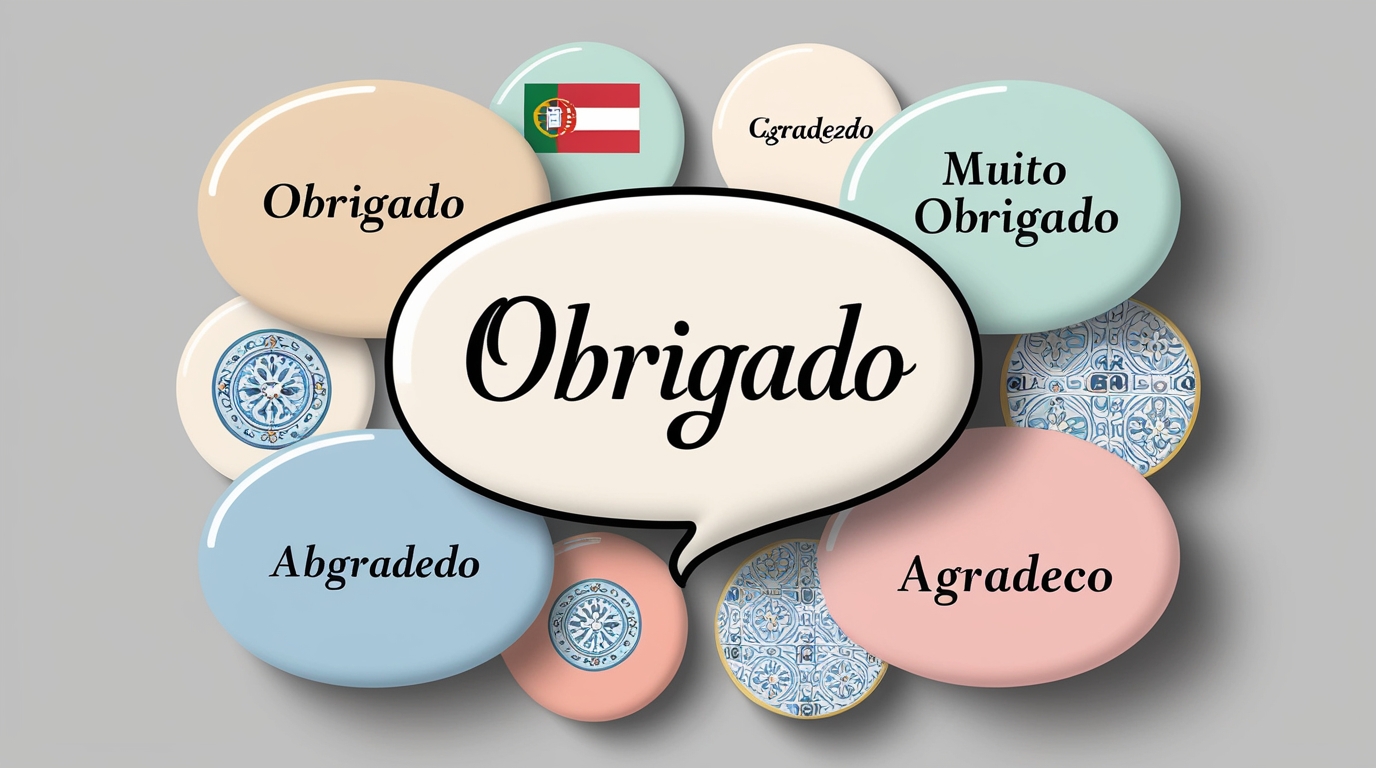
So, how does the form of obrigado vary in Portuguese?
If you identify as a male, say obrigado.
If you identify as a female, say obrigada.
How to say ‘‘thank you very much’’ in Portuguese
While “obrigado/a” is the standard way to say thank you, there are times when a simple expression of gratitude just won’t suffice. Consider situations where someone treats you to ice cream, offers you their bus seat, or even walks you to your hotel to ensure you don’t get lost. In these moments, a deeper acknowledgment of their kindness is warranted.
A simple obrigado/a doesn’t quite seem enough.
When someone has made a special effort for you and you wish to express your gratitude with a touch more warmth and empathy, consider saying “muito obrigado” if you’re male or “muito obrigada” if you’re female. This phrase adds a heartfelt dimension to your thankfulness!
This translates to “thank you very much” in English.
How to say ‘‘thanks’’ in informal Portuguese
If you’re speaking with friends or just want to say a simple “thanks,” you can say obriga or valeu.
While these expressions are more casual than “obrigado/a,” they can convey a friendlier tone in informal settings. However, it’s best to steer clear of them when expressing gratitude to someone like your friend’s grandmother, as they may come off as too informal.
It’s important to note that “asobrigai” is simply a shortened form of “obrigado/a,” so you don’t have to adjust the ending based on your gender identity. Likewise, “valeu” remains unchanged regardless of the speaker’s gender.
How to say “thank you for coming” in Portuguese
If you ever have the pleasure of hosting an event in Portugal or Brazil, expressing your gratitude to your guests is a lovely gesture. You can say “Obrigado por vir” if you’re male or “Obrigada por vir” if you’re female, both meaning “thank you for coming.”
If you’re at a dinner party, the interaction might look like this:
Host: Obrigado por vir. (Thank you for coming.)
Guest: Foi um prazer. (It was a pleasure.)
Even if your Portuguese is very basic, your guests will be thrilled by your effort!
Being more formal when saying ‘‘thank you’’ in Portuguese
When someone rolls out the red carpet for you, expressing your gratitude can be as simple as saying “Eu sou grato” if you’re male or “Eu sou grata” if you’re female. This phrase translates to “I am grateful,” capturing your appreciation perfectly.
How to respond politely to “thanks” in Portuguese
Now that you’ve learned various ways to express gratitude in Portuguese, you might be wondering how to respond when someone thanks you. What’s the appropriate reply?
Just like in English, there are a few ways to respond.
A great way to respond politely is by saying “bede nada” or “não há de quê,” both of which mean “you’re welcome” or “it’s nothing” in English.
Here are some short conversations you might have:
At a store:
Customer: Obrigado(a)! (Thanks!)
Store owner: De nada, até breve! (You’re welcome, see you soon!)
At a Restaurant:
Customer: “Thank you for the outstanding service!”
Waiter: “It was our pleasure! We look forward to welcoming you back soon!”
Receiving Directions on the Street
Tourist: “Thank you so much for your help with the directions!”
Local: “You’re very welcome! Enjoy your day!”
At a Coffee Shop
Customer: “Obrigado pelo café delicioso!” (Thank you for the delicious coffee!)
Barista: “De nada, aproveite seu dia!” (You’re welcome, enjoy your day!)
Bringing it all together
Here’s a quick summary of all the language we’ve seen so far in the table below.

If you found this information useful, check out our vocabulary feature on mobile, available for download on the App Store and Google Play. Plus, don’t miss our article packed with expert tips on mastering Portuguese!
Sending a thank you letter in Portuguese
In formal or professional environments, or following a meaningful favor or event, sending a thank you letter is often a thoughtful gesture. In Portuguese culture, expressing gratitude through thank you letters holds significant importance, reflecting the value placed on appreciation and acknowledgment.
Here’s how you would structure a thank you letter in Portuguese:
Addressing the recipient:
Formal: Use Prezado(a) [Recipient’s Name] (Dear [Recipient’s Name]).
Informal: Use the recipient’s name or a friendly salutation.
Expressing gratitude:
Begin with Eu gostaria de expressar meu sincero agradecimento por … (I would like to express my sincere thanks for…).
You can also say Estou escrevendo para expressar minha gratidão por … (I am writing to express my gratitude for…).
Closing remarks:
You can close with a phrase like Muito obrigado(a) novamente (Thank you very much again.).
Signing off:
For formal communication, opt for sign-offs like “Atenciosamente” or “Com os melhores cumprimentos,” which translate to “Sincerely” or “With best regards,” respectively, and always include your name afterward. In more casual settings, you can choose a warm closing such as “Com carinho” (With affection) or simply “Até logo” (See you soon), followed by your name.
Taking the time to craft a well-thought-out letter of thanks will definitely be appreciated.
So long and thanks for everything
Mastering the phrases “obrigado” (thank you) and “de nada” (you’re welcome) in Portuguese is a fantastic way to kickstart polite and meaningful conversations. Even if you’re just starting to learn the language, using these simple expressions of gratitude can brighten the day of your Portuguese friends, hosts, or colleagues.
LingualNeeds bridges the gap between learners and tutors across over 180 countries, making it easy for you to find the perfect Portuguese tutor. Whether you’re looking to enhance your conversational skills or simply want to master polite phrases like “thank you,” our platform offers interactive lessons with experienced tutors. Sign up today and elevate your Portuguese language journey with LingualNeeds!
Frequently Asked Questions
What is the standard way to say ‘thank you’ in Portuguese?
The standard way to say ‘thank you’ in Portuguese is ‘obrigado’ if you identify as male and ‘obrigada’ if you identify as female.
How can I express deeper gratitude in Portuguese?
To express deeper gratitude, you can say ‘muito obrigado’ if you’re male or ‘muito obrigada’ if you’re female, which translates to ‘thank you very much’.
What are informal ways to say ‘thanks’ in Portuguese?
Informal ways to say ‘thanks’ in Portuguese include ‘obriga’ and ‘valeu’, which are more casual than ‘obrigado/a’.
How do I say ‘thank you for coming’ in Portuguese?
You can say ‘Obrigado por vir’ if you’re male or ‘Obrigada por vir’ if you’re female, both meaning ‘thank you for coming’.
What should I include in a thank you letter in Portuguese?
In a thank you letter, you should address the recipient, express gratitude with phrases like ‘Eu gostaria de expressar meu sincero agradecimento por…’, and close with a polite sign-off.


