
- The basics of Japanese honorifics
- さん (san)
- くん (kun)
- ちゃん (chan)
- 様 (さま, sama)
- 先生 (せんせい, sensei)
- How to use Japanese honorifics correctly
- Examples of Japanese honorifics in conversation
- Greeting a colleague
- Addressing a younger (male) colleague
- Talking to a child
- Speaking to a customer
- Talking to a teacher
- Speaking to a senior at work
- Honorific Japanese nouns
- Understanding keigo
- Final thoughts: Honorifics are an important part of Japanese
- Frequently Asked Questions
- What are Japanese honorifics?
- What is the most commonly used honorific in Japanese?
- How do honorifics affect communication in Japan?
- What is the difference between sonkeigo and kenjōgo?
- How can I practice using Japanese honorifics effectively?
Mastering the Japanese language hinges on a solid understanding of honorifics, which are crucial for effective communication with Japanese speakers. Don’t be intimidated by their complexity! This guide will equip you with essential knowledge, covering everything from the meanings of common suffixes to the significance of “sama.” Dive in and enhance your language skills!
In this article, we’ll explore the fascinating world of honorifics in Japanese, including how to address individuals respectfully, the various nouns that have honorific versions, and the concept of “keigo,” which encompasses formal language usage in Japanese culture.
The basics of Japanese honorifics
Japanese honorifics play a vital role in daily interactions, serving as more than mere titles. They embody respect, social hierarchy, and the nuances of relationships. Typically used as suffixes attached to names, these honorifics can also occasionally replace names entirely, highlighting their significance in communication.
Let’s explore some of the most common honorifics:
さん (san)
The most adaptable and widely used honorific in Japanese, akin to “Mr.,” “Mrs.,” or “Ms.” in English, is さん (san). This versatile term can be applied to individuals of any gender, age, or social standing, making it suitable for both formal and casual contexts.
Did you know that the Japanese suffix “さん” is versatile and used beyond just referring to people? You’ll often hear it attached to the names of companies, shops, and even food items, reflecting a sense of respect and familiarity in various contexts.
くん (kun)
This term is commonly used among younger males or male colleagues, particularly in school or workplace environments. As a casual honorific, it’s best to avoid using it in formal contexts.
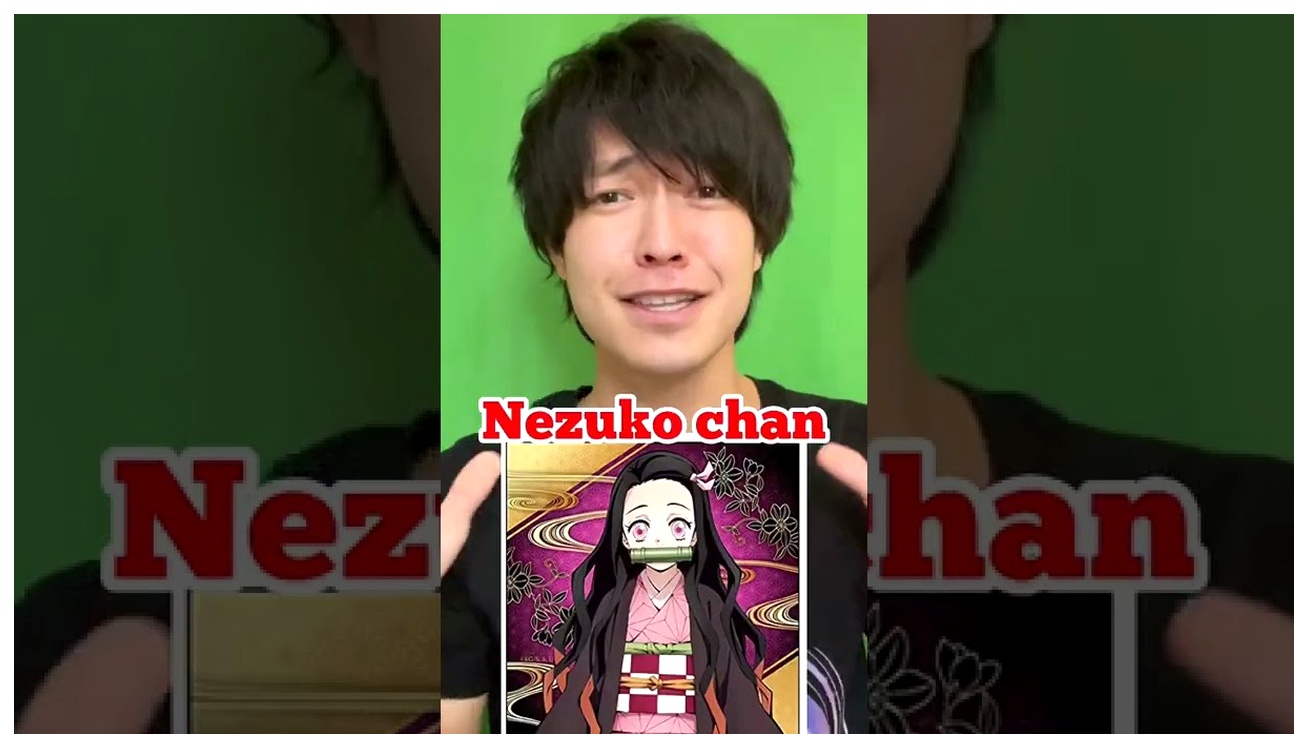
ちゃん (chan)
This affectionate term, known as “ちゃん,” is commonly used to express warmth towards children, close friends, and family members. While it is predominantly used for females, it can also apply to males in certain contexts, making it a versatile expression of fondness.
Note of interest: In Osaka, people add ちゃん to foods, too. For example, 飴ちゃん (あめちゃん, amechan) means “candy.”
様 (さま, sama)
The character 様 conveys a strong sense of respect, which is why it is commonly used in formal, professional, and business contexts, regardless of the individual’s age or gender.
先生 (せんせい, sensei)
This term is commonly used to refer to teachers, doctors, and various other professionals. What sets 先生 apart from the other terms on this list is that it can be used independently, without needing to include the person’s name.
Check out the native pronunciation of the honorifics (with a little more explanation) in the video below:
How to use Japanese honorifics correctly
Let’s dive into some practical tips for mastering honorifics in Japanese! While navigating these can be challenging, a few key insights can help you communicate like a native speaker. The most important factor to consider is context. Your relationship with the individual, their social standing, and the specific situation all influence the appropriate honorific to use. Japanese culture has clear guidelines on formality, which impact not only the honorifics but also how you express apologies. Embrace these nuances, and you’ll enhance your conversational skills significantly!
Our recommendation is simple: when you’re unsure, use さん (san). This versatile Japanese honorific is appropriate for individuals of any gender, age, or social standing. It’s a respectful choice that ensures you won’t unintentionally offend anyone.
In the business realm, honorifics play a vital role in conveying professionalism and respect. For example, referring to a client as 山本様 (やまもとさま, Yamamoto-sama) demonstrates deep respect and formality. Conversely, in casual social interactions, you can adopt a more relaxed approach by using terms like ちゃん (chan) or くん (kun) with close friends, which adds warmth and affection to your exchanges.
Examples of Japanese honorifics in conversation
Now, let’s explore these honorifics in real-life contexts. Below are some examples presented in Japanese script alongside their English translations:
Greeting a colleague
Kanji: 田中さん、おはようございます。
Hiragana: たなかさん、おはようございます。
Rōmaji: (Tanaka-san, ohayō gozaimasu.)
English: Good morning, Mr./Ms. Tanaka.
Addressing a younger (male) colleague
Kanji: 鈴木君、その報告書は完成しましたか?
Hiragana: すずきくん、そのほうこくしょはかんせいしましたか?
Rōmaji: (Suzuki-kun, sono hōkokusho wa kansei shimashita ka?)
English: Suzuki, have you completed the report?
Talking to a child
Kanji: 絵里ちゃん、元気?
Hiragana: えりちゃん、げんき?
Rōmaji: (Eri-chan, genki?)
English: Eri, are you doing well?
Speaking to a customer
Kanji: 山本様、いつもご利用いただきありがとうございます。
Hiragana: やまもとさま、いつもごりよういただきありがとうございます。
Rōmaji: (Yamamoto-sama, itsumo goriyō itadaki arigatō gozaimasu.)
English: Thank you for your continued patronage, Mr./Ms. Yamamoto.
Talking to a teacher
Kanji: 佐藤先生、質問があります。
Hiragana: さとうせんせい、しつもんがあります。
Rōmaji: (Satō sensei, shitsumon ga arimasu.)
English: Professor/Mr./Ms. Sato, I have a question.
Speaking to a senior at work
Kanji: 田中さん、このデータを見ていただけますか?
Hiragana: たなかさん、このデータをみていただけますか?
Rōmaji: (Tanaka-san, kono dēta o mite itadakemasu ka?)
English: Mr./Ms. Tanaka, could you please look at this data?
Honorific Japanese nouns
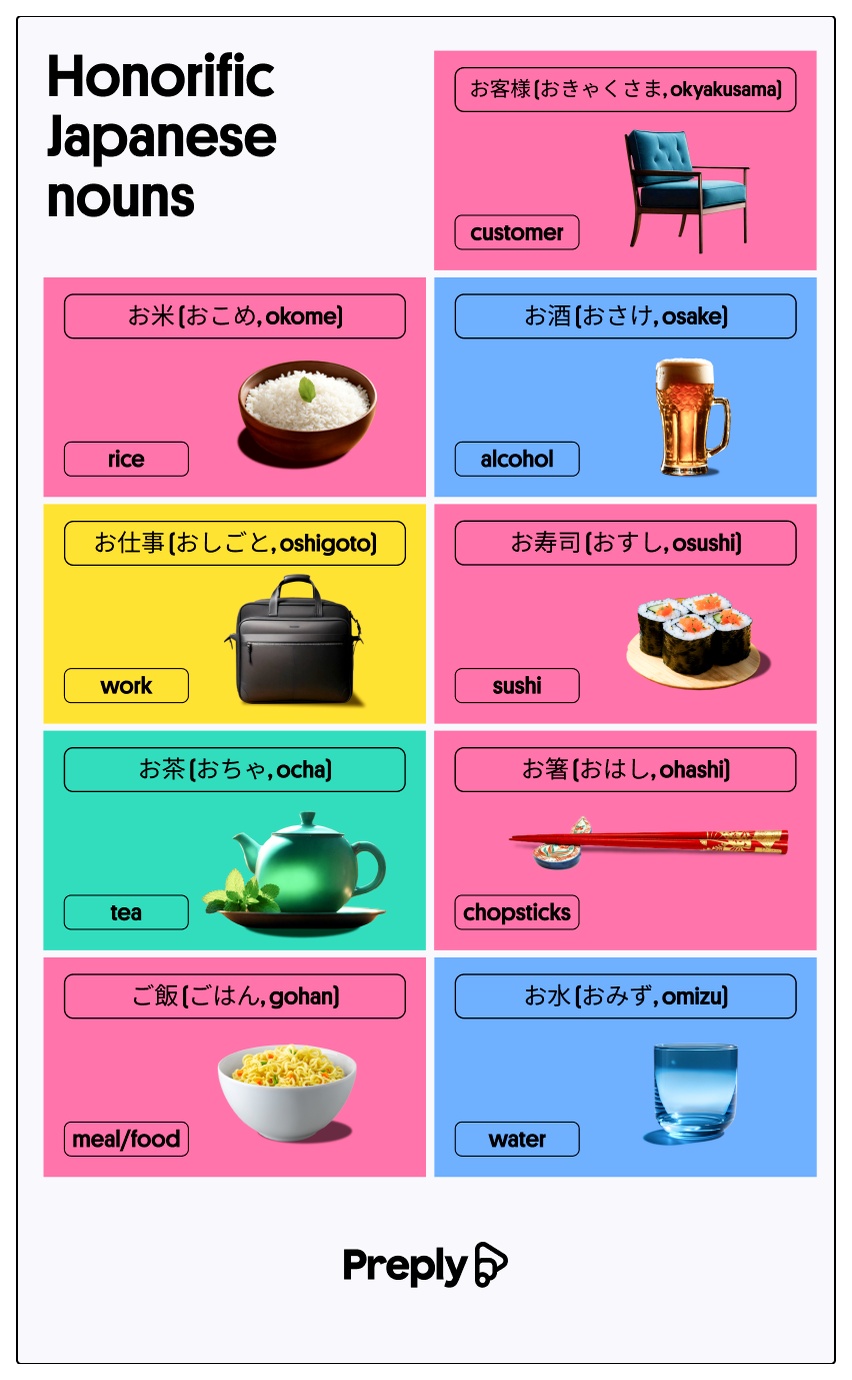
When using Japanese, respect extends beyond just individuals—it also encompasses certain concepts and objects that hold significant cultural value. In Japan, these revered items often receive honorific prefixes, such as お (o) or ご (go), to signify their importance. You can explore more examples in our guide to basic Japanese vocabulary. Here are a few common ones to get you started:
- お客様 (おきゃくさま, okyakusama) = customer
- お米 (おこめ, okome) = rice
- お酒 (おさけ, osake) = alcohol
- お仕事 (おしごと, oshigoto) = work
- お寿司 (おすし, osushi) = sushi
- お茶 (おちゃ, ocha) = tea
- ご注文 (ごちゅうもん, gochūmon) = order
- お箸 (おはし, ohashi) = chopsticks
- ご飯 (ごはん, gohan) = meal/food
- お水 (おみず, omizu) = water
Understanding keigo
Keigo (敬語, けいご) is a distinctive form of formal Japanese that conveys respect and politeness in communication. It consists of two primary categories: sonkeigo (尊敬語, そんけいご), which is the honorific form used to elevate the status of others, and kenjōgo (謙譲語, けんじょうご), the humble form that lowers one’s own status in relation to others.
I understand your concerns—it can be perplexing, even for native speakers! However, mastering this aspect is crucial in business and formal interactions. With practice, you can impress others with your politeness and humility, making a lasting positive impression.
Let’s clarify the distinction: Use sonkeigo when addressing or referring to someone else, and opt for kenjōgo when speaking about yourself. The vocabulary and grammar can shift significantly, even for common terms. For instance, the everyday Japanese word for “say” is 言います (いいます, iimasu), but in sonkeigo, it transforms to おっしゃいます (osshaimasu), while in kenjōgo, it becomes 申します (もうします, mōshimasu).
You can learn more about keigo in our in-depth guide.
Final thoughts: Honorifics are an important part of Japanese
To truly master Japanese, grasping the concept of honorifics is essential. These linguistic nuances play a significant role in both the language and cultural interactions in Japan. Observe how Japanese speakers effortlessly alternate between casual and formal language based on their conversation partner. By utilizing the tips in this guide and practicing with a tutor from LingualNeeds, you can also become proficient in using Japanese honorifics.
Frequently Asked Questions
What are Japanese honorifics?
Japanese honorifics are suffixes or terms used to convey respect, social hierarchy, and the nuances of relationships in communication.
What is the most commonly used honorific in Japanese?
The most commonly used honorific is さん (san), which can be applied to individuals of any gender, age, or social standing.
How do honorifics affect communication in Japan?
Honorifics play a vital role in daily interactions, influencing the level of respect and formality in communication.
What is the difference between sonkeigo and kenjōgo?
Sonkeigo is the honorific form used to elevate the status of others, while kenjōgo is the humble form that lowers one’s own status in relation to others.
How can I practice using Japanese honorifics effectively?
You can practice using Japanese honorifics by observing native speakers, engaging in conversation with a tutor, and applying the tips provided in guides.