- The most common Italian idioms
- Italian sayings that feature animals
- 1. Chi dorme non piglia pesci (The early bird catches the worm)
- 2. Meglio un giorno da leone che cento da pecora (Better one day as a lion than a hundred as a sheep)
- 3. In bocca al lupo! (Best of luck!)
- 4. A caval donato non si guarda in bocca (Don’t look a gift horse in the mouth)
- 5. Fa un freddo cane (It’s freezing cold)
- Italian sayings that feature food
- 6. Non tutte le ciambelle riescono col buco (Not all doughnuts come out with a hole)
- 7. Tutto fa brodo (It’s all grist for the mill)
- 8. L’appetito vien mangiando (The more you do, the more you can do)
- 9. Tutto fumo e niente arrosto (All mouth and no trousers)
- 10. Cercare il pelo nell’uovo (Looking for the hair in the egg)
- Other funny Italian phrases to use in everyday life
- 11.Avere le mani d’oro (To have golden hands)
- 12. Chi ha la coda di paglia, non si avvicina al fuoco (Those who have a guilty conscience avoid the fire)
- 13. Meglio tardi che mai (Better late than never)
- 14. Ogni morte di Papa (Once in a blue moon)
- 15. Sfortunato al gioco, fortunato in amore (Unlucky at cards, lucky in love)
- Conclusion – Or tutto è bene quel che finisce bene
- Frequently Asked Questions
- What are Italian idioms and why are they important?
- Can you give an example of an Italian idiom related to animals?
- What does the Italian saying ‘In bocca al lupo’ mean?
- How can incorporating Italian idioms improve language learning?
- What is the meaning of the idiom ‘Sfortunato al gioco, fortunato in amore’?
Have you ever been captivated by the lively gestures and animated conversations of Italians? What makes their language so fascinating? One key element is the rich tapestry of Italian idioms. Italians skillfully infuse their dialogue with vibrant expressions, bringing a unique charm and warmth to every interaction.
If you’re immersing yourself in the Italian language online, diving into Italian idioms can unlock a wealth of cultural and linguistic treasures. This article will take you on a journey through amusing Italian phrases, revealing their intriguing meanings and showing how they can enhance your language learning adventure.
So, grab your espresso, settle in, and get ready to take notes!
The most common Italian idioms
Italy is rich in regional proverbs and sayings, many of which are both unique and humorous. In the following sections, we’ll explore some of the most popular Italian idiomatic expressions. We’ll highlight those that have English equivalents, while also sharing phrases that can only be understood through their literal translations, reflecting the charm of Italian culture.
Incorporating Italian idiomatic expressions into your daily conversations can significantly enhance the flow of your discussions. To practice, consider working with an Italian tutor or connect with conversation partners through a language exchange app. This will make mastering these expressions more enjoyable and effective!
Italian sayings that feature animals
1. Chi dorme non piglia pesci (The early bird catches the worm)
The Italian proverb “those who sleep catch no fish” emphasizes the importance of staying alert and proactive. In English, a similar sentiment is often expressed with the metaphor of birds and worms. This saying serves as a friendly reminder to embrace each day and take full advantage of the opportunities that come your way.
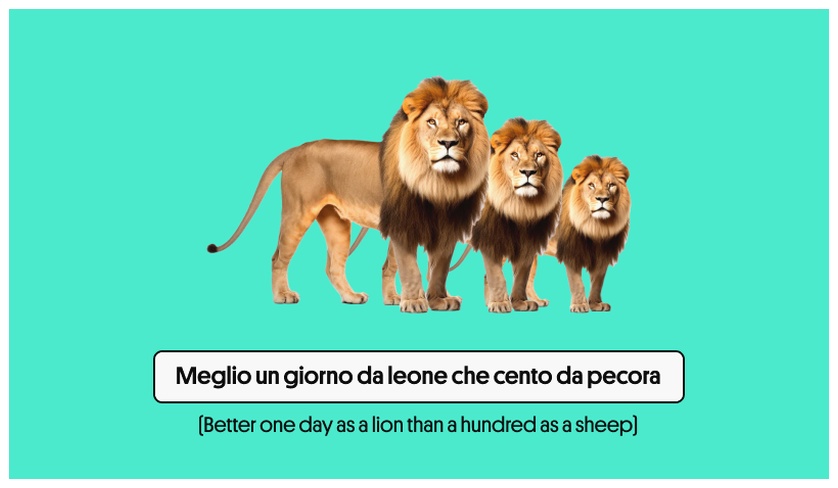
2. Meglio un giorno da leone che cento da pecora (Better one day as a lion than a hundred as a sheep)
Lions embody strength, courage, and leadership, while sheep represent conformity and obedience. This Italian metaphor suggests that a life filled with bold experiences is far more valuable than a lengthy existence devoid of excitement and purpose. Embrace the thrill of living boldly!
3. In bocca al lupo! (Best of luck!)
The phrase “good luck” may seem straightforward in English, but in Italian, it carries a unique twist: it translates to a wish to end up in a lion’s mouth! The word “bocca” means “mouth,” while “lupo” translates to “wolf.” So, when someone tells you, “In bocca al lupo,” they’re wishing you luck. The traditional response is “Crepi il lupo,” meaning “May the wolf die.” However, many people now prefer to say “Viva il lupo,” which means “Long live the wolf!” This playful exchange adds a cultural flair to wishing someone well.
4. A caval donato non si guarda in bocca (Don’t look a gift horse in the mouth)
This timeless Italian proverb encourages us to value the kindness of others without questioning or judging their offerings. In ancient times, horses were vital for transportation, trade, and farming, and a horse’s teeth were crucial for determining its age and health. Therefore, when receiving a horse as a gift, it was deemed impolite and ungrateful to examine its teeth right away to evaluate its worth.
5. Fa un freddo cane (It’s freezing cold)
In centuries past, dogs were often relegated to living outside, chained up to guard the home and to keep pests like fleas and ticks at bay. They braved freezing nights and harsh weather, as many people believed they didn’t deserve a place indoors. This harsh treatment gave rise to the expression “freddocane,” describing a bone-chilling cold that was unbearable for everyone—except for the dogs left outside.
Italian sayings that feature food
6. Non tutte le ciambelle riescono col buco (Not all doughnuts come out with a hole)
This saying traces its roots to the creation of traditional Italian doughnuts known as ciambelle. When crafting ciambelle, the dough is usually shaped into rings before being fried or baked. However, various factors can lead to some ciambelle not forming a perfect hole in the center during cooking. This expression serves as a reminder that, despite our best efforts, outcomes can sometimes differ from our expectations.
7. Tutto fa brodo (It’s all grist for the mill)
“Everything makes broth”—a cherished Italian saying that highlights how every element contributes to the whole. Just as a rich broth is created by simmering an array of ingredients like meat, vegetables, herbs, and spices, which blend their flavors and nutrients over time, this idiom illustrates that even the smallest or most unrelated factors can play a vital role in reaching a goal. It reminds us that every contribution matters in the recipe of life.
8. L’appetito vien mangiando (The more you do, the more you can do)
This classic Italian proverb, which means “appetite comes with eating,” conveys a powerful idea: the more you indulge in something, the greater your desire for it becomes. It serves as a gentle nudge to encourage someone to keep eating, especially if they’re unsure about their appetite. Beyond food, this saying also applies to various activities, suggesting that the more you participate in something, the more you will enjoy and crave it.
9. Tutto fumo e niente arrosto (All mouth and no trousers)
Have you ever heard the English phrase “All mouth and no trousers”? In Italian culture, where discussing food is a vital part of daily life, we have a similar saying: “All smoke and no roast.” This expression describes situations or individuals that appear impressive at first glance but ultimately fail to deliver. In traditional cooking, smoke signifies the rich flavors and aromas produced while roasting or grilling meat. However, if there’s only smoke without the actual roast, it signifies a lack of substance and fulfillment.
10. Cercare il pelo nell’uovo (Looking for the hair in the egg)
This phrase refers to a person who is excessively critical, often fixating on minor flaws or imperfections in a situation or object. Its origins lie in the meticulous practice of examining eggs for any tiny defects, like minute hairs on the shell. Given how rare and inconsequential such flaws are, the expression effectively captures the tendency to hunt for insignificant faults in various contexts.

Other funny Italian phrases to use in everyday life
11. Avere le mani d’oro (To have golden hands)
Are you a culinary wizard or a talented artisan? If so, this Italian phrase is perfect for you! It’s a playful way to celebrate someone’s remarkable talent and expertise. So, the next time you prepare a mouthwatering dish or craft a stunning piece, take pride in knowing you have “le mani d’oro,” or “golden hands.”
12. Chi ha la coda di paglia, non si avvicina al fuoco (Those who have a guilty conscience avoid the fire)
Have you ever seen someone dodge a particular topic or situation as if it were contagious? This Italian expression playfully highlights how individuals with secrets often go to great lengths to avoid any chance of confrontation or discomfort.
13. Meglio tardi che mai (Better late than never)
This Italian proverb provides a refreshing outlook on tardiness in a culture that often prioritizes punctuality. Whether you’re arriving fashionably late to a gathering or finally getting around to that neglected project, it’s important to remember: it’s better to arrive late than to miss out completely.
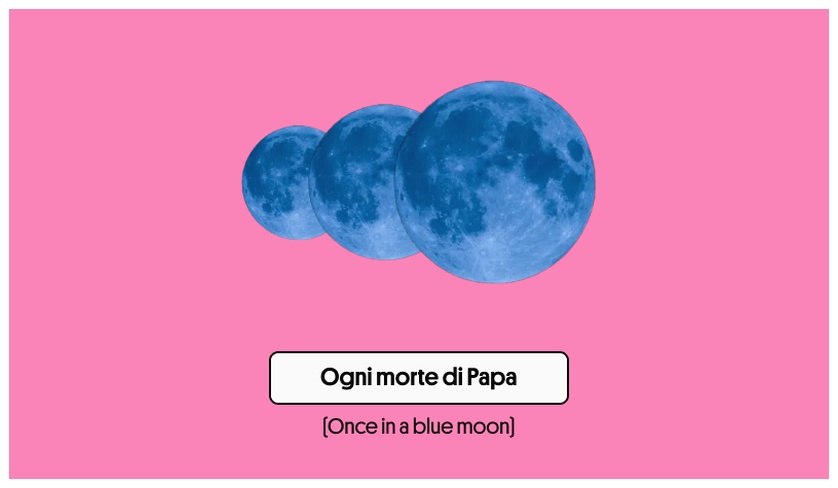
14. Ogni morte di Papa (Once in a blue moon)
Are you holding your breath for pigs to fly or the stars to perfectly align? This charming Italian saying humorously illustrates the unlikelihood of certain events, suggesting that you might as well wait for “every death of a pope” before expecting something remarkable to happen.
15. Sfortunato al gioco, fortunato in amore (Unlucky at cards, lucky in love)
This playful idiom serves as a reminder that challenges in one part of life can often be countered by achievements or good fortune in another. It highlights life’s unpredictability and the ebb and flow of luck—concepts that resonate deeply with Italians, who are known for their superstitious beliefs.
Conclusion – Or tutto è bene quel che finisce bene
Italians often express the sentiment, “All’s well that ends well.” By the end of this article, you’ll likely find yourself captivated by the intriguing beliefs and superstitions that shape Italian culture and language. You’ve now tapped into the delightful world of amusing Italian sayings and the rich joy that comes with their unique expressions.
Equipped with these charming expressions, you’re all set to add joy and warmth to your conversations. Keep in mind that learning Italian online is an exciting journey filled with exploration and discovery, so embrace the unique quirks and nuances you encounter along the way!
Frequently Asked Questions
What are Italian idioms and why are they important?
Italian idioms are unique expressions that reflect the cultural and linguistic richness of the Italian language. They enhance conversations and provide insights into Italian culture.
Can you give an example of an Italian idiom related to animals?
One example is ‘Chi dorme non piglia pesci,’ which means ‘The early bird catches the worm,’ emphasizing the importance of being proactive.
What does the Italian saying ‘In bocca al lupo’ mean?
‘In bocca al lupo’ translates to ‘Best of luck!’ and is a playful expression wishing someone well, with a traditional response being ‘Crepi il lupo,’ meaning ‘May the wolf die.’
How can incorporating Italian idioms improve language learning?
Incorporating Italian idioms into daily conversations can enhance the flow of discussions and make learning more enjoyable and effective.
What is the meaning of the idiom ‘Sfortunato al gioco, fortunato in amore’?
This idiom means ‘Unlucky at cards, lucky in love,’ highlighting the unpredictability of life where setbacks in one area can lead to success in another.