- Key takeaways
- Frequency of recognition v. desire for recognition
- How does desired frequency of recognition vary by generation?
- The dos and don’ts of giving employee praise
- Employee rewards and recognition preferences
- Employees’ top aspirations for life
- How do preferred forms of rewards and recognition vary by generation?
- Conclusion
- Frequently Asked Questions
- Why is employee recognition important?
- How often do employees typically receive recognition?
- What is a key factor in delivering effective employee praise?
- How do recognition preferences differ across generations?
- What do employees value more, monetary or non-monetary recognition?
Never overlook the impact of genuine appreciation: recent statistics show that about 50% of employees might consider leaving a company that fails to recognize their hard work. Additionally, research indicates that employees who receive consistent acknowledgment and rewards are eight times more engaged compared to those who only get annual bonuses.
It’s crucial to consistently make employees feel appreciated, but how you do it matters just as much as the act itself. Employers need to understand that merely acknowledging their staff isn’t sufficient; the delivery of that recognition plays a vital role in its impact.
As National Employee Appreciation Day approaches, it’s the perfect opportunity for organizations to embrace a meaningful strategy for recognizing their employees. But how can employers make their teams feel genuinely valued for their contributions? In this article, LingualNeeds Business explores the significance of employee recognition and shares essential dos and don’ts for delivering workplace praise effectively.
Key takeaways
- Only 13% of employees receive recognition frequently, and 39% of employees feel they don’t receive recognition frequently enough.
- Generic praise can backfire, leading employees to view it as insincere or superficial.
- 19% of employees identify “achieving recognition for their work” as one of their top ambitions in the workplace.
Frequency of recognition v. desire for recognition
The statistics on employee recognition reveal a concerning trend. A Gallup poll revealed that 65% of respondents reported receiving no praise or acknowledgment for their efforts in the past year. Additionally, a survey within a healthcare organization examined the gap between the recognition employees receive and their desire for it. The findings were telling:
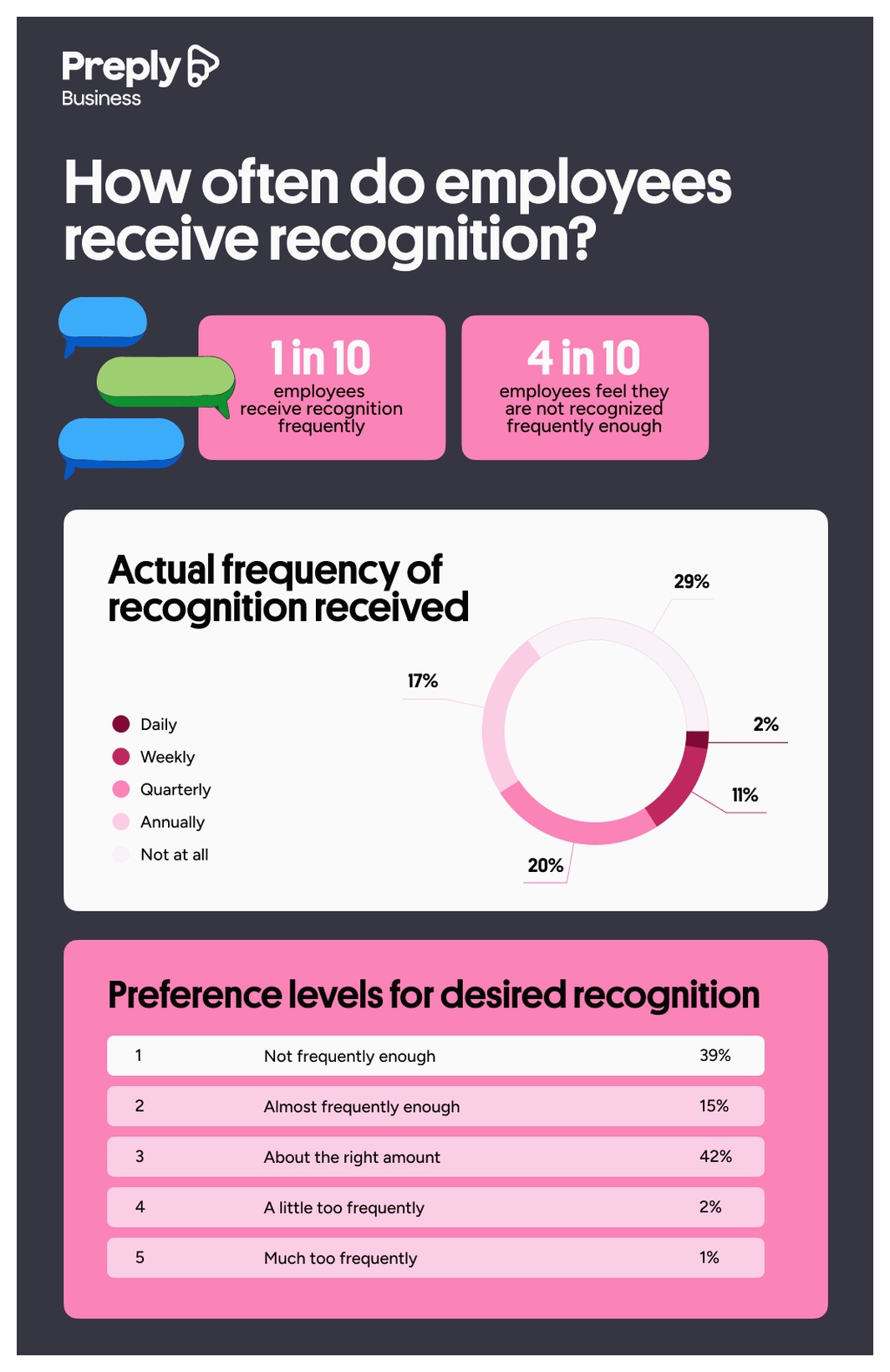
The pie chart above reveals a troubling trend: just 13% of poll participants reported receiving regular recognition for their efforts, whether daily or weekly. Even more alarming, nearly one-third of employees stated that they received no acknowledgment from their supervisors at all throughout the year.
The table reveals that 39% of survey participants believe their hard work goes unrecognized too often, highlighting a strong demand for more acknowledgment in the workplace. The key insight here is that employees crave consistent appreciation for their contributions, yet many organizations fall short in providing this essential recognition throughout the year.
How does desired frequency of recognition vary by generation?
Generational differences play a significant role in how employees prefer to be recognized at work. Recent research reveals that Generation Z thrives on receiving praise from their managers three times a week. In contrast, millennials appreciate acknowledgment about three times a year, while Generation X is satisfied with recognition just once a year. Understanding these preferences can help foster a more motivated and engaged workforce.
The dos and don’ts of giving employee praise
Recognition serves as a powerful motivator for employees, significantly enhancing their engagement levels. When team members receive consistent praise, they not only feel more secure in their roles but also develop stronger loyalty to the company. This boost in morale translates into increased productivity and ultimately benefits the organization’s financial performance. However, it’s essential to implement employee recognition effectively to maximize these positive outcomes.
Recognizing and praising employees is crucial for making them feel appreciated for their hard work and dedication. However, it’s essential that this recognition is perceived as sincere. According to Gallup, authentic employee recognition stems from being meaningful, heartfelt, and honest. It resonates more when linked to rewards, career opportunities, or the organization’s goals, and when employees understand that it is deserved, intentional, and specific.
When recognition of an employee’s hard work falls short, it can come across as disingenuous or insincere. So, how can leaders express genuine appreciation that truly resonates with their team? To help with this, LinkedIn offers valuable tips on delivering meaningful workplace praise and highlights common pitfalls to avoid.

When attempts to recognize an employee’s efforts don’t meet these standards, the praise is perceived as phony or insincere.

To truly motivate employees, commendations should be specific and highlight both their achievements and the methods they used to succeed—rather than relying on vague phrases like “Good job!” It’s also crucial for employers to provide timely and consistent praise for outstanding performance; recognizing an employee a month after their accomplishment or at random moments simply won’t be effective. Regular, meaningful recognition fosters a more engaged and productive workforce.
Equally crucial is the principle that recognition should be reserved for truly deserving employees. When supervisors offer praise to the entire team for the standout efforts of just one individual, or overly commend the group for completing routine tasks, the impact of their recognition diminishes. Failing to adhere to these standards can lead to appreciation backfiring, undermining the manager’s intentions.
Employee rewards and recognition preferences
To genuinely appreciate their employees, companies need to understand what their staff members aim to achieve in their careers. By aligning recognition efforts with these professional aspirations, organizations can more effectively celebrate and acknowledge each team member’s contributions.
To this end, LingualNeeds Business polled 2,500 working professionals to pinpoint their top work-related aspirations. Explore the results below:

In addition to attaining financial stability, survey respondents placed a higher value on non-monetary benefits. Notably, 42% emphasized the importance of achieving a healthy work-life balance, while 34% prioritized the opportunity to enhance their professional skills through ongoing learning.
Many professionals also value non-financial rewards, with 19% highlighting the importance of recognition for their contributions. Research shows that a significant 71% of employees seek acknowledgment for their performance or role achievements, while only 12% desire recognition for their everyday behaviors. This demonstrates that most workers are motivated by substantial accomplishments rather than routine tasks.
To gain insight into the non-monetary benefits that employees truly value, LingualNeeds Business conducted a survey asking professionals, “If you could request one non-monetary benefit from your employer, what would it be?” Here are the intriguing responses they received:
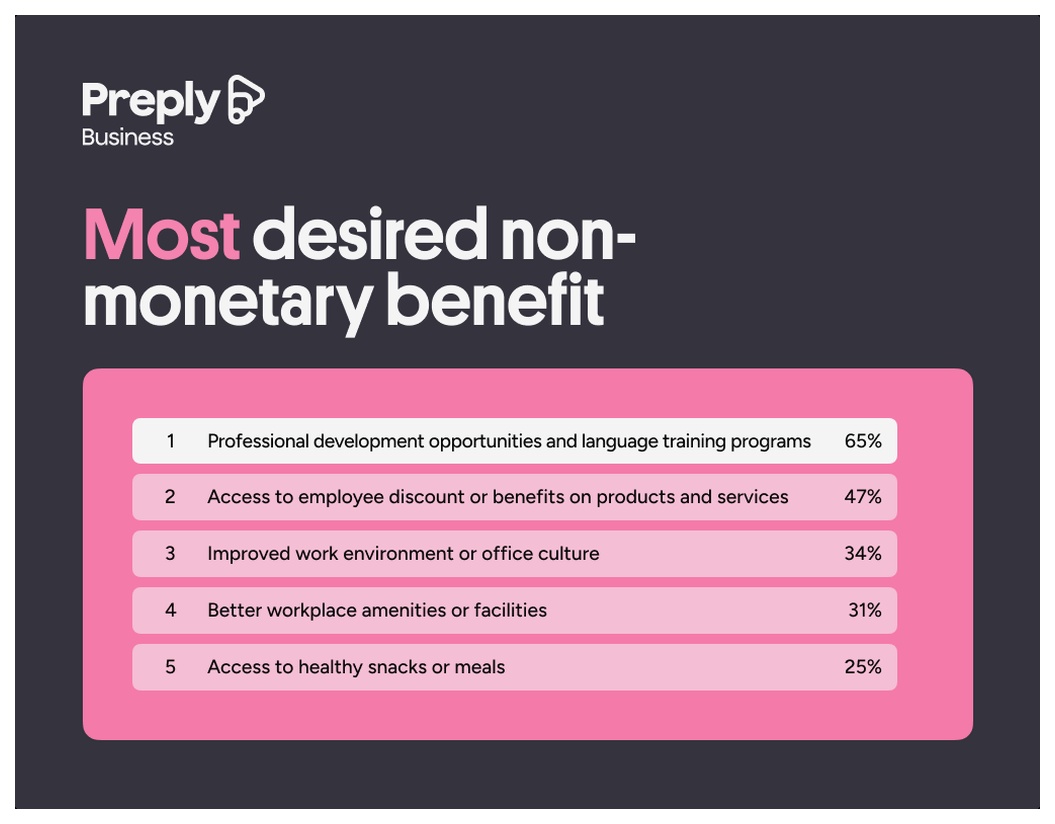
In a recent poll, an impressive 65% of respondents favored professional development opportunities and language training as their preferred non-financial rewards. Following closely behind were employee discounts on company products and services, which garnered 47% of the votes, and a more vibrant work culture or environment, chosen by 34%.
Employees’ top aspirations for life
As LingualNeeds Business explores aspirations beyond the workplace, they sought insights from survey participants about their life goals. Dive into the diverse ambitions these professionals aim to fulfill in their personal lives:

In the pursuit of work-life balance, a significant 36% of employees expressed that their top life goal is to spend more quality time with family and friends. Close behind, both learning a new language and focusing on personal well-being each garnered support from 30% of respondents, highlighting a shared interest in personal growth and fulfillment.
Why is this important? Understanding the personal and professional aspirations of employees allows organizations to tailor recognition in a way that is meaningful, genuine, and individualized. This approach enhances the impact of acknowledgment, fostering a more engaged and motivated workforce.
How do preferred forms of rewards and recognition vary by generation?
To grasp the essence of recognition in the workplace for Gen Z, employers should recognize that this generation prioritizes social acknowledgment and a positive work environment over financial incentives. In fact, a striking 40% of Gen Z employees appreciate daily interactions with their supervisors. This statistic suggests that rather than focusing solely on monetary rewards, fostering genuine connections and uplifting morale is key to motivating this generation.
As Generation Z steadily takes over the workforce with the retirement of older generations, understanding what motivates these young professionals is crucial for companies. A recent LinkedIn survey highlights that Gen Z’s compensation preferences stand out from those of Traditionalists, Baby Boomers, Gen X, and Millennials. Here are the top five forms of compensation and benefits that resonate most with Gen Z:

Like Gen X and Millennials, Gen Z values flexible work schedules, but they prioritize different aspects of employment. Unlike Baby Boomers and Gen X, who often emphasize high salaries and personal accolades, Gen Z places greater importance on benefits such as paid time off and financial security, particularly through retirement plans. This focus on stability is especially relevant as life expectancy rises.
A standout compensation preference for Gen Z is their desire for ongoing learning and professional development without incurring additional debt. Given the skyrocketing costs of college education and the increasing need for postsecondary degrees in today’s job market, it makes perfect sense that Gen Z is advocating for education reimbursement as part of their benefits package.
LinkedIn’s recent generational poll revealed the compensation and benefits that Gen Z values the least. Here’s a breakdown of their least preferred options:
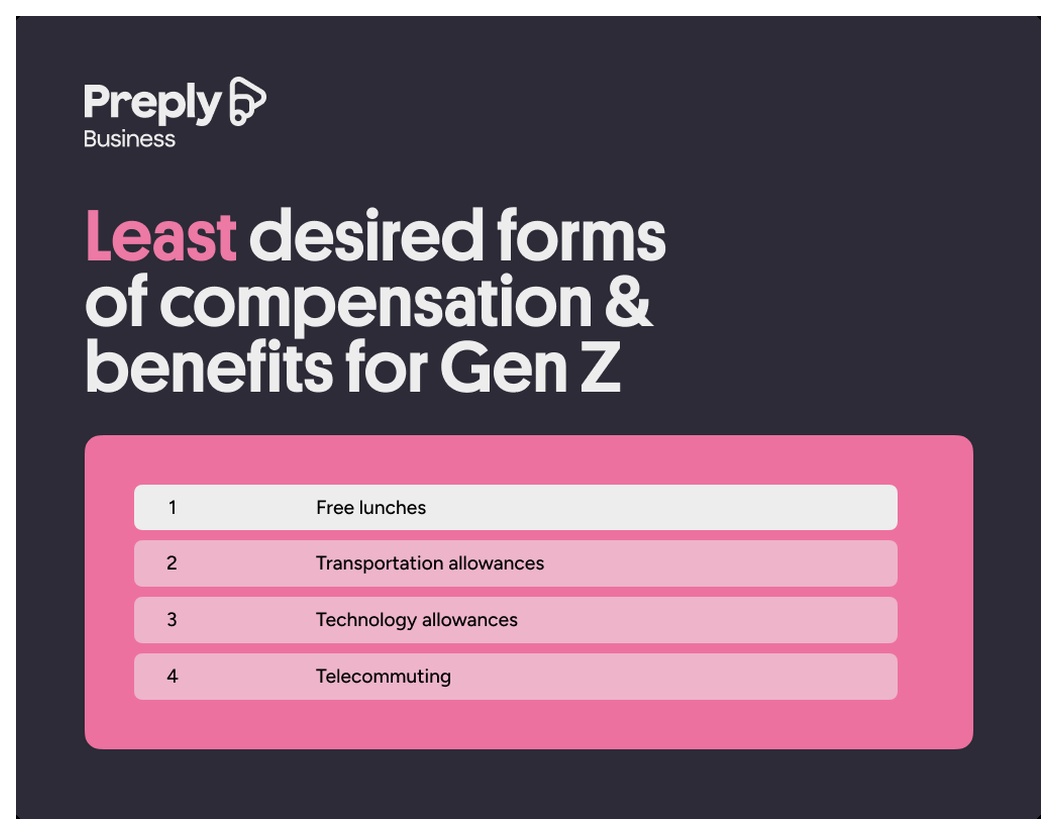
As highlighted in the findings, Gen Z shows minimal interest in traditional workplace rewards like free lunches and transportation benefits. Interestingly, the option to work from home also ranked low, reflecting this generation’s strong desire for connection with others. Even more surprising is their lukewarm response to receiving funds for purchasing personal electronic devices, despite their reputation as a tech-savvy generation.
What can we learn from this? Given that Gen Z experiences a significantly high job turnover rate, it’s crucial for companies to revamp their compensation and benefits packages to align with the values and priorities of this emerging workforce.
Conclusion
Recognizing employees for their hard work is an incredibly effective way for leaders to motivate their teams. This recognition not only lifts morale but also plays a crucial role in improving employee retention. When team members feel valued and acknowledged for their efforts, they are more likely to stay loyal to the company. Ultimately, such recognition validates their contributions, cultivates a positive workplace atmosphere, and strengthens the connection between employees and the organization.
A note on methodology
This research utilized a quantitative online survey format, gathering insights from over 2,500 working professionals across the globe who are learning new languages. Participants hailed from diverse countries, including the United States, Brazil, Germany, Spain, Italy, and Poland, providing a rich spectrum of perspectives on language learning.
In our survey, 51% of participants identified as male and 49% as female. The age distribution revealed that 27% belonged to Gen Z, 38% were Millennials, and 35% represented Gen X.
Frequently Asked Questions
Why is employee recognition important?
Employee recognition is crucial because it boosts morale, enhances engagement, and improves retention rates, making employees feel valued for their contributions.
How often do employees typically receive recognition?
Only 13% of employees receive recognition frequently, while 39% feel they do not receive enough acknowledgment for their hard work.
What is a key factor in delivering effective employee praise?
The delivery of recognition is vital; it should be specific, timely, and sincere to be perceived as meaningful by employees.
How do recognition preferences differ across generations?
Generation Z prefers recognition three times a week, Millennials appreciate it about three times a year, and Generation X is satisfied with recognition once a year.
What do employees value more, monetary or non-monetary recognition?
Many employees prioritize non-monetary recognition, with 71% seeking acknowledgment for significant achievements rather than routine tasks.