

- Why the learning experience is so important
- More benefits of online classroom games for kids and teens
- Practice functional language
- Develop leadership and teamwork
- Boost motivation
- Revise target language
- Build routines
- Refresh focus
- 5 Low prep games for teachers to play with students online
- 1. Drawing dictation
- 2. Akinator
- 3. Taboo
- 4. Last letter
- 5. Scattergories
- Final words
- Frequently Asked Questions
- Why should fun be included in an ESL class?
- What is the affective filter hypothesis?
- What are some benefits of using online games in ESL teaching?
- How can games help reduce classroom stress?
- What types of games are suitable for online ESL classes?
Teachers often grapple with guilt when searching for online games to enhance their students’ English learning experience. A persistent thought lingers: should fun really be a component of an English as a Second Language (ESL) class? After all, students are there to learn, not just to play.
Simultaneously, it’s evident that games offer numerous benefits for young learners and teenagers. They not only help students refocus and unwind but also foster essential skills like communication, teamwork, and leadership. Through play, young individuals develop a sense of collaboration and social interaction that can enhance their learning experience.
In this discussion, we’ll delve into the benefits of incorporating ESL teaching games and examine the concept of the affective filter, a crucial factor in second language acquisition. Additionally, we’ll introduce five engaging classroom games for kids that you can implement while teaching online with LingualNeeds.
Why the learning experience is so important
Second language acquisition (SLA) theorist and researcher Stephen Krashen first proposed the affective filter hypothesis in 1982.
The affective filter concept highlights the significant role emotions and attitudes play in second language acquisition. When learners experience negative thoughts and feelings, it acts as a barrier that hinders their language learning journey. Conversely, a fun, safe, and relaxed environment fosters a positive mindset, enabling students to engage more effectively and make better progress in their language studies.
ESL games serve as fantastic tools for teaching, allowing students to immerse themselves in the target language in a fun and interactive way. By reducing classroom stress, these games effectively lower the affective filter, making it easier for learners to absorb and use the language.
More benefits of online classroom games for kids and teens
Practice functional language
ESL online games introduce a variety of practical language expressions that enhance learning, such as asking “Whose turn is it?”, saying “Roll the dice,” or expressing frustration with “That’s unfair, she cheated!” These phrases not only make the games interactive but also help learners practice real-life conversational skills.
It’s essential to introduce key vocabulary necessary for gameplay before diving into the action. However, during the game, students often encounter new language as they recognize the need to express important ideas. This spontaneous language emerges naturally, and learners quickly grasp its significance, eagerly incorporating it into their communication right away.
Develop leadership and teamwork
Team games not only foster connections between students but also promote essential skills like communication, turn-taking, and leadership. These activities provide a fun way for students of all ages to develop valuable life skills and enhance their social abilities.

Boost motivation
Whether you’re teaching in a virtual classroom or right beside your student, fill-in-the-blank activities often lead to boredom. In contrast, incorporating games into your lessons can spark enthusiasm and serve as an excellent motivator.
Revise target language
It’s no secret that games can serve as fantastic study aids, offering a much more enjoyable alternative to traditional workbook exercises. They engage learners in a dynamic way, making revision not only effective but also fun!
Build routines
Routines play a crucial role in classes for young learners. They foster a sense of security and predictability, helping to reduce anxiety and boost engagement. By incorporating online ESL games into your regular activities, you not only make learning enjoyable but also give students something exciting to anticipate.
Refresh focus
Games are a fantastic source of energy, injecting excitement and competition into your classroom, especially during those quieter moments. Having a selection of no-preparation games ready to go can help you easily shift the atmosphere and re-engage your students when needed.
You might also like to check out our article on engaging ESL warm up activities for online classes.
5 Low prep games for teachers to play with students online
1. Drawing dictation
Objective: To describe an image; to understand a description
Suitable for: One-to-one classes and groups
Age and level: 10 +, pre-intermediate and above
Language skills practiced: Listening, speaking, descriptive language, target vocabulary
Materials required: Online links to images, pens and paper
How to play:
- Put students in pairs (Student A and Student B).
- Share a link to an image, such as this circus act, with each Student A through the chat feature.
- Student A has one minute to describe the picture to Student B, who must draw it.
- After one minute, the students must compare pictures to see how close to the original it was.
- For larger classes, have students showcase their images on camera and select a winner.
- Students should then swap roles.
- If you are teaching a single student, act as their partner.
2. Akinator
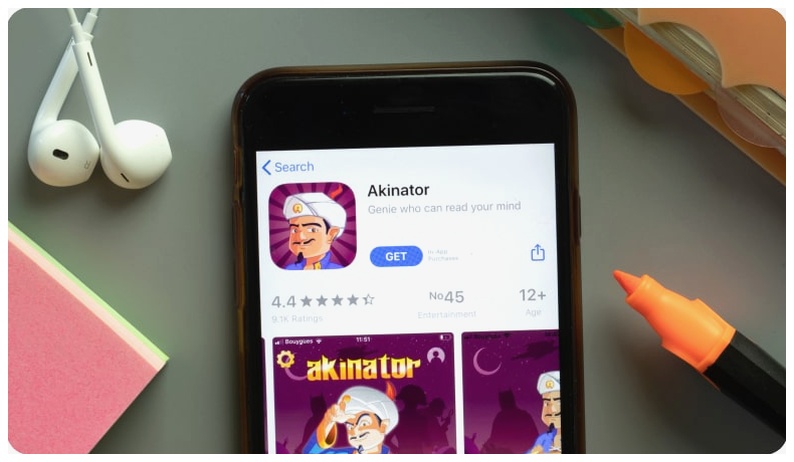
Objective: To play with the online genie, Akinator. He will guess the character, object or animal you are thinking of.
Suitable for: One-to-one classes and groups
Age and level: 12 +, pre-intermediate and above
Language skills practiced: Reading comprehension
Materials required: Akinator website
How to play:
- Put students in small groups (or work directly with your one-to-one student) and direct them to the Akinator website.
- Students should choose a familiar object, character, or animal, preferably linked to the target language being taught.
- Students should then direct Akinator and answer his questions until he guesses correctly or incorrectly.
- Note that you may need to support students with more complex questions or vocabulary.
3. Taboo
Objective: To win points by correctly guessing what a player is describing to your team
Suitable for: Minimum 6 students in groups of three or more
Age and level: 12 +, intermediate level
Language skills practiced: Description, listening, vocabulary
Materials required: Taboo Website, buzzer sound effect (optional)
How to play:
- Divide your class into two teams (minimum 3 per group).
- Team A must choose a person to be the “Clue-giver”.
- The Clue-giver should reference the Clue card on the website, which displays a clue word alongside a list of taboo words.
- The Clue-giver initiates the timer and describes the target word to their team, aiming for them to guess it without using any of the listed taboo words.
- The Teacher or Clue-giver must share their screen with the opposing team to display the card.
- If a taboo word is used then Team B must make a buzzer noise and Team A loses the point.
Full rules and how to play can be found on the Taboo website
4. Last letter
Objective: To practice vocabulary, spelling and concentration in a fun way
Suitable for: One-to-one classes and groups
Age and level: 10 +, pre-intermediate and above
Materials required: None.
Language skills practiced: Spelling, vocabulary recall
How to play:
- Give your students a topic you have been studying in class (e.g. sports)
- Put students in order (list their names in the chat).
- The first student should start with any sports-related word. For example, tennis.
- The next student should say a word that begins with the last letter. For example, soccer.
- The aim is to come up with as many words as possible.
- The chain continues until someone makes a mistake or can’t think of a word.
- You can repeat the game with a new topic.
- The game can be played with a one-to-one student, if you join in playing with them.
5. Scattergories
Objective: To think of a word beginning with a given letter of a range of different categories.
Suitable for: One-to-one classes and groups
Age and level: 10+, intermediate and above
Materials required: Scattergories online
Language skills practiced: Vocabulary revision
How to play:
- Before playing, you’ll need to set up the game for your students, choosing suitable categories.
- Share the link provided with your students.
- Students then have one minute to think of example words for each of the categories you’ve selected.
- Scores are automatically collected at the end of the game.
- In smaller groups, students can play against the computer.

Final words
Engaging your students in the online classroom can be as simple as incorporating quick games into your lessons. Many classic activities can easily be adapted for the virtual setting. Consider playing I Spy, Spot the Difference, or even Simon Says to make learning fun and interactive!
Incorporating play into your routine can be a game-changer! By regularly exploring new games, you’ll create a diverse toolkit that not only makes your lessons more enjoyable but also fosters effective learning. This approach will motivate your learners and support their progress in a fun and engaging way.
If you’re interested in teaching English online to young learners, teens or adults, why not check out our online tutoring jobs at LingualNeeds?
Frequently Asked Questions
Why should fun be included in an ESL class?
Fun helps create a positive mindset, lowering the affective filter and enabling students to engage more effectively in their language studies.
What is the affective filter hypothesis?
The affective filter hypothesis suggests that emotions and attitudes significantly impact second language acquisition, acting as barriers or facilitators to learning.
What are some benefits of using online games in ESL teaching?
Online games help practice functional language, develop leadership and teamwork skills, boost motivation, and make revision more enjoyable.
How can games help reduce classroom stress?
Games create a fun and relaxed environment, allowing students to immerse themselves in the language, which lowers anxiety and enhances learning.
What types of games are suitable for online ESL classes?
Games like Drawing Dictation, Akinator, Taboo, Last Letter, and Scattergories are engaging and effective for teaching ESL online.


